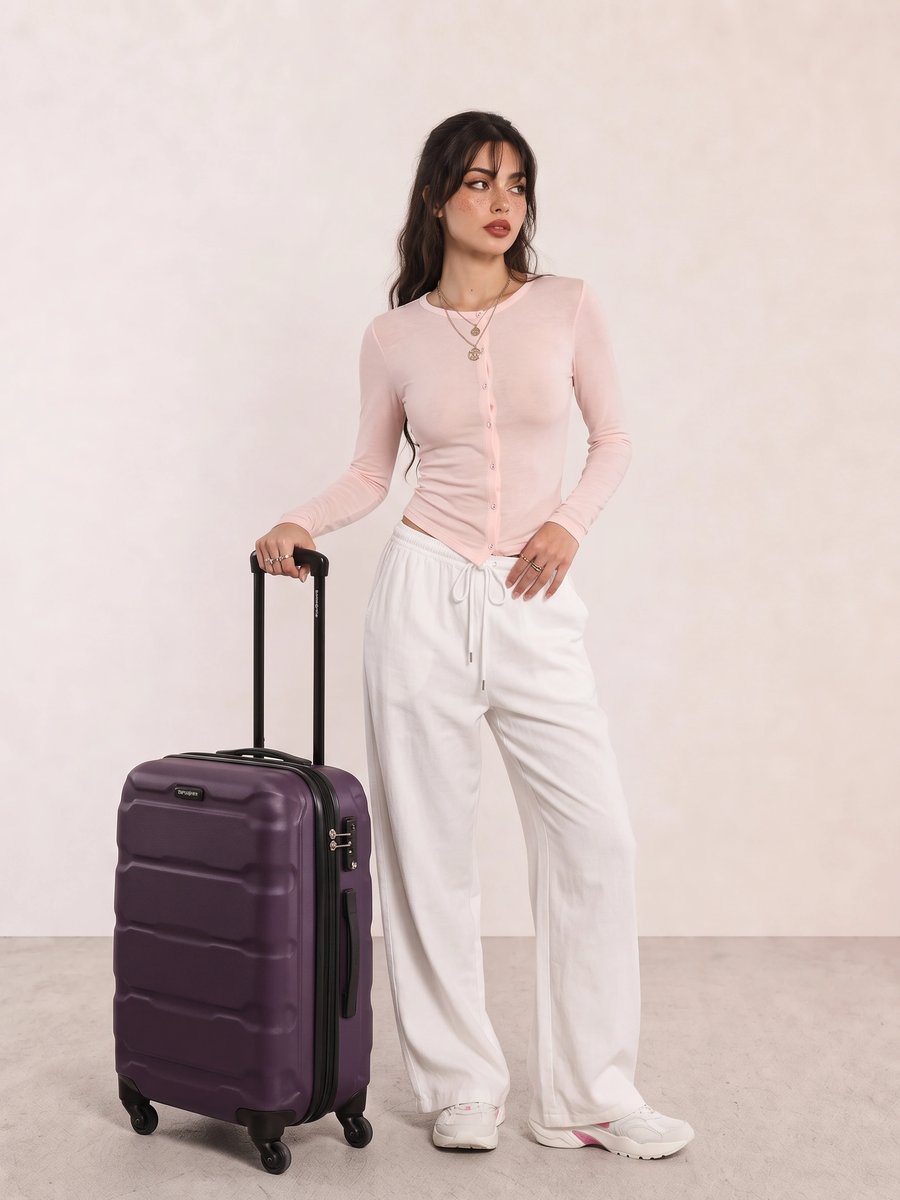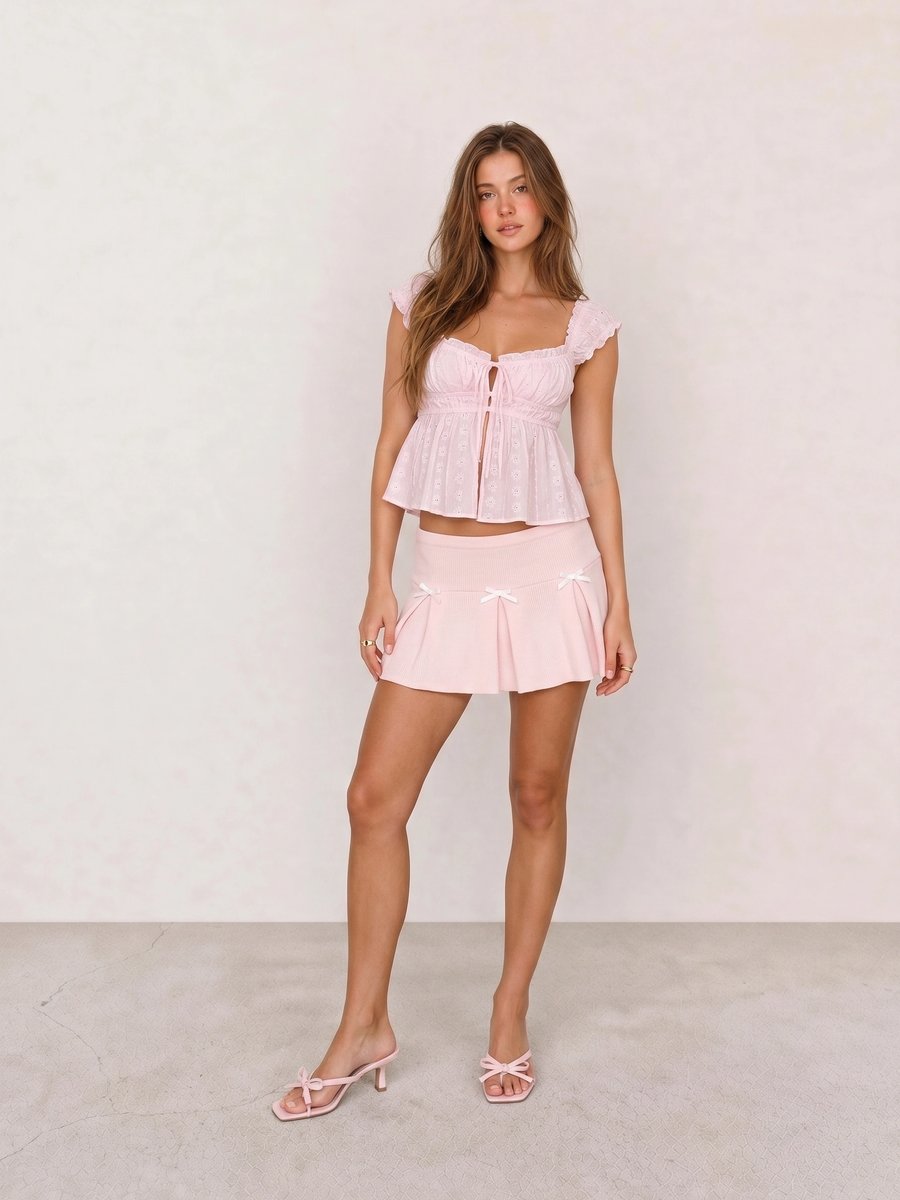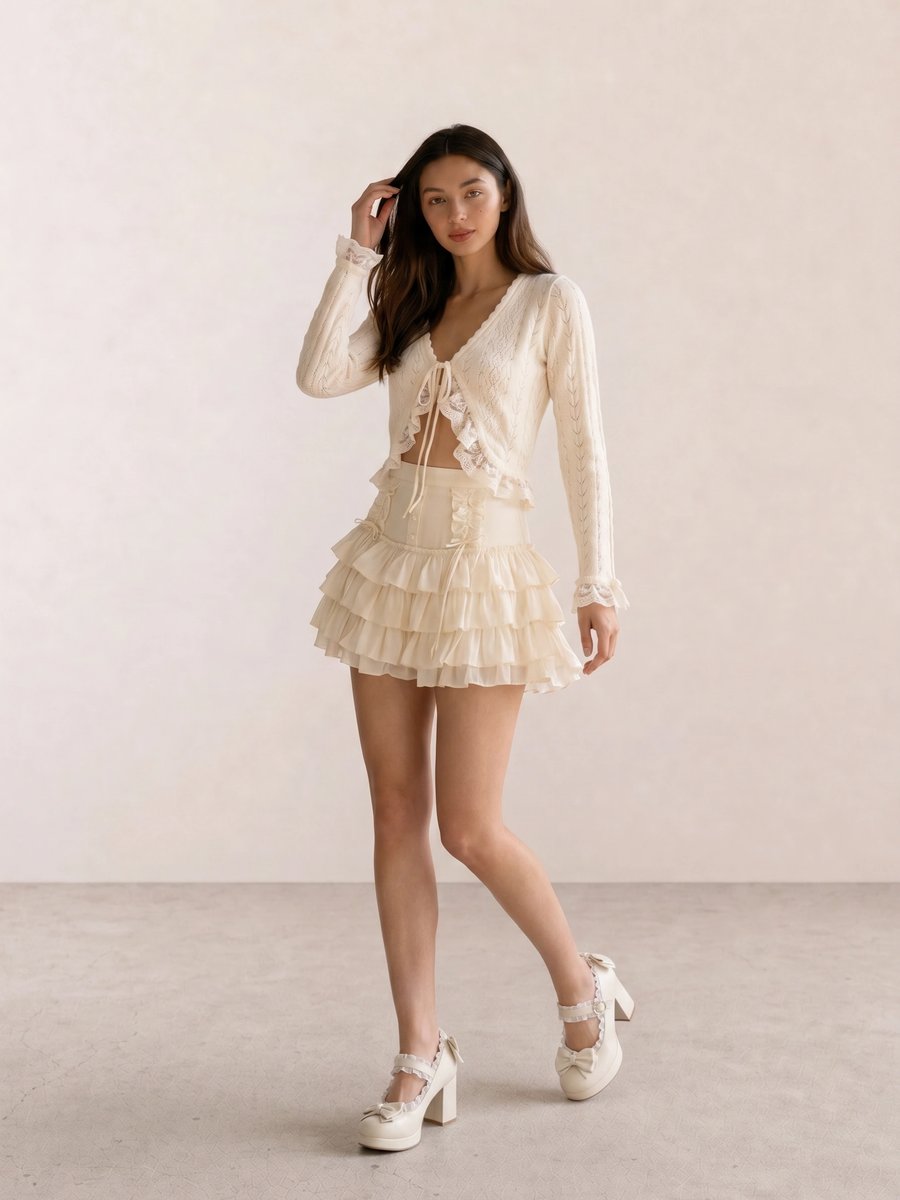
Common Coquette Styling Mistakes (And How to Fix Them)
The line between coquette and costume is thinner than you think. Here's what tips it — and the fix for each.
STYLEFINDEN editorial review: checked before publication for wearability, proportion logic and real-life outfit use. We explain our editorial method and image policy on the About page and keep affiliate independence details in the affiliate disclosure.
Most coquette outfits don't fail because of one bad piece. They fail because of one decision applied too many times — one more bow, one more pastel, one more ruffle, until the outfit stops reading as styled and starts reading as a costume. I've watched this happen in fitting rooms and in my own closet. The good news: every mistake on this list has a fast, specific fix. For the full breakdown of the aesthetic itself, the complete coquette fashion guide covers the foundations. This post is about what goes wrong once you start actually getting dressed.
If you want the styling formula before you start, how to dress coquette in 2026 is the better starting point. Here, we're fixing what already went wrong.
Mistake 1: Putting a Bow on Everything
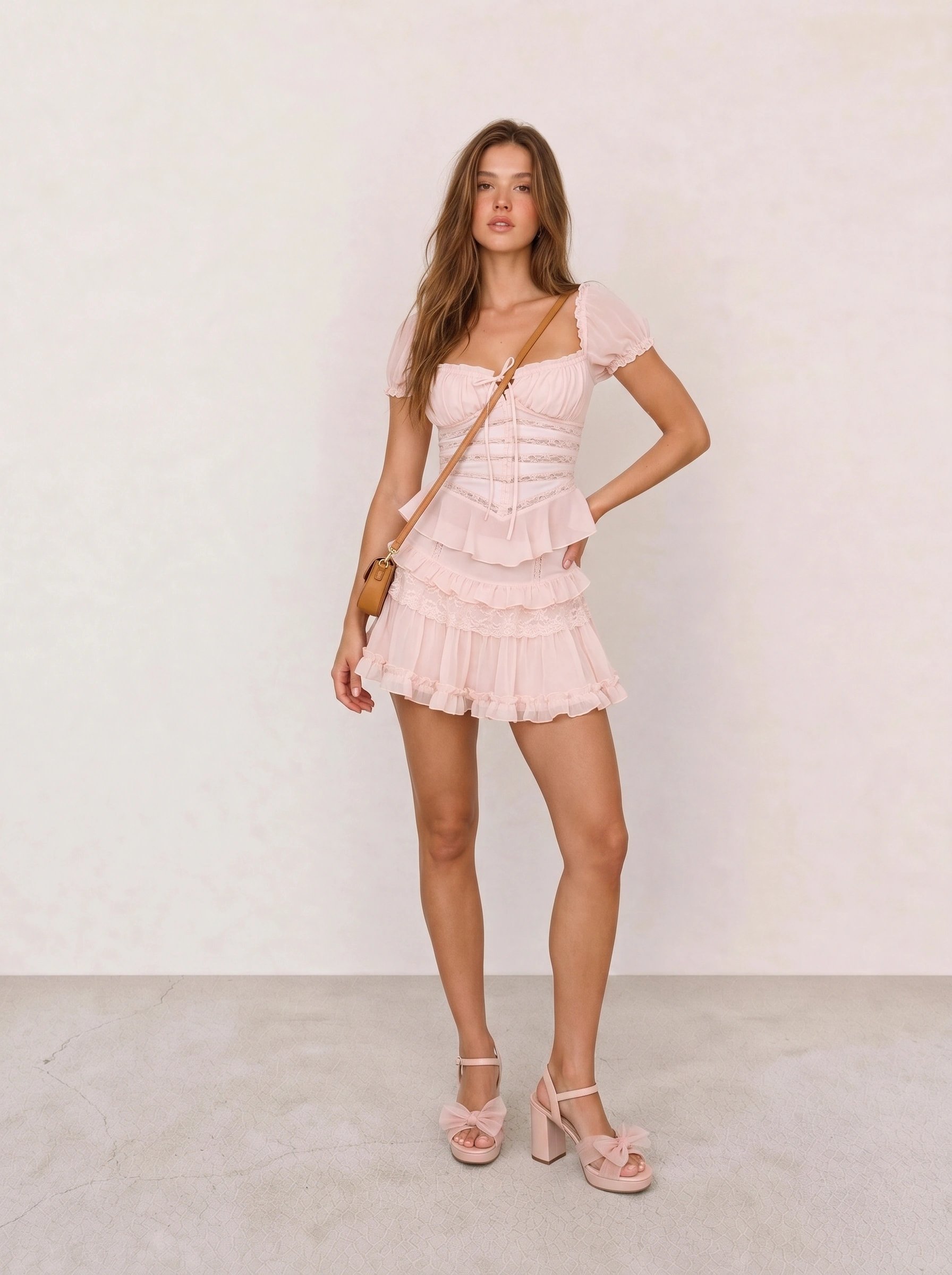
This is the single most common error, and it comes from a reasonable assumption: if one bow says coquette, five bows should say it five times louder. It doesn't work that way. Once you pass two bow placements in one outfit, the eye stops reading them as detail and starts reading them as theme — which is the exact moment coquette tips into costume.
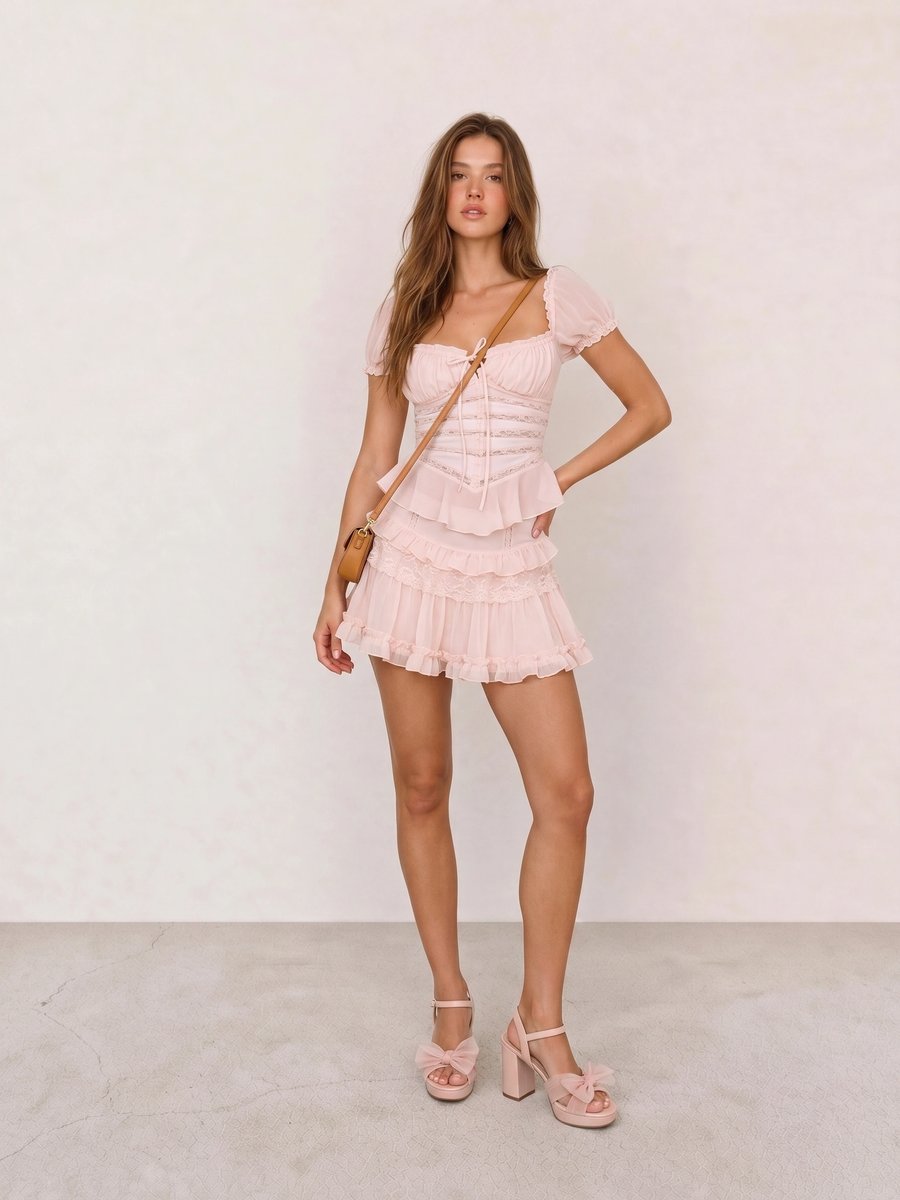
The fix is restraint with placement, not elimination. One bow at a waist seam or a neckline does more work than five scattered across hair, shoes, and bag. The pink fairycore corset and skirt set gets this right — the bow detail sits at the waist, where it actually shapes the silhouette instead of just decorating it.
Mistake 2: Pastel Head-to-Toe With No Anchor
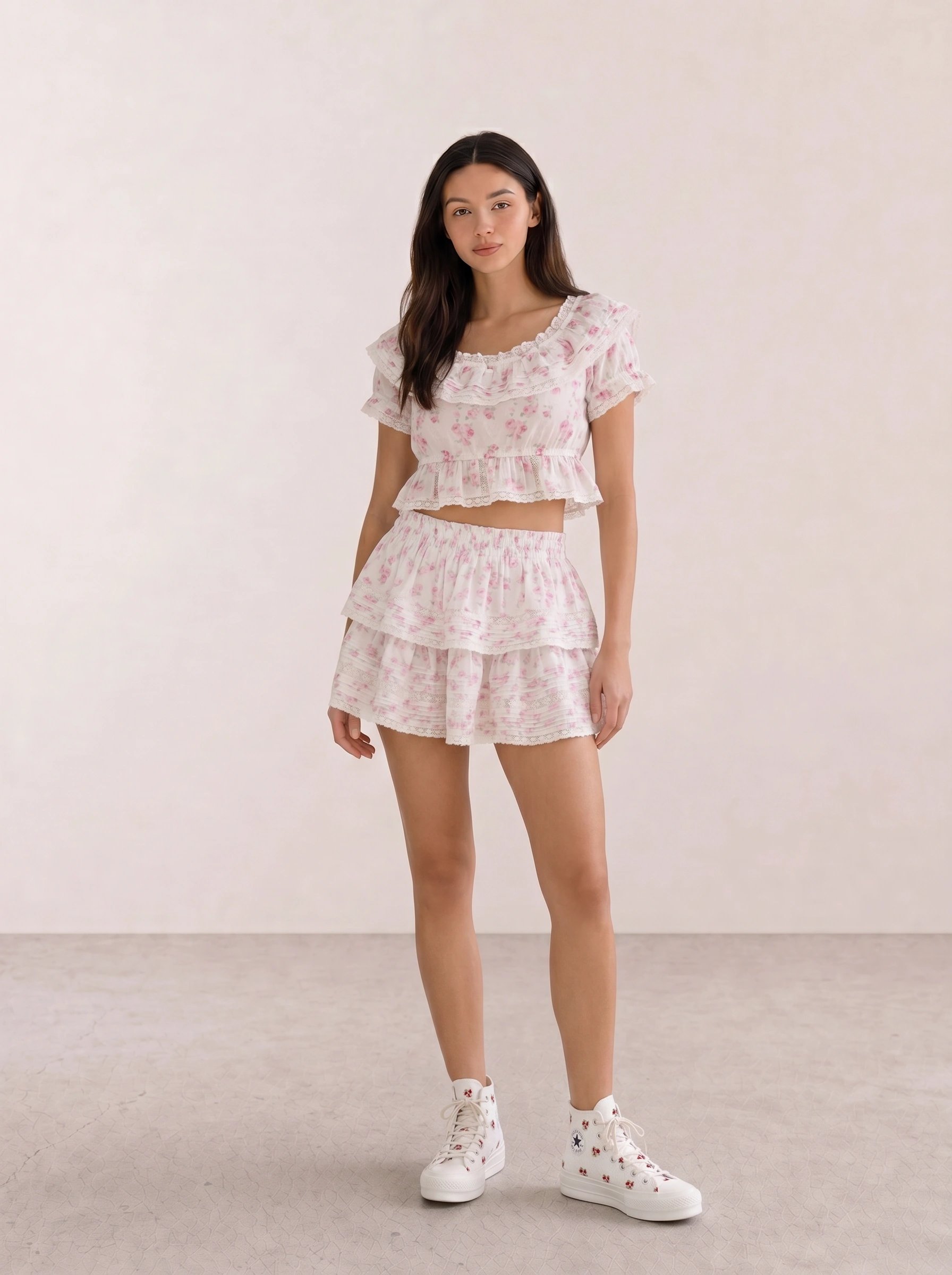
An all-pastel outfit with no neutral, no white, no skin-tone break reads as a single soft blur rather than a considered look. This happens because pastels are low-contrast by nature — pink next to lavender next to baby blue gives the eye nothing to land on.
Anchor the palette with one neutral or one ivory piece, and the rest of the pastels suddenly read as intentional rather than accidental. Our coquette color palette guide breaks this down in more depth if color logic is where you usually get stuck.
Mistake 3: Treating Lace as the Whole Outfit
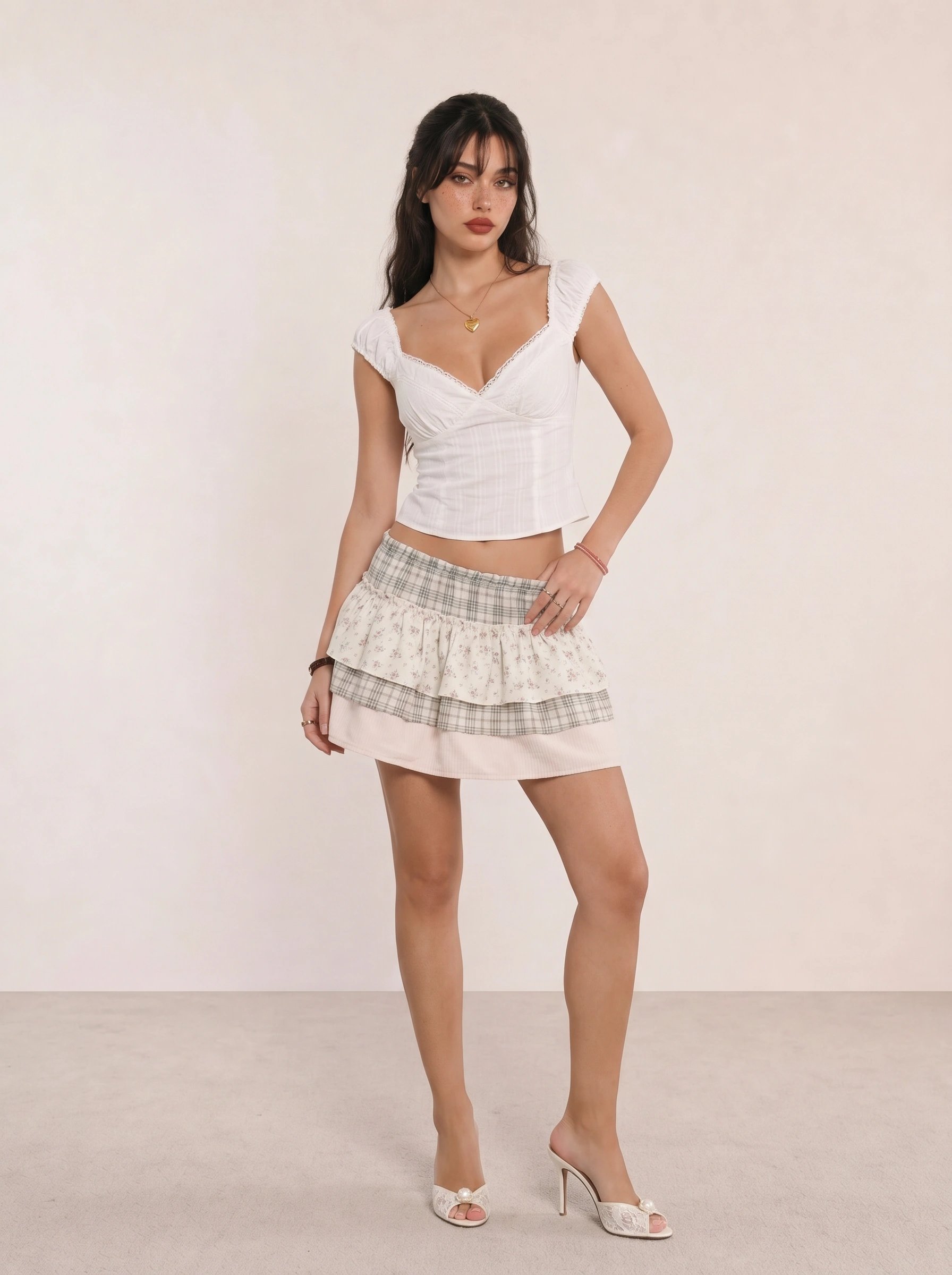
Lace top, lace skirt, lace trim on the socks — it sounds cohesive on paper, but in person it flattens the outfit. Lace needs a plain surface to contrast against. Without one, you lose the texture story entirely, because there's no smooth fabric left for the lace to stand out from.
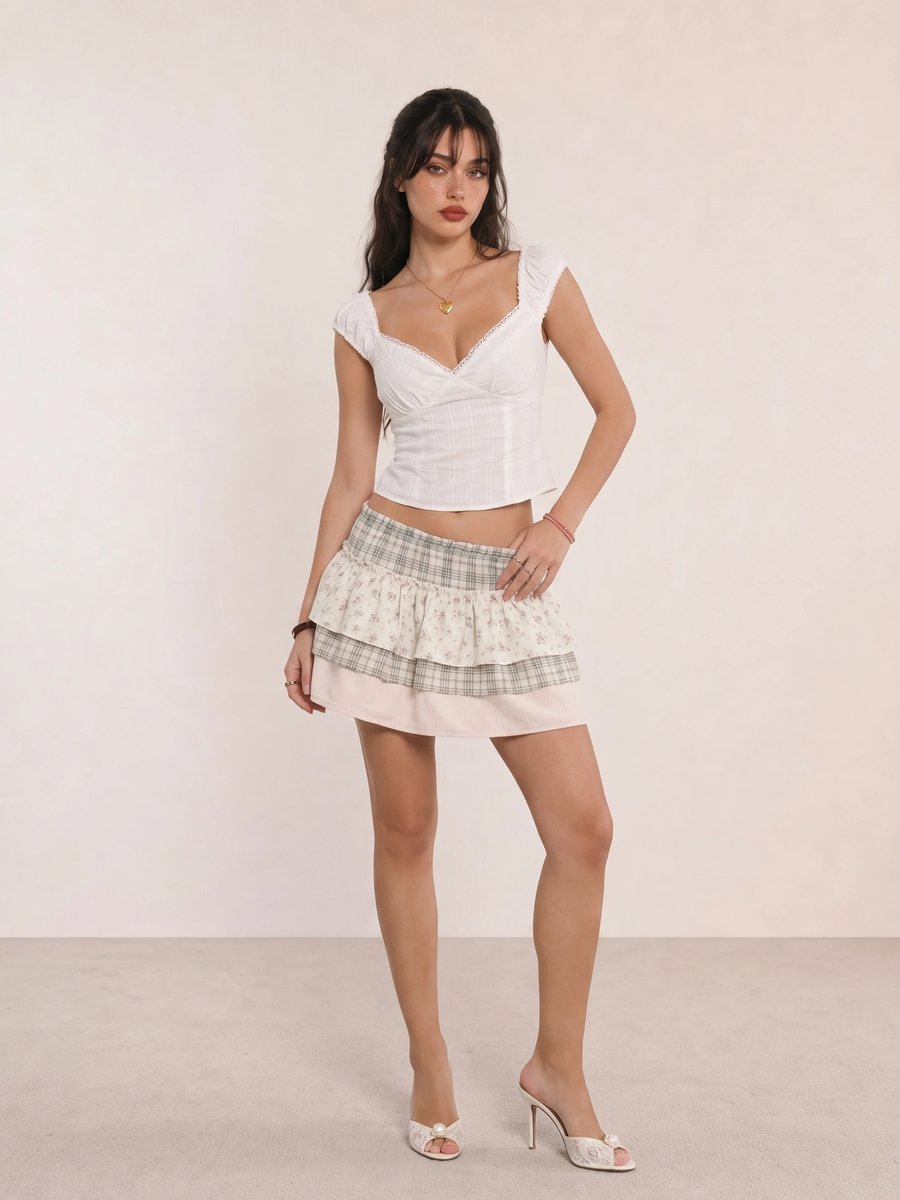
The white lace patchwork mini works because the patchwork construction already builds contrast into a single garment — varied lace panels against smoother fabric. If you're styling separates, pair lace with something flat: a plain knit, a smooth satin, denim. One lace piece per outfit is the rule I'd actually defend.
Mistake 4: Wearing It to the Wrong Setting
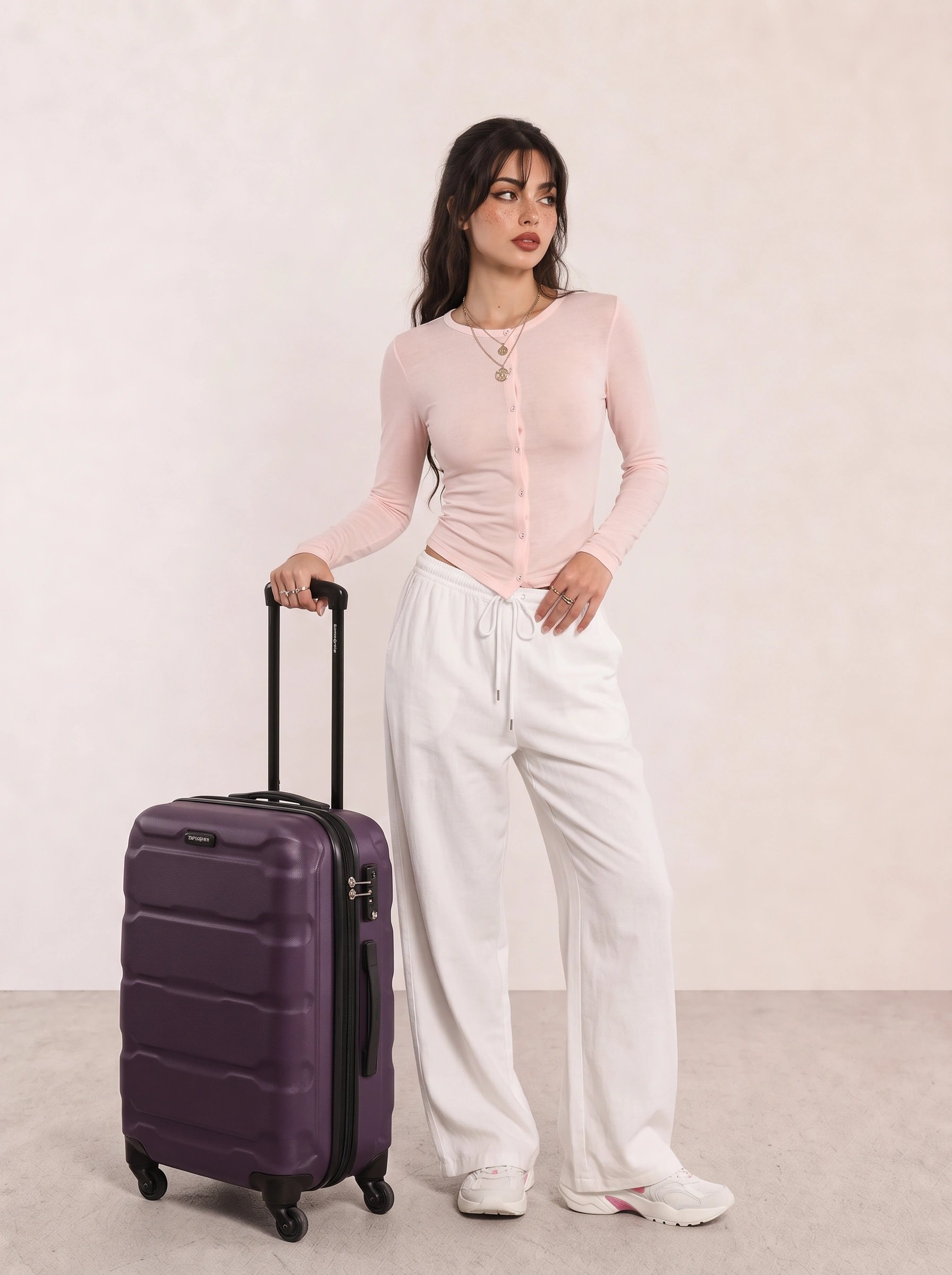
Coquette pieces read differently depending on where you put them. A ruffled mini at a daytime farmers market reads charming. The same mini at a formal office meeting reads like you got the dress code wrong. This isn't a rule against the aesthetic — it's about matching formality, not toning down the style itself.
Save the most decorated pieces for settings where a little romance is expected — a long lunch that turns into an afternoon you don't want to end, a garden party, a date you actually planned for. For more buttoned-up days, lean on a single coquette detail rather than the full silhouette.
Mistake 5: Ignoring Proportion for the Sake of Cute
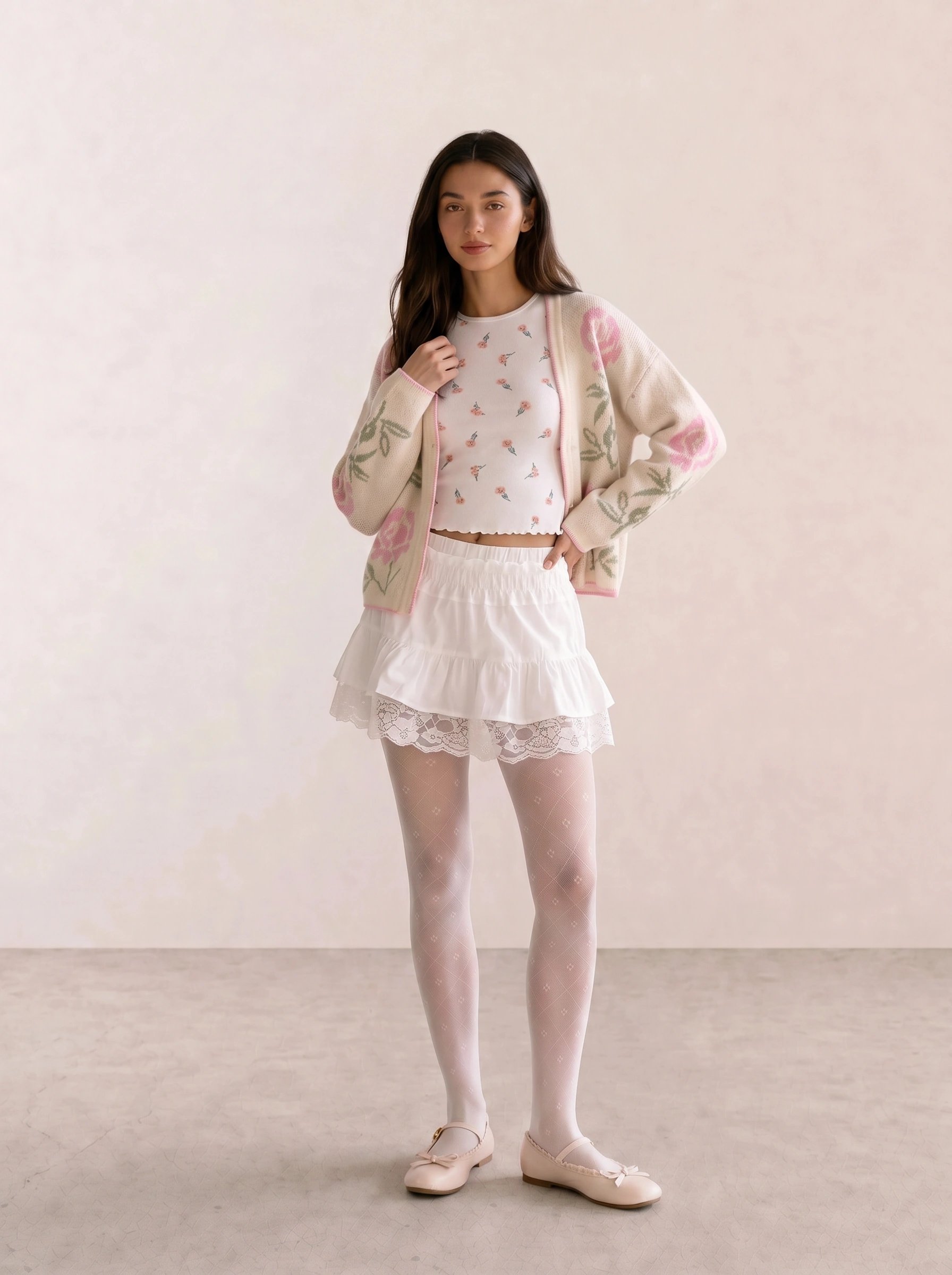
Most people think coquette is built from decoration. It isn't. It's built from proportion first, decoration second. A boxy top over a full skirt with no waist definition will still look unfinished even if every individual piece is technically coquette. The eye needs a waistline to register the silhouette as intentional.
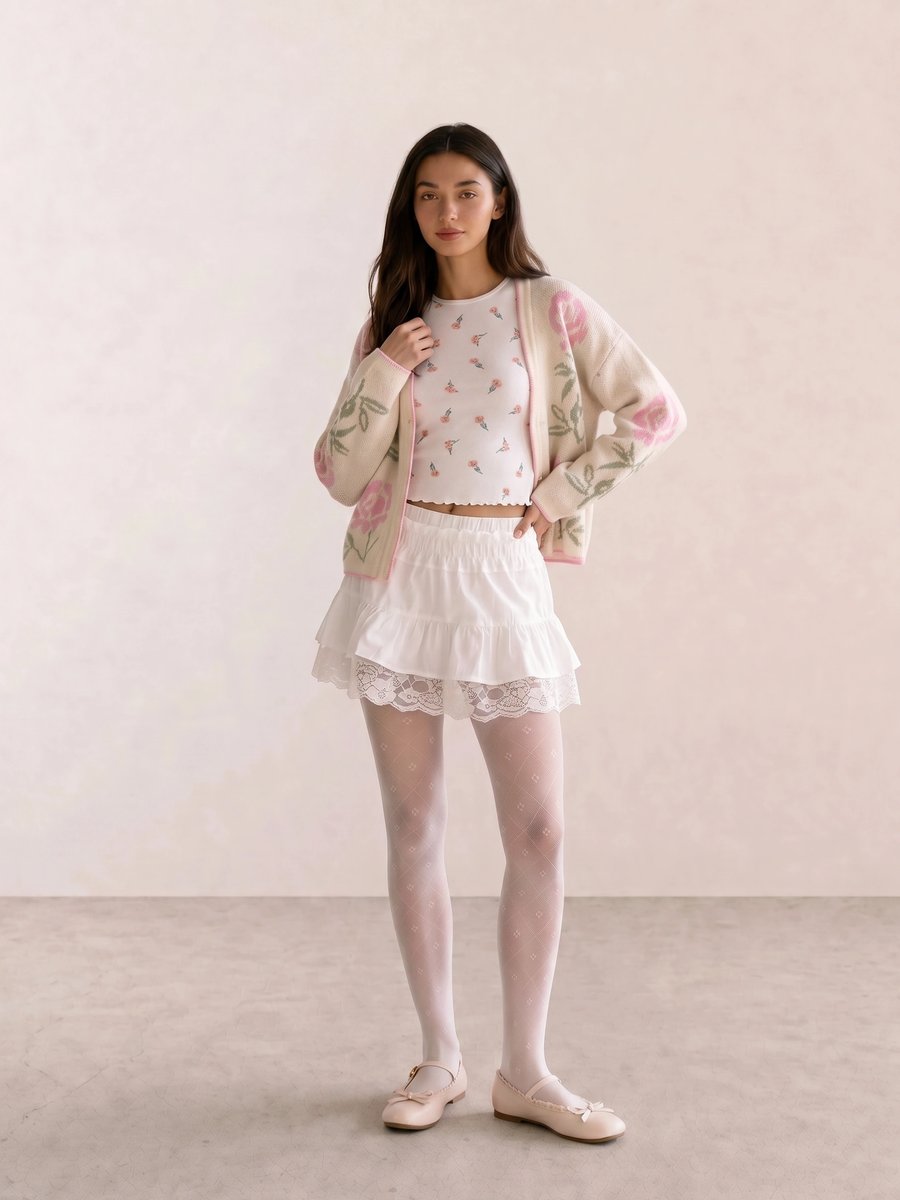
Fitted on top, fuller below — or the reverse, if you're working with a longline cardigan — is the structural rule that actually carries the look. The floral cardigan and lace mini skirt pairing makes this visible: the cardigan is cropped enough to expose the waist seam underneath, so the proportion still reads even with two layered pieces.
If I had to name the single fastest fix on this list, it's proportion. You can get the color palette a little wrong and still look put together. Get the proportion wrong and nothing else in the outfit matters.
Mistake 6: Pairing Delicate Pieces With Heavy Shoes
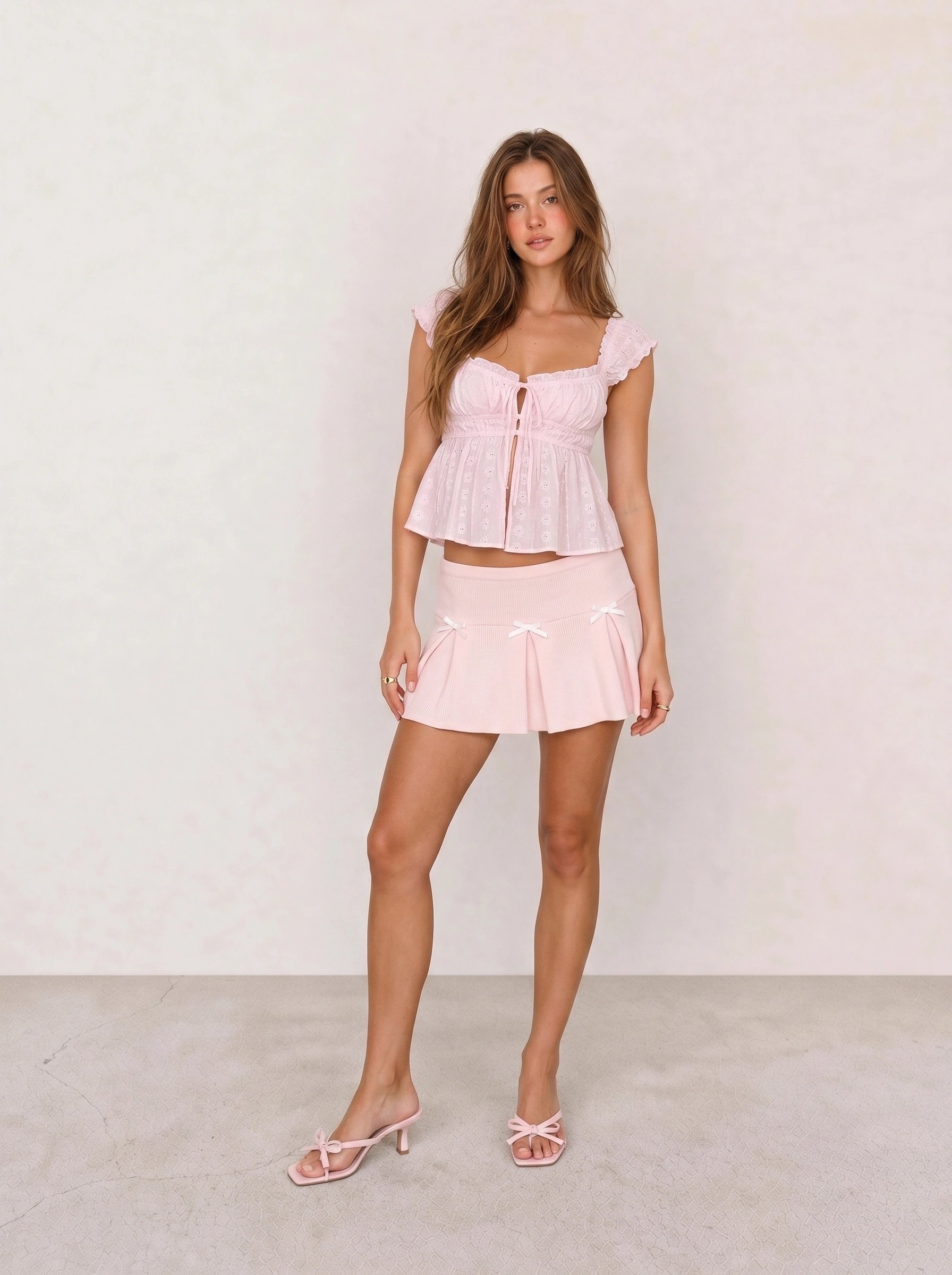
Chunky platform boots under a ruffled mini is a pairing I see constantly, usually because it feels like a way to make the outfit less precious. It does the opposite. The weight mismatch between a delicate top half and a heavy shoe collapses the silhouette balance the rest of the outfit worked to build.
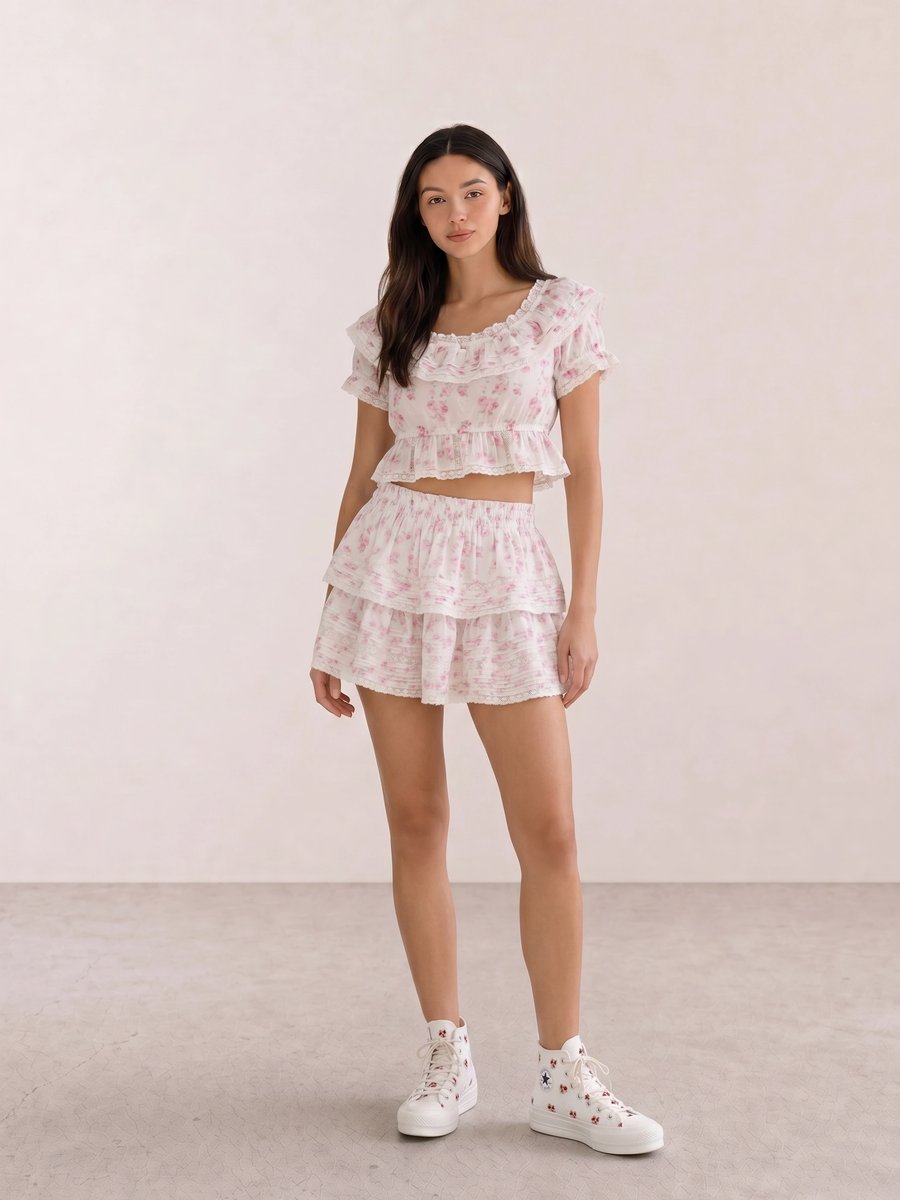
Mary Janes, ballet flats, or a kitten heel keep the proportion intact because they're light in the same way the rest of the outfit is light. The ivory lace ruffle coordinate set is a good reference for this — everything in the outfit, top to shoe, stays in the same weight category. If shoes are where you usually get stuck, the best shoes for coquette outfits guide goes deeper on this specifically.
Mistake 7: Using Coquette as One-Size-Fits-All
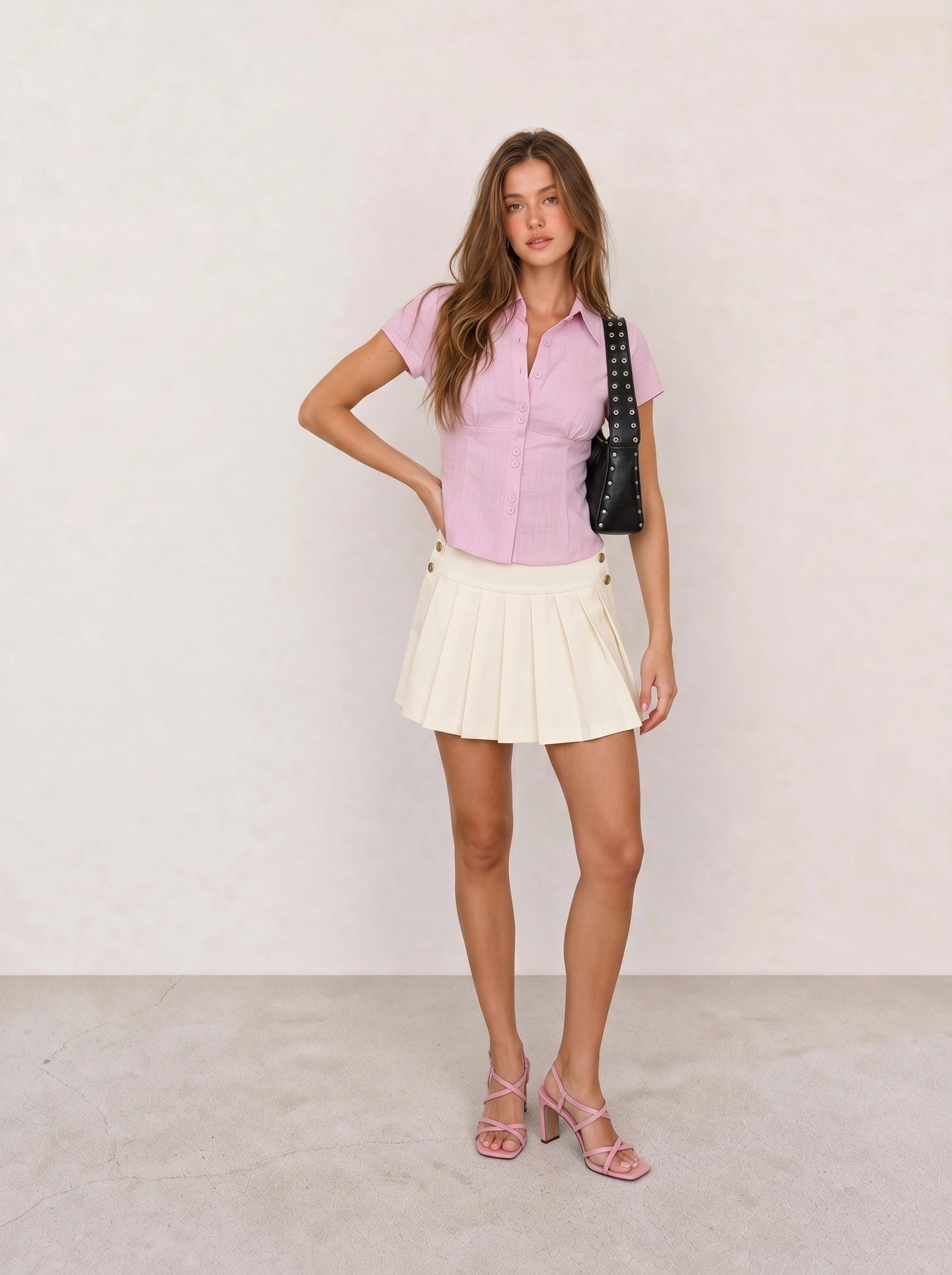
There's an assumption that coquette only works on one body type — petite, narrow-waisted, conventionally girlish. That's not accurate, and it's also not useful. The silhouette balance principle works regardless of size; it's about where the fitted and loose elements sit relative to your own waist, not about matching a specific frame.
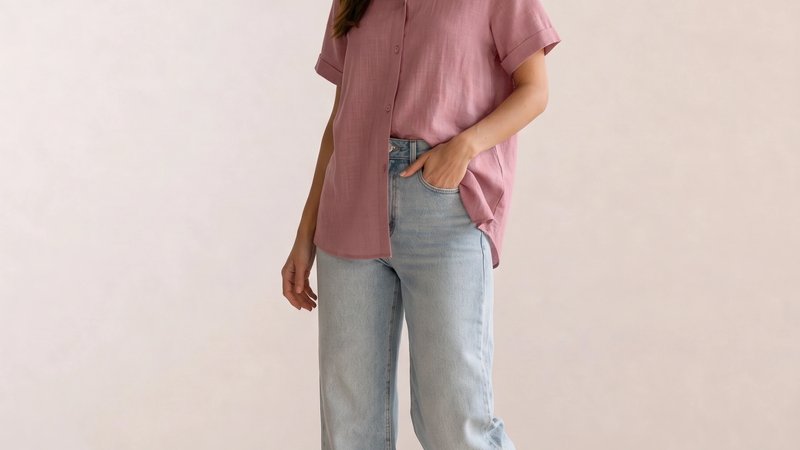
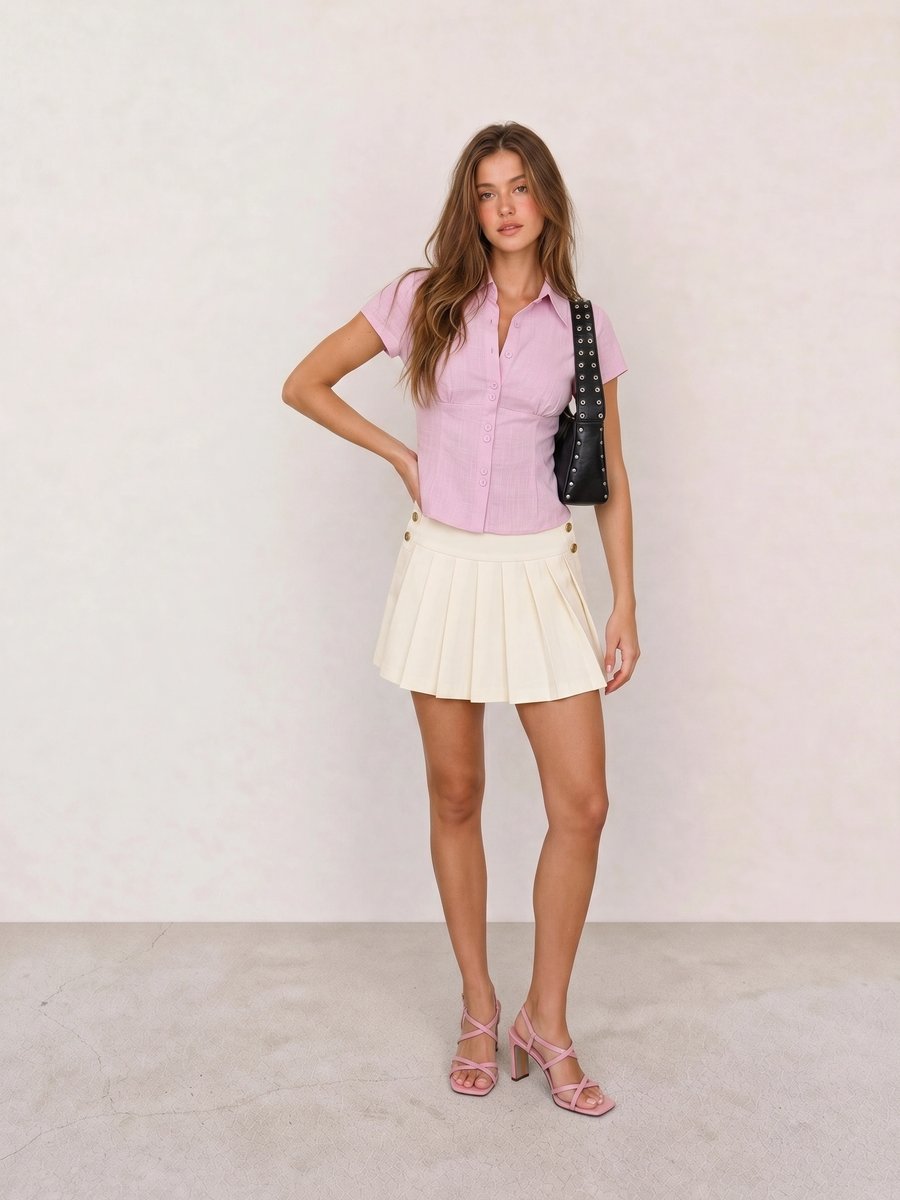
A higher rise mini, a structured corset top, or a pleated skirt with a defined waistband all read coquette while working with a range of proportions. The pink shirt and ivory pleated tennis mini is a good example of how a tailored shirt tucked into a pleated skirt builds the same waist definition without needing a corset at all.
Worth saying plainly: the trend has already started moving away from maximalist decoration toward this kind of cleaner, texture-led version — fewer bows, sharper tailoring underneath the softness. If you've been hesitant about coquette because the heavily accessorized version felt costumey, this is the entry point.
Coquette Styling Questions, Answered
How do I keep coquette from looking costumey?
Limit yourself to one or two coquette signifiers per outfit — one bow, one lace piece, one pastel — and let proportion carry the rest. The costume effect comes from stacking decoration, not from the aesthetic itself.
Can coquette be worn to work?
Yes, in a toned-down form. Keep one coquette detail — a ribbon tie, a soft pastel blouse — and pair it with tailored, neutral pieces so the overall formality matches the room.
What shoes ruin a coquette outfit?
Heavy platforms and chunky combat boots are the most common mismatch. They overpower the delicate proportion the rest of the outfit is built on. Ballet flats, Mary Janes, and kitten heels keep the silhouette intact.
Is coquette only for petite or younger body types?
No. The aesthetic depends on where fitted and loose elements sit relative to your own waist, not on a specific frame. Structured corset tops, defined waistbands, and higher-rise minis create the same silhouette balance across a range of body types.
None of these mistakes require buying anything new to fix — most are decisions you make while getting dressed, not gaps in your closet. If you're building out pieces from scratch, the coquette fashion essentials guide and the coquette accessories guide are the better next stops. Which mistake on this list have you actually made — the bow overload, or the wrong shoe?
Build the foundation with the coquette wardrobe checklist, compare coquette vs balletcore, and browse cute coquette outfits when you want full looks.
Weekly outfit picks and style guides — no fluff, unsubscribe anytime.