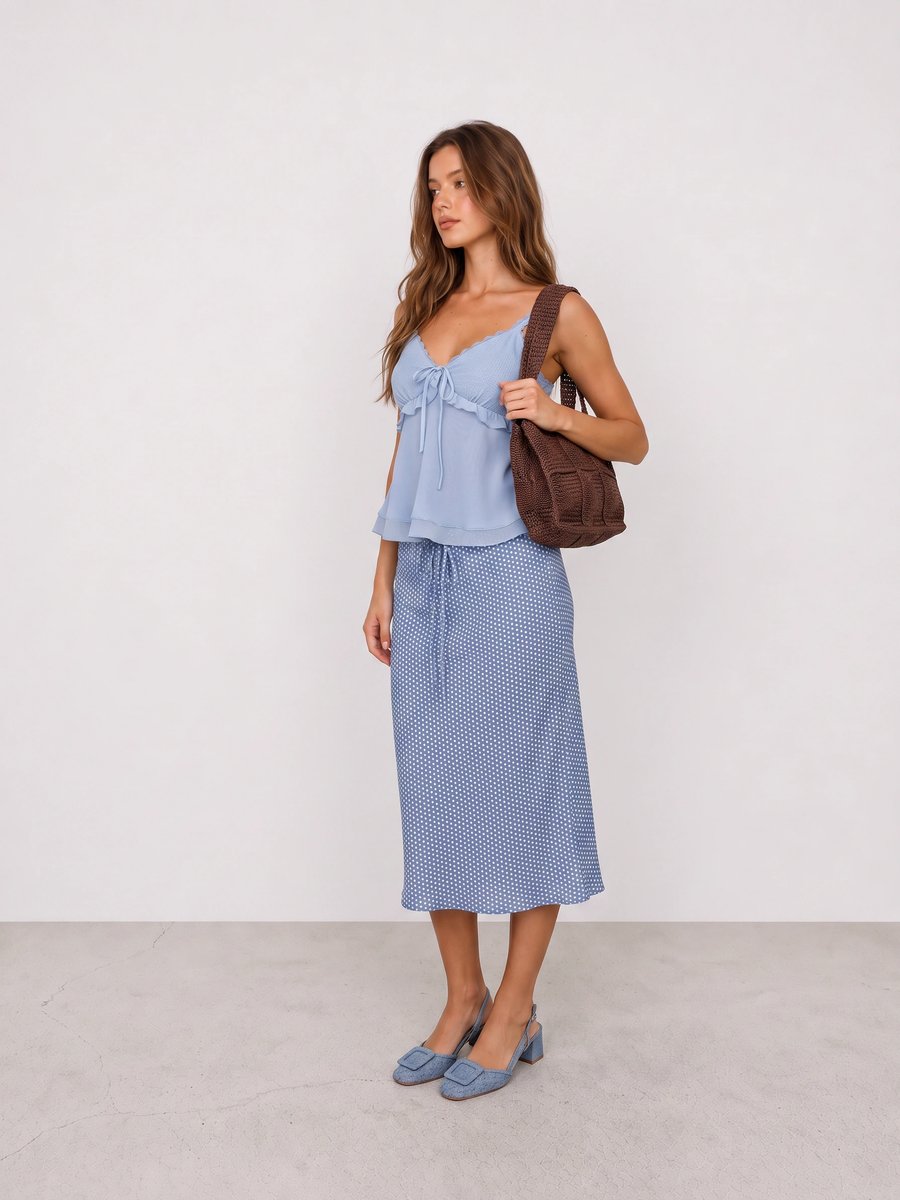
Coquette vs Balletcore: What's the Difference?
Coquette and balletcore share a pastel palette and feminine silhouettes — but the logic underneath each is completely different. Here's how to tell them apart.
STYLEFINDEN editorial review: checked before publication for wearability, proportion logic and real-life outfit use. We explain our editorial method and image policy on the About page and keep affiliate independence details in the affiliate disclosure.
Both aesthetics live in the same corner of the internet — pastel feeds, delicate textures, hyper-feminine silhouettes. People mix them up constantly, and you can see why. But they come from completely different places, they solve different dressing problems, and they read very differently on an actual body. Knowing which is which doesn't just help you name what you're wearing. It helps you buy the right pieces and avoid the specific styling errors that collapse each look.
The short version: coquette is about romantic decoration. Balletcore is about proportion and layering. Same pastel corner of the color wheel, entirely different construction logic. Here's how to read each one clearly.
What Is the Coquette Aesthetic?
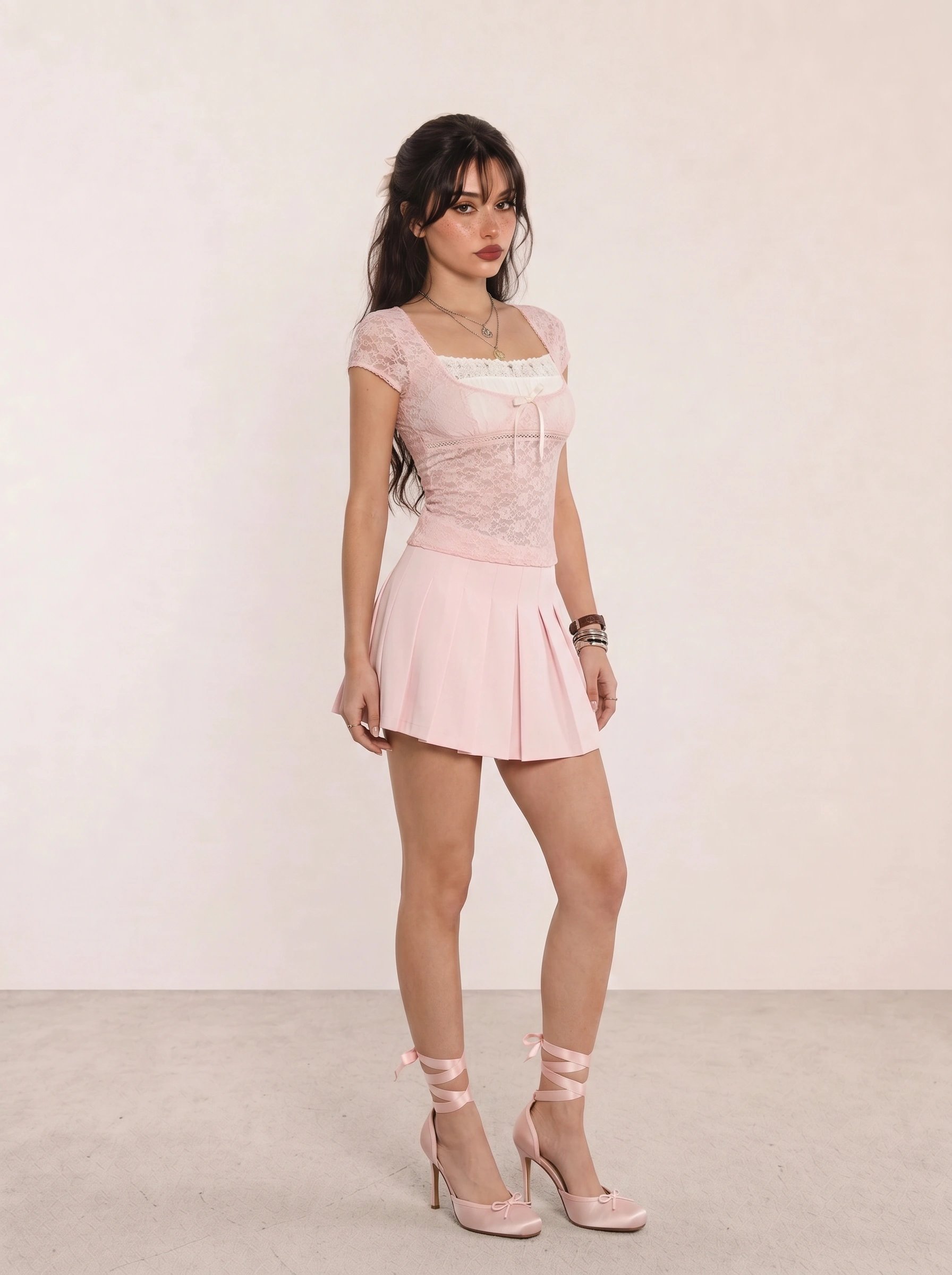
Coquette is a romantic aesthetic rooted in 18th-century French femininity — the word itself describes a flirtatious, playful woman who wields her charm deliberately. It entered contemporary fashion through Tumblr's hyper-feminine era in the early 2010s and accelerated again through Pinterest and TikTok in 2023 and 2024. The defining tension in coquette is between innocence and intention. Nothing is accidental. Every bow, every lace edge, every pastel is chosen to create the impression of unstudied prettiness — which, paradoxically, requires quite a lot of thought to execute well.
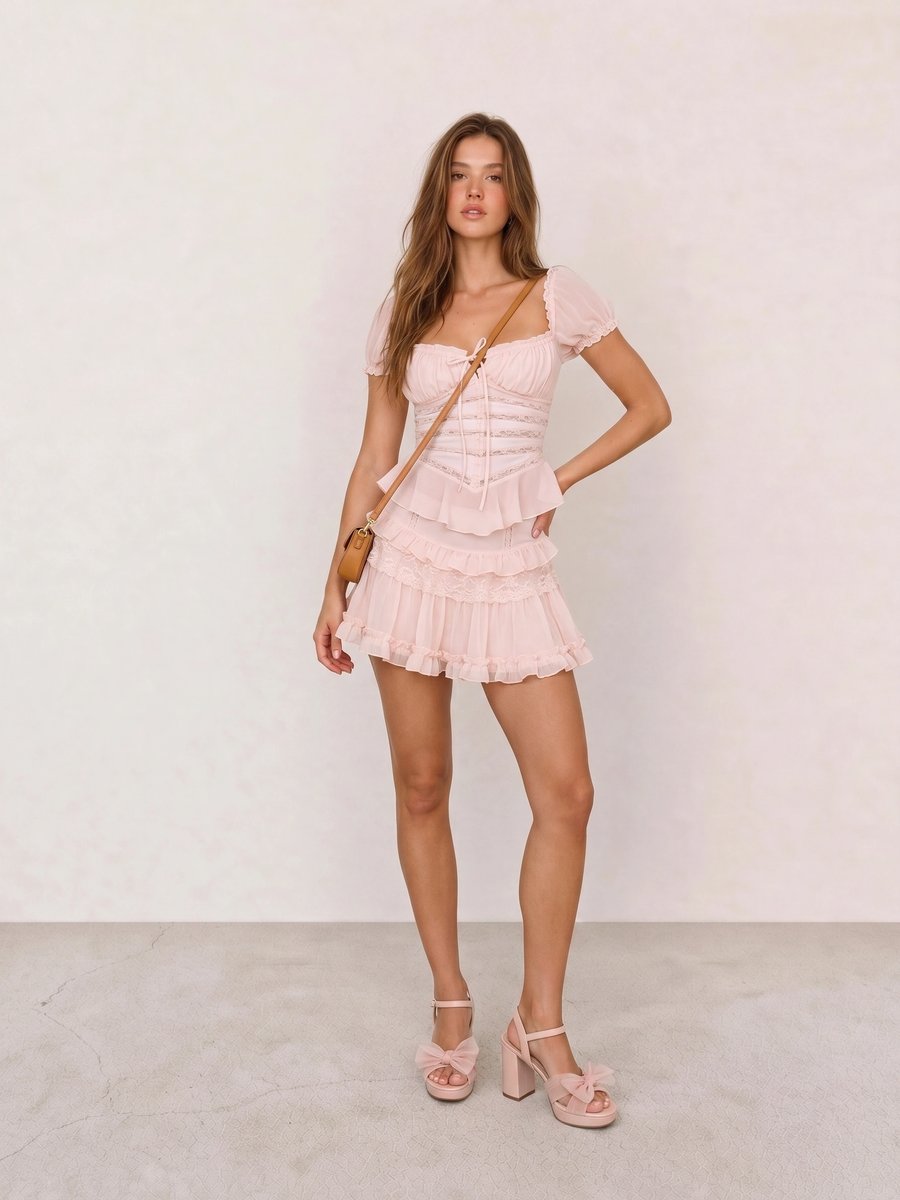
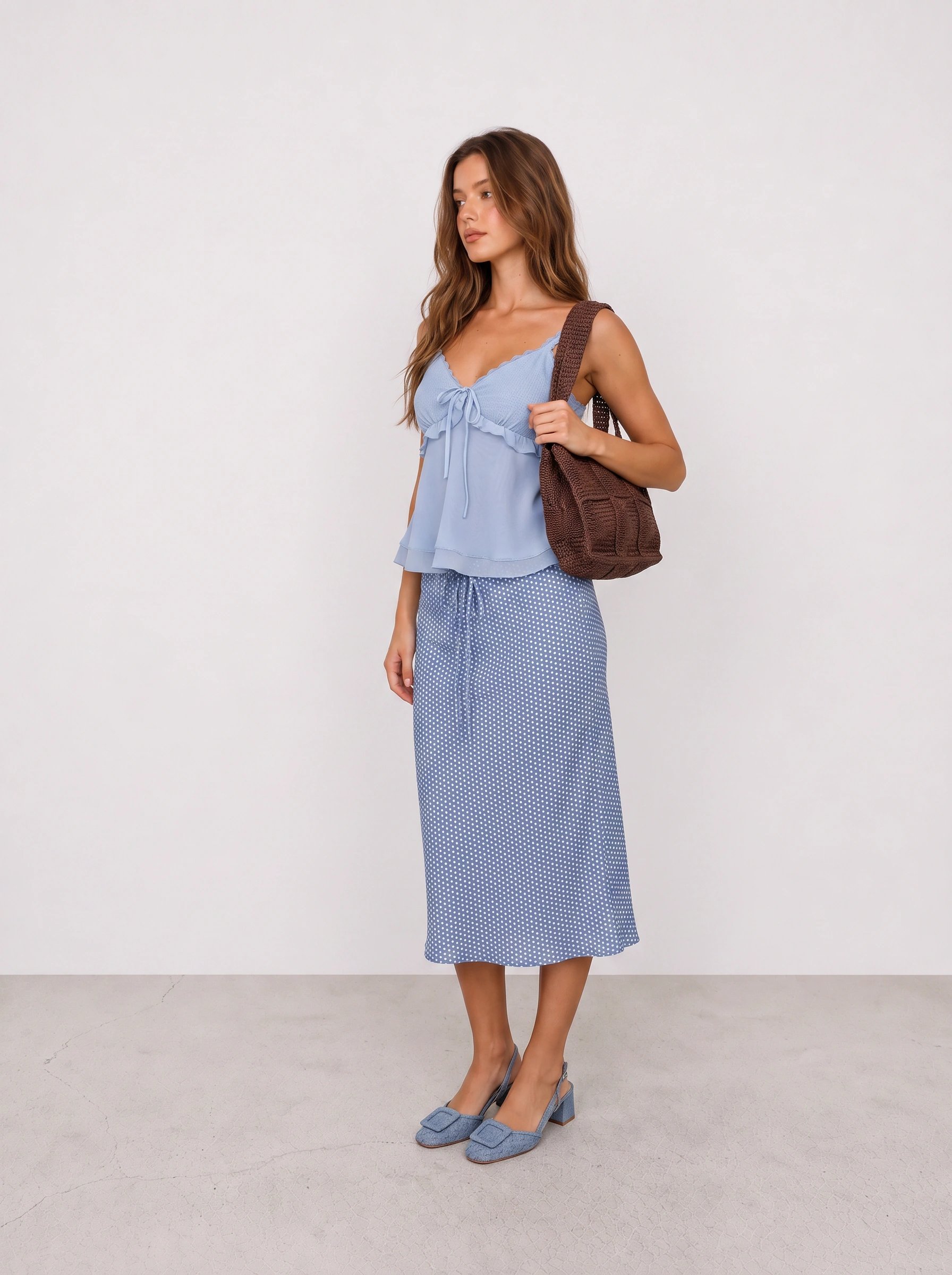
The color palette runs from soft blush and dusty rose through ivory, lavender, and baby blue. Textures are central: lace, satin, broderie anglaise, chiffon. The silhouette is consistently feminine — fitted bodices, full or pleated minis, high waists. Bows appear at necks, waists, or in the hair. As of 2026, the aesthetic has shifted toward a cleaner interpretation: texture does more work than decoration, and a single well-placed lace panel outperforms five stacked accessories. For the full picture of how the aesthetic has evolved, the complete guide to coquette fashion in 2026 covers every element in depth.
What Is Balletcore?
Balletcore draws directly from ballet dancer off-duty dressing — not the performance, but the rehearsal. Think of what a professional dancer wears between classes: wrap cardigans, knit layers, leotards worn as tops, wide-leg trousers layered under skirts, leg warmers, ballet flats. The aesthetic was cemented in cultural memory through early 2000s films like Black Swan and Center Stage, then resurfaced as a dominant trend in 2023 through designers including Alaïa, Miu Miu, and Sandy Liang.
Where coquette is about romantic decoration, balletcore is about studied practicality — garments designed for movement, warmth, and ease. The palette is more restricted: ecru, warm white, soft grey, muted blush. Black appears but the dominant feel is pale and austere rather than sweet. There are no bows in balletcore. The equivalent visual signal is a wrap tie — the self-tie on a cardigan or skirt, which references how dancers secure their clothing, not how they decorate it.
Coquette vs. Balletcore: How to Tell Them Apart
Silhouette is the clearest signal. Coquette leans into mini lengths, fitted bodices, and volume through pleating or ruffles — the proportion is small-on-top, full-on-bottom, with the high waist as the anchor point. Balletcore favors asymmetric hemlines, wrap silhouettes, and layered proportions — a cropped knit over a midi skirt, or a wide-leg trouser under a fitted wrap. The shapes overlap at 'feminine' and diverge immediately at everything else.
Palette overlaps at blush and ivory but diverges in temperature and saturation. Coquette pink is warm and present — dusty rose, soft candy, peach-adjacent. Balletcore pink is cooler and more worn-looking — the washed-out pink of a well-used slipper or a faded rehearsal leotard. If the pink looks like it came from a French patisserie, it's coquette. If it looks like it's been through a hundred washes, it's balletcore.
Fabric choices separate them sharply. Coquette relies on lace, satin ribbon, eyelet, and chiffon — materials with obvious visual softness. Balletcore uses knit, jersey, wool-blend, and matte cotton — materials that imply movement and warmth rather than decoration. A lace top is always coquette. A ribbed knit wrap is always balletcore. The outlier is silk, which can serve either depending on the cut.
Footwear is probably the single most diagnostic element. Coquette reaches for kitten heels, Mary Janes with a bar strap, or strappy flat sandals in leather or satin. Balletcore defaults to ballet flats — specifically a structured version with a proper sole, not a foldable fashion flat. Leg warmers worn over tights with ballet flats are balletcore and only balletcore. You would not wear leg warmers with a coquette outfit. The looks would contradict each other at the ankle.
The contrast is sharpest when you place each aesthetic in a specific setting. Coquette is dressed for being seen — a Sunday afternoon at a café where you'd like to look like you didn't try too hard but absolutely did, a garden party, a date where the outfit is half the plan. Balletcore is dressed for a different kind of intention — a rehearsal studio, a creative meeting, a walk through a city in October where you want to look considered without looking like you made a special effort. One aesthetic performs femininity; the other simply inhabits it.
Key Pieces: Coquette vs. Balletcore
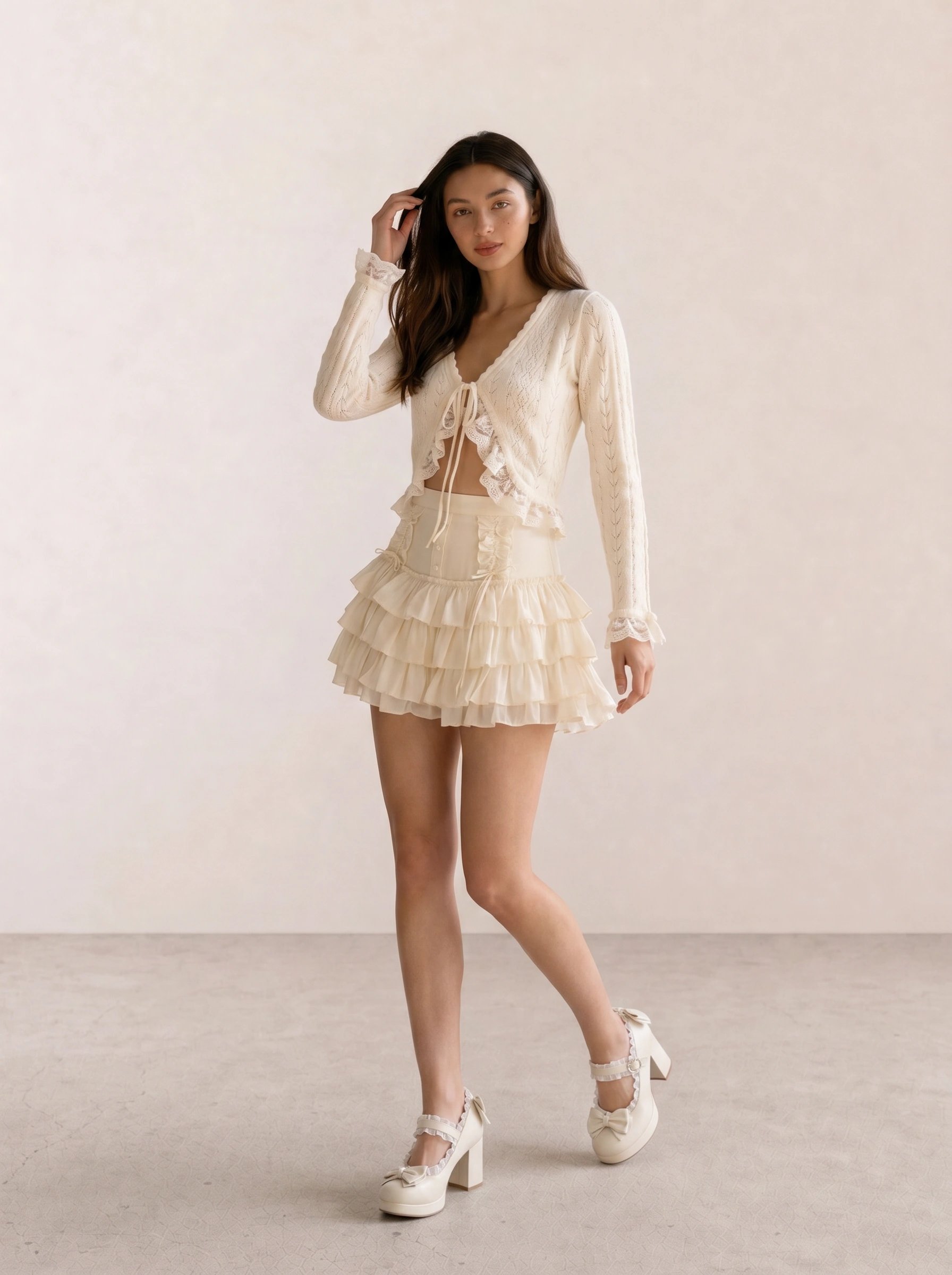
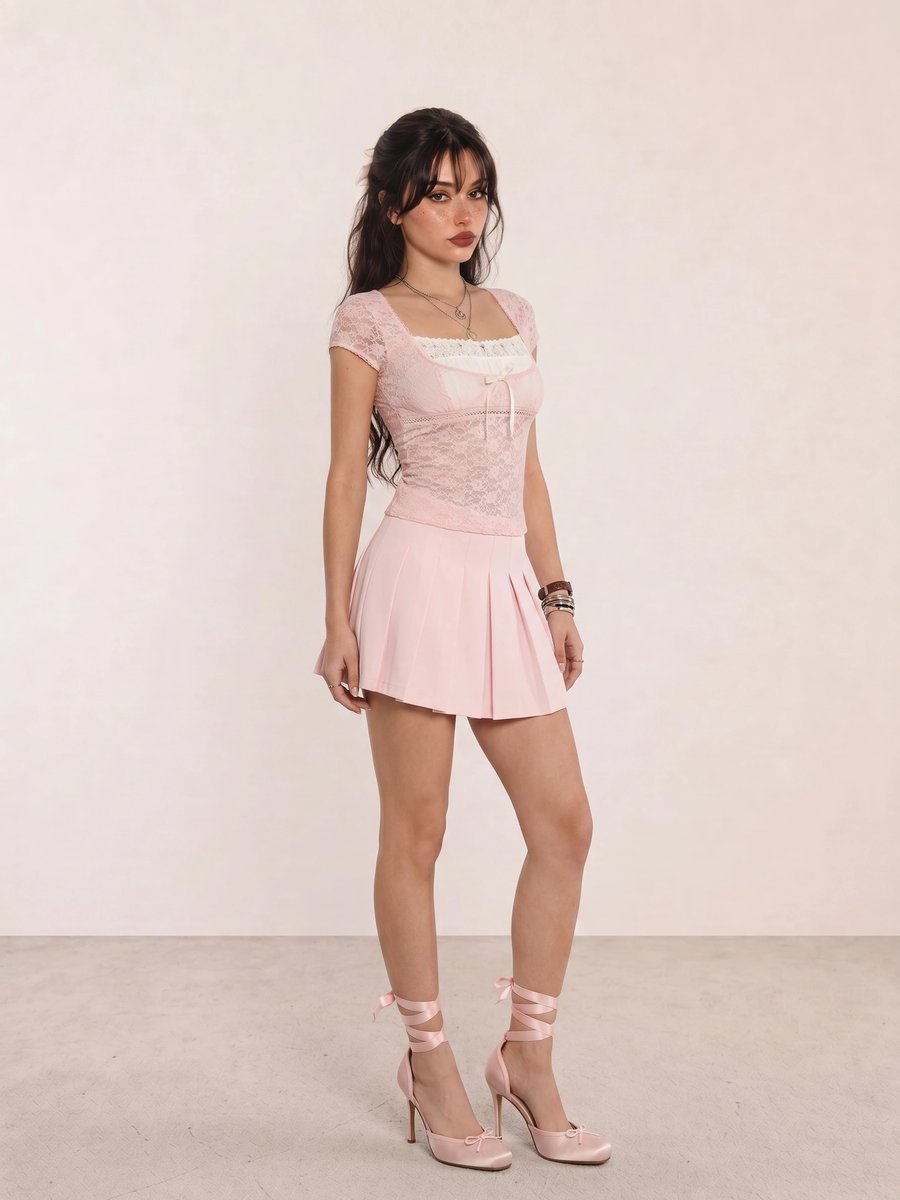
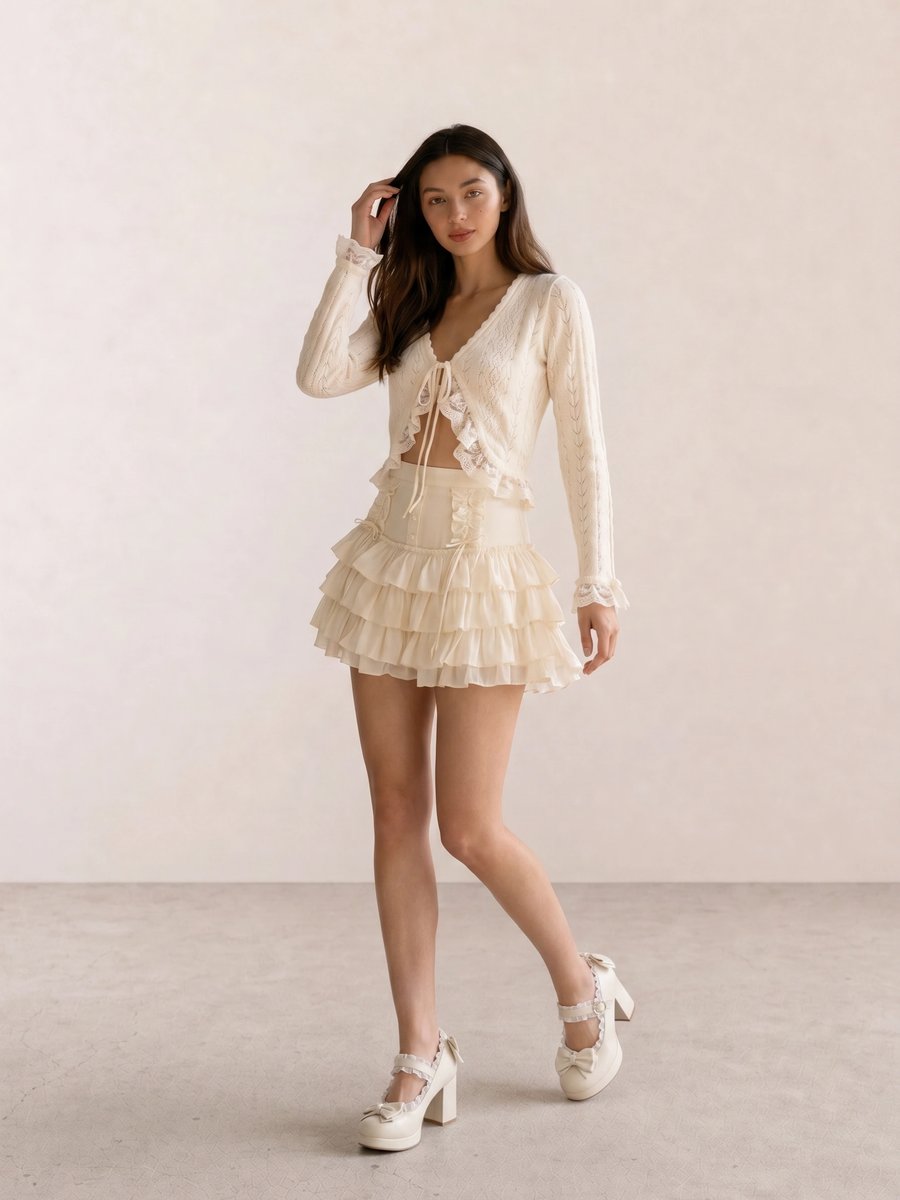
For coquette, the foundational formula is a lace or broderie anglaise crop top, a micro-pleated or tiered mini skirt, and either a satin ribbon belt or a bow hair accessory — one decorative element, not several. The Pink Lace Bow Crop & Pleated Mini is the clearest version of this silhouette: fitted lace on top, movement on the bottom, proportion anchored by the high waist. The Ivory Lace Ruffle Tie-Front Co-Ord takes the second approach: a coordinated set where the tie-front detail does the work of a bow without requiring a separate accessory. The coquette fashion essentials guide has a fuller breakdown of starting-point pieces.
For balletcore, the non-negotiables are a fitted wrap knit or cardigan (self-tie, not button-up), a high-waisted trouser or midi skirt with some movement, and ballet flats. The bag, if there is one, is a small crossbody or nothing. Leg warmers are optional but they signal the aesthetic immediately to anyone familiar with it. Avoid anything structured at the shoulder — balletcore deliberately plays down effort at the top and lets the layering logic do the work.
Styling Rules for Each Aesthetic
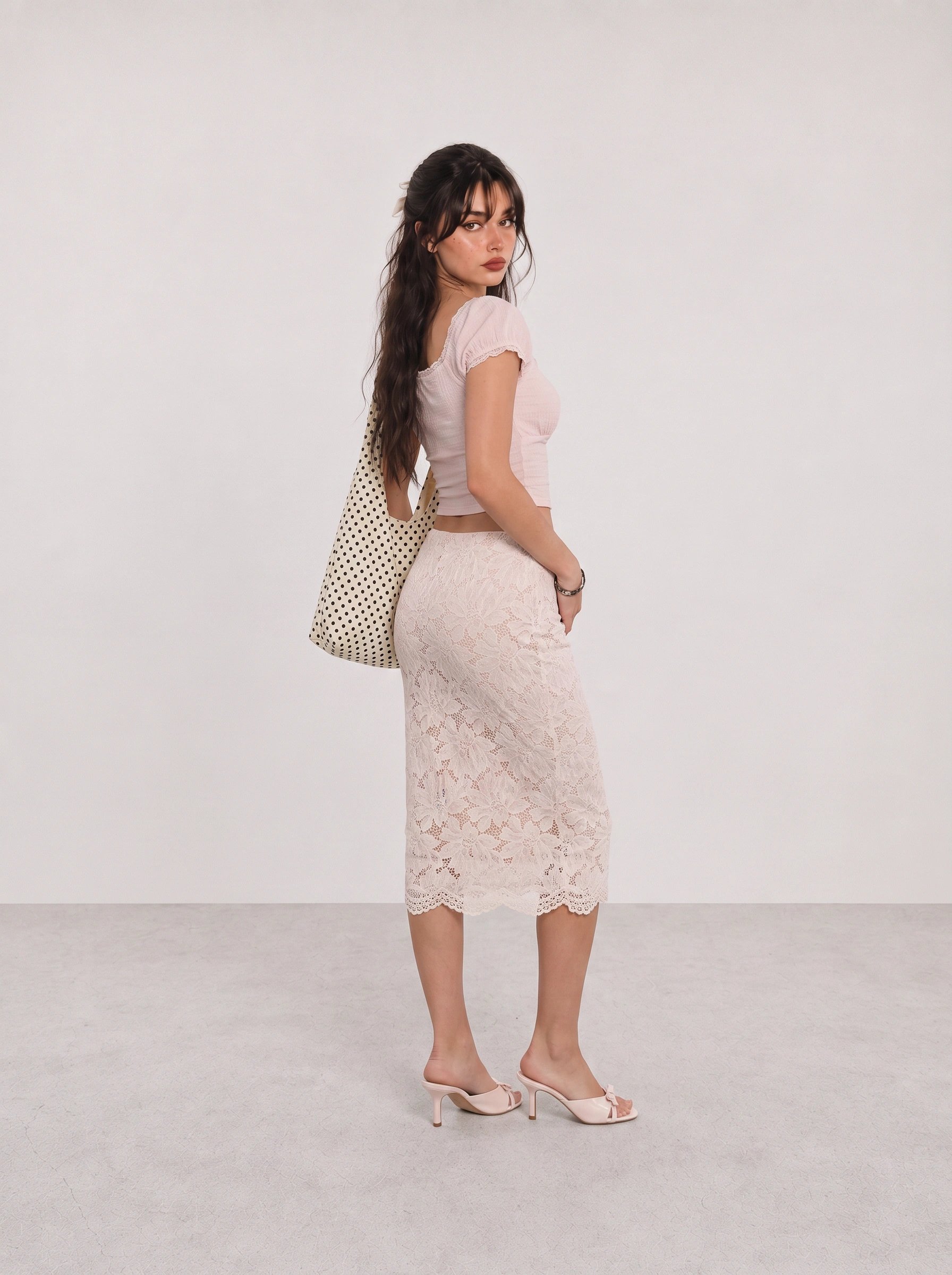
For coquette, keep the focal point singular. One lace detail, one bow, one texture statement per outfit — when every element competes for attention, the look tips from romantic to costume. The silhouette carries more weight than any single accessory. A well-cut pleated mini in the right length reads coquette without a single embellishment; add five bow clips and you've traded the aesthetic for a theme. Shoe choice also matters more than people expect — see the breakdown in the best shoes for coquette outfits for what actually works and why.
For balletcore, the layering logic matters more than individual pieces. A great wrap cardigan worn over a cheap jersey skirt still reads balletcore because the proportion is right. A ballet flat worn under an otherwise unrelated outfit just looks like you forgot to change shoes. Build from the silhouette out — get the relationship between the top and bottom layers right before adding anything else. The wrap tie at the waist or hip is doing structural work, not decorative work; treat it that way.
Common Mistakes (and How to Avoid Them)
The most consistent coquette mistake is adding too many bow details. One bow, placed at a waist seam or in the hair, outperforms five scattered across the look. At five, you're wearing a theme. At one, you're wearing an aesthetic. The second most common error is choosing a mini skirt that's too short for the lace top — the silhouette collapses when there's no proportional anchor at the high waist.
Balletcore has two consistent failure modes. The first is treating ballet flats as the whole aesthetic — flats without the layered, wrap-heavy silhouette just look like casual shoes. The second is using pastels that are too saturated. Balletcore's palette is deliberately muted, and anything too pink or too warm reads as coquette immediately. If the color looks like it belongs in a macaron box rather than a studio, pull back toward a cooler, more washed-out version.
Coquette Outfits That Show the Aesthetic Clearly
The Pink Puff Sleeve Corset Top & Fairycore Ruffle Skirt demonstrates coquette silhouette logic at its most committed. The puff sleeve creates volume at the shoulder; the ruffle skirt creates volume at the hem; the fitted corset waist anchors both. Without the corset fit at the waist, the two volume points compete instead of balancing — the look reads oversized, not romantic. This is the outfit that makes the proportion rule legible.
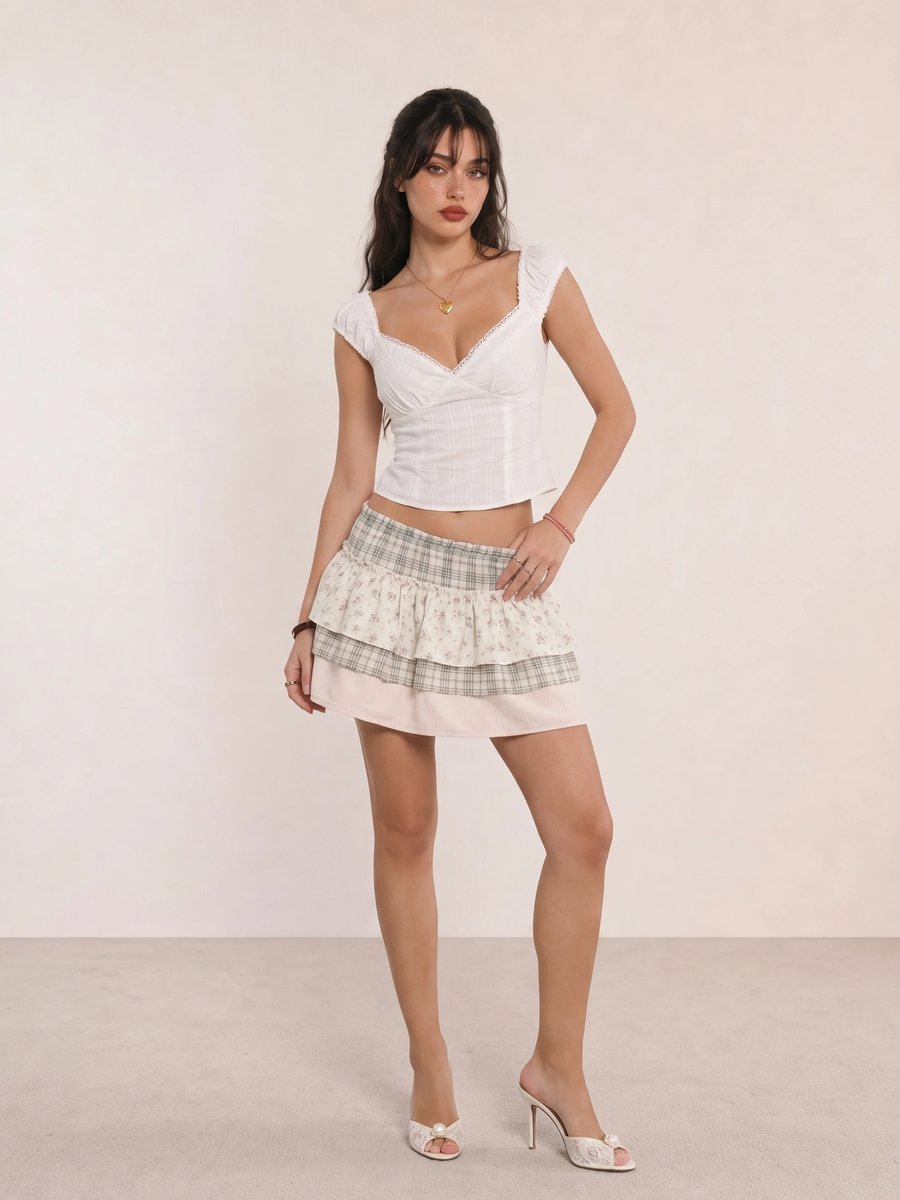
The White Lace Crop & Patchwork Tiered Ruffle Skirt takes a different approach: texture does all the structural work. The patchwork lace creates visual interest across the skirt without requiring additional accessories, and the white-on-white palette keeps the look from reading busy. This reflects where coquette is heading in 2026 — away from stacked decoration, toward texture-led restraint. It's also the better example for someone new to the aesthetic; one mechanism, clearly executed.
Worth noting: these outfits share almost no construction DNA with balletcore beyond the approximate color temperature. Coquette builds from decoration outward. Balletcore builds from proportion inward. Seeing that distinction clearly is what separates someone who dresses in an aesthetic from someone who dresses in a trend.
The Pink Lace Bow Crop & Pleated Mini is the most useful reference for explaining coquette to someone unfamiliar with the aesthetic — the lace crop adds texture, the bow adds the single decorative signal, the pleated mini introduces movement, and the high waist anchors the proportion. Every element is doing one specific job. That clarity is what makes it the clearest version of the aesthetic on this list.
For the Ivory Lace Ruffle Tie-Front Co-Ord, the coordinated approach removes one of the most common coquette styling problems: mixing textures that compete. When the top and bottom come from the same design logic — lace ruffle top, matching ruffle skirt, identical colorway — the outfit has cohesion built in. The tie-front at the waist does what a bow would do structurally without adding a separate accessory. For the accessories question more broadly, the coquette accessories guide and the breakdown of coquette color palette are worth reading together — they make the boundary between coquette and adjacent aesthetics considerably clearer.
Coquette vs. Balletcore: FAQ
Is coquette the same as balletcore?
No. They share a pastel palette and a feminine orientation, but the underlying logic is different. Coquette is built from decoration — lace, bows, satin ribbon — and a romantic cultural reference. Balletcore is built from layering and proportion, referencing a dancer's functional off-duty wardrobe. You can wear pastel and be neither. You can borrow from both and land somewhere in between. But at their cores, they're solving different aesthetic problems using different tools.
Can you mix coquette and balletcore?
Yes, but carefully. A ballet flat worn with a coquette mini skirt and lace top works well — the flat grounds the delicacy of the lace without competing with it. Where it falls apart is when you apply balletcore's layering logic on top of coquette's decoration logic simultaneously. Too much of both reads confused rather than intentional. Pick one aesthetic as the foundation, then borrow one element from the other. One element.
Is balletcore still relevant in 2026?
Yes, though it has evolved. The early 2023–2024 wave was heavily leg-warmer and wrap-cardigan focused, with some costume-leaning interpretations. In 2026, the aesthetic has absorbed cleaner, more minimal references — closer to Alaïa's body-conscious knit work than the more literal rehearsal-studio looks. Ballet flats themselves have had a sustained commercial moment across multiple seasons and show no signs of declining as a footwear category.
What shoes do you wear for coquette vs. balletcore?
For coquette: kitten heels, Mary Janes with a bar strap, or strappy flat sandals in leather or satin. For balletcore: ballet flats — specifically a structured version with a proper sole, not a foldable fashion flat. Leg warmers worn over tights with ballet flats are balletcore only; the same combination with a coquette outfit would contradict the entire silhouette. For a more detailed breakdown of what works for coquette specifically, the best shoes for coquette outfits covers the logic behind each option.
Which aesthetic is easier to style for beginners?
Coquette is more forgiving. A single good piece — a lace crop top, a pleated mini — reads correctly even without the full outfit built around it. Balletcore requires the layering proportions to work before it reads as intentional; individual balletcore pieces worn in isolation tend to look like basics. Start with coquette, borrow the ballet flat from balletcore once you understand the silhouette logic, and see how far one shoe change can shift an entire look's reference point.
Next, use the coquette wardrobe checklist, avoid common coquette styling mistakes, and shop the full cute coquette outfit edit.
Weekly outfit picks and style guides — no fluff, unsubscribe anytime.