Office vs Business Casual vs Workwear: Dress Code Differences
Office vs business casual vs workwear: learn the dress code differences, key pieces, outfit formulas, and what to wear when the brief is unclear.
STYLEFINDEN editorial review: checked before publication for wearability, proportion logic and real-life outfit use. We explain our editorial method and image policy on the About page and keep affiliate independence details in the affiliate disclosure.
A dress code becomes hard to read when the invitation gives you one vague word: “office,” “business casual,” or “workwear.” The labels overlap, but they ask different things of a blazer, a shoe, and the amount of formality you carry into the room.
Use this office vs business casual vs workwear guide to choose the right level before you get dressed. The useful question is not whether an outfit looks professional. It is whether its structure matches the meeting, workplace, and role you need it to serve.
What Is the Difference Between Office, Business Casual, and Workwear?
Office attire is the broadest category. It covers clothes suitable for a workplace, from a tailored suit in a formal firm to knitwear and trousers in a relaxed office. Business casual is a narrower dress code: polished separates without the full formality of a suit. Workwear is the practical wardrobe built for workdays, often with more repeatable pieces, comfortable shoes, and layers that can survive a commute.
The terms get confused because the same black trousers can belong to all three. Context changes the answer. Pair them with a matching blazer and a structured bag for a formal office. Add a fine knit and loafers for business casual. Wear them with a washable shirt, flat shoe, and roomy tote for workwear.
Where These Dress Codes Came From
Traditional office dressing borrowed its visual language from tailoring: matching jackets and trousers, pressed shirts, closed shoes, and bags that held documents without looking like luggage. Business casual grew out of workplaces that wanted the competence of that uniform without requiring a suit each day. The result was less about dressing down than changing the formula: separates took the place of a matched set.
Modern workwear added a third concern: the workday itself. A commute, shared desk, client meeting, lunch outside, and late train home make comfort part of the brief. That is why loafers, knit polos, flat boots, wrinkle-tolerant trousers, and a bag with actual capacity matter. A look can read refined without being fragile.
The Key Pieces That Set the Level
Start with the pieces that carry the most authority. A blazer signals structure first, so its cut and styling decide whether the outfit reads formal or relaxed. A matching trouser extends that formality. A separate trouser softens it. Shoes finish the decision: a pointed heel or polished slingback pushes upward; a loafer, sleek boot, or low block heel keeps the outfit grounded.
Fabric matters as much as the garment name. Dense suiting, crisp poplin, and smooth leather look more formal than ribbed jersey, washed cotton, or an oversized knit. You do not need to avoid casual texture. Give it one tailored partner. A soft top with clean trousers has a purpose; a soft top with slouchy pants and running shoes has changed the code.
For a compact workwear closet, own a dark blazer, two pairs of trousers with different rises or weights, a white or blue shirt, a fine knit, a neutral skirt or dress, a comfortable polished shoe, and one structured bag. Repetition is useful here. A work wardrobe earns its place by making weekday decisions easier.
How to Dress for a Formal Office
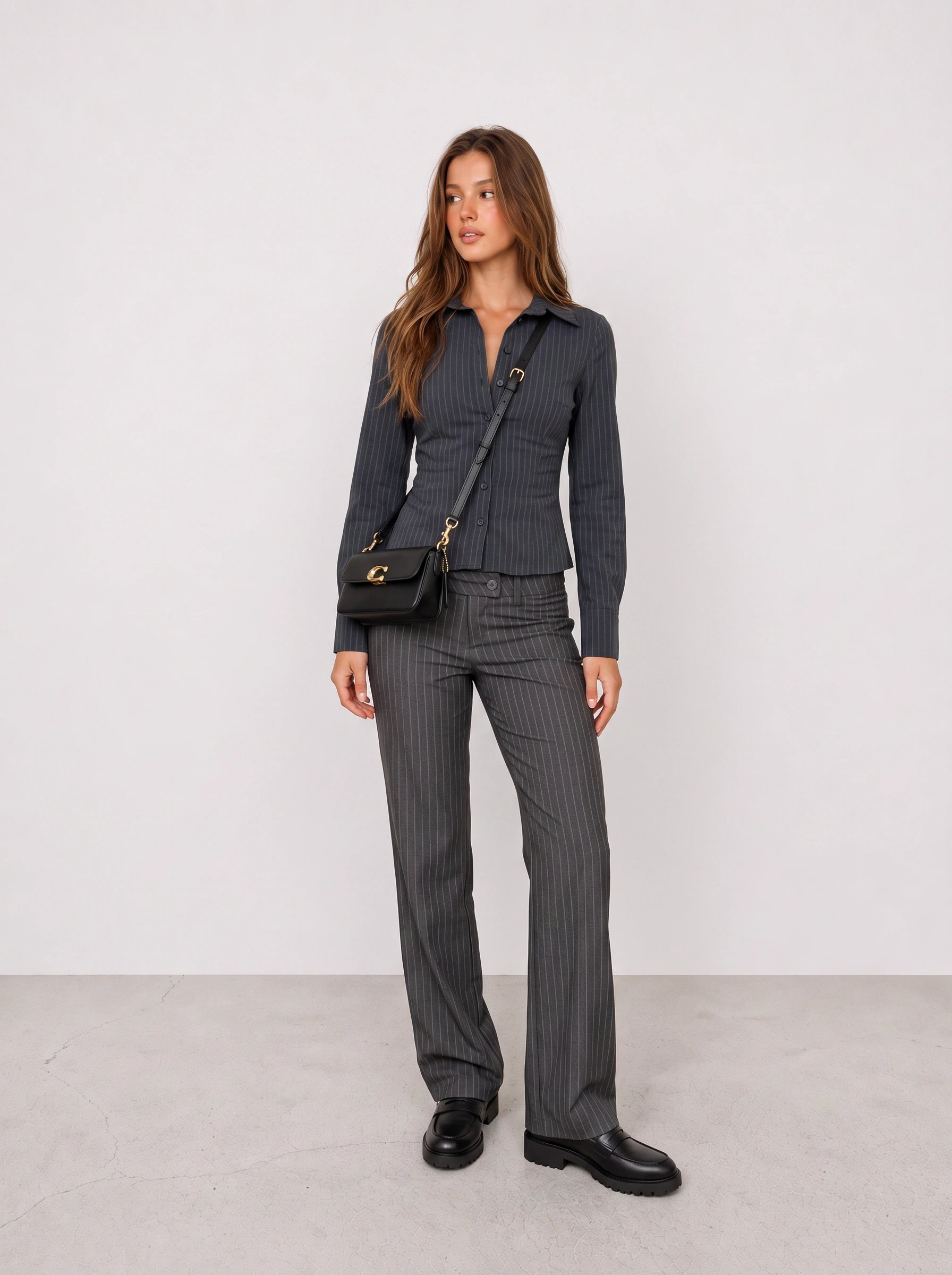
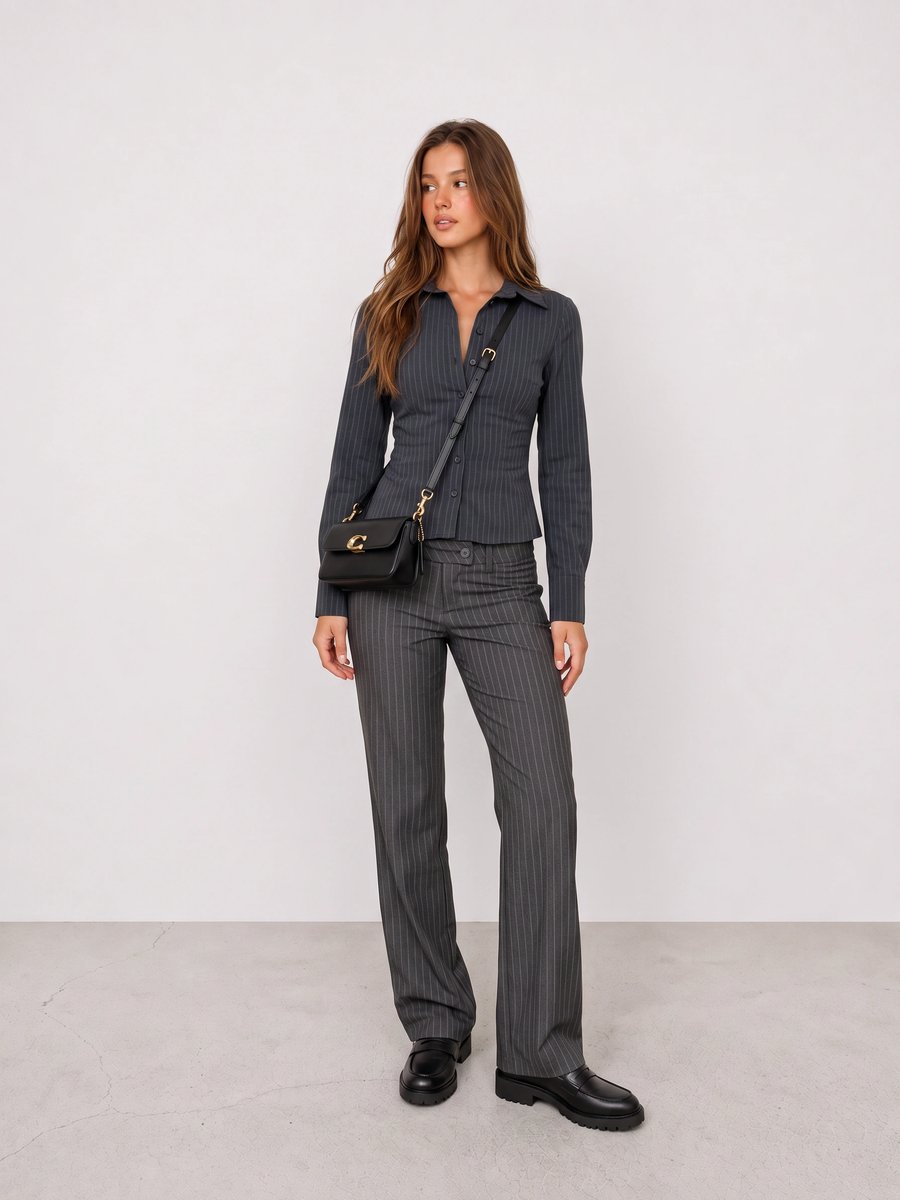
Charcoal Pinstripe Suit Office Outfit shows the formal office formula at its clearest: a charcoal pinstripe blazer, matching trousers, black loafers, and a compact shoulder bag. The matching fabric creates a continuous vertical line, while the loafers keep the suit useful for a full day.
A formal office does not demand a heel every time. The suit does the authority work. Without the matching jacket and trousers, the pinstripe would read closer to business casual, especially with a knit or tee underneath. Keep the bag structured and avoid a sneaker that breaks the line at the ankle.
Use this level for interviews, presentations, finance or law environments, and meetings where you are representing the company. When the room is unknown, a suit with a softer shoe gives you room to adjust without looking underdressed.
How to Dress Business Casual Without Looking Unfinished
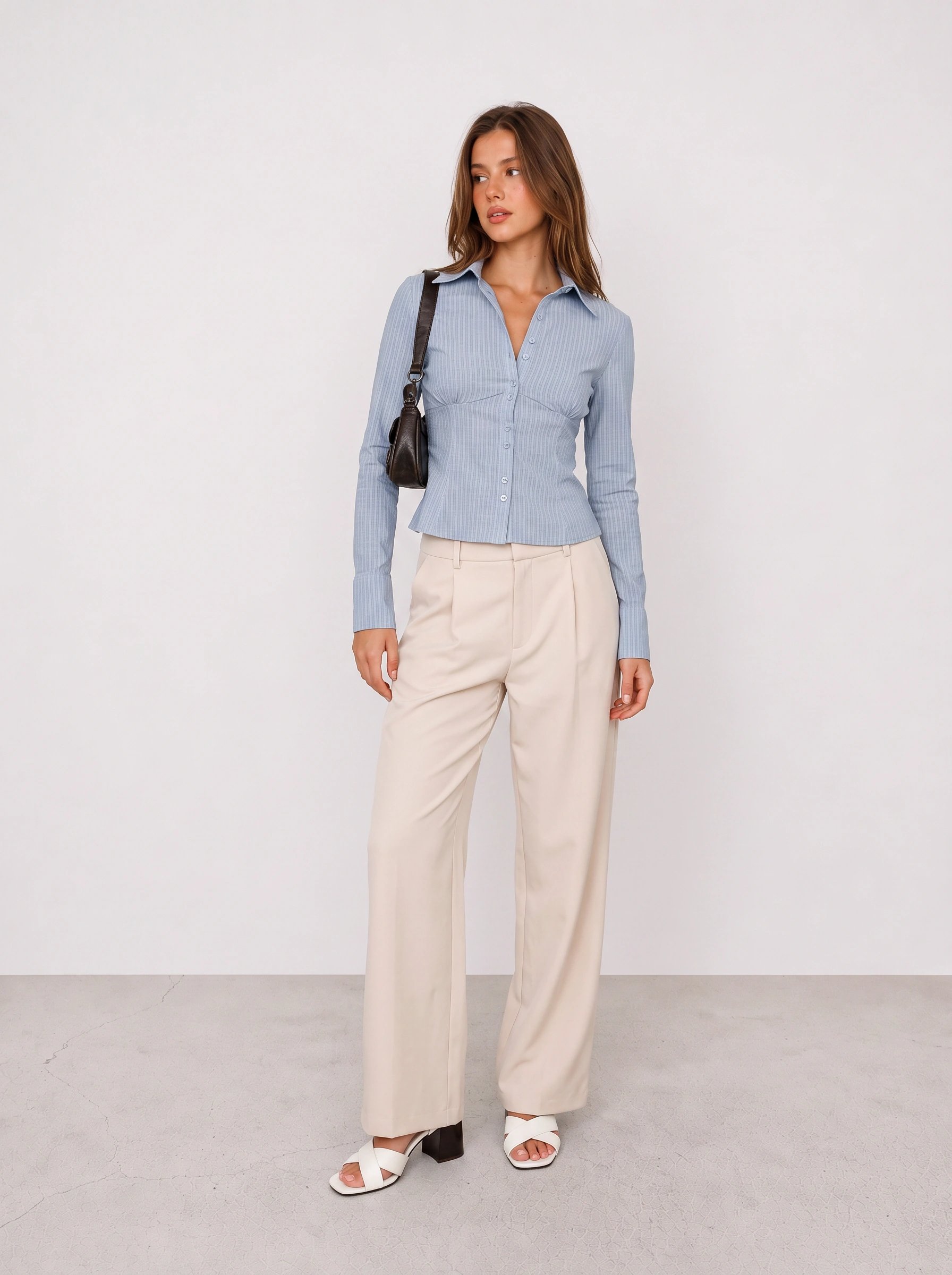
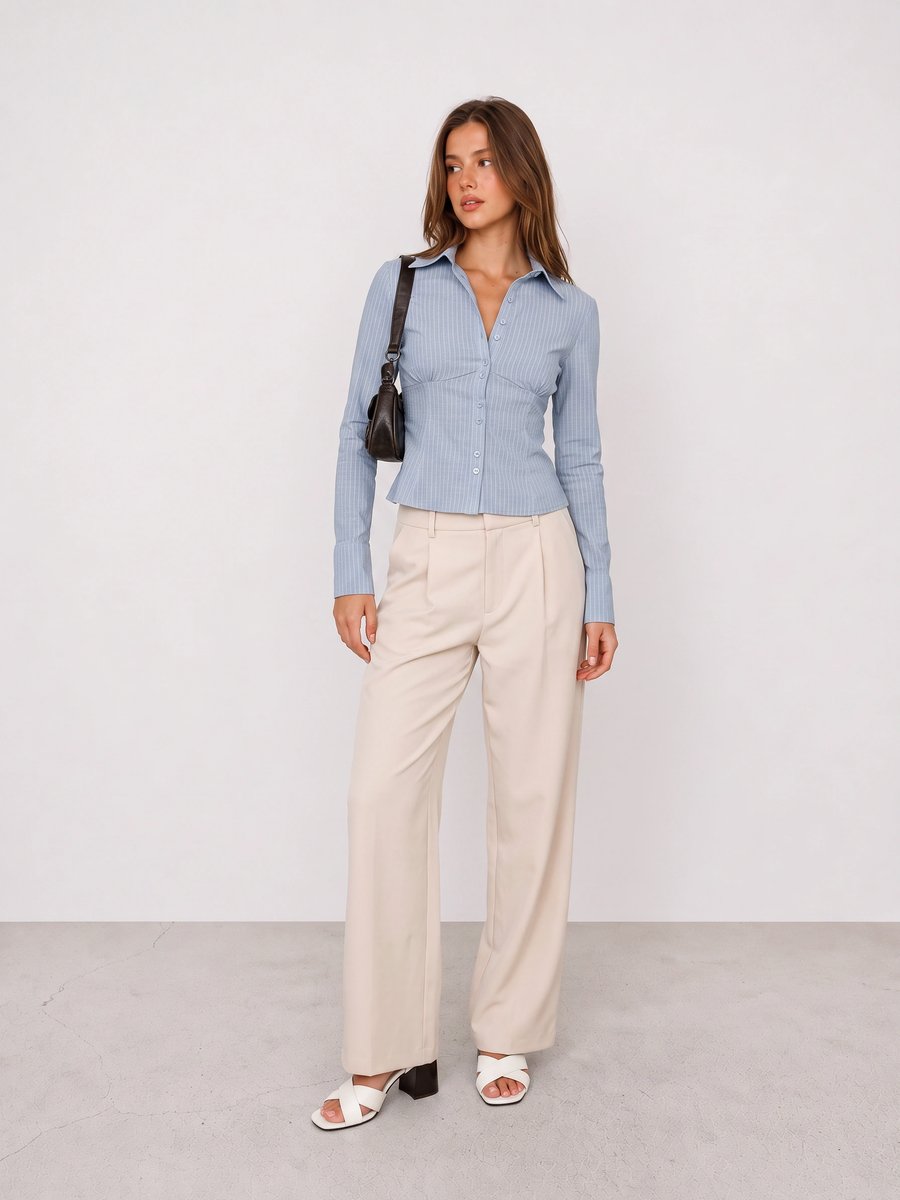
Blue Fitted Shirt and Cream Trousers Office Outfit uses a light blue fitted shirt and cream wide-leg trousers instead of a matched suit. The color contrast stays quiet, so the trousers look intentional rather than like an extra pair pulled from a weekend closet.
Business casual works through one strong tailored element. Here, it is the trouser. The fitted shirt keeps the upper half sharp, and the low block heel adds polish without changing the outfit into eveningwear. Without the clean trouser crease, the shirt-and-sandal combination would lose the work signal.
The common mistake is treating business casual as permission to remove all structure. A casual blazer over jeans can work in a creative office, but it needs a defined shoe and a clean top. Skip thin leggings, gym sneakers, distressed denim, and a large logo bag when the brief is business casual.
What Modern Workwear Looks Like
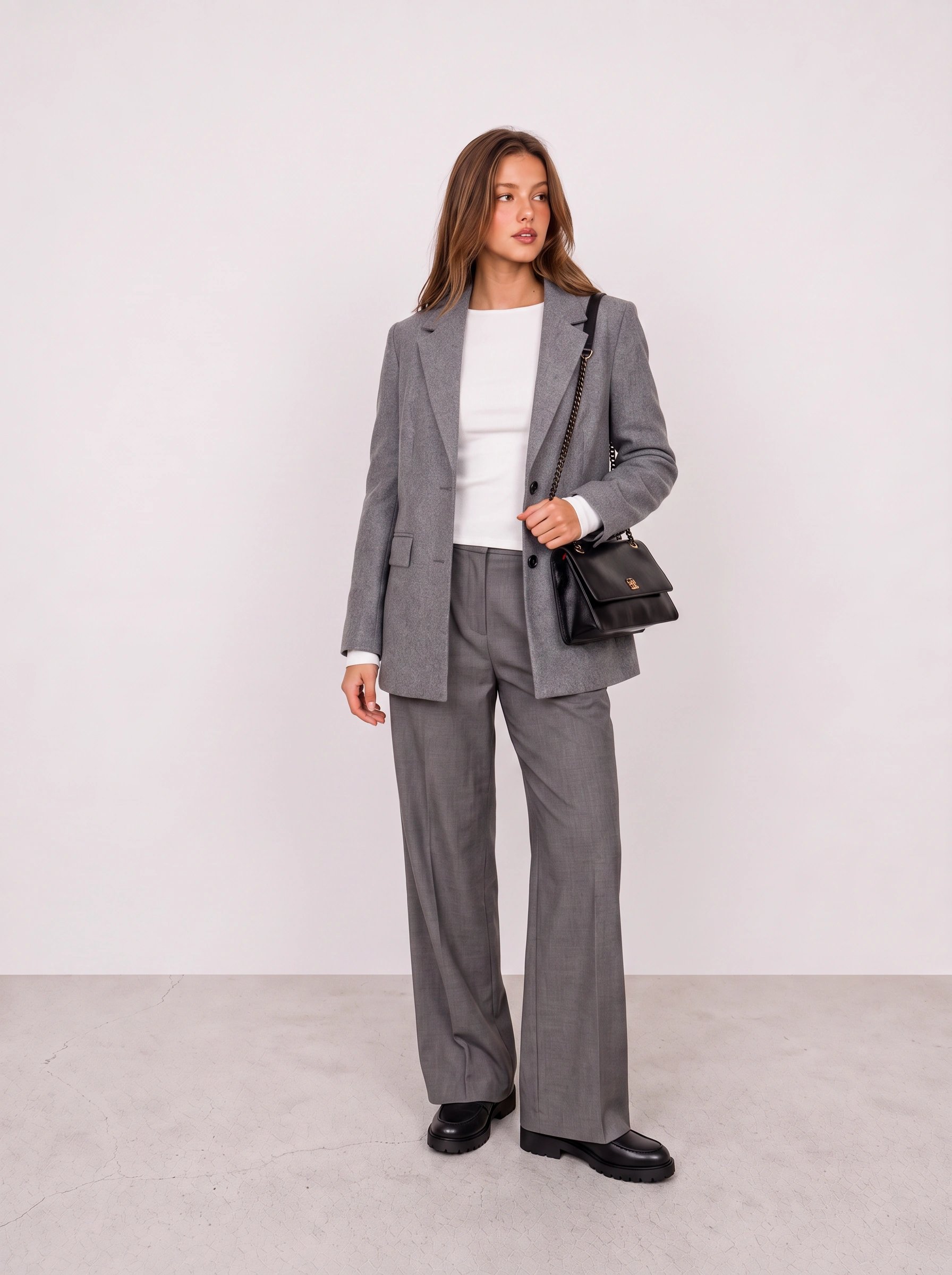
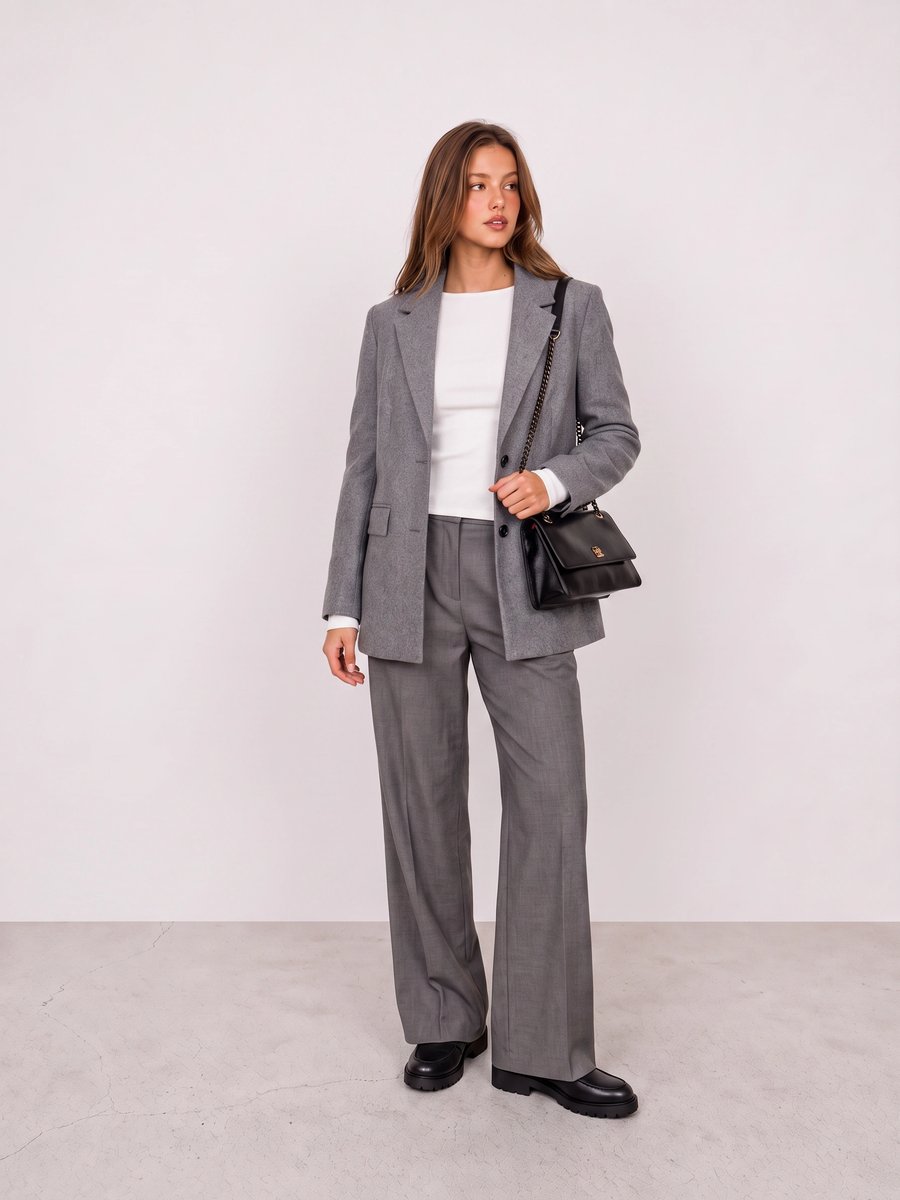
Grey Tailored Suit with White Tee Office Outfit shows why modern workwear is not a lesser version of formal office dressing. The grey tailored blazer and wide-leg trousers hold the shape; the white tee releases the stiffness. Black lug-sole loafers make the look walkable and give the light layers some weight.
The counterintuitive part is that a tee can make tailoring look more capable, not less. It removes the costume quality that appears when every piece is trying to announce authority. The blazer remains the focal point, so the outfit still works for a desk day, a coffee meeting, or an office with no written code.
Prioritize fabrics that recover after sitting, shoes you can walk in, and a bag that holds a laptop or notebook. Modern workwear should not require an outfit change at 5 p.m. It should take you through the day with one or two small adjustments.
Office Outfit Mistakes That Change the Dress Code
Too many statement pieces turn a professional outfit into a social one. A leather pencil skirt, a sharp heel, and a blazer can work together, but each needs a quieter partner. The same rule applies to color: one controlled contrast looks deliberate; three competing accents make the outfit harder to place.
Do not rely on one item to make a look professional. A blazer over a casual base cannot fix running shoes, a wrinkled tee, and an unstructured bag at once. Choose two signals that agree: trouser and shoe, blazer and bag, or shirt and skirt. That pairing gives the outfit a clear center.
Fit is the other trap. Oversized tailoring needs a visible line somewhere, such as a fitted knit, a tucked shirt, or a narrower shoe. A cropped blazer needs a trouser rise that meets it. When both halves are loose and the shoe is bulky, the body disappears under the outfit.
Office Outfit Examples for Different Workdays
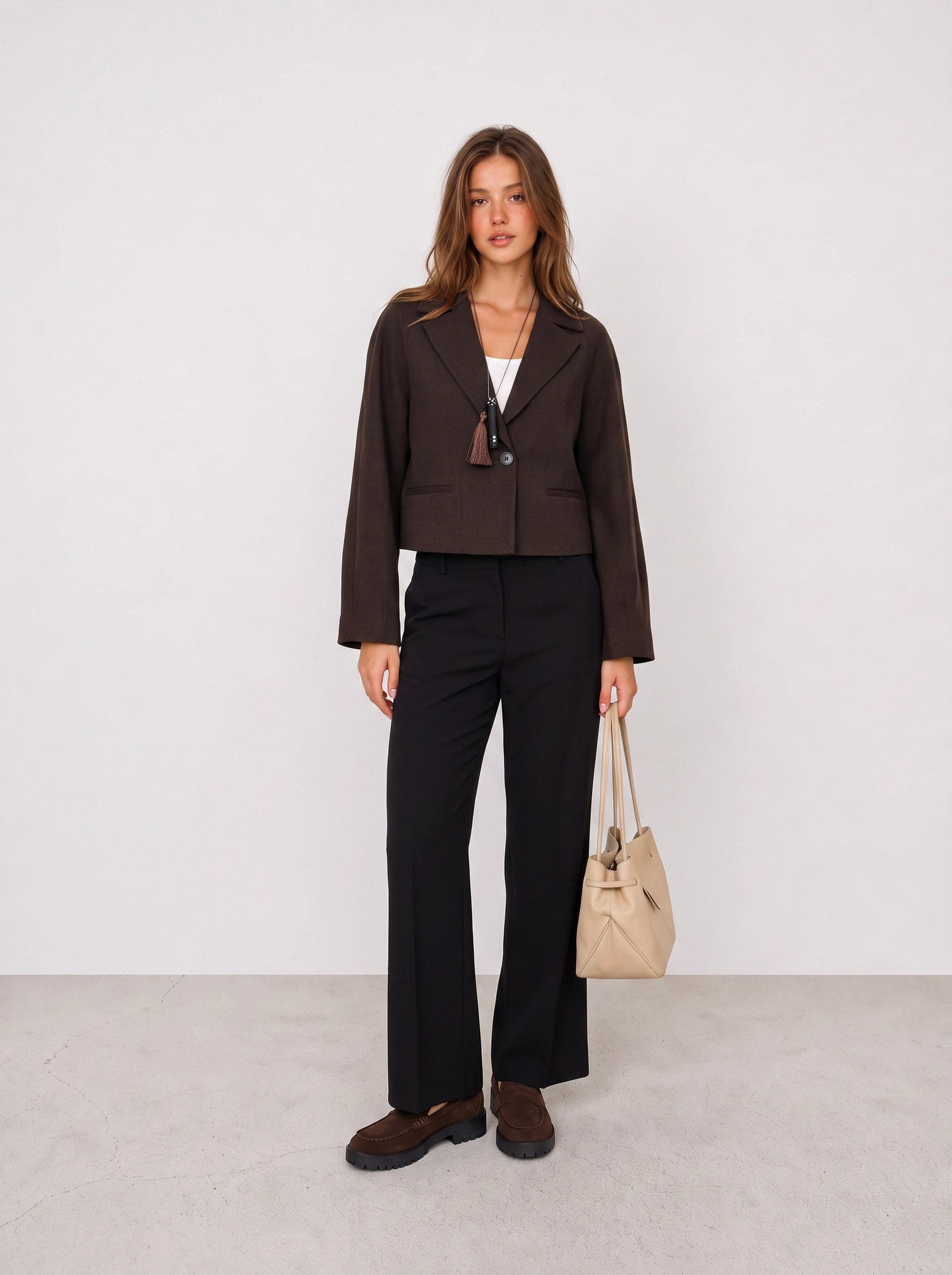
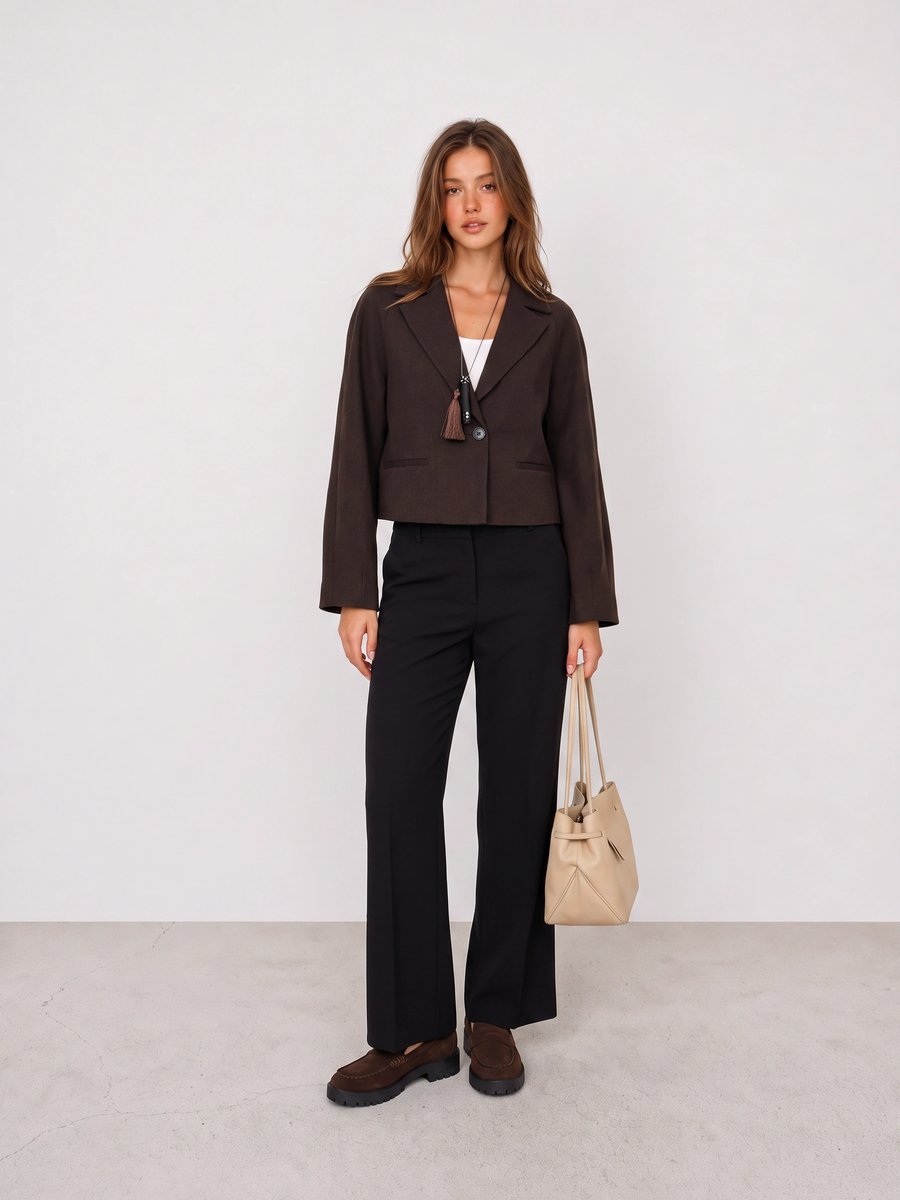
Brown Cropped Blazer and Black Trousers Office Outfit is a useful business-casual formula for a day with internal meetings. The cropped brown blazer creates a clear waist point above black wide-leg trousers; dark loafers keep the lower half steady. Without the shorter jacket, the wide trousers would need a more fitted top to keep the same proportion.
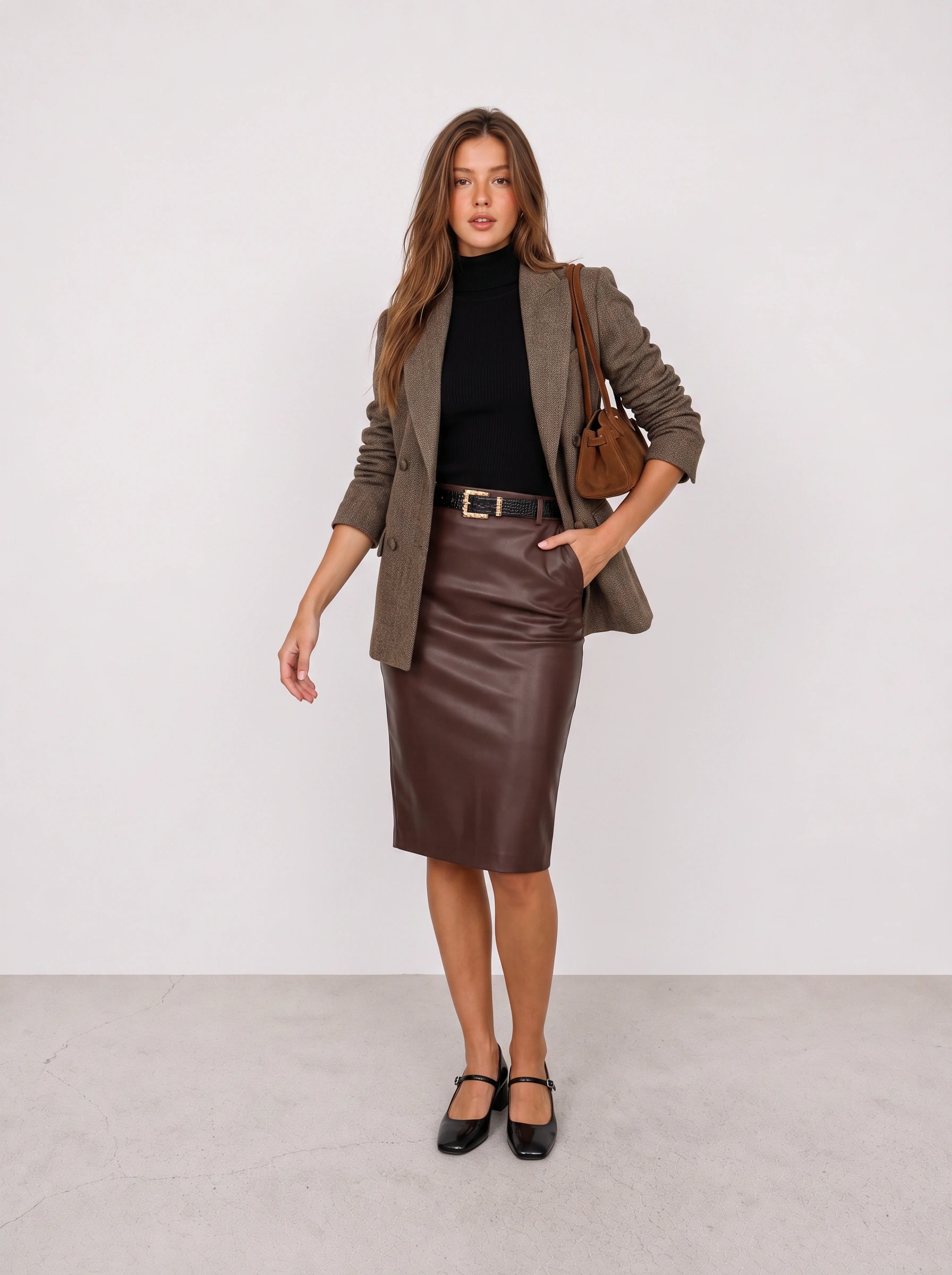
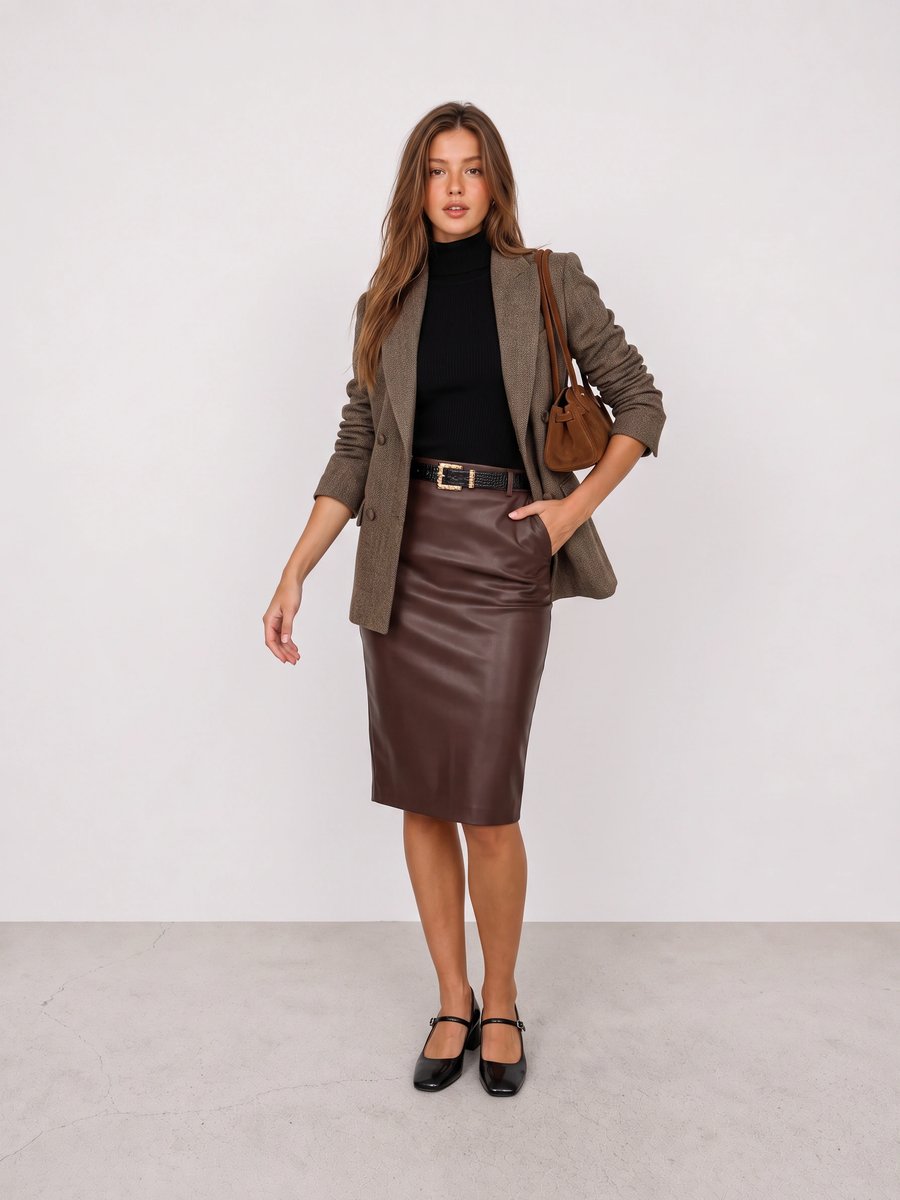
Brown Blazer and Leather Pencil Skirt Office Outfit suits a client-facing day when the office calls for more presence. The brown blazer repeats the warmth of the leather pencil skirt, while black Mary Jane heels draw a clean boundary at the foot. Keep the top simple. Another dramatic texture would make the skirt feel after-hours rather than work-ready.
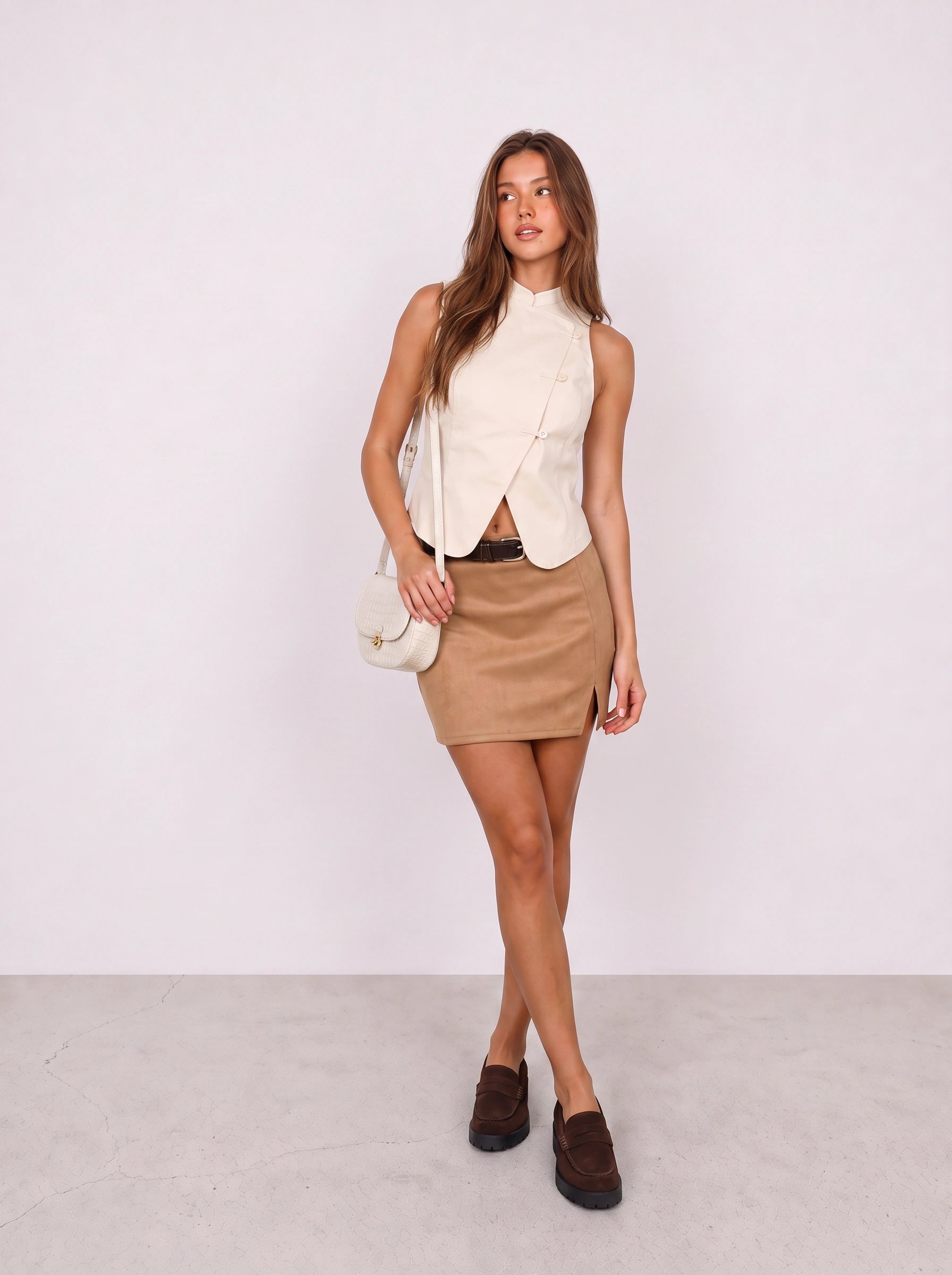
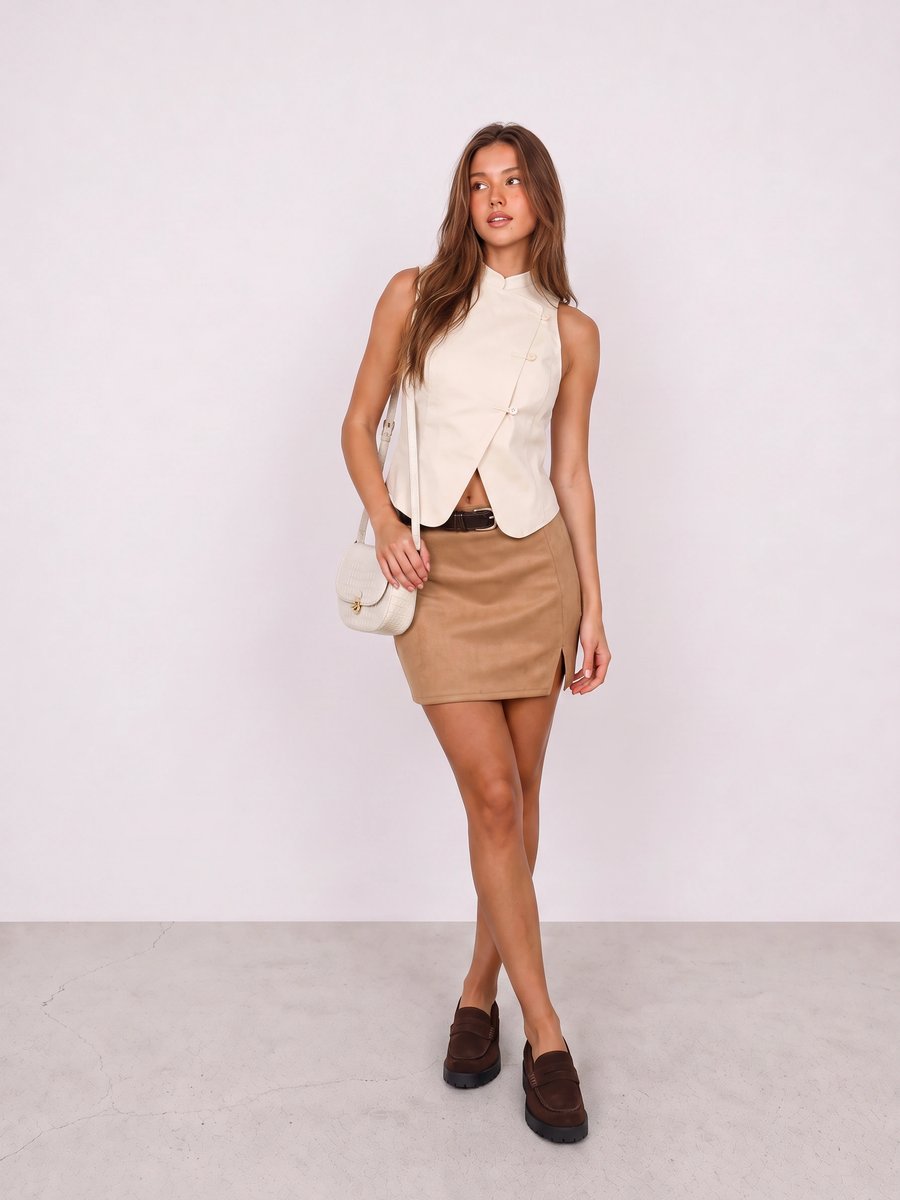
Cream Tailored Vest and Tan Mini Skirt Office Outfit belongs in a relaxed summer office with a clear casual policy. The tailored vest supplies the structure that a short hem removes, and the brown loafers make the outfit read daytime. For a conservative workplace, keep the vest and change the mini skirt for tailored shorts or a knee-length skirt.
What to Buy for Office, Business Casual, and Workwear
Spend more on the pieces that take physical wear and set the silhouette: trousers that hold their shape, a blazer with clean shoulders, and shoes you can stand in. A good mid-range blazer or trouser is often a better buy than a cheap suit with weak fabric, because you can separate the pieces and use them across all three dress codes.
At a budget level, build around one dark trouser, one light trouser, a crisp shirt, a fine knit, and loafers or low heels. Mid-range is where a second blazer, a structured tote, and a well-cut dress add range. At the investment level, look for a suit or coat you will wear for years, then keep the rest of the outfit simpler.
Buy for the code you live in, not the rare meeting you fear. If you wear a suit twice a month, choose separates that can become a suit when needed. If you commute five days a week, a durable shoe and bag will improve more outfits than another statement blazer.
Office vs Business Casual vs Workwear FAQ
What is business casual for women? Business casual combines polished separates with a relaxed level of formality: trousers, skirts, dresses, shirts, fine knits, loafers, and low heels are common choices. It usually avoids matched suiting, athletic clothing, distressed denim, and overtly evening pieces.
Can I wear jeans to a business casual office? You can wear dark, clean, non-distressed jeans when the workplace treats denim as business casual. Pair them with a tailored top, polished shoe, and a blazer or structured layer, then choose trousers for interviews, client presentations, and formal meetings.
Is workwear the same as business casual? Workwear overlaps with business casual but gives more weight to function. It favors repeatable layers, comfortable polished shoes, practical bags, and fabrics that handle commuting and long days.
What should I wear when the office dress code is unclear? Choose a tailored trouser, a shirt or fine knit, a polished flat or low heel, and a structured bag. Bring a blazer if you can. You can remove a layer when the office is relaxed, but you cannot add structure after you arrive.
A reliable office wardrobe gives you options without turning every Monday into a styling project. Read the room, choose two pieces that set the level, and let comfort do its proper job: support the day without becoming the entire message.
Weekly outfit picks and style guides — no fluff, unsubscribe anytime.