Retro Autumn Outfits: 70s-Inspired Looks for Fall
The 70s revival, dressed for the cold. Nine retro autumn outfits — flares on sneakers, minis on knee-high boots, and the burgundy-and-brown palette that only turns up once the temperature drops.
STYLEFINDEN editorial review: checked before publication for wearability, proportion logic and real-life outfit use. We explain our editorial method and image policy on the About page and keep affiliate independence details in the affiliate disclosure.
Retro dressing does not survive the temperature drop unchanged. The flares and the lace and the earthy browns all still work in October, but the shoes change, the hemlines change, and the things you can actually leave the house in narrow down fast. This is the seasonal half of the 70s revival: what stays, what has to be swapped, and what the autumn versions of these looks really consist of.
Autumn Splits Retro Into Two Wardrobes
Across the nine retro-vintage outfits in the autumn edit, there is a clean division and it runs through the shoes. Four of them are casual, five are built for going out, and the footwear tells you which is which before you look at anything else. Every single one of the five going-out looks is on a boot or a heel. Not one of them is on a sneaker.
The casual half is where the sneakers live, and they are doing something specific: they are holding up denim. Both of the jeans outfits in this edit — the bell-bottoms and the flares — are worn with sneakers and only with sneakers. Retro denim and a heeled boot is not a combination that appears here at all, and that is worth noticing, because it is the pairing most people reach for first.
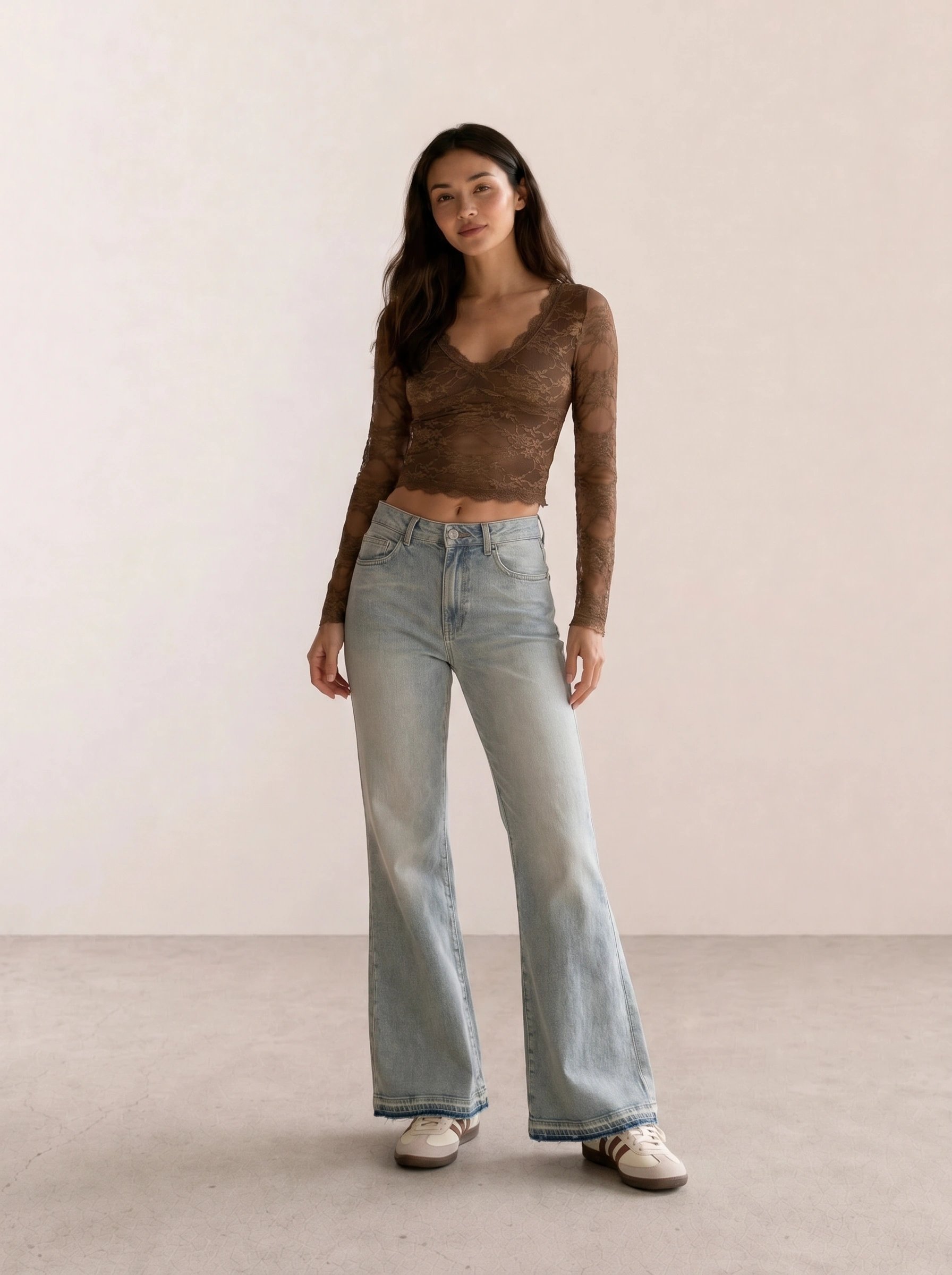
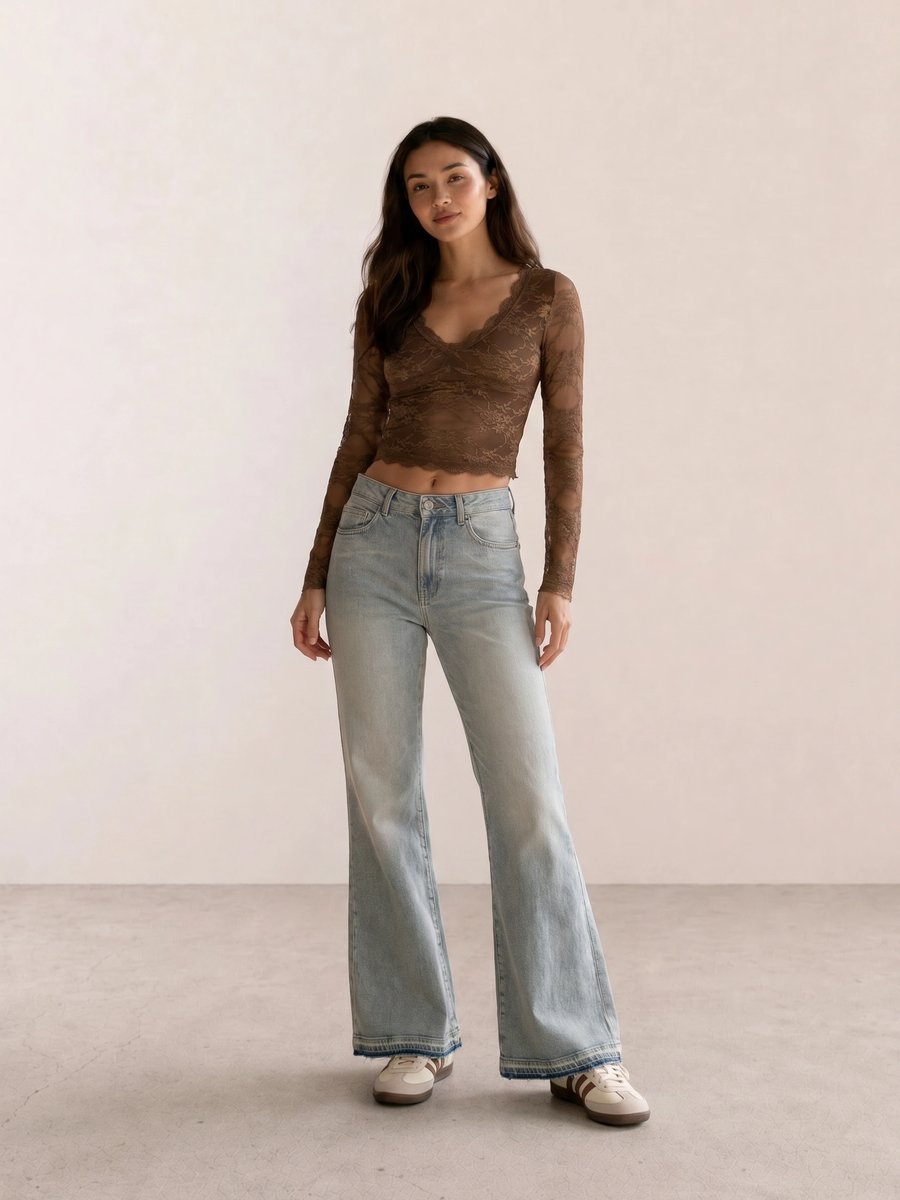
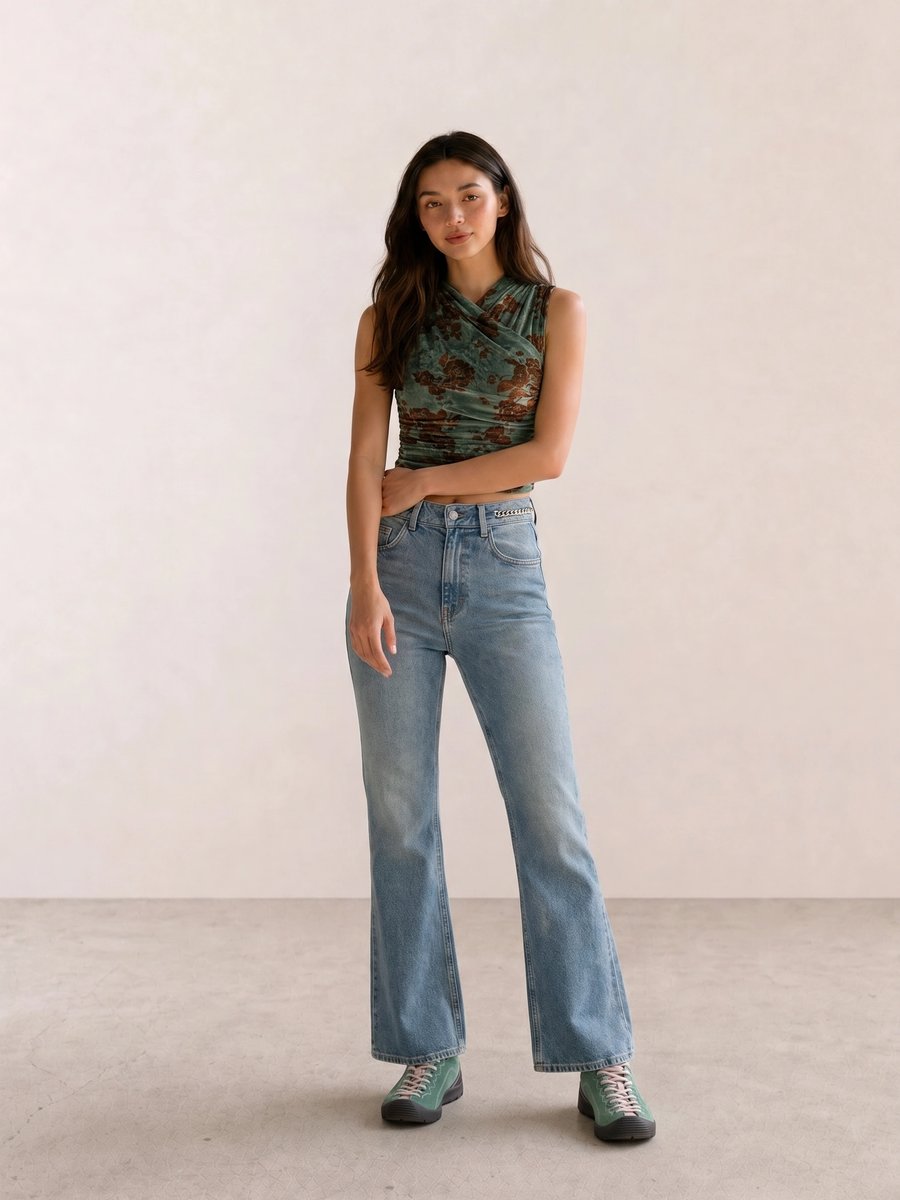
The lace crop with the bell-bottoms is the template for the casual side. The lace does the decorative work so the denim does not have to, and the cream suede sneaker keeps the whole thing on the ground. The green velvet wrap top with flare jeans runs the same play with a different texture — velvet instead of lace, teal sneaker instead of cream — and it is the one outfit in this edit with no brown in it at all.
Why Flares Need a Flat Shoe in October
The bell-bottom is a wide, long, heavy leg. It is designed to break over the top of the foot and it needs enough shoe underneath it to keep the hem off the pavement — but the moment you put a heel under a flare, the hem rises, the break disappears, and the trouser starts reading as a slightly-too-long straight leg instead of a flare. The retro sneaker solves this. It has volume, it has a thick sole, and it has no lift at the back.
This is also the practical answer for autumn. A flare hem drags in wet weather, and a chunky sneaker is the shoe that lets you wear one anyway. It is why both denim outfits here land on the same footwear without any coordination between them, and it is the difference between a 70s trouser that works in October and one that lives in the wardrobe until spring.
Boots and Heels Are What Make Retro a Night Look
Turn to the going-out half and the shoe changes completely. Three of the five evening looks are on a knee-high boot, and the other two are on a heel — a stiletto sandal and a block-heel mule. The boot is doing more here than keeping you warm: it is the piece that lets a short retro hem work in cold weather at all.
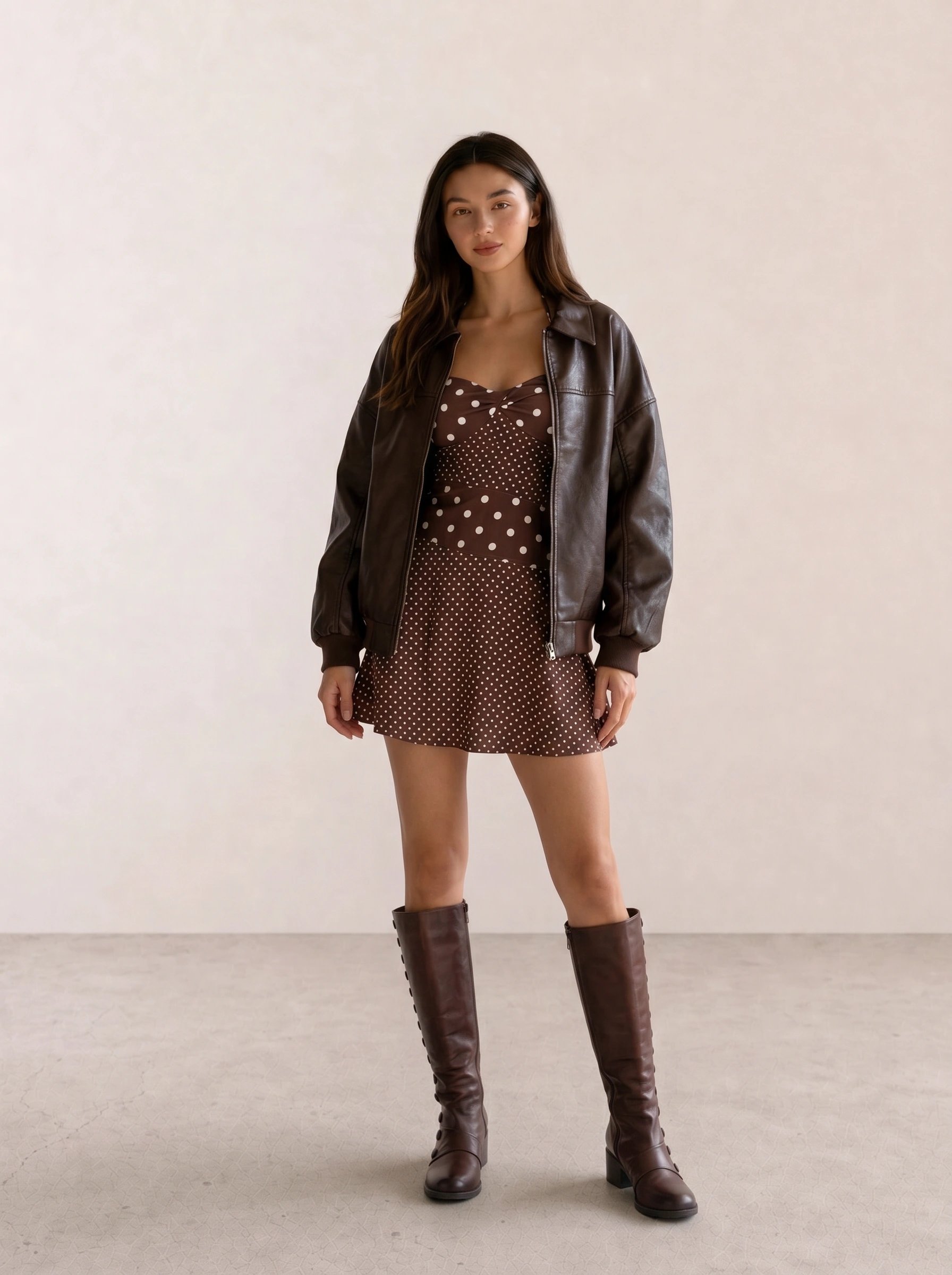
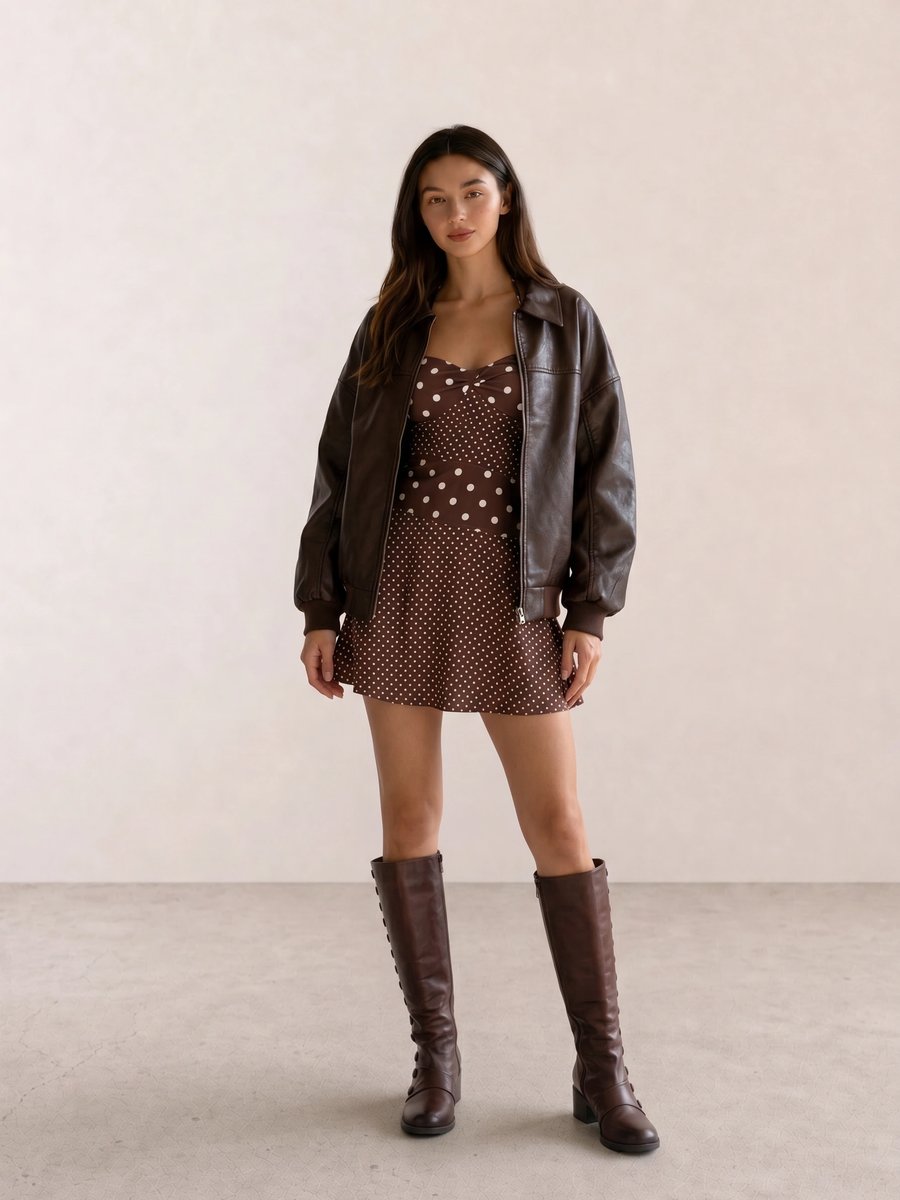
The polka dot mini with the oversized leather jacket is the clearest example. The dress alone is a summer garment. The knee-high boot closes the gap between hem and knee, the leather jacket closes the gap at the top, and what is left exposed is a few inches of leg rather than the whole of it. This is how the mini survives autumn: not by getting longer, but by getting bracketed at both ends.
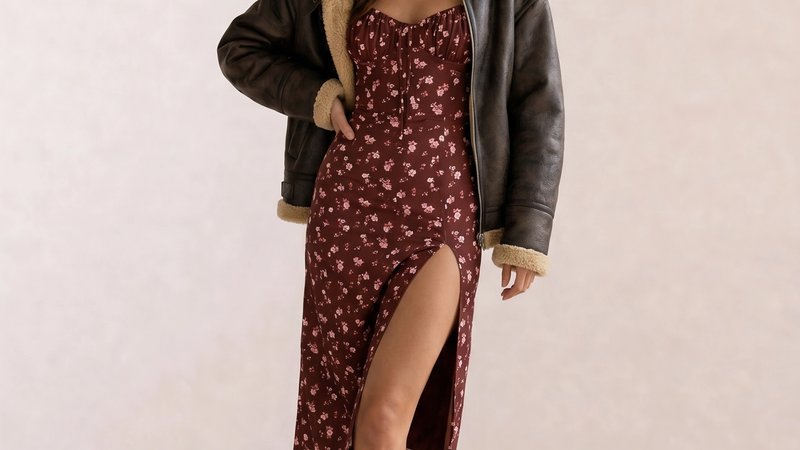
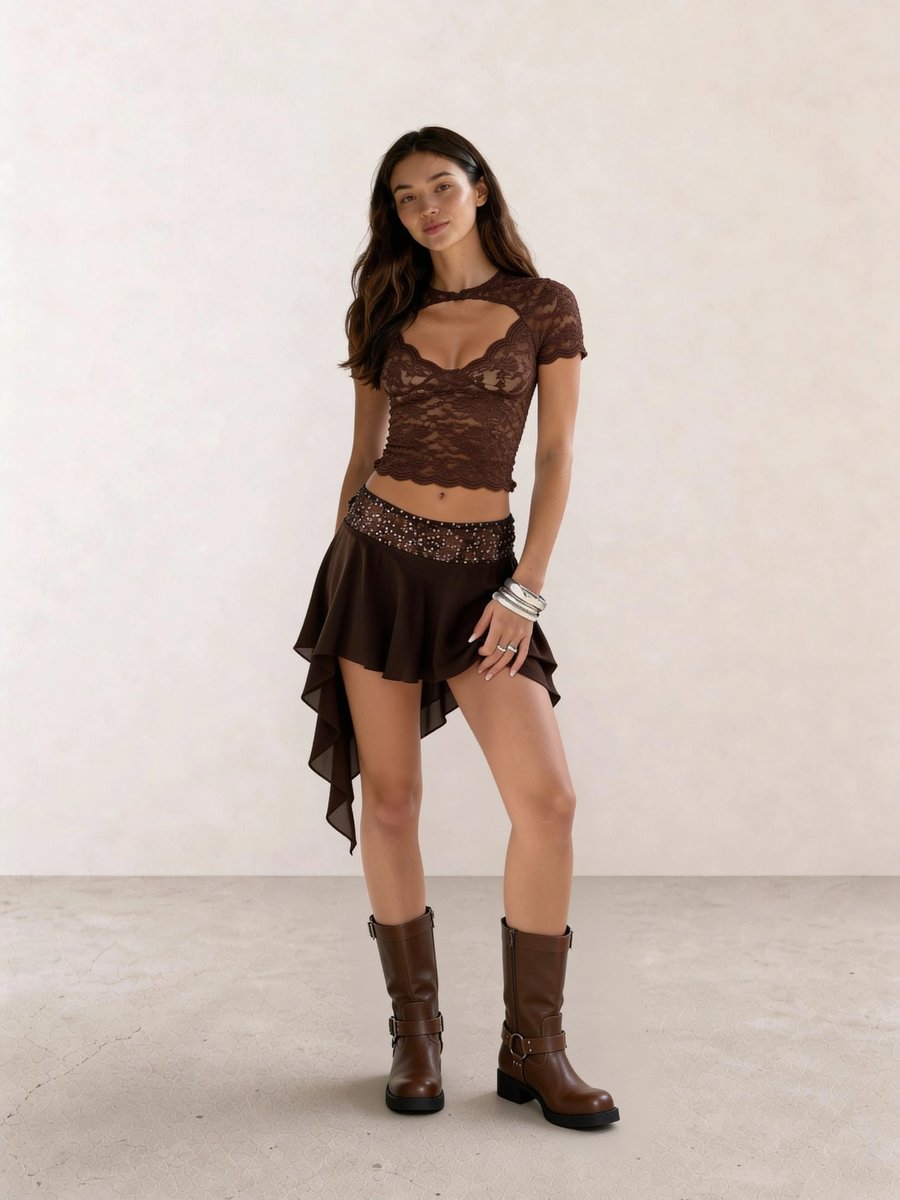
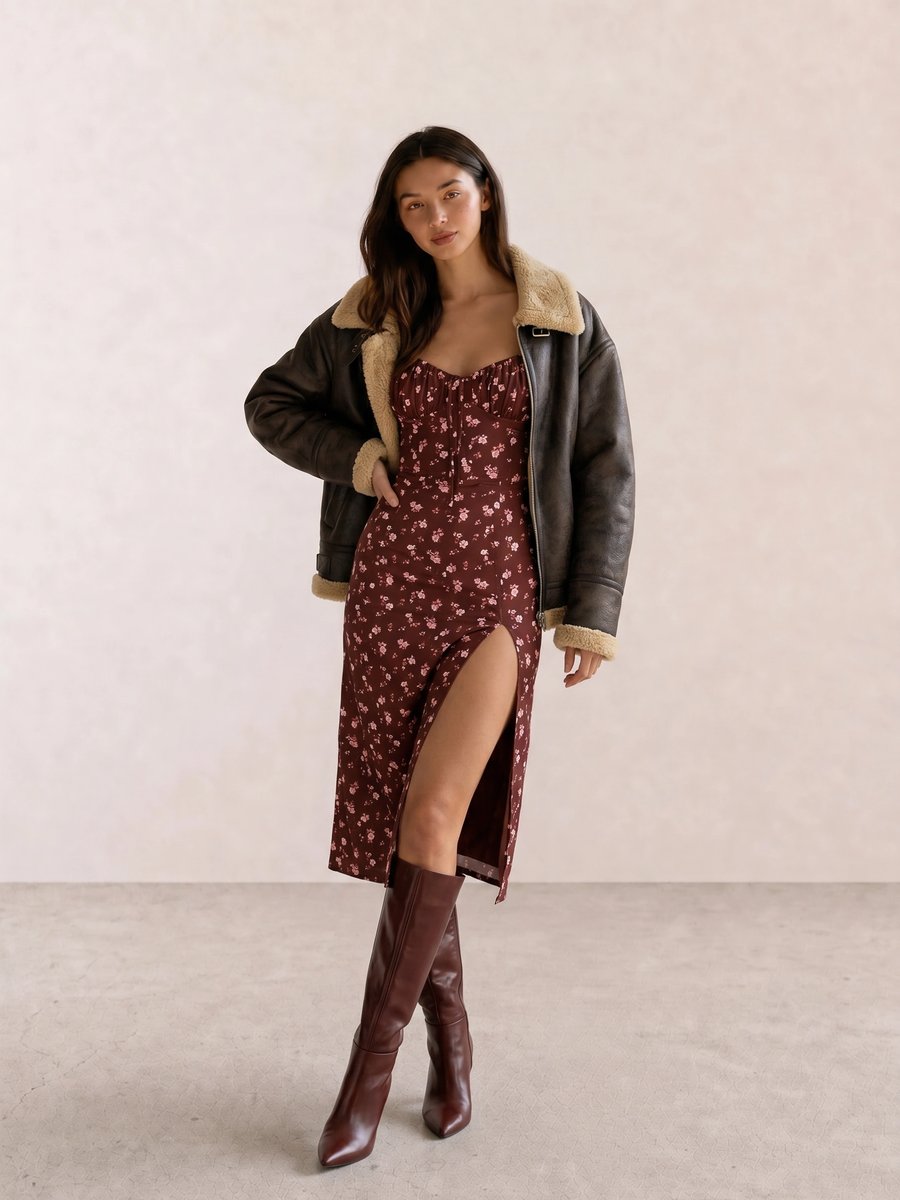
The same logic runs through the sequin handkerchief mini with harness boots, and through the floral slit midi under a shearling-collar jacket — the two outfits in this edit that carry real outerwear. Those jackets are the only genuine cold-weather layers in the nine, which is honest to say: most of these looks are transitional autumn rather than deep winter, and they are dressed for a taxi rather than a long walk.
Burgundy Is the Colour That Only Turns Up in Autumn
Brown carries this edit — eighteen of the twenty-nine pieces across the nine outfits are brown, and three of the outfits are brown from top to toe. But brown is not the seasonal signal. Brown is retro all year round.
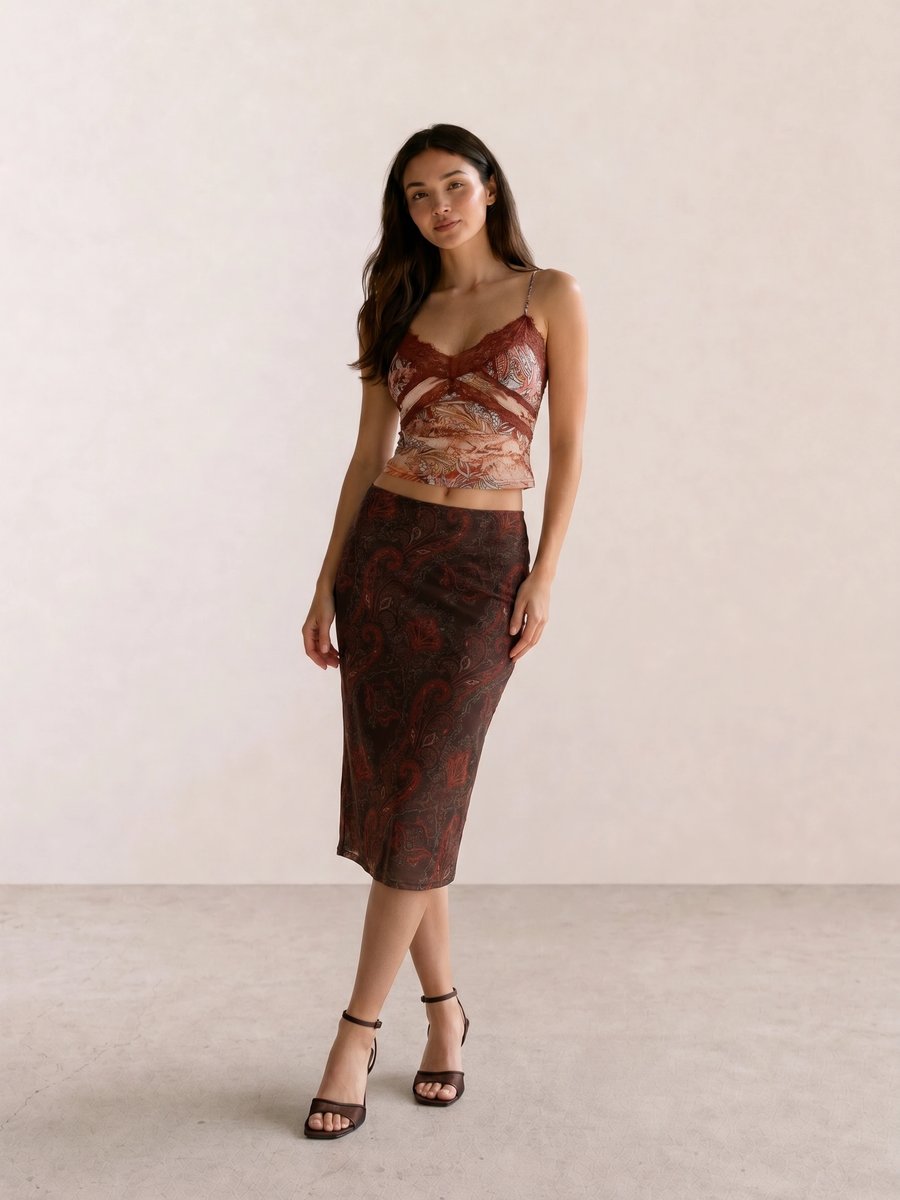
Burgundy is the seasonal one. It appears in three of these nine outfits and nowhere in the warm-weather retro looks, and it is doing the job that black would do in a non-retro wardrobe: it is the dark anchor that makes an earthy palette read as autumn rather than as summer boho. The burgundy paisley cami over a dark brown midi is the purest version — two dark tones, one print, no contrast at all.
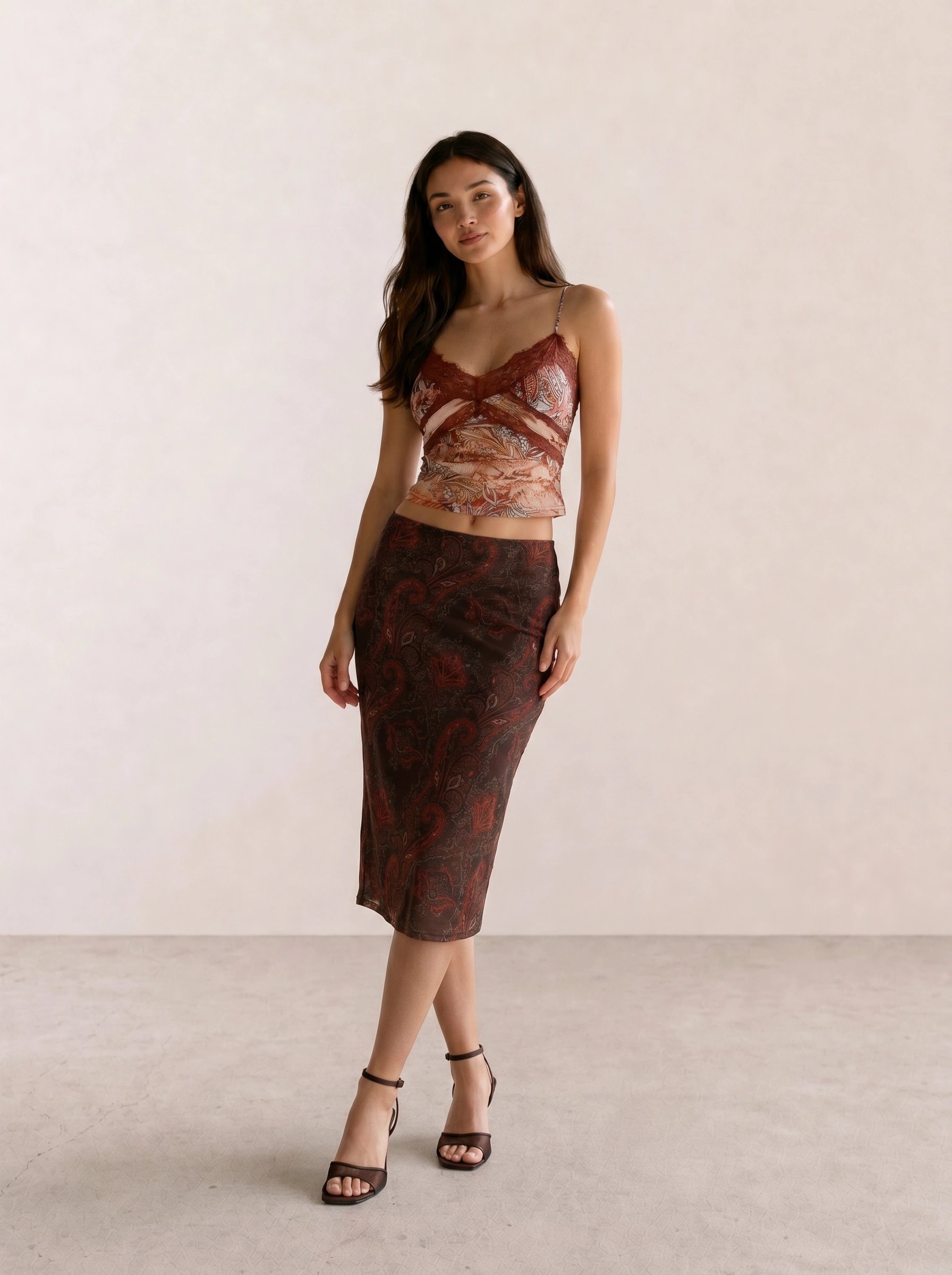
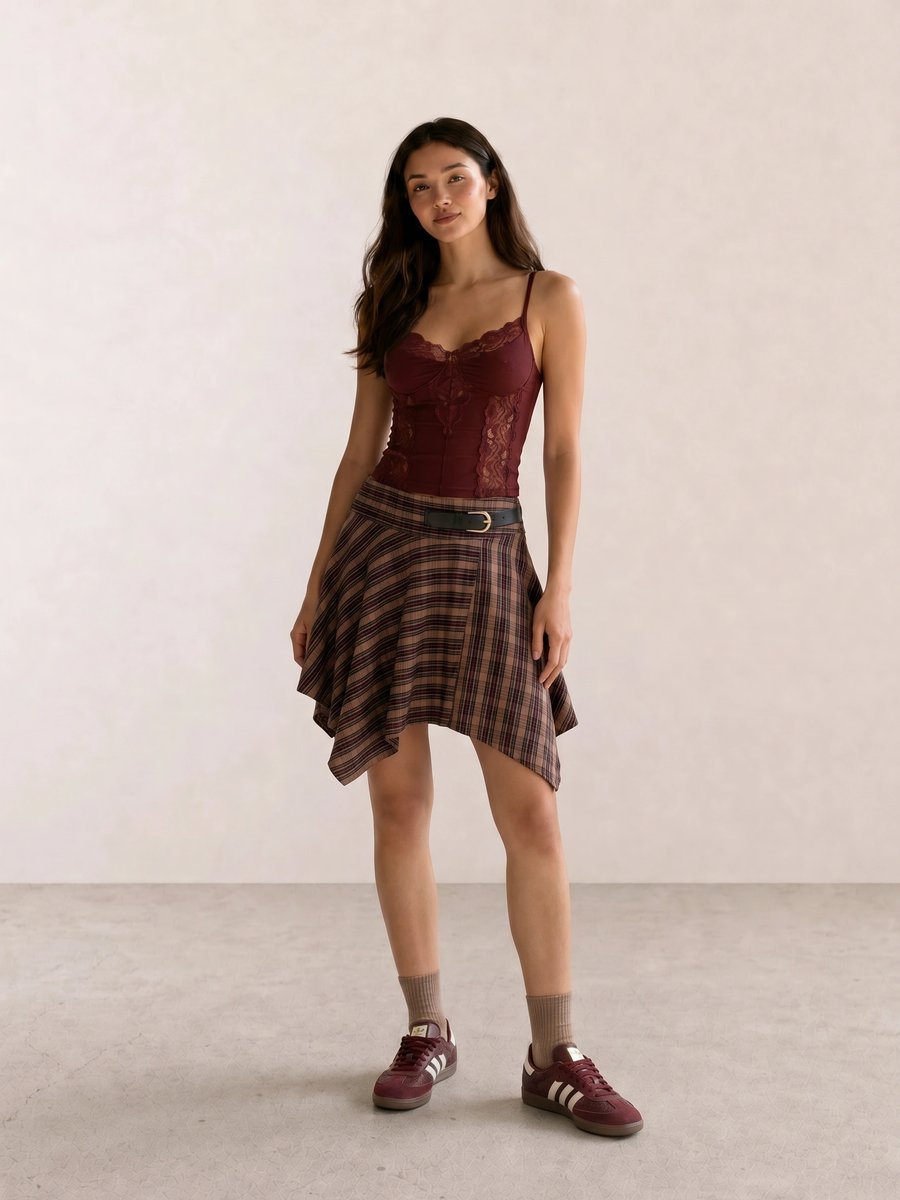
If you own one retro piece in burgundy, make it a top. In all three of the burgundy outfits here it lands above the waist — as a cami, as a bustier, as the print in a dress — and never once on the skirt or the trousers. The bottom half stays brown. That is the easiest colour rule in this whole edit to copy.
Texture Is Doing the Work That Print Used to Do
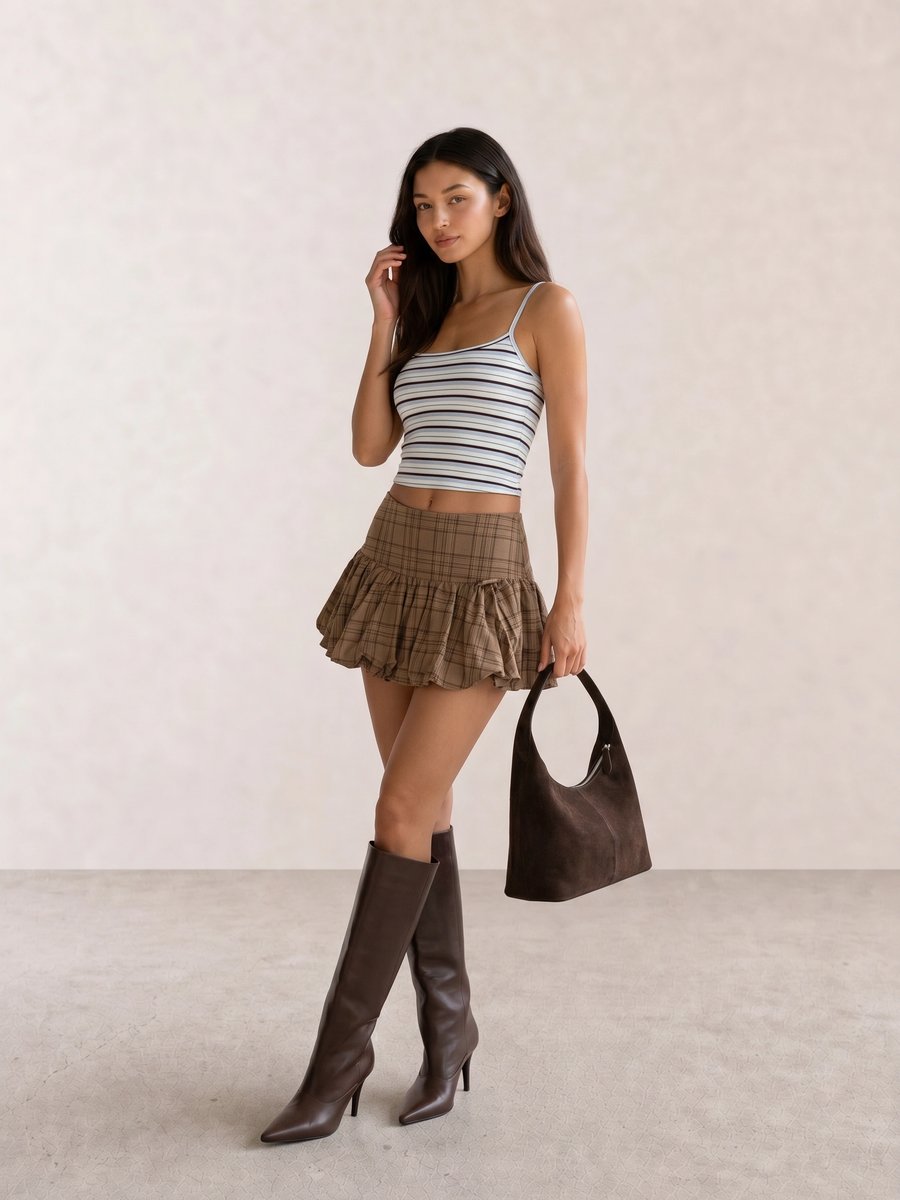
Seventies dressing has a reputation for print, and there is print here — paisley, polka dot, plaid, floral, stripe. But the thing that actually makes these outfits look expensive in autumn light is the fabric, not the pattern. Lace turns up as a fabric in four of the nine. Add satin, velvet, sequin, mesh, suede, leather and shearling, and every one of the nine has at least one texture doing visible work.
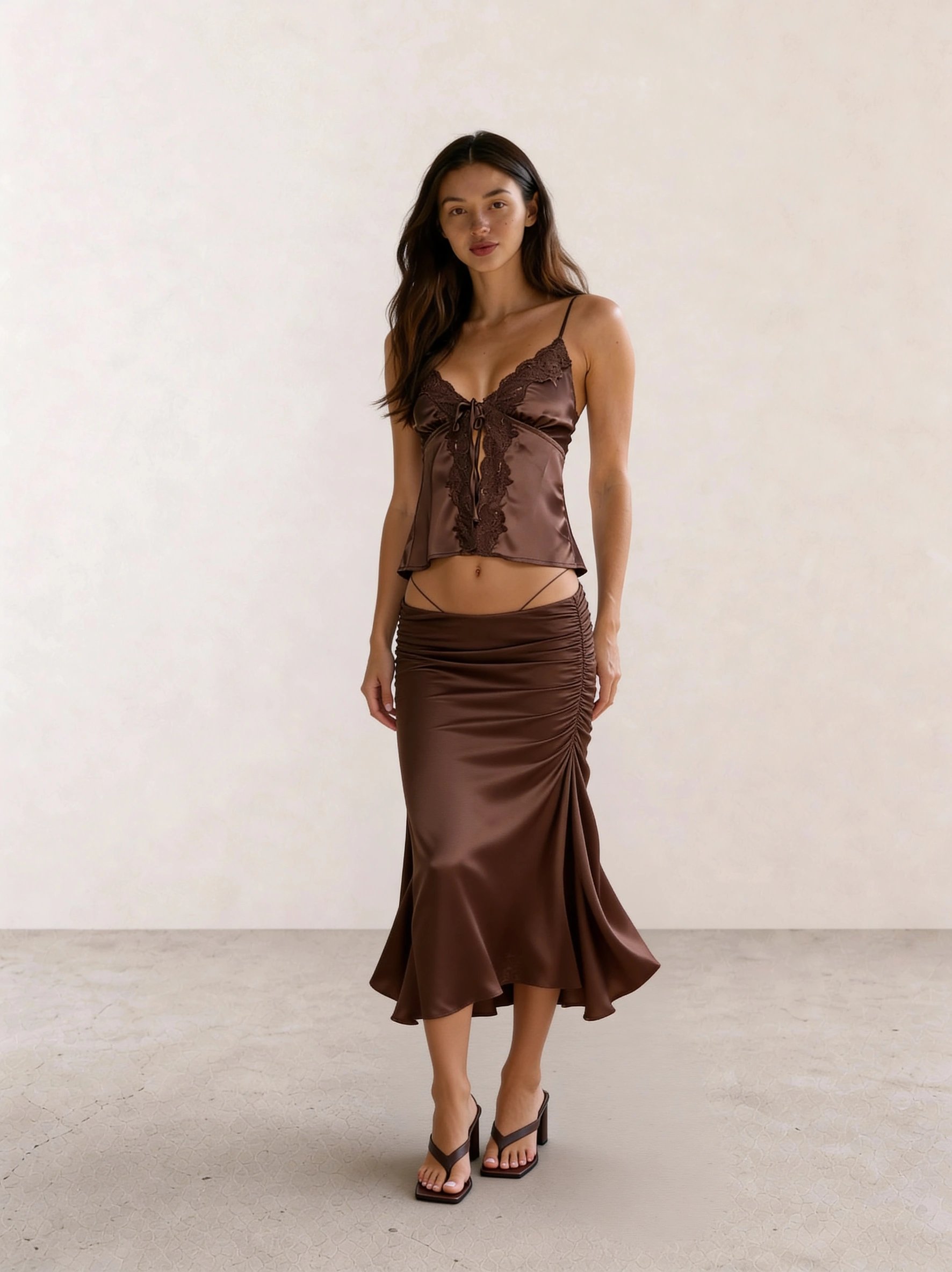
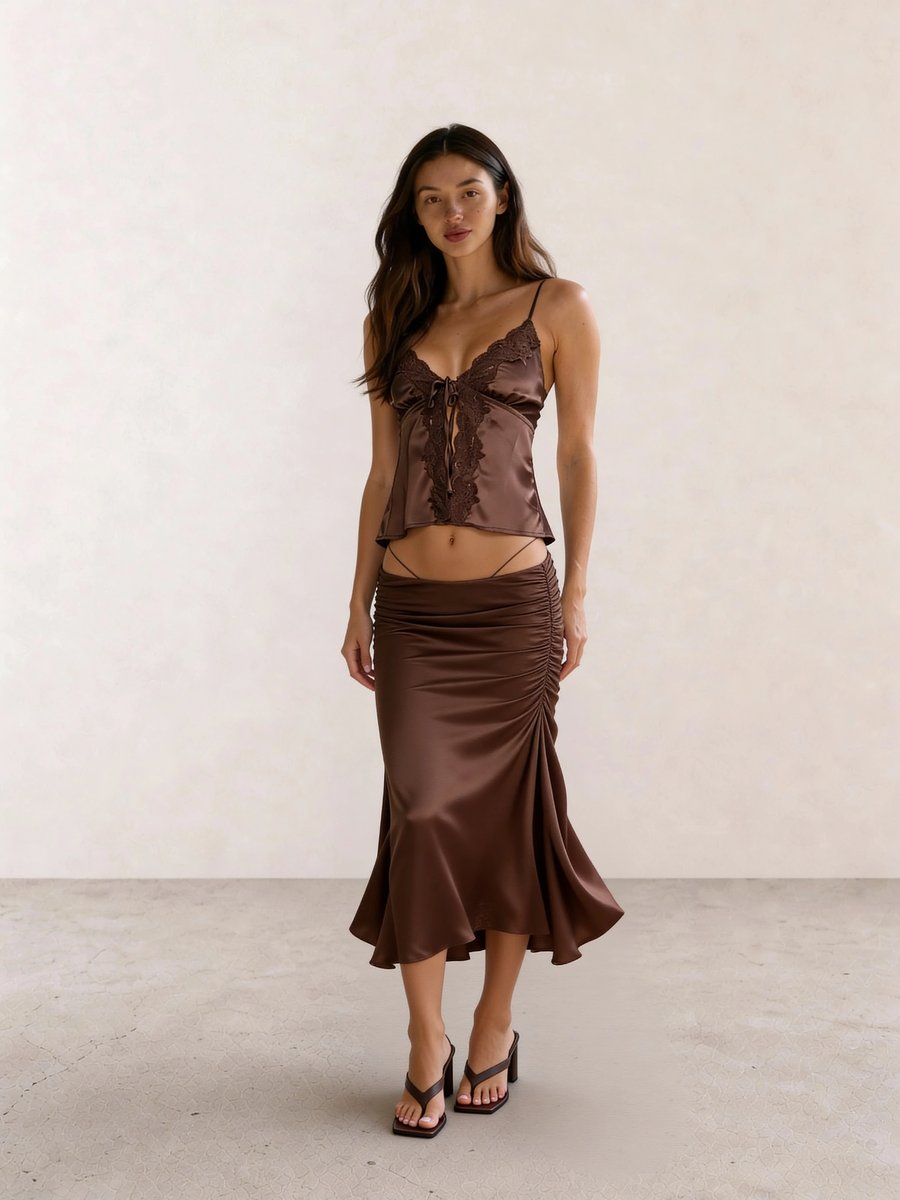
This matters most when the outfit is one colour. The all-brown satin cami and ruched midi has no print and no contrast whatsoever — the only thing separating the top from the skirt is that one is satin and one is gathered. In a monochrome retro look, texture is the entire silhouette. Take it away and you have a brown tube.
The Two Retro Pieces That Earn Their Autumn Keep
If you are buying into this for the season rather than the year, there are two things worth the money.
A knee-high brown boot. It appears in four of these nine outfits and it is the piece that converts a summer hemline into an autumn one. It works under a mini, under a midi, and under a dress, and it is the single most reusable item in the edit.
A brown leather or shearling jacket. Only two outfits here carry real outerwear, and both of them are built around it. It is the layer that makes the difference between a look that photographs well and a look you can actually wear outside in October.
Notice what is not on that list: the flares. Bell-bottoms are the most recognisably 70s thing you can own, and they are the least seasonal — they need a dry pavement and a flat shoe, and they are the first thing that stops working when the weather turns.
Where This Sits in the Rest of the Wardrobe
This is the autumn cut of a bigger aesthetic. For the origins of the look, the earth palette as a system, the proportion rules and the mistakes to avoid, the full retro vintage guide covers the aesthetic in the round rather than by season. If you want the wider autumn picture — the brown, the suede, the western boots that dominate the season beyond retro — start with the autumn outfit ideas edit.
And because so much of this rests on brown, the brown outfits guide goes deeper on how far you can push a single colour before it flattens out.
Frequently Asked Questions
Can you wear flare jeans in autumn?
Yes, but keep them on a flat shoe. Both flare outfits in this edit are worn with sneakers, and that is not a stylistic accident — a heel lifts the hem and kills the break that makes a flare look like a flare. A thick-soled retro sneaker keeps the length right and keeps the hem off a wet pavement.
What shoes go with 70s outfits in cold weather?
Knee-high boots for anything short, sneakers for anything long. Every going-out look in this edit is on a boot or a heel, and every denim look is on a sneaker. The boot is what lets a mini skirt or a mini dress work once the temperature drops, because it closes the gap between hem and knee.
What colours are 70s autumn outfits?
Brown, overwhelmingly — it accounts for eighteen of the twenty-nine pieces here, and three of these outfits are brown throughout. Burgundy is the seasonal addition, appearing in three of the nine and almost always on the upper half. Together they cover nearly everything; there is very little else in the palette.
Is retro the same as boho?
They overlap but they are not interchangeable. Boho leans loose, layered and unstructured; the retro looks here are more fitted and more deliberate, built on a defined waist and a strong silhouette. The crossover is real enough that the full retro guide treats it as its own territory.
Weekly outfit picks and style guides — no fluff, unsubscribe anytime.