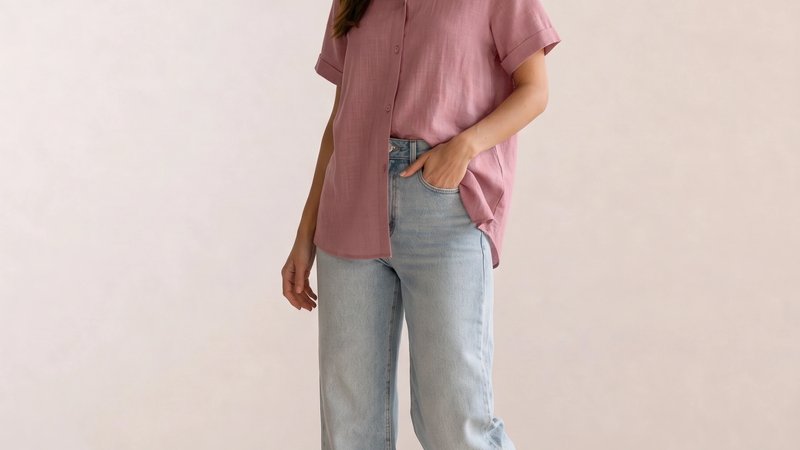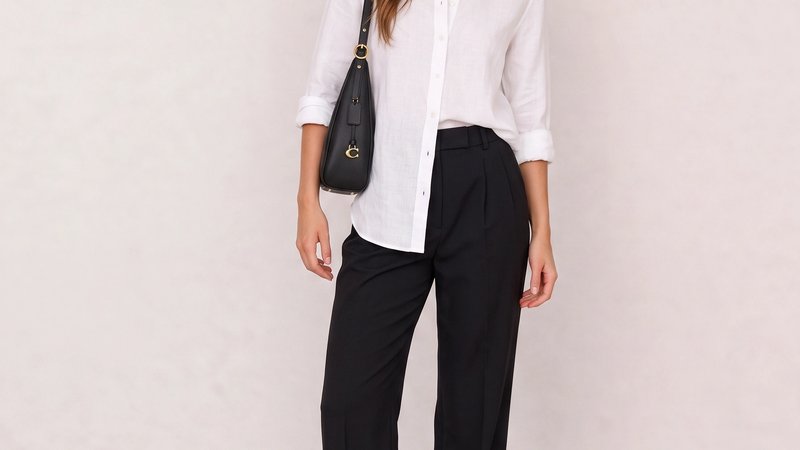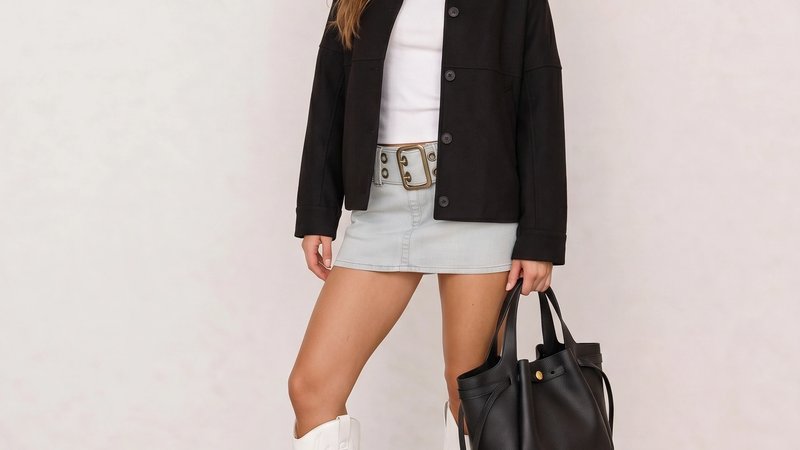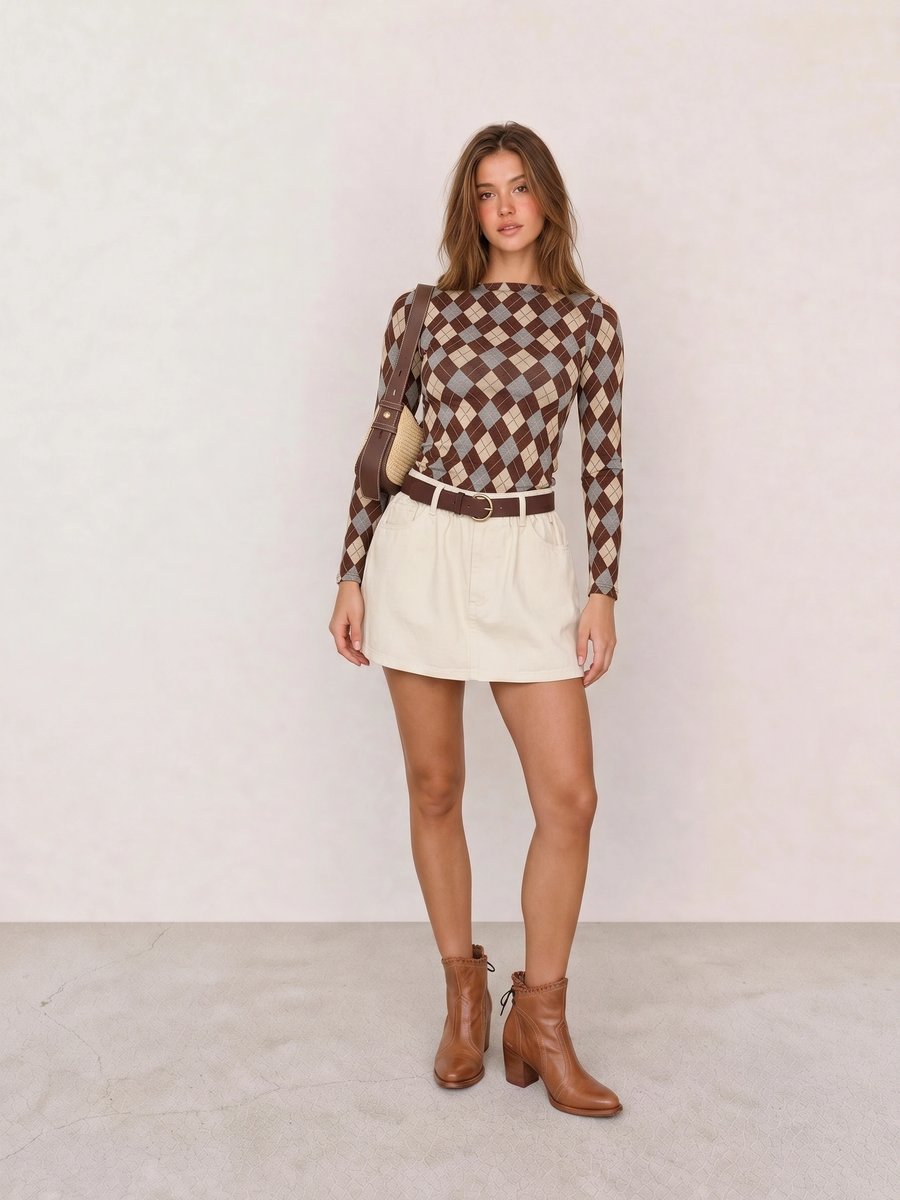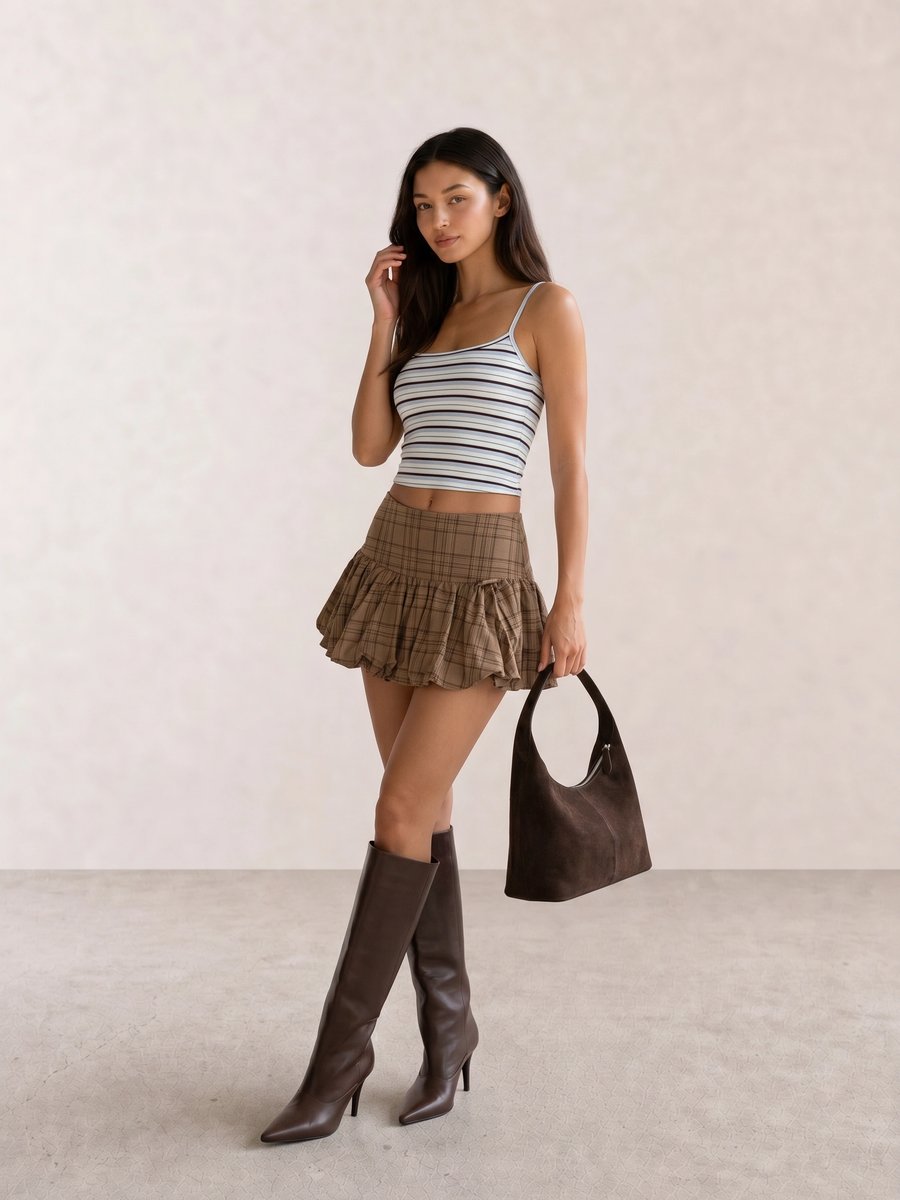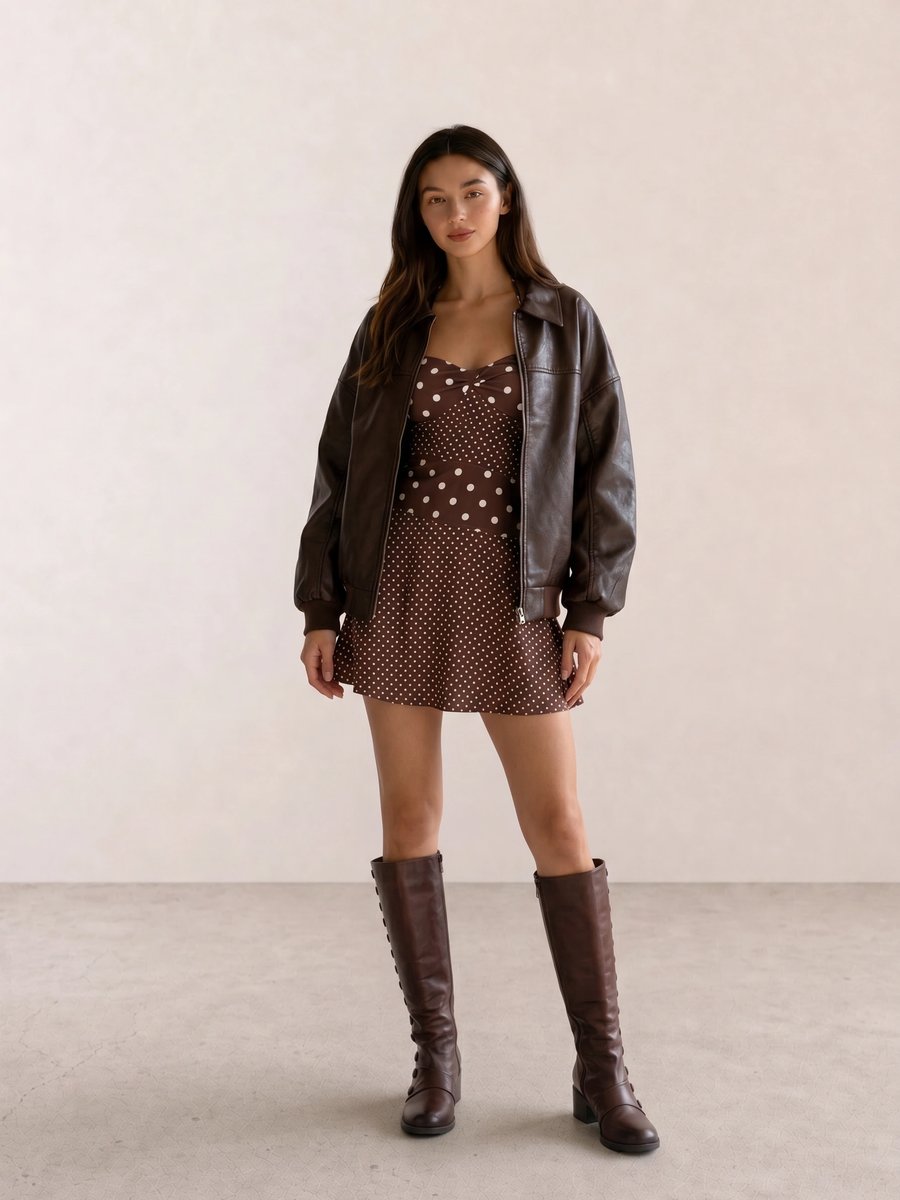
Retro Vintage Outfits: The 70s-Inspired Looks Defining 2026
Your guide to retro vintage outfits for 2026 — flare jeans, wide-leg trousers, and 70s details that feel current. The definitive vintage style reference.
STYLEFINDEN editorial review: checked before publication for wearability, proportion logic and real-life outfit use. We explain our editorial method and image policy on the About page and keep affiliate independence details in the affiliate disclosure.
The 70s never really left fashion; they went dormant. In 2026, the silhouette pendulum has swung back to volume after three years of Y2K's low-rise, body-skimming proportions dominating every conversation. Specifically, upward volume: high waists, wide legs, flared hems. The proportion formula that defined 1970s dressing is back because it works on actual bodies in ways that low-rise simply doesn't, and these twenty retro vintage outfits show exactly how that formula translates today.
The 2026 interpretation looks different from its source material. The fabrics have been updated: stretch velvet, marble-print mesh, technical denim. The shoes are retro sneakers now, not wooden-heeled clogs. Across fifty years, the silhouette logic and the earthy color story hold: burgundy, olive, brown, cream, with an occasional pop that reads joyful rather than loud.
The Origins of the Retro Vintage Aesthetic
The retro vintage aesthetic draws primarily from 1970s American and European fashion: high-waisted flare and wide-leg silhouettes, earth-tone color palettes, natural-feeling fabrics (velvet, lace, denim, corduroy), and decorative details like embroidery, plaid, and fringe. It sits between costume-y "vintage" and the sanitized "70s-inspired" label applied to anything beige — the real version has texture, a defined waistline, and a deliberate silhouette.
Historically, the 1970s were a reaction against the structured mod silhouettes of the 1960s. The decade's most influential designers shared a single conviction: fashion should follow the body, not fight it. Halston built his entire brand on bias-cut jersey that moved with the wearer — no interfacing, no boning, no structure imposed from outside. Diane von Furstenberg's wrap dress (1974) codified the principle: a single adjustable knot at the waist, a V-neckline that works across body types, a hem that falls rather than holds. That dress sold five million copies in two years because it solved a real problem. Ossie Clark brought print back to the body in the same spirit — his chiffon pieces draped rather than draped-and-stiffened. The California boho wave, running from Stevie Nicks through Gram Parsons through the whole Laurel Canyon scene, translated the same body-first logic into suede, lace, and denim. The 2026 revival pulls from this lineage more than from the Studio 54 sequin side of the decade. It's canyon road, not dance floor.
The 70s Earth Palette — Why It Works as a Unit
The color story is as structural as the silhouette. Burgundy, tobacco brown, olive, harvest gold, sienna, and cream form a palette that reads coherent because these colors exist within the same natural-saturation range; none of them are synthetic. A burgundy lace top and olive wide-leg jeans don't fight each other because both are pulled toward brown. That's why the earth palette is self-styling: anything within it will work with anything else within it.
The 2026 interpretation narrows this range further. The current edit is muted enough that even a single pop color reads bold. A teal sneaker on a brown-and-denim outfit stands because everything else is grounded. That contrast effect only works if the base palette is disciplined.
How to Style Retro Vintage Outfits: The 70s Proportion Rule
The key to a 70s-inspired outfit is the proportion, not the print. Put a houndstooth top with slim jeans and you have a contemporary outfit. Put the same top with high-waist wide-leg jeans and you've crossed fifty years back to 1975. The silhouette does the era-defining work; the pattern is secondary.
The formula is three-part: a high-waisted bottom (flare jeans, wide-leg trousers, or A-line mini), a fitted or cropped top that ends at or above the natural waist, and a waistline that is visibly defined rather than guessed at. A top that blurs the waist or a bottom that sits at the hip will collapse the silhouette. The cropped top is structural, not decorative.
On footwear: platform shoes were the original decade choice, but 2026's version reads better with retro sneakers or low-heeled boots. Platforms add height but signal costume. Retro sneakers keep the silhouette grounded and contemporary.
Leather Jacket & Flare Jeans Outfits
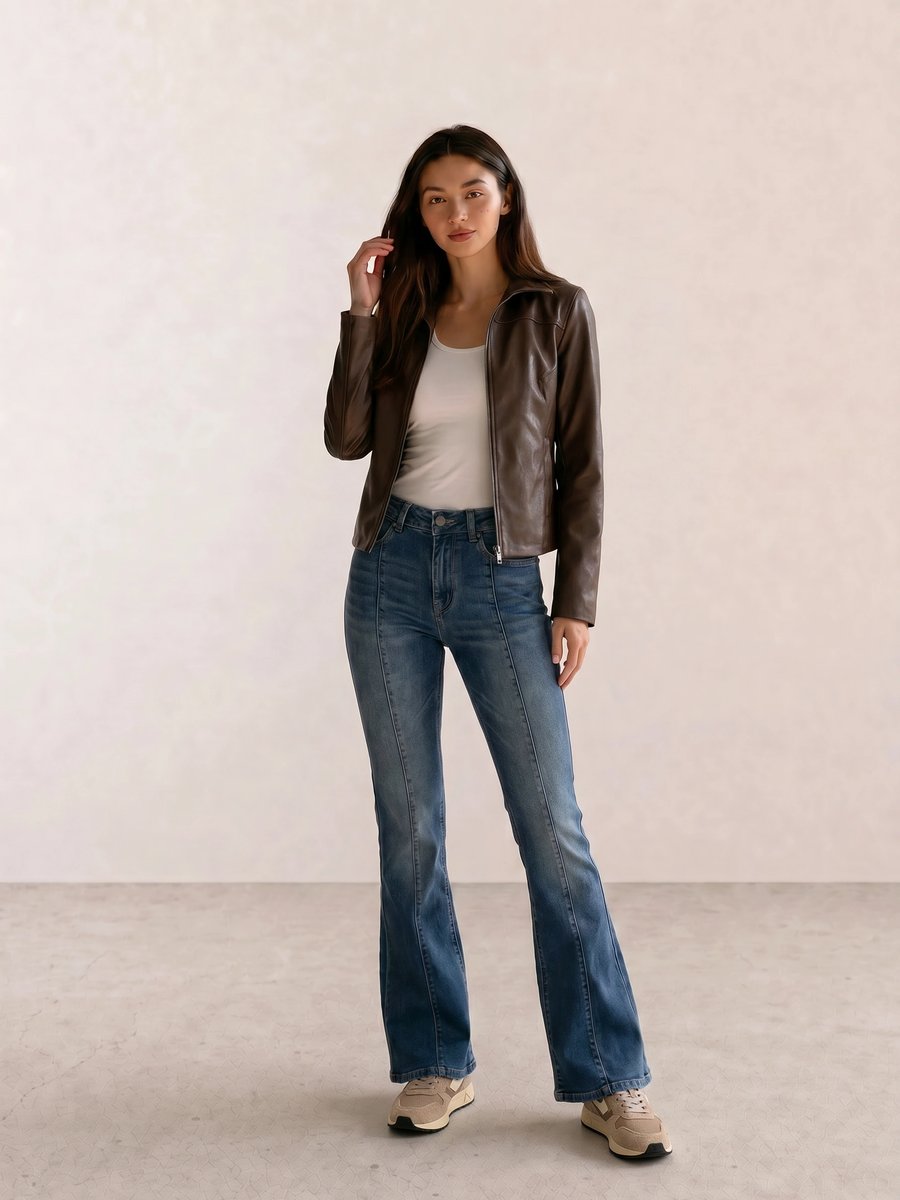
The leather jacket is doing more work in the 2026 retro revival than any fringe or suede piece could. Structured enough to read present, dark enough to anchor the wide-leg volume below it, it bridges the era gap.
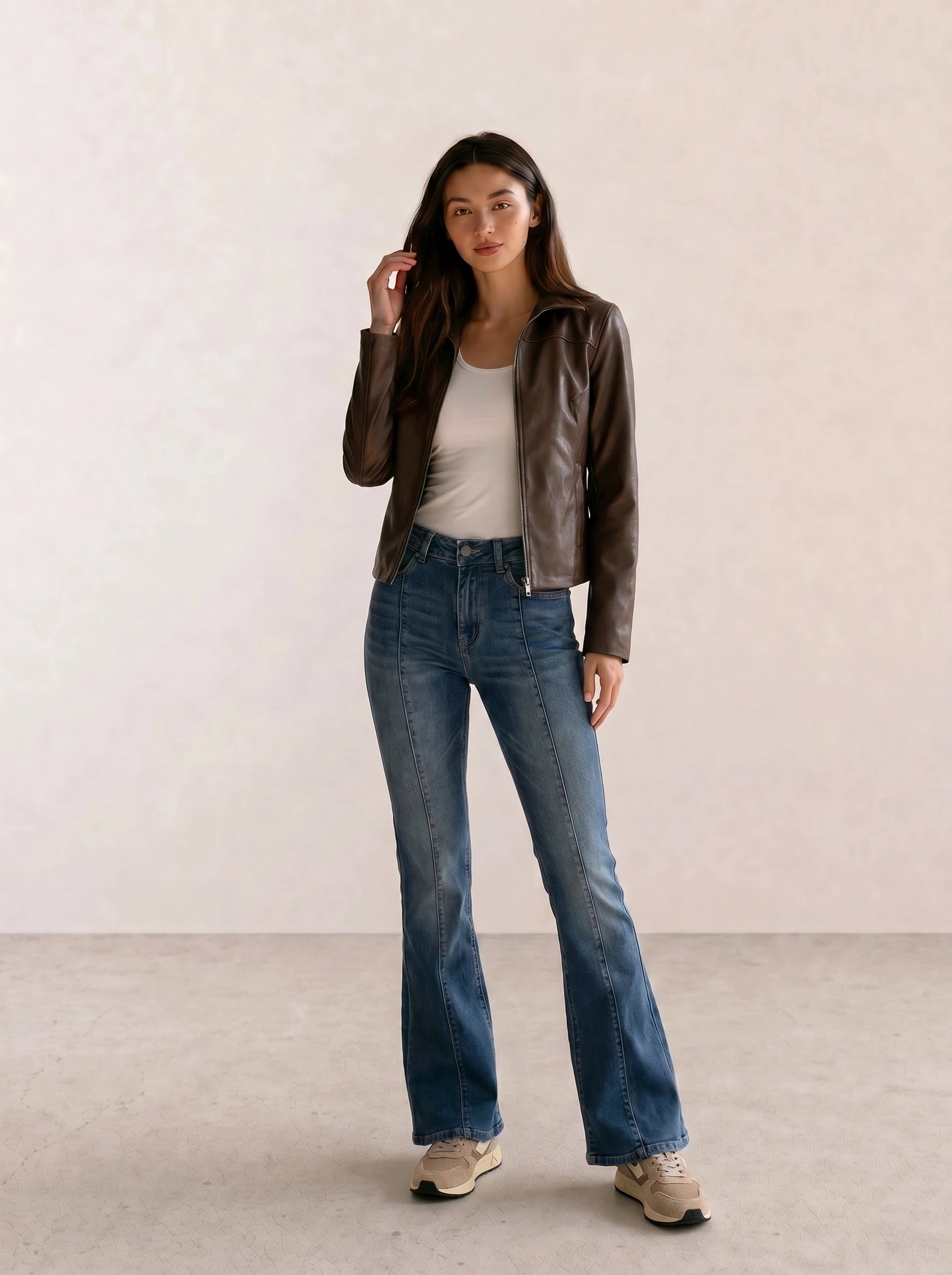
The proportion logic here is precise: the Dark Brown Leather Biker Jacket hits just below the natural waist, which is exactly where the flare jeans begin. That transition point, jacket hem meeting high-rise, is where the 70s silhouette lives. Without the jacket, the Light Wash Low-Rise Flare Jeans and Taupe Retro Sneakers are a casual outfit. Add the structured leather layer and the whole thing snaps into intentional 70s-informed dressing.
The formula: structured biker jacket, low-rise flare jeans, retro sneaker. Three pieces, three jobs — structure, volume, era signal.
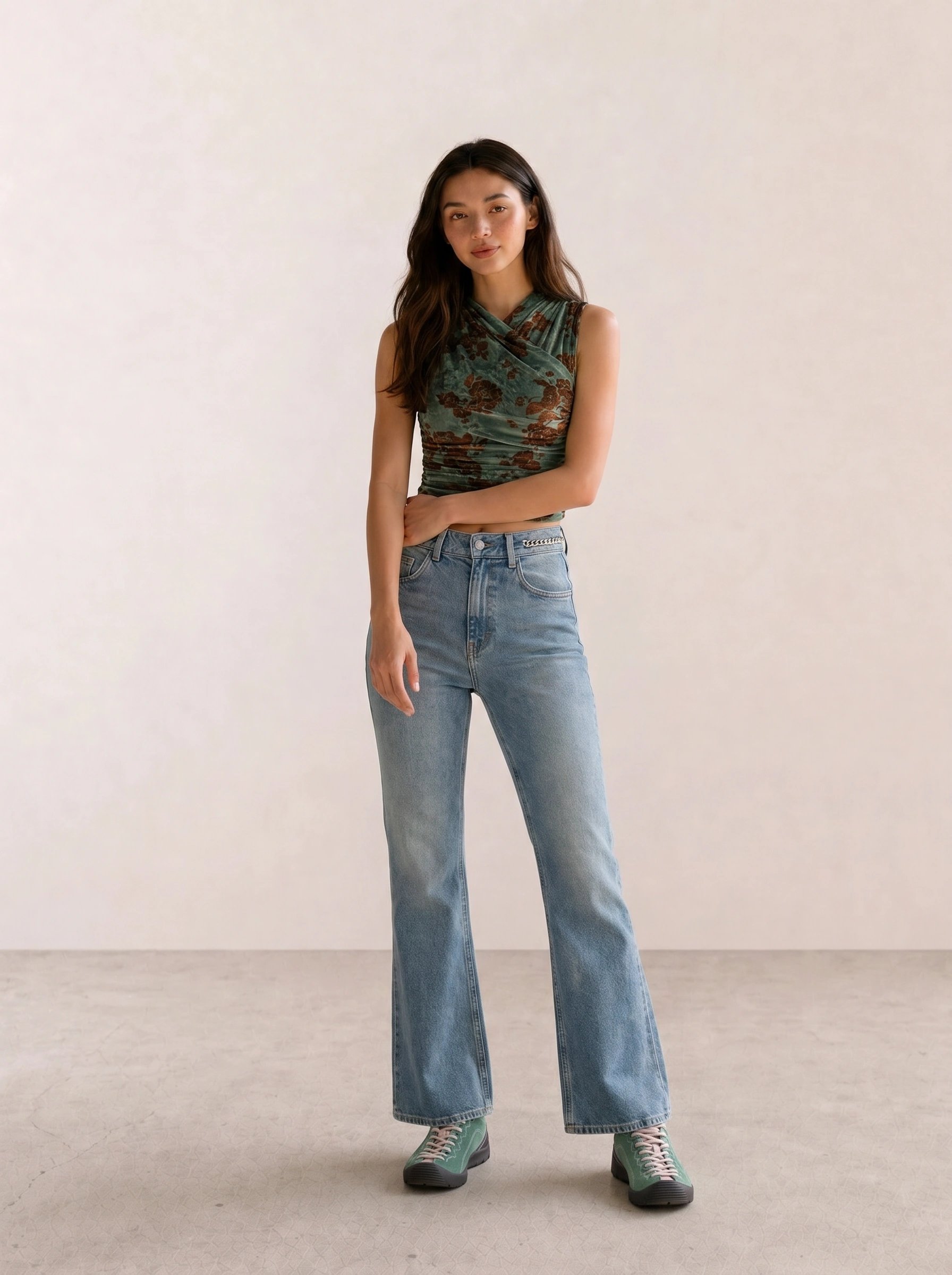
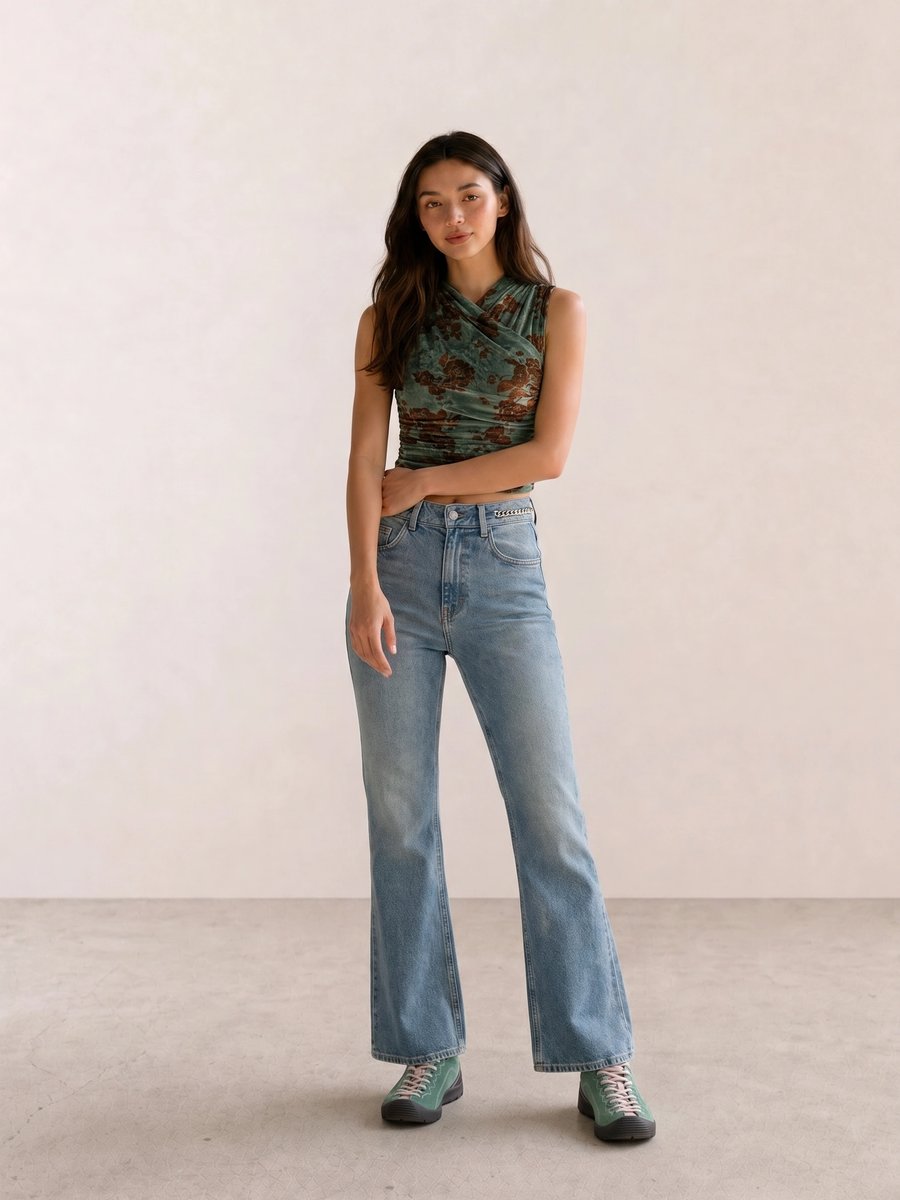
Velvet is the fabric detail that most accurately signals 70s in a modern outfit; it has the right weight and surface quality without reading period-costume. The Brown Velvet Wrap Top creates the V-neckline that made wrap dresses the decade's defining silhouette (DVF, 1974). The wrap's self-tie belt does the waist definition work, making a separate belt redundant. The Teal Lace-Up Sneakers are the modern edit that prevent the outfit from tipping into full-era recreation.
Without the velvet texture, this reads as a standard flare jean outfit. Swap velvet for cotton and the decade signal disappears.
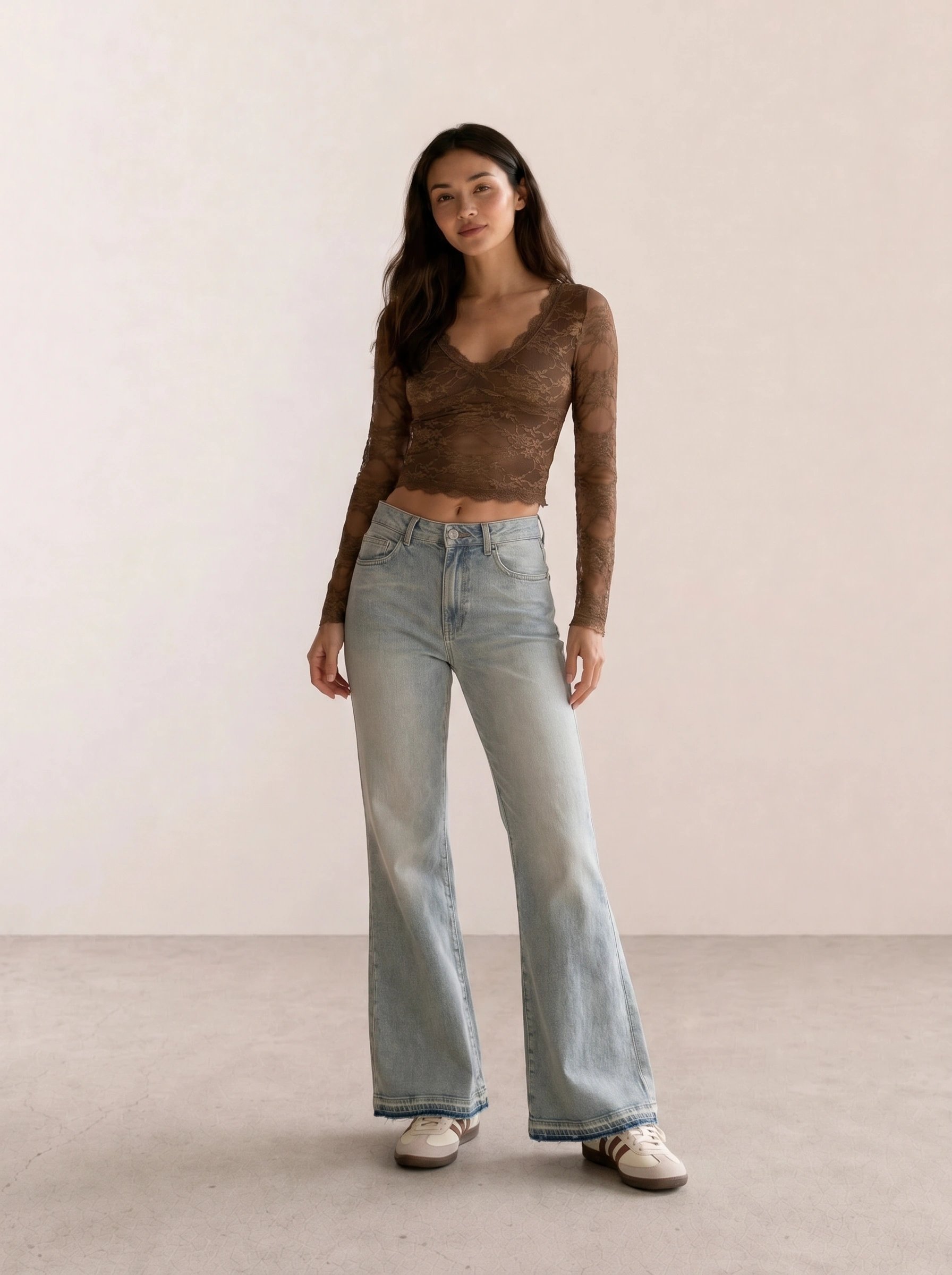
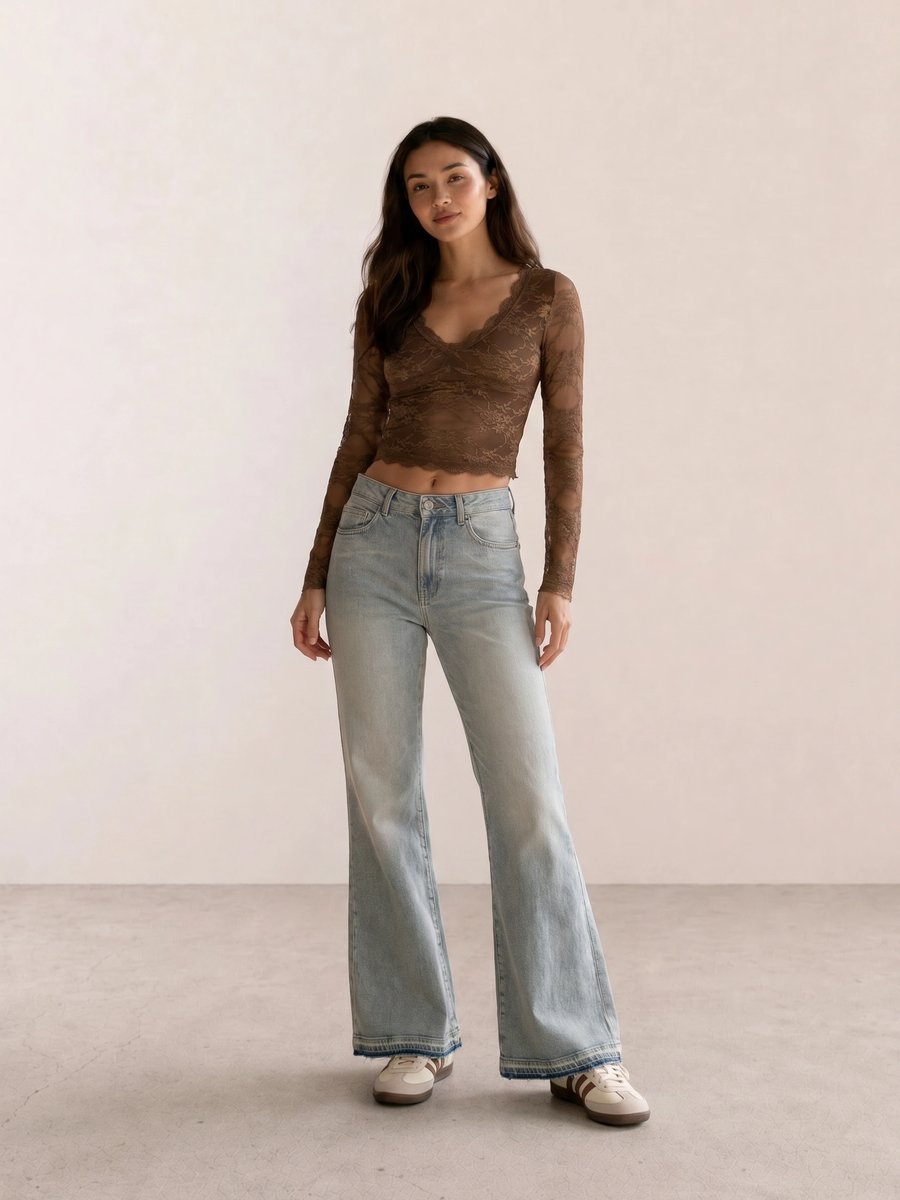
Bell-bottoms flare from the knee down rather than the thigh, which creates a more dramatic silhouette sweep at the hem than a standard flare. The Brown Lace Long-Sleeve Crop softens the volume with texture. Cream Suede Retro Sneakers keep it in daytime territory.
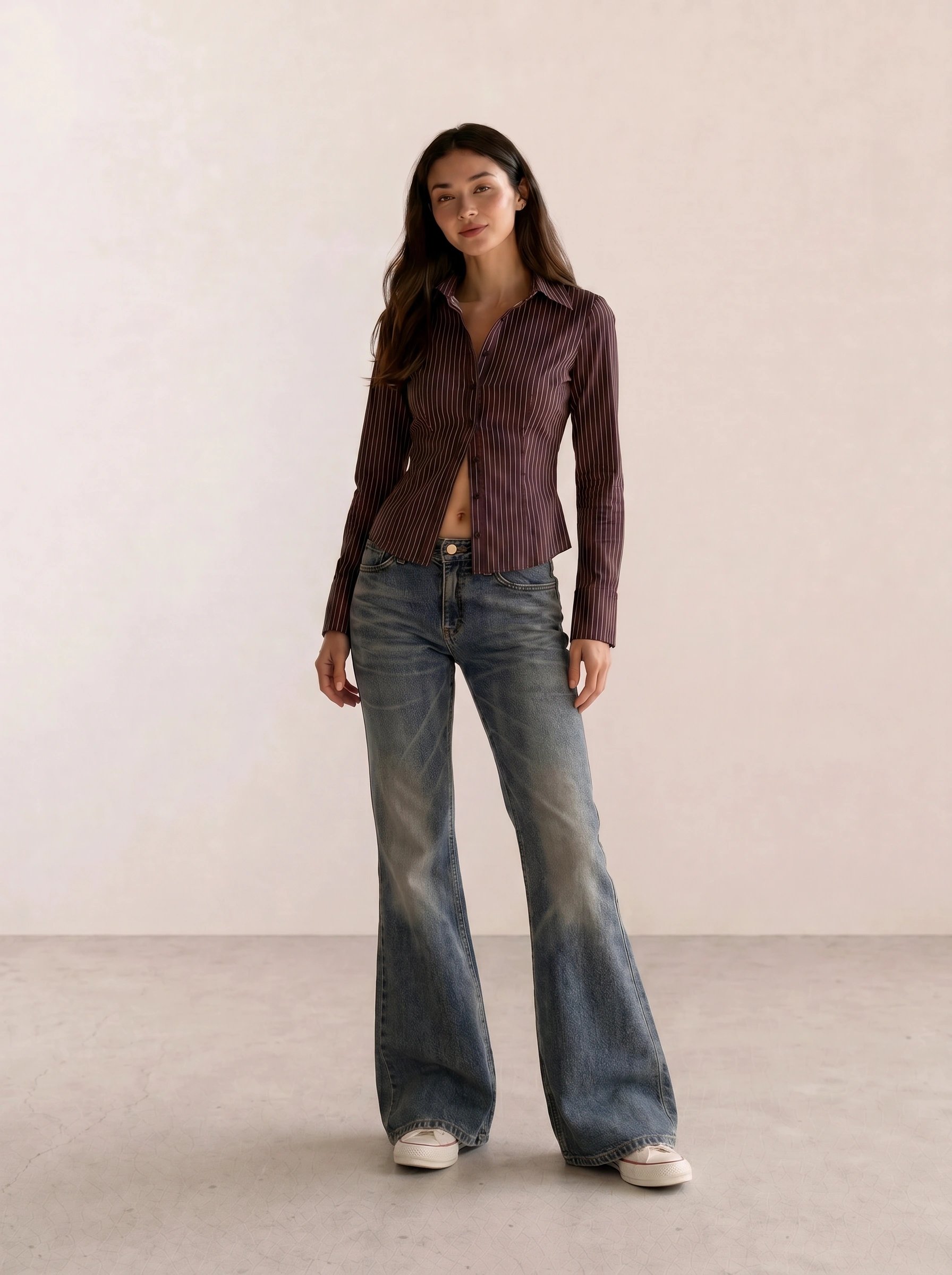
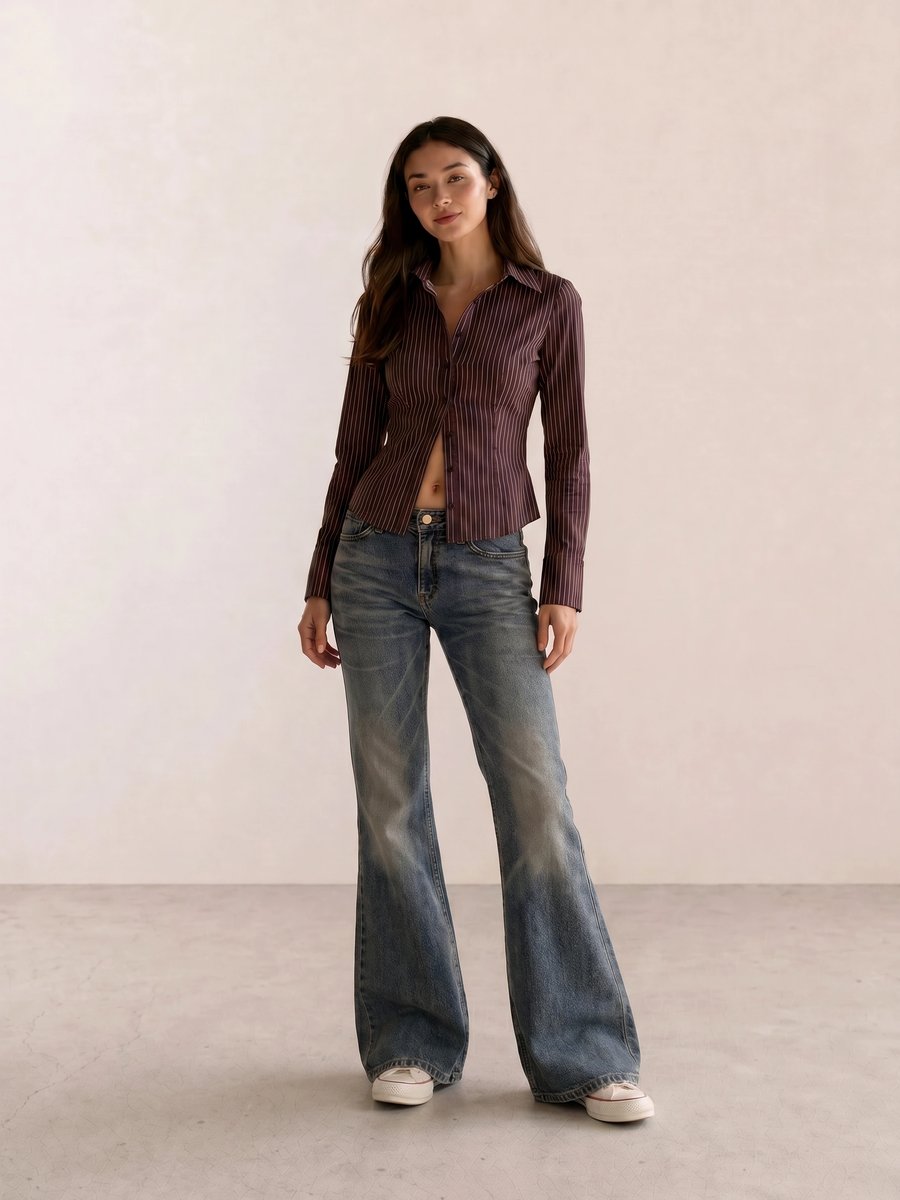
Pinstripe reads office in a slim cut. Open two buttons, tuck loosely into high-rise flares, and the same shirt becomes 70s tailoring. The Burgundy Pinstripe Fitted Shirt works here because its structured fabric contrasts the denim's softness — neither piece is casualwear alone, but together they create the relaxed-polished tension that defined 70s day dressing. Cream High-Top Canvas Sneakers keep the formality at the right level.
Printed Tops & Vintage Flares
Prints are the most visible retro vintage signal — and the one most likely to be overdone. One print per outfit, everything else in a supporting neutral. When two prints compete, the 70s aesthetic disappears; you're just wearing a lot of things at once.
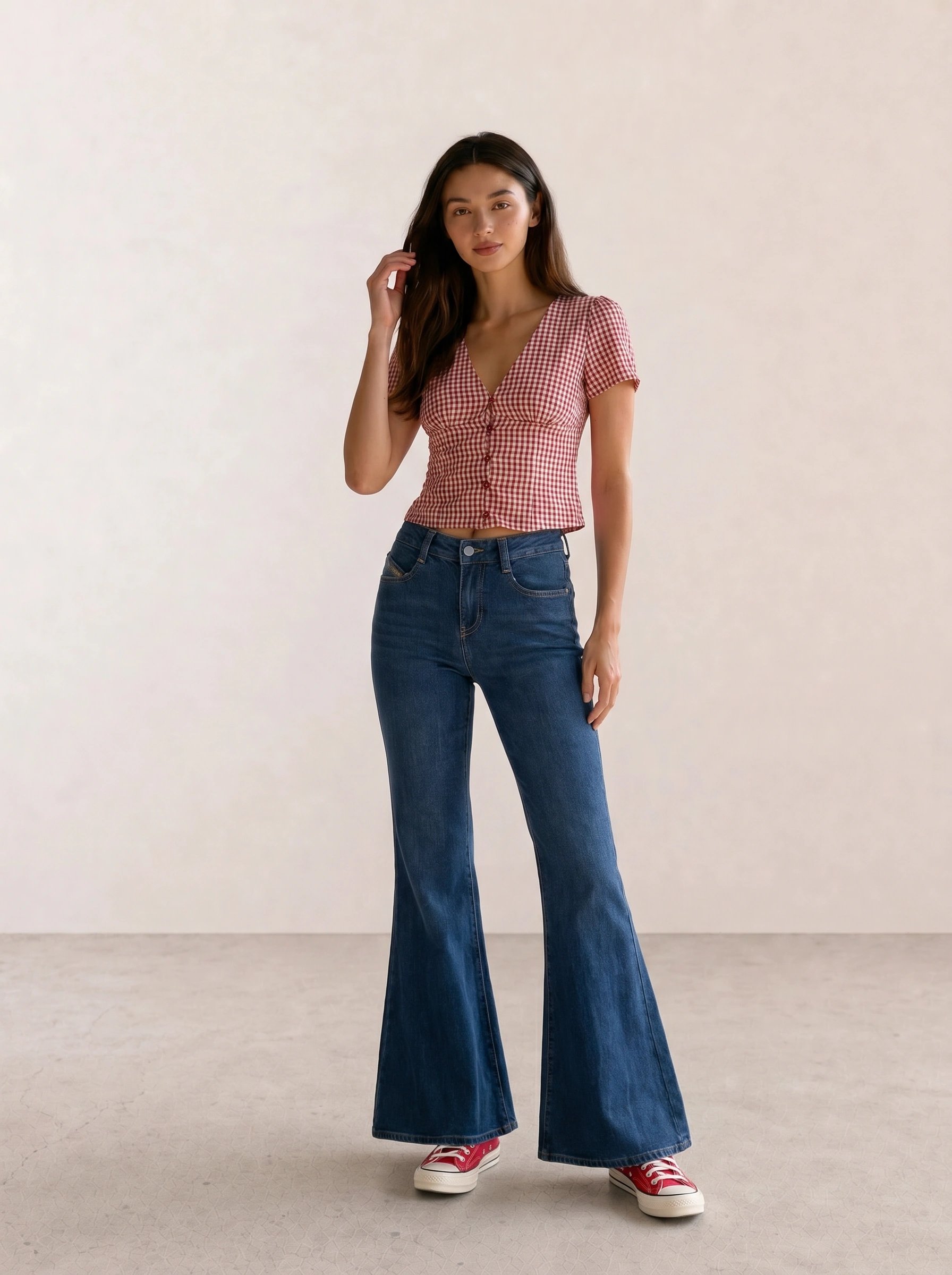
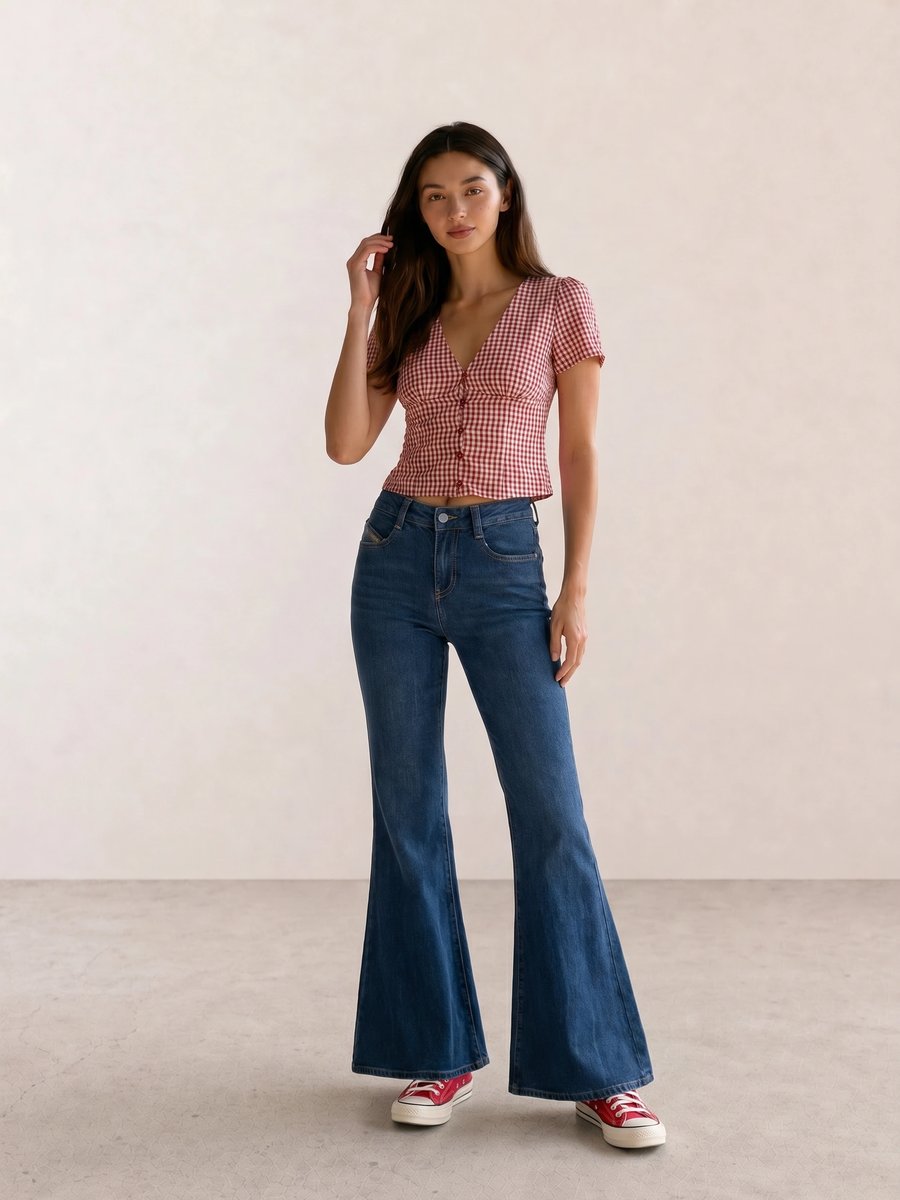
Gingham is 70s California; it reads picnic blanket without effort. The Red Gingham Tie-Front Crop Top ties at the waist, creating the proportion point without a separate belt. Light Wash Flare-Leg Jeans complete the silhouette. The Red High-Top Canvas Sneakers echo the crop top's color, a monochromatic accent within a high-contrast outfit. Without the color echo, the sneakers read mismatched.
Shop the pieces: Red Gingham Tie-Front Crop Top / Light Wash Flare-Leg Jeans / Red High-Top Canvas Sneakers
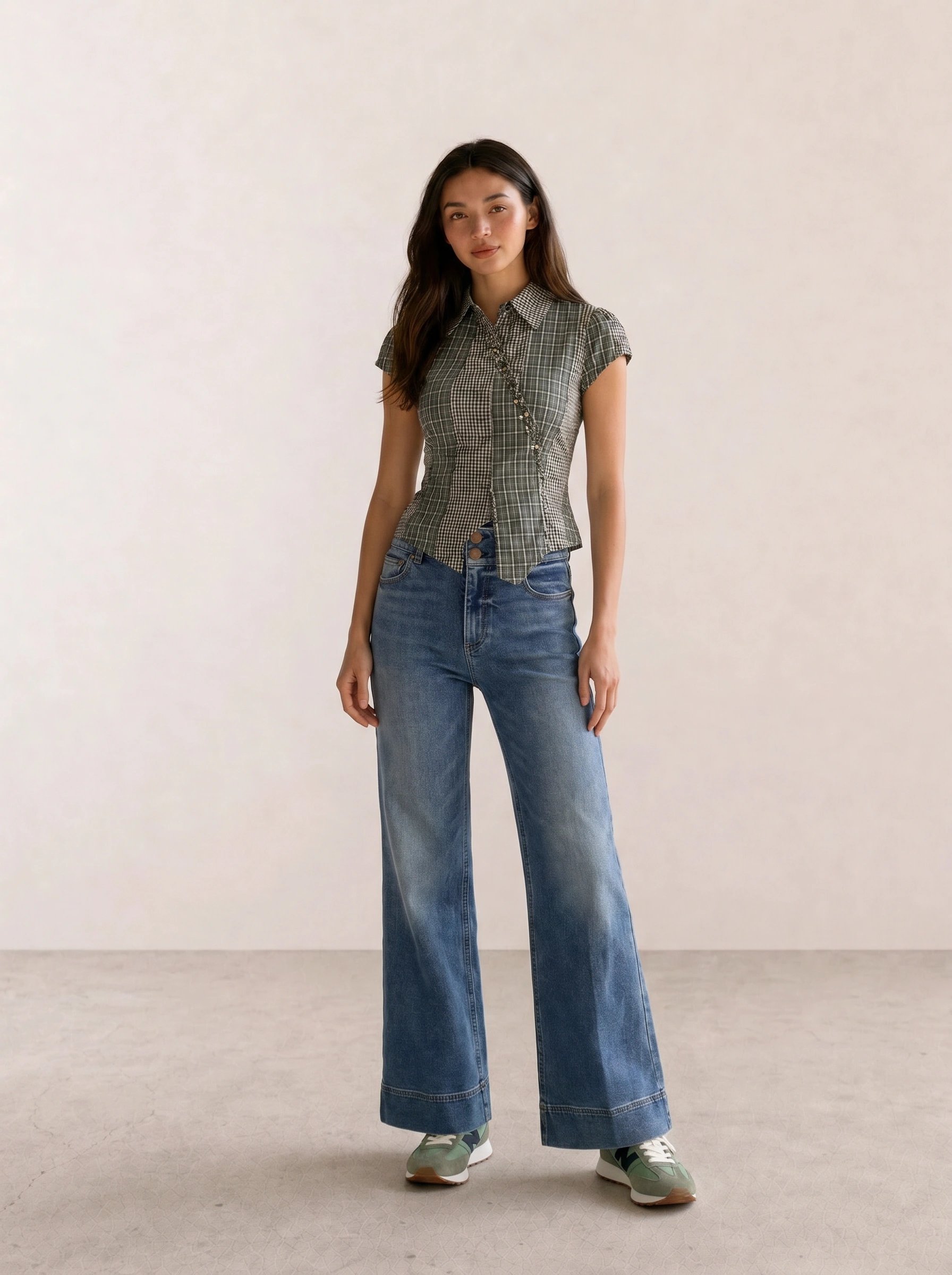
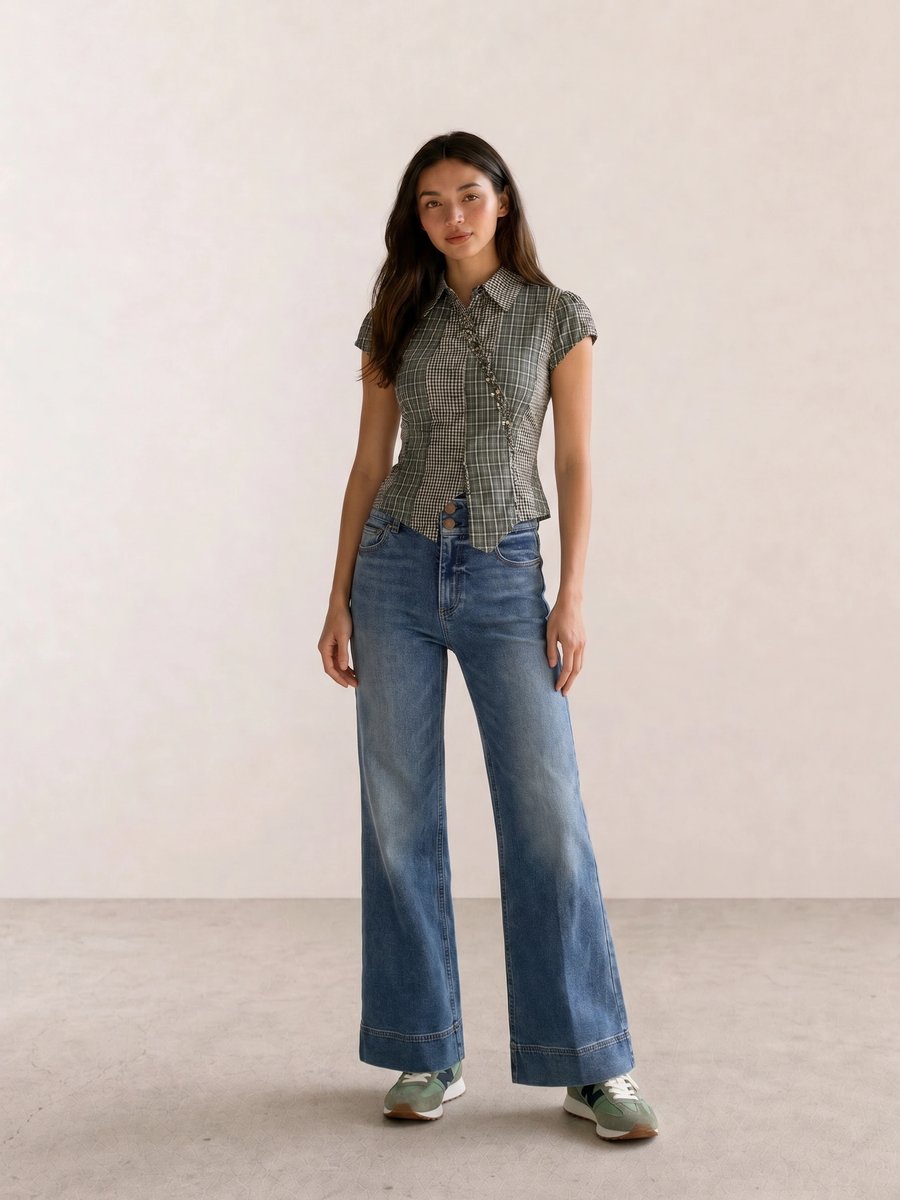
Houndstooth is an estate-sale print; it has age without reading costume. The Olive Houndstooth Fitted Top with Light Wash High-Waist Wide-Leg Jeans demonstrates the proportion rule directly: the fitted top creates the sharp visual break the wide-leg jeans need above them. The Sage Oversized Utility Crop Jacket adds a third layer without collapsing the proportion because it's cropped. A longer jacket over wide-leg bottoms buries the waistline entirely. The crop is what works.
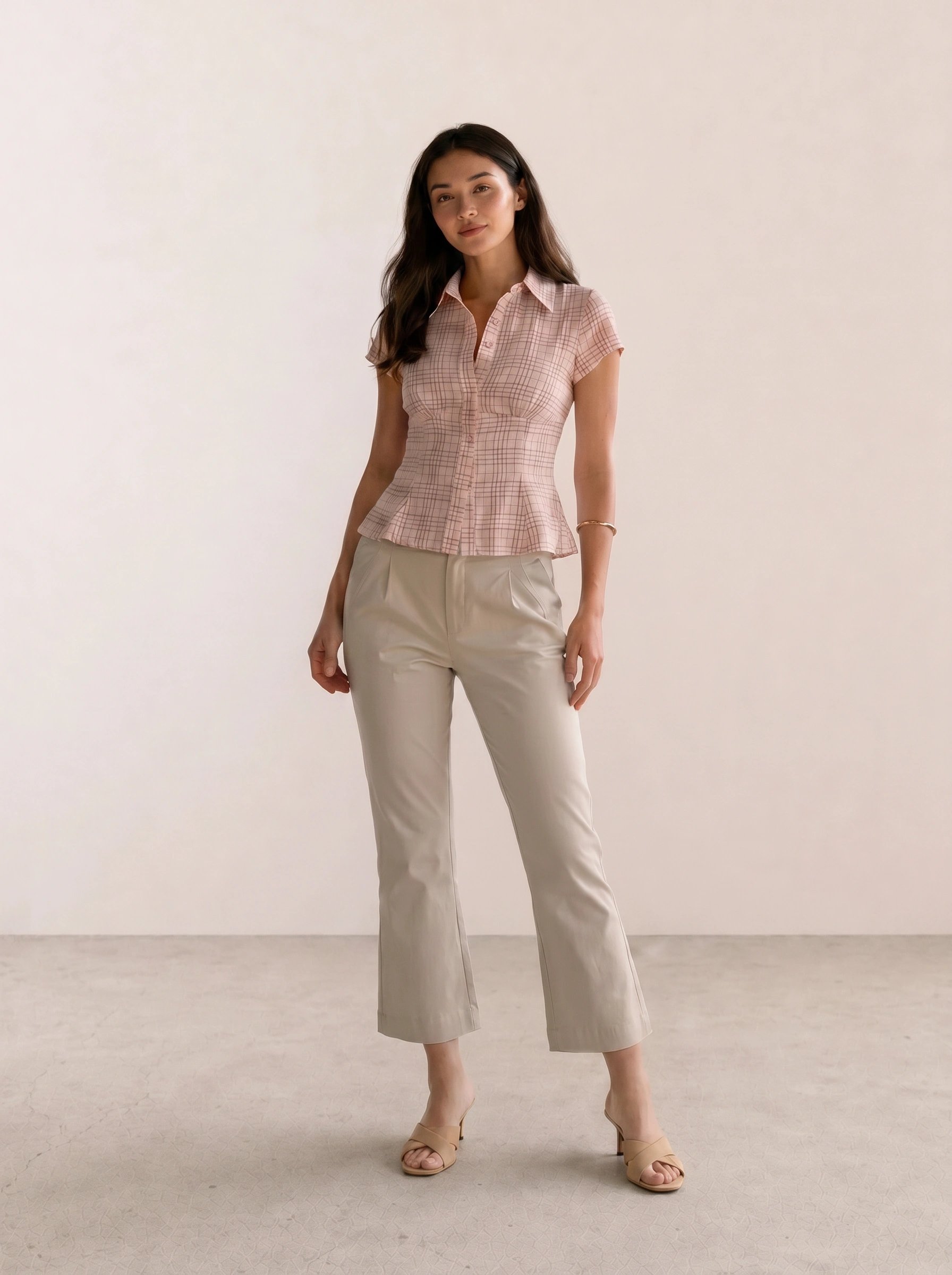
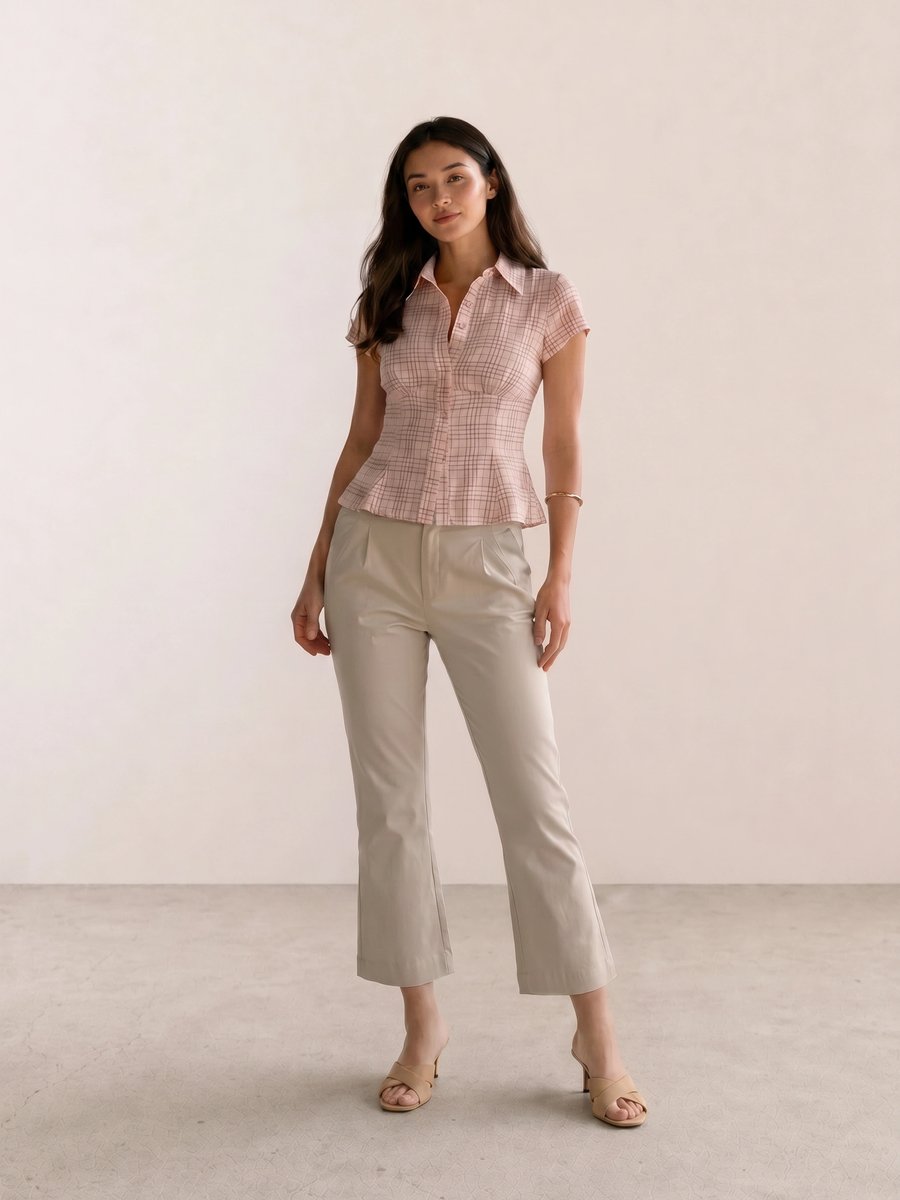
The Pink Plaid Polo Crop and Beige Wide-Leg Trousers in a tonal pink-and-beige palette. The plaid is small-scale, which reads preppy rather than 70s on its own — the wide-leg cut and Nude Suede Kitten Heel Mules pull it into retro territory. One outfit where the silhouette carries the era entirely.
Wide-Leg Jeans & Casual Tops
Wide-leg jeans are the most versatile piece in the retro-vintage wardrobe. The top choice determines whether the outfit reads casual Saturday or elevated evening; the bottom carries the silhouette either way.
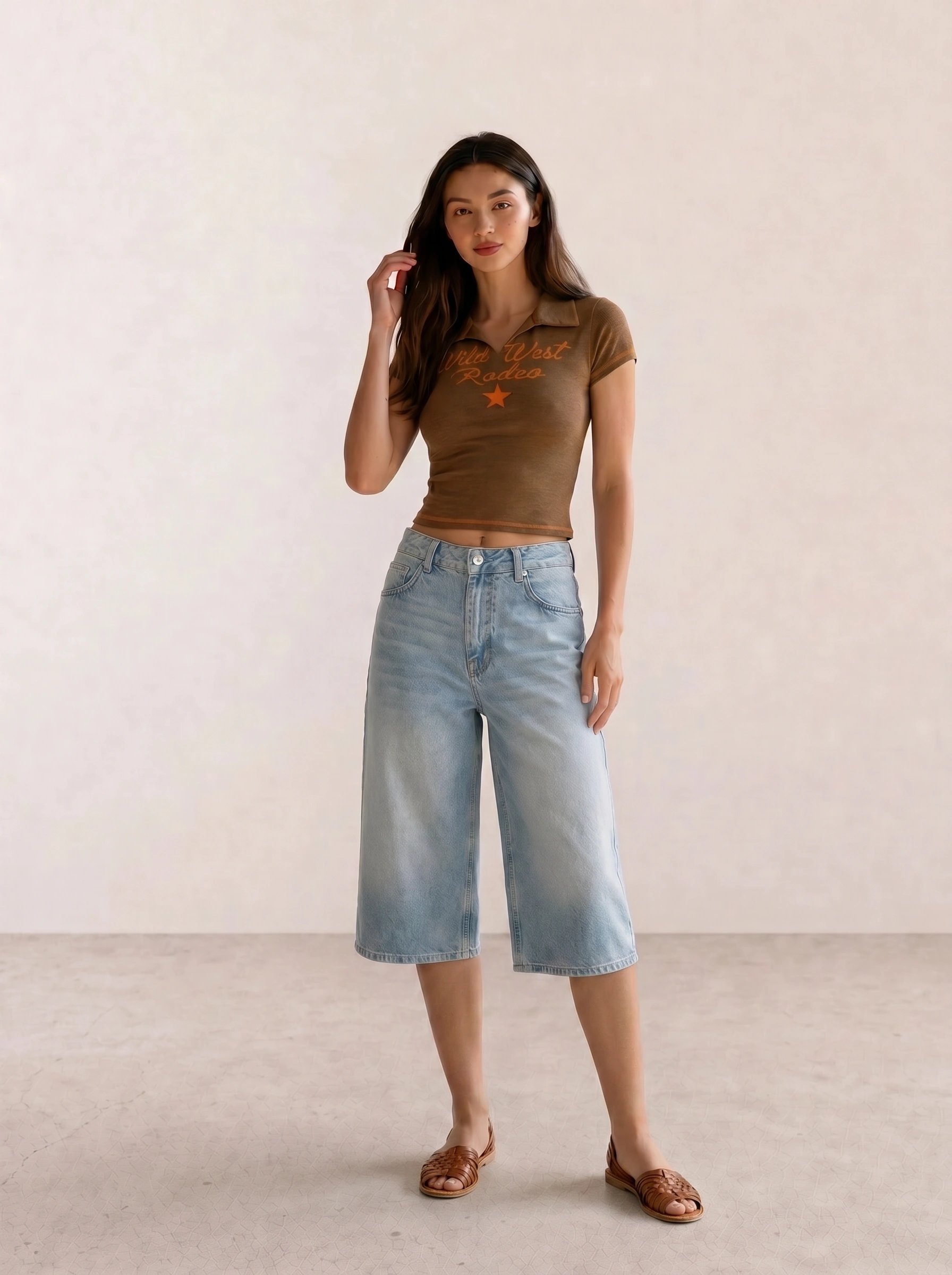
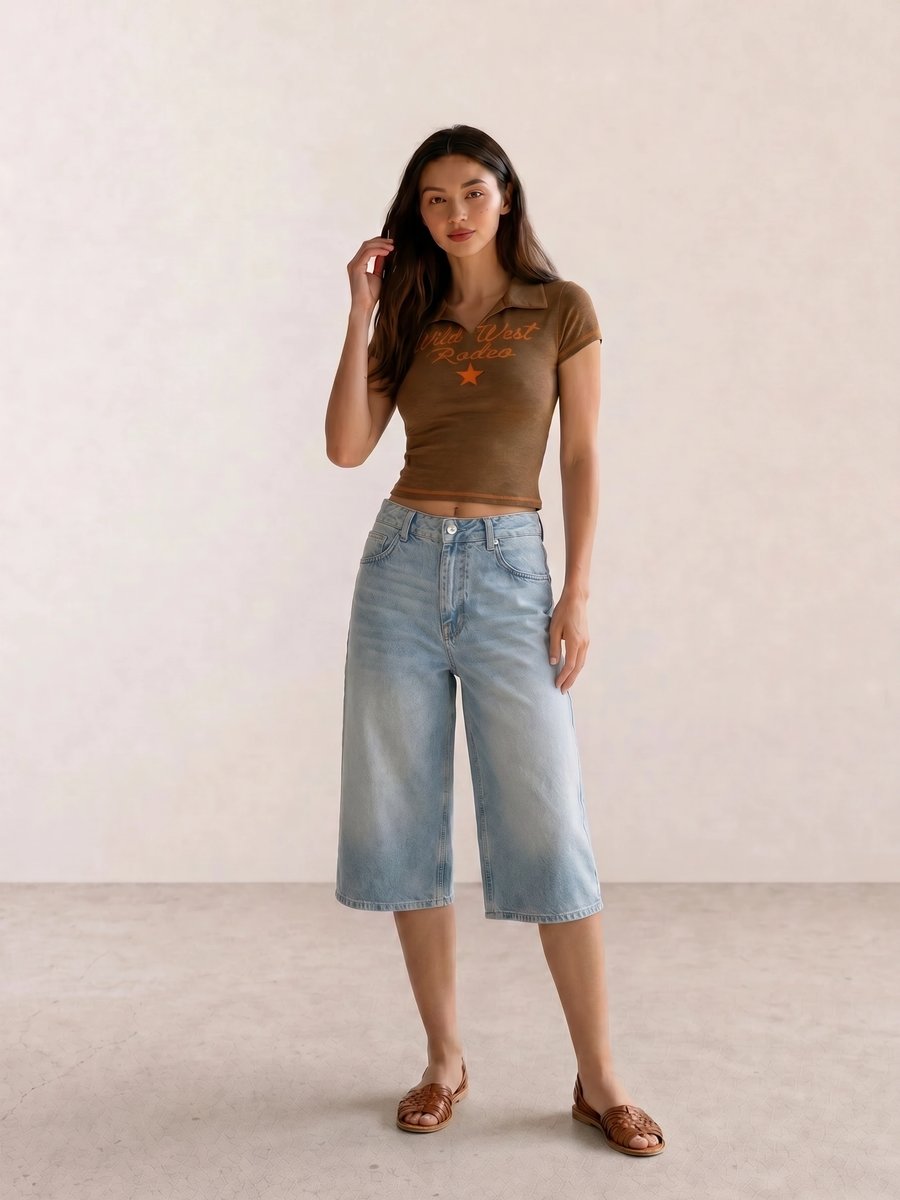
The Brown Graphic Baby Tee with Light Wash Wide-Leg Jeans is a Western-inflected take on the 70s casual silhouette. Baby tees are technically Y2K in origin, but cropped and fitted, they satisfy the same top proportion a 70s outfit needs. The Caramel Woven Leather Sandals land this in daytime territory; sandals with wide-leg jeans read summer market, not nightlife.
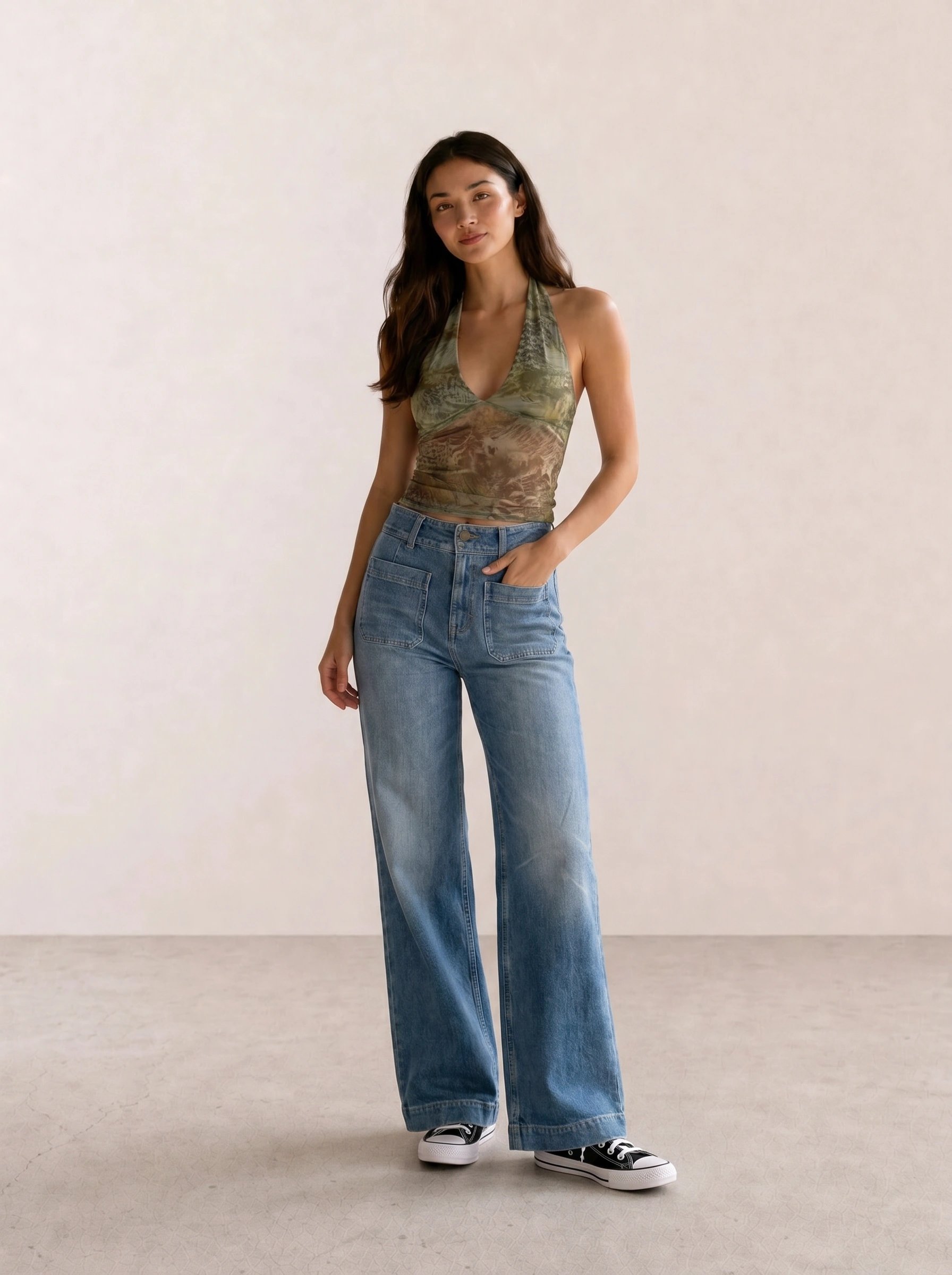
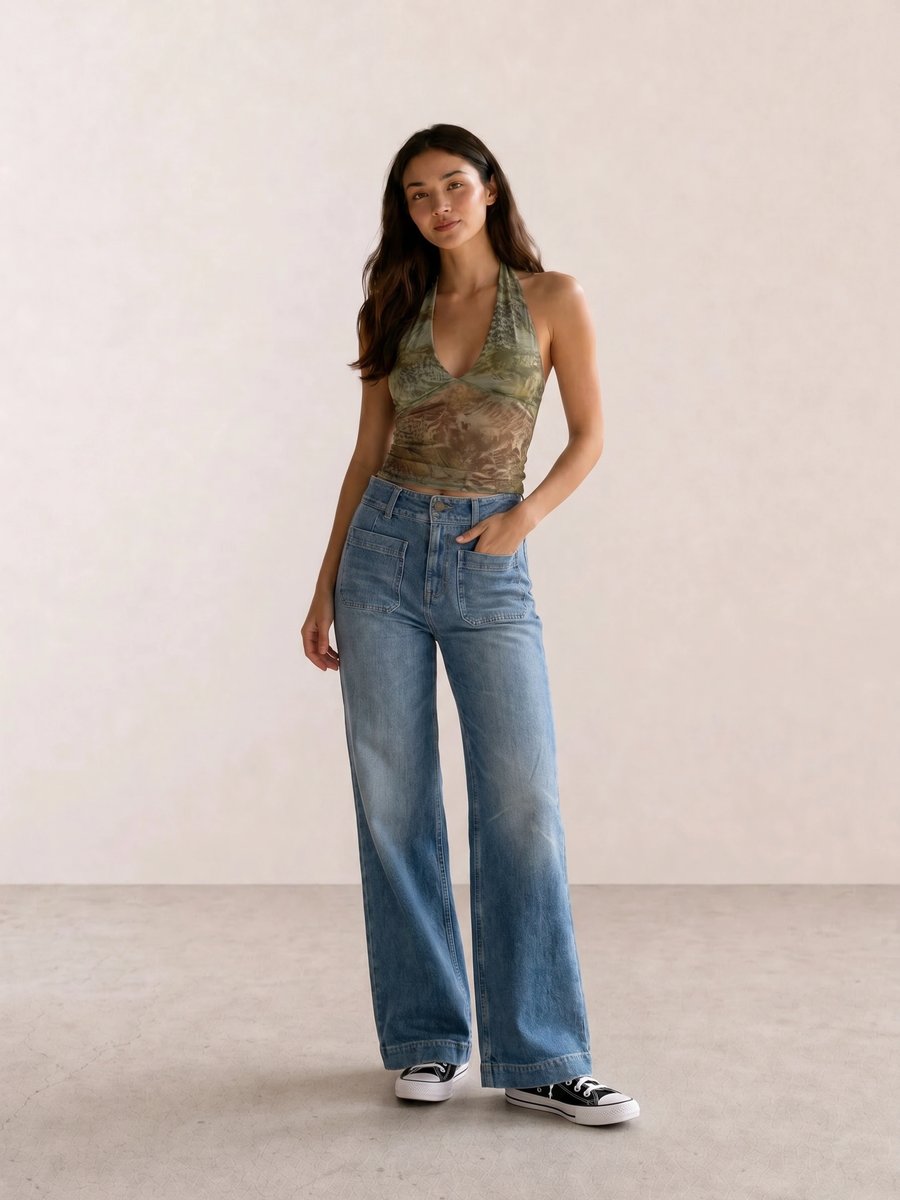
The fabric tension is what makes this work. The Olive Marble Print Mesh Halter Crop Top is lightweight and translucent; the Light Wash Wide-Leg Utility Jeans are heavy and structured. Opposite weights, same silhouette logic. The Black High-Top Canvas Sneakers ground it without adding another material story.
The high waist and straight-through-the-leg cut are the most forgiving proportions in this category.
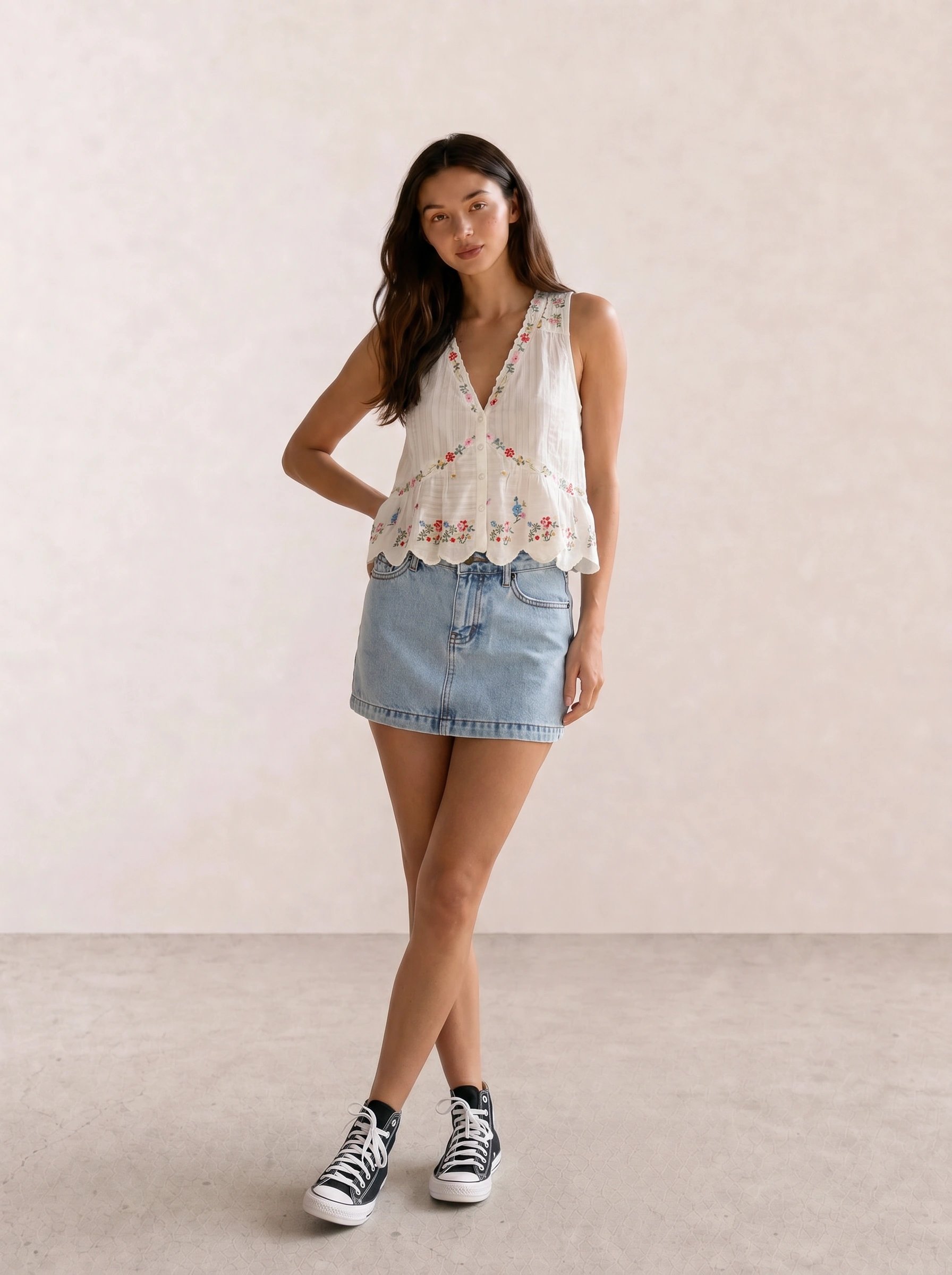
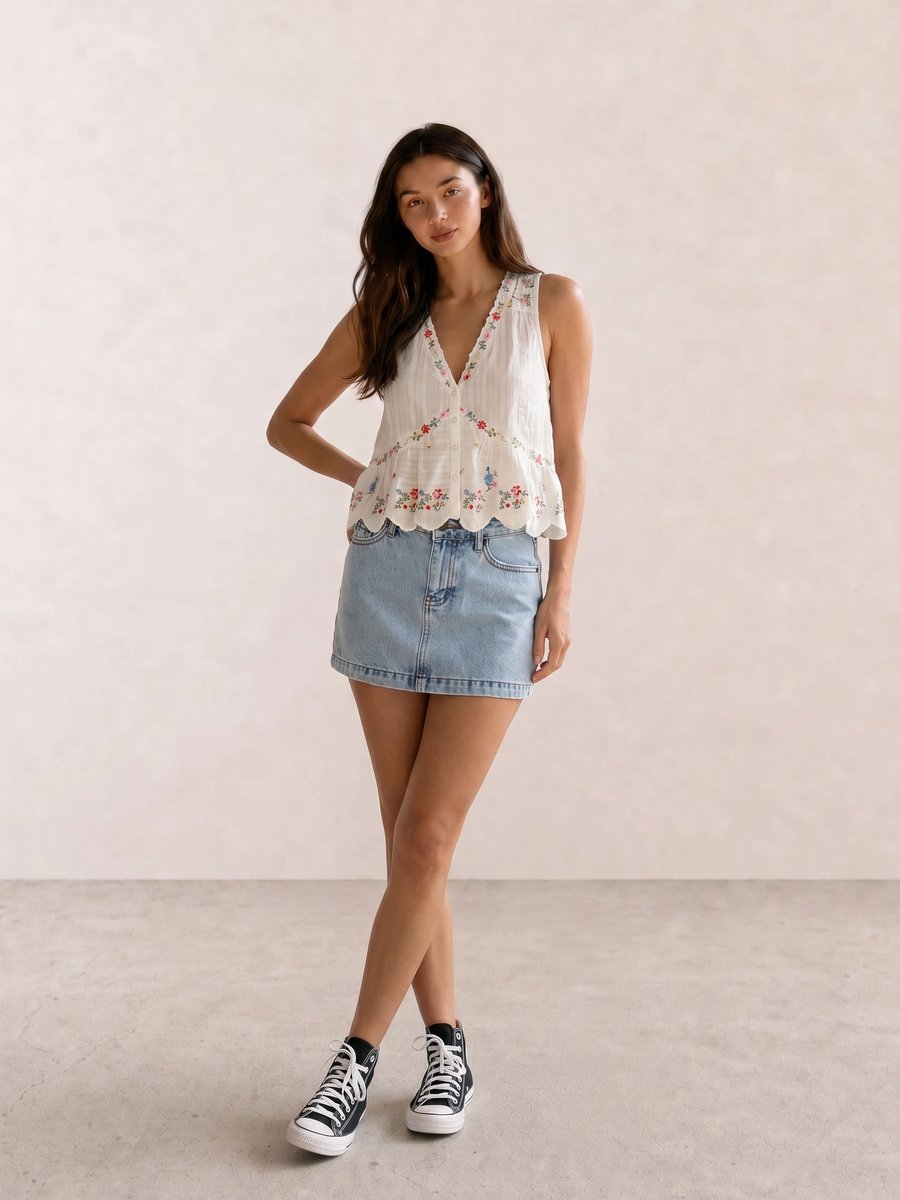
The Cream Floral Embroidered Peplum Top with Light Wash Quilted Denim Shorts is the warm-weather variation. The peplum hem creates volume at the hip, fitted above, mirroring the proportion logic of wide-leg bottoms in cooler months. Pack this for a beach town in June, when the air is warm enough for shorts but the evening might cool down. For more warm-weather retro looks, the summer outfits guide covers gingham flares and boho florals that fit directly into this wardrobe.
Boho and Western Crossover
The 1970s weren't one aesthetic. The decade included polished uptown velvet-and-flares and the rough-around-the-edges Canyon Road boho that ran through Stevie Nicks and California suede culture. These two outfits occupy the latter territory.
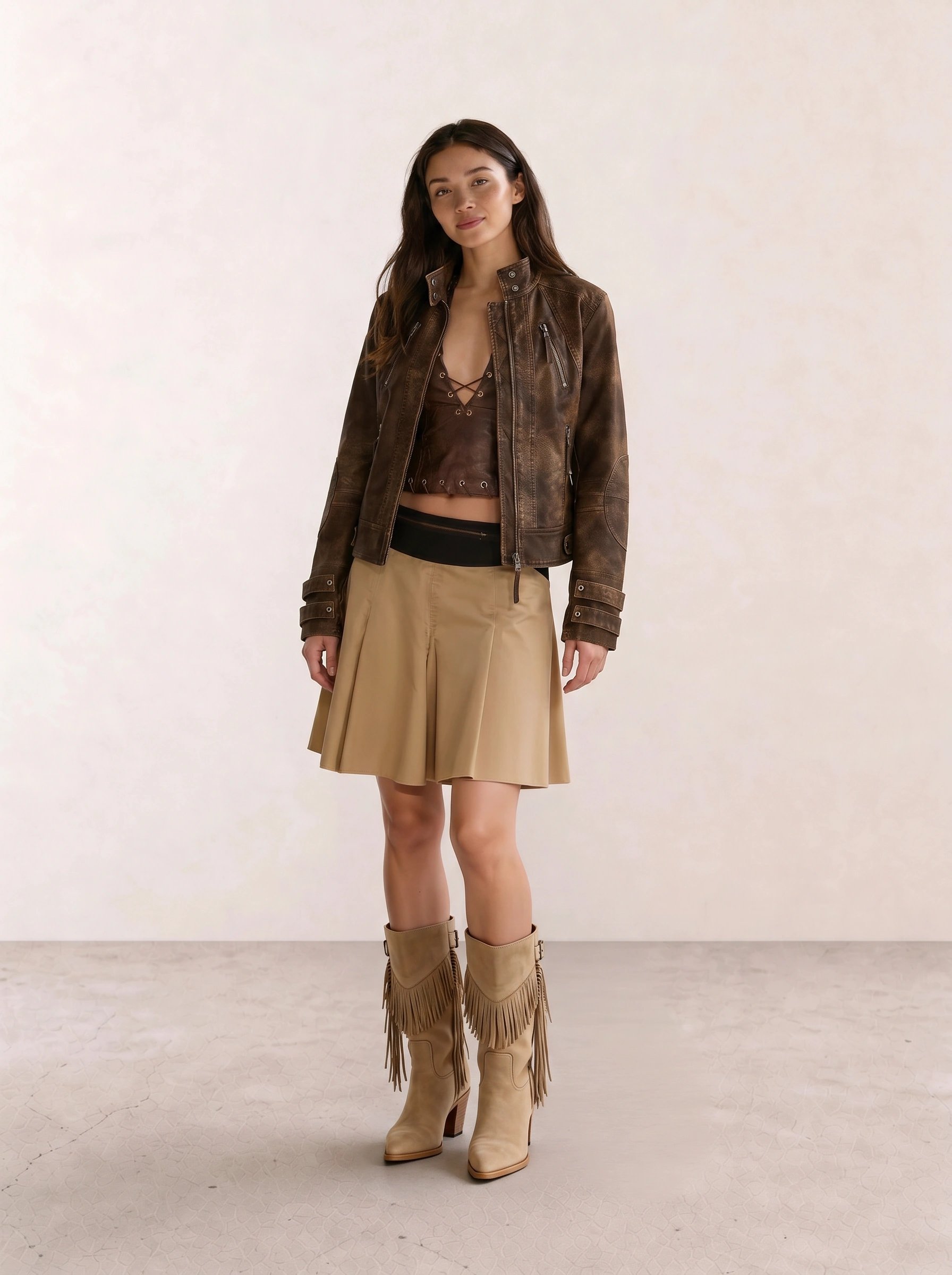
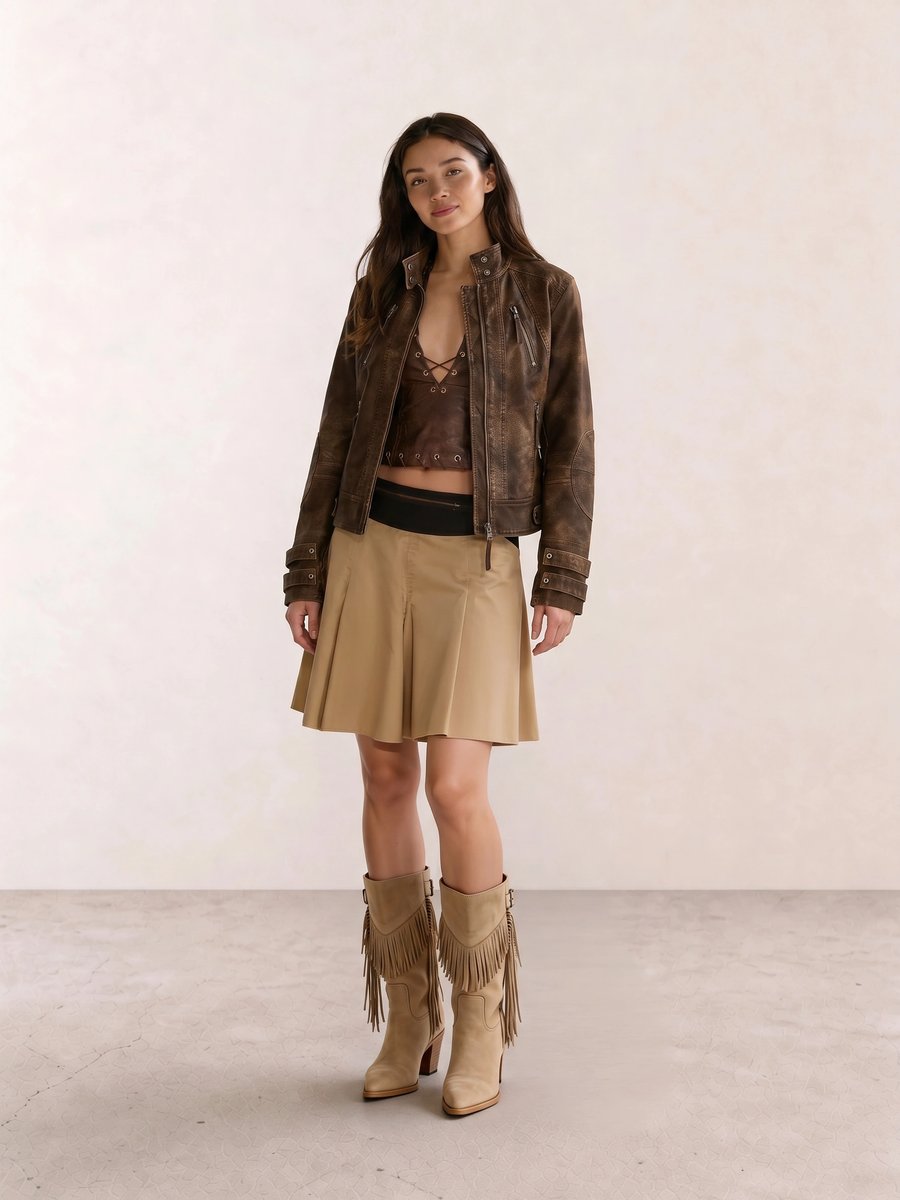
Three textures hold this together, each doing different work. The Dark Brown Distressed Suede Moto Jacket is structured and angular; the Brown Leather Halter Cami beneath it is smooth and body-following; the Khaki Pleated Mini Skirt adds feminine volume at the hem. Rough suede, smooth leather, pleated fabric: three materials within a single earth-tone palette. That's what 70s Western dressing actually looked like.
The Tan Suede Fringe Cowboy Boots are the decade signal. Remove them and this reads contemporary moto-girl, not retro. One strong retro anchor per look is enough; stacking fringe boots, a printed top, and wide-leg flares in a single outfit crosses from inspired to costume.
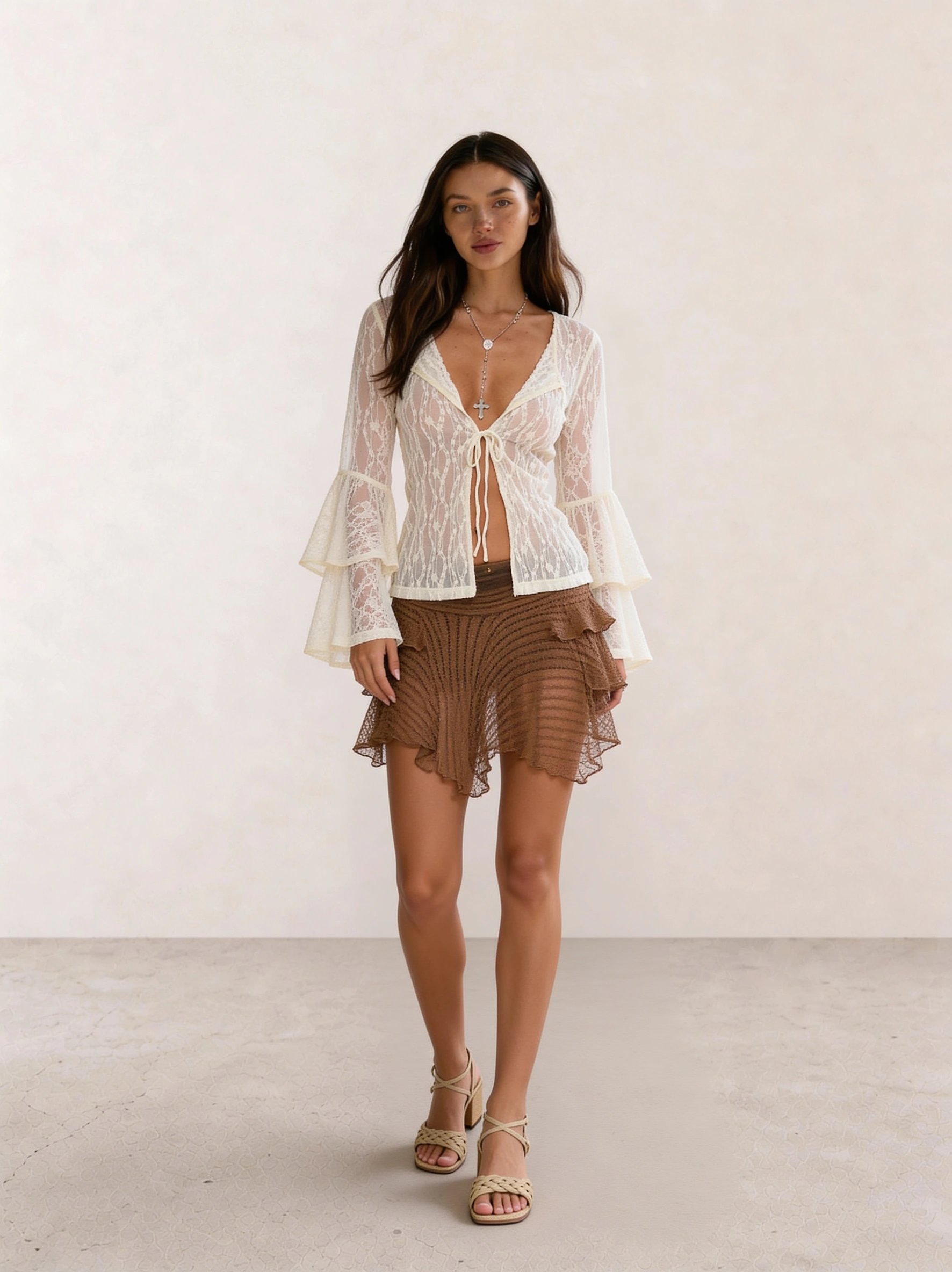
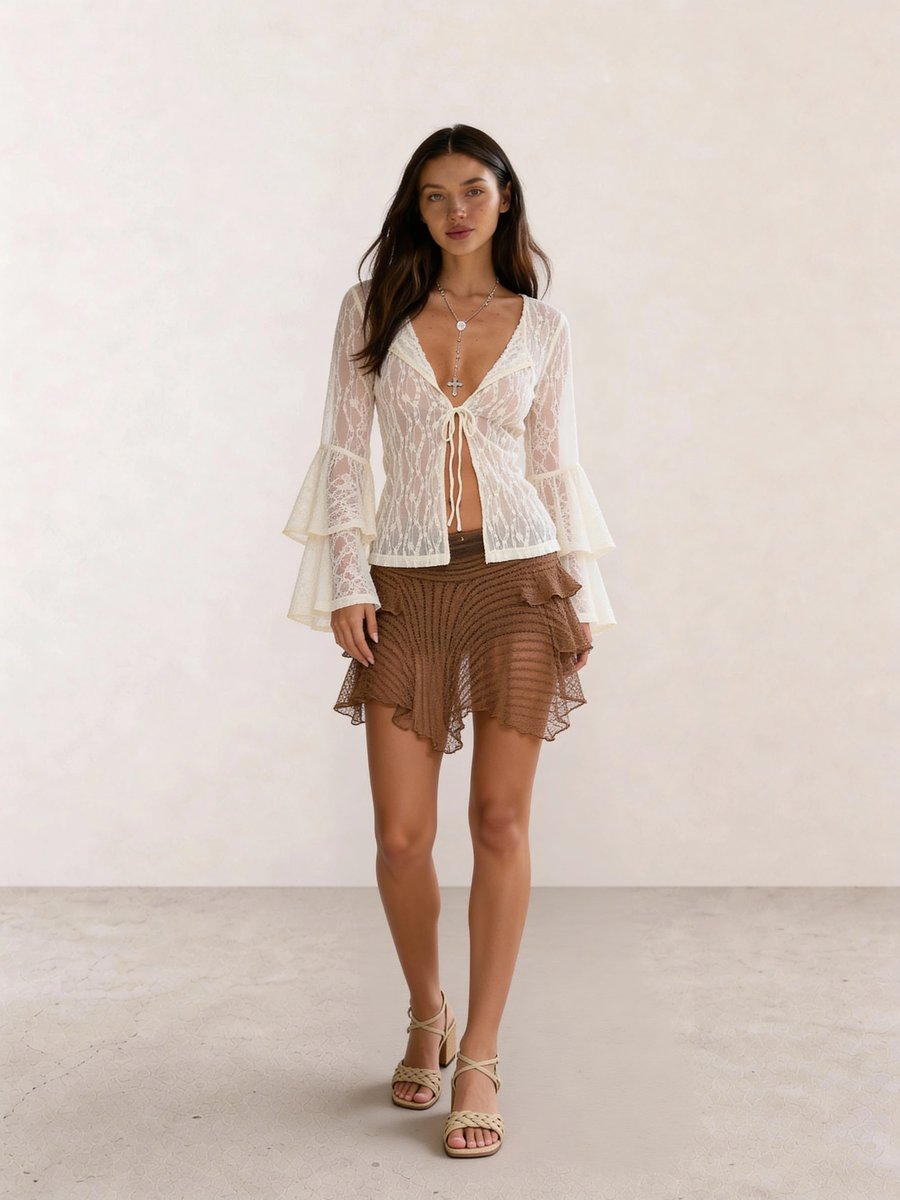
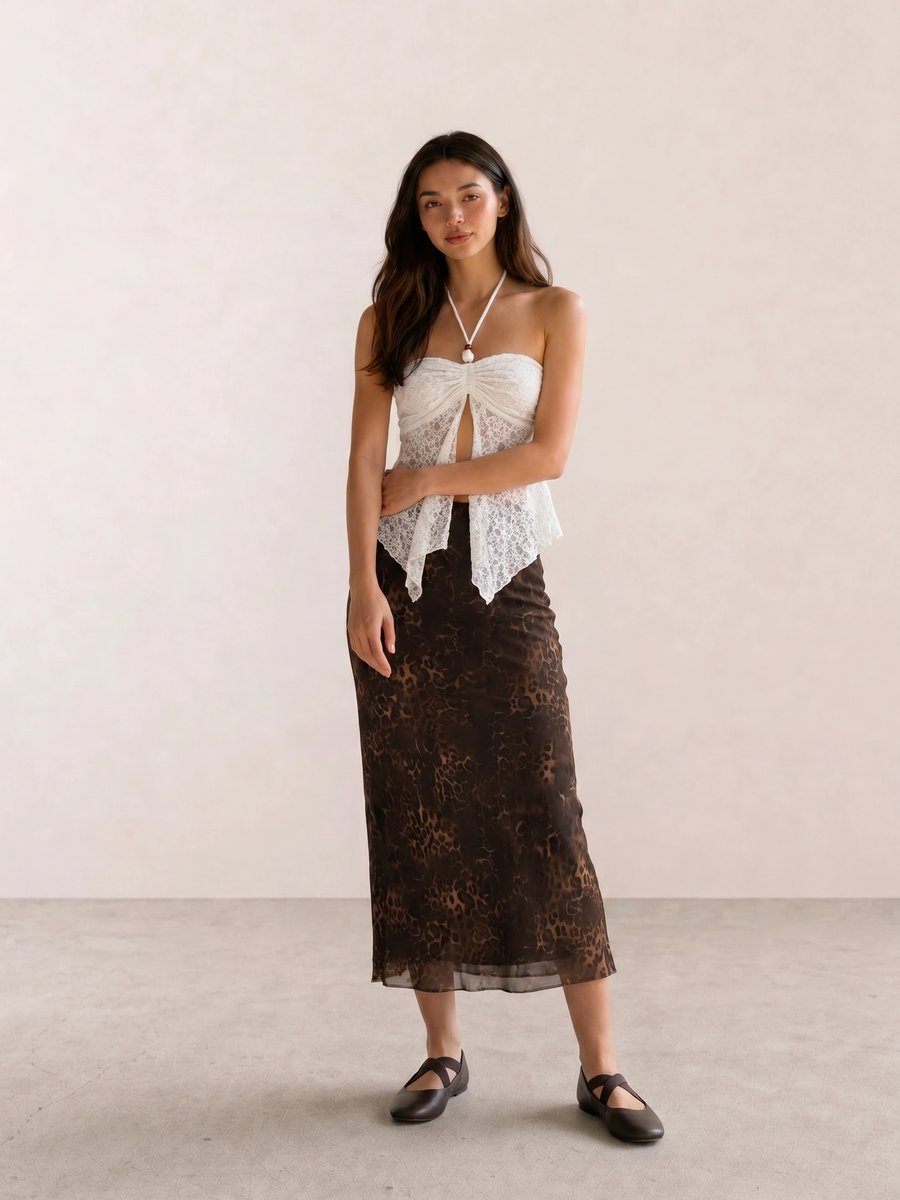
The White Lace Bell-Sleeve Crop Blouse with Brown Crochet Ruffle Asymmetric Mini Skirt is the full boho expression: lace, crochet, and a flowing asymmetric hem all in one look. The color story keeps it coherent: white and brown together read natural and organic, early-70s California rather than maximalist. The Gold Strappy Block Heel Sandals provide necessary proportion at the shoe; without heel height, the layered skirt fabrics read too heavy. For more 70s-influenced evening options, the date night outfits guide includes several looks that sit in this territory.
Mini Skirts with Vintage Edge
The 70s mini sits higher and is fuller than the Y2K micro-mini, often A-line or pleated rather than straight-cut. The vintage edge comes from the pairing, not the skirt itself.
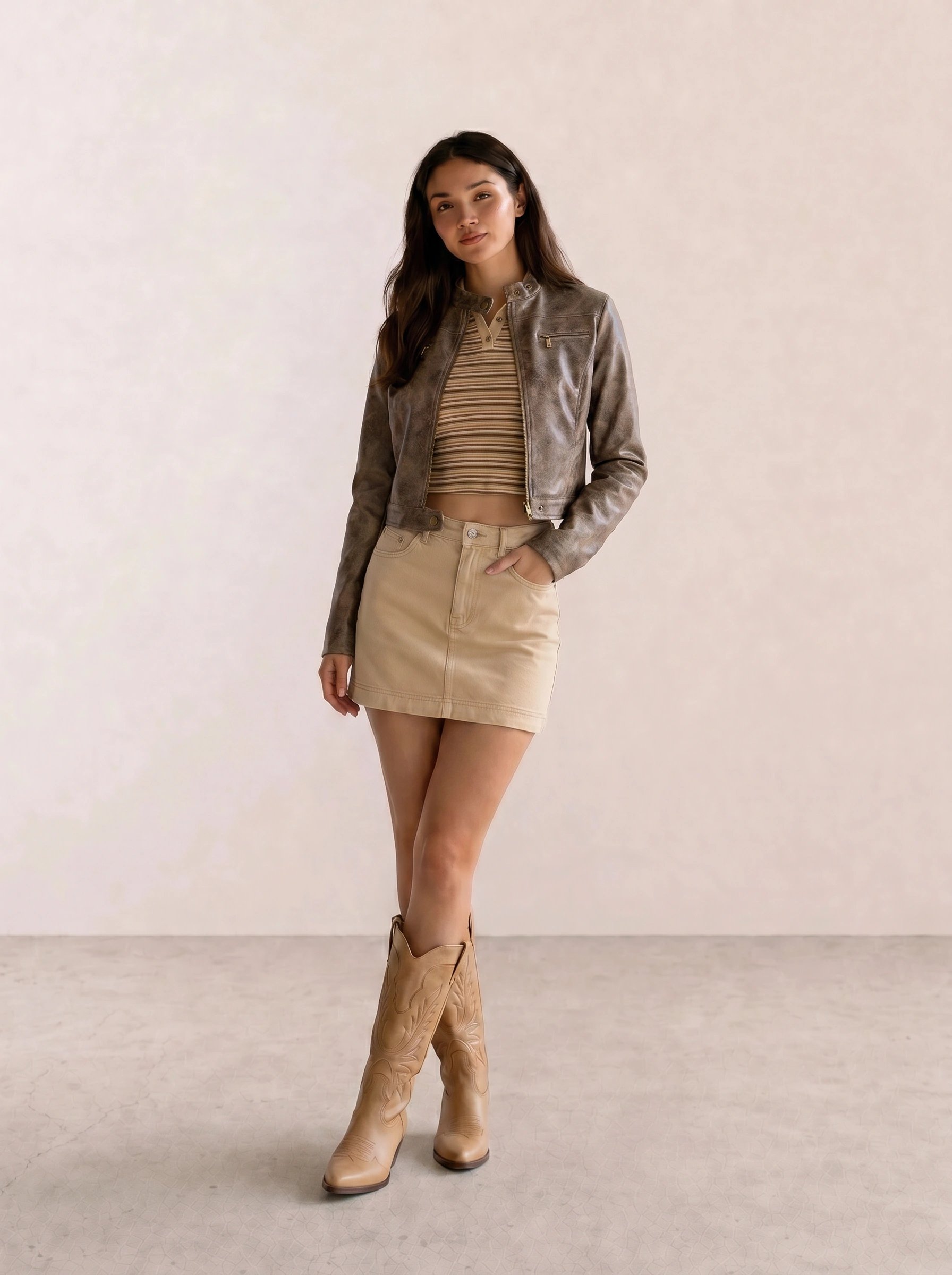
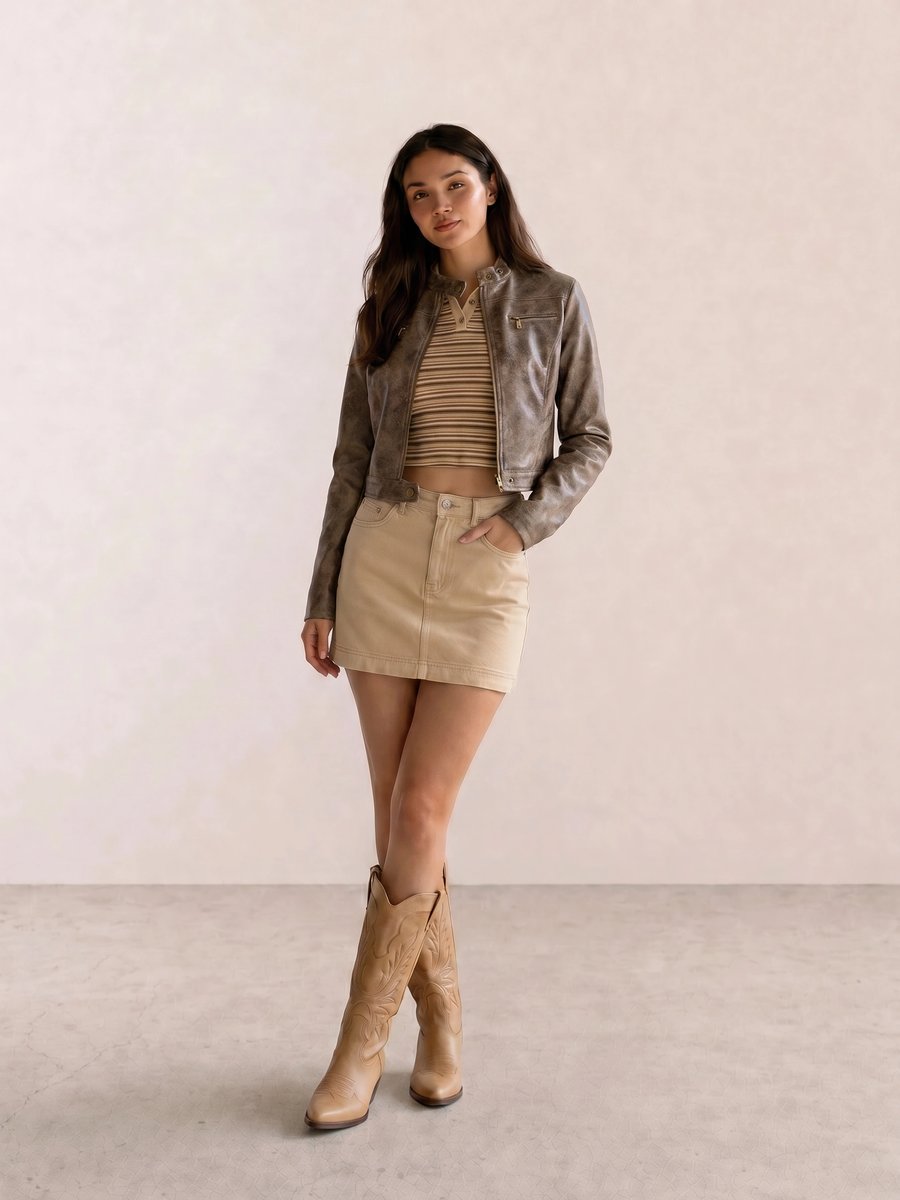
The Grey Leather Moto Jacket over a Beige Striped Polo Crop Top and Khaki Denim Mini Skirt works because the jacket hardens a combination that would otherwise read too soft. The polo's stripe and the khaki mini already have a retro prep quality; the moto jacket introduces decade-appropriate edge. The Tan Embroidered Cowboy Boots are the era signal. Take them away and the decade reference disappears.
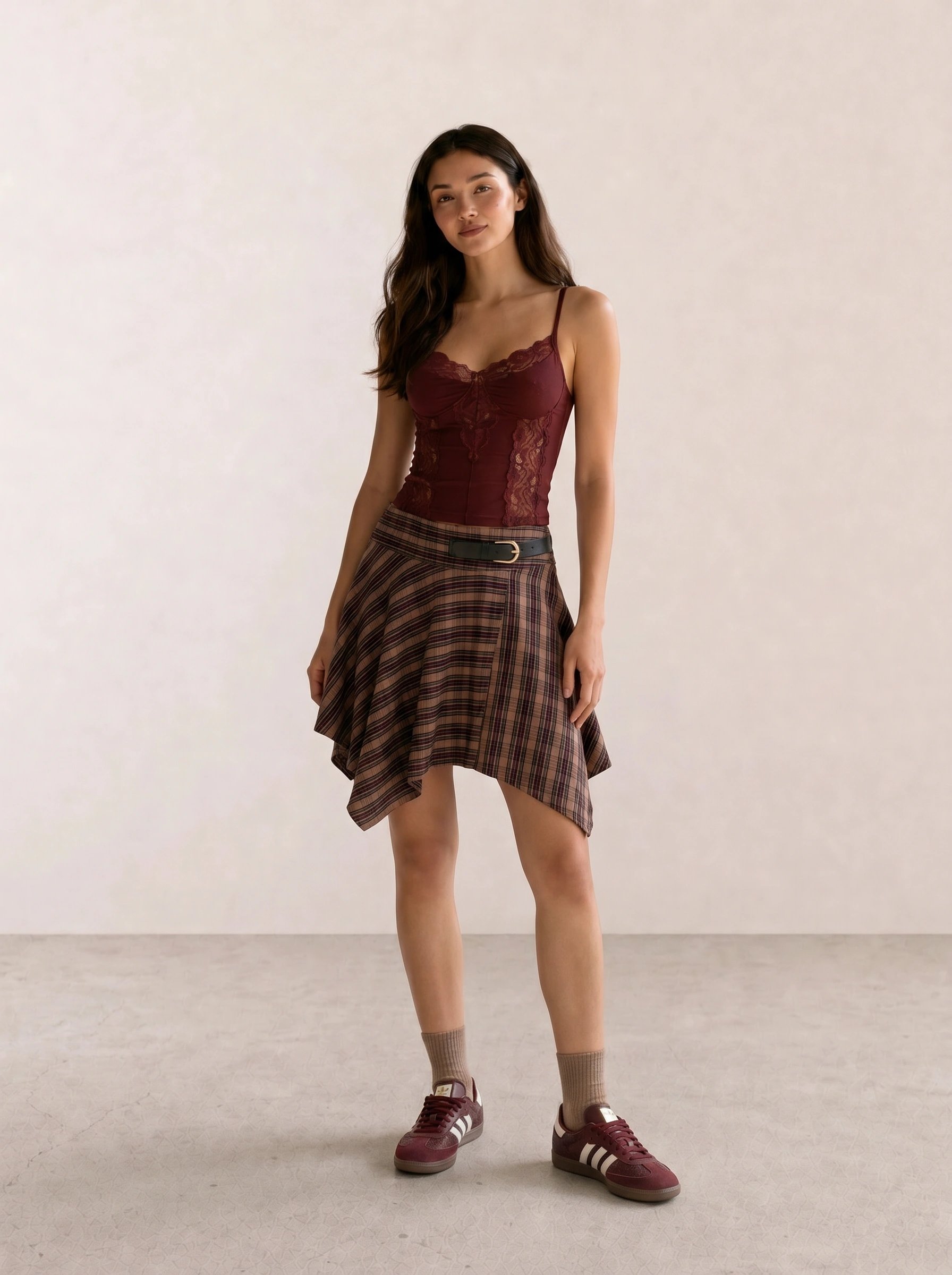
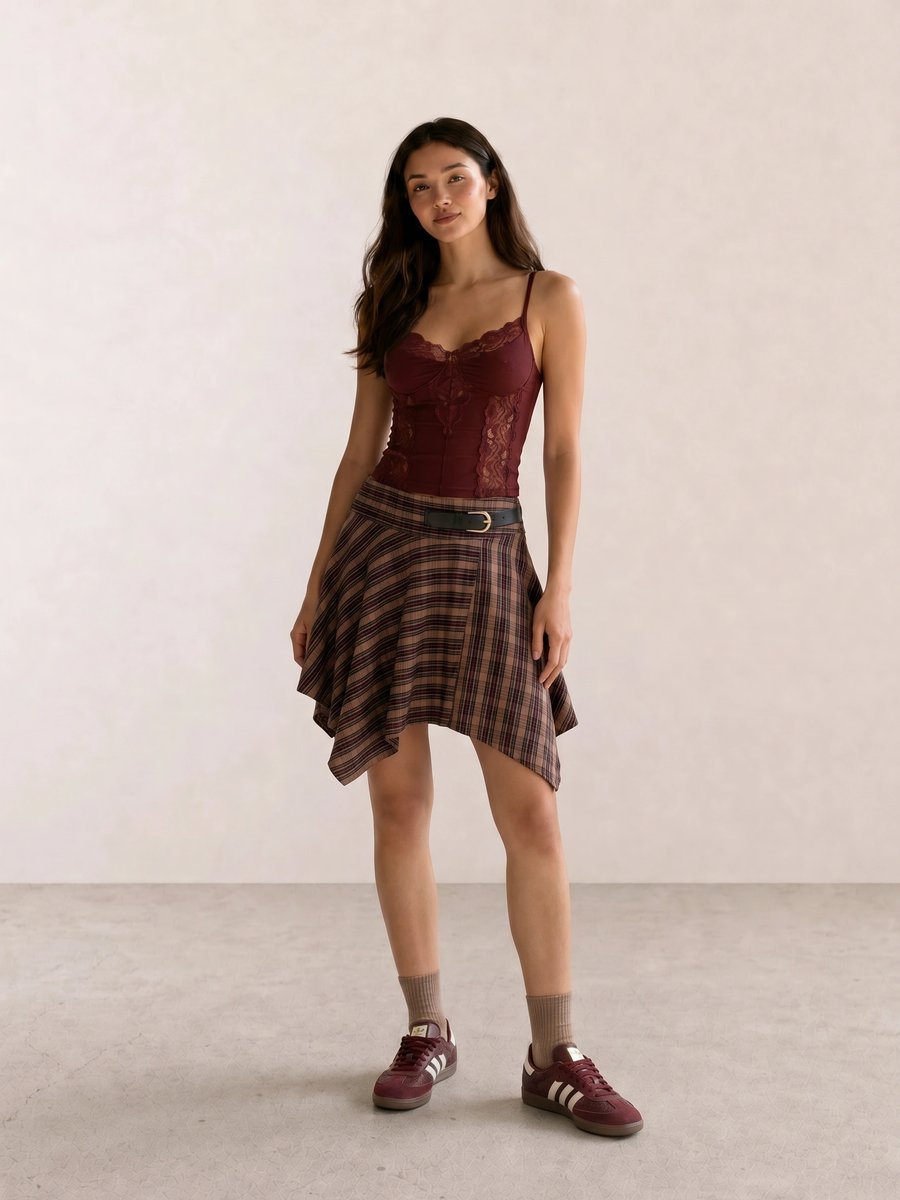
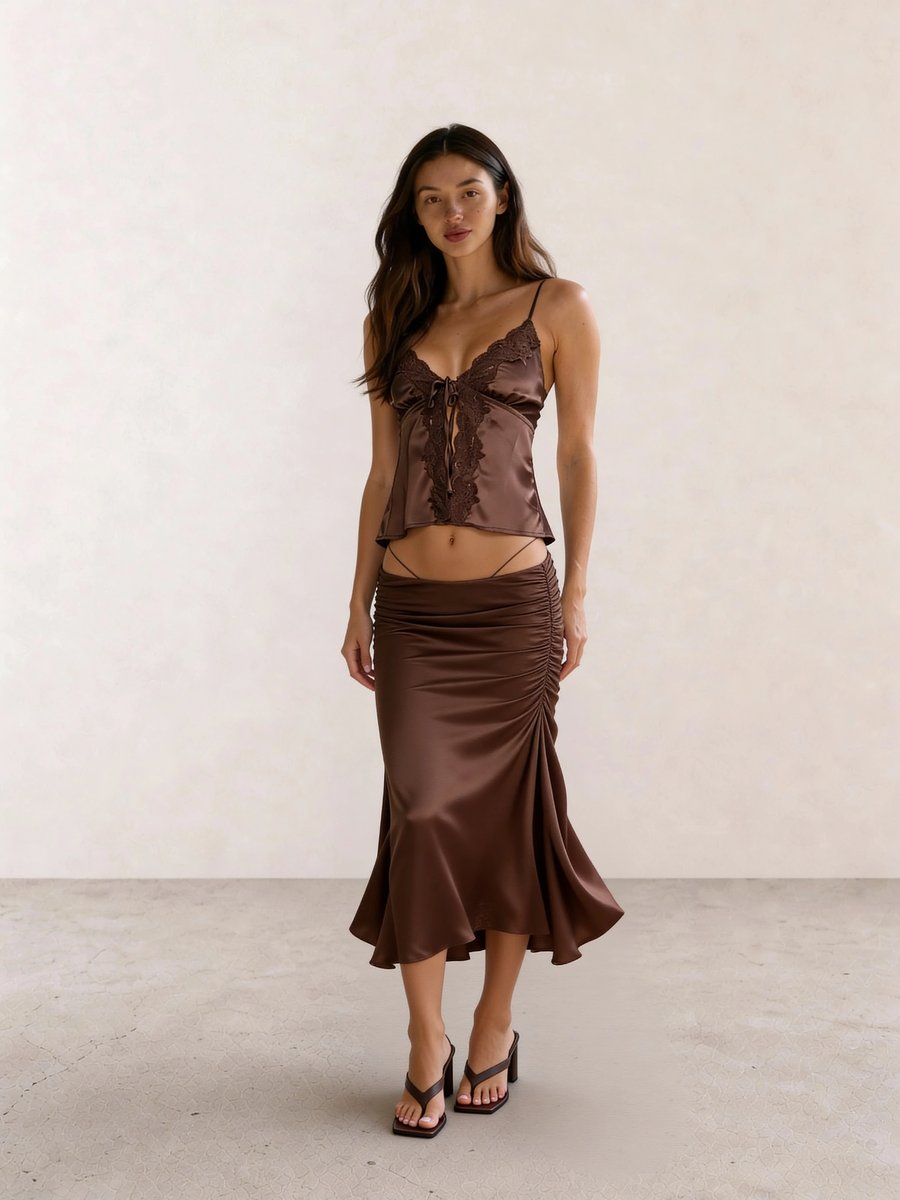
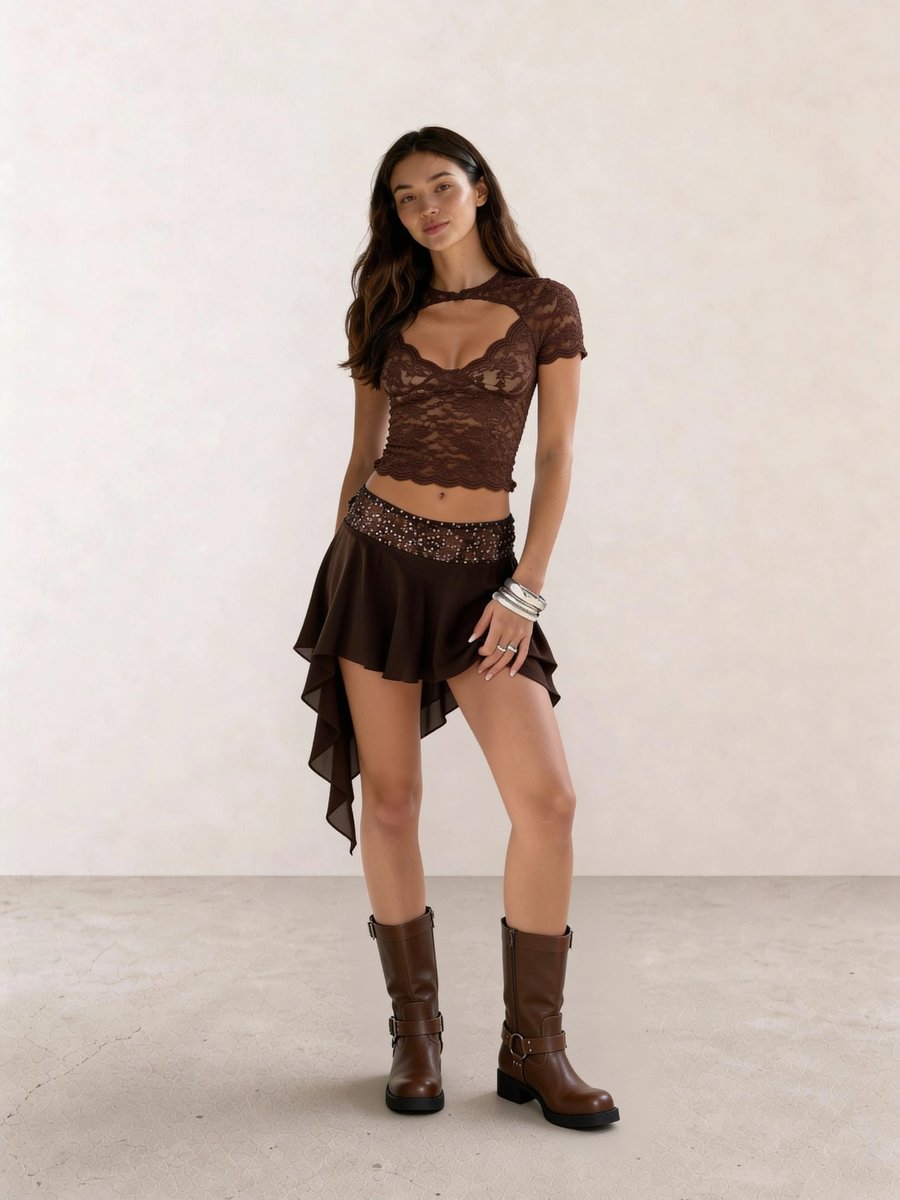
The monochromatic burgundy palette (Burgundy Lace Bustier Cami, Burgundy Plaid Asymmetric Mini Skirt, Burgundy Low-Top Leather Sneakers) removes the distraction of color contrast and makes fabric and texture the entire story. Lace against plaid against smooth leather, all in the same colorway. Intentional 70s maximalism, restrained by color.
Without the monochromatic constraint, lace cami plus plaid mini plus leather sneakers is three competing signals. The single-color edit holds it together.
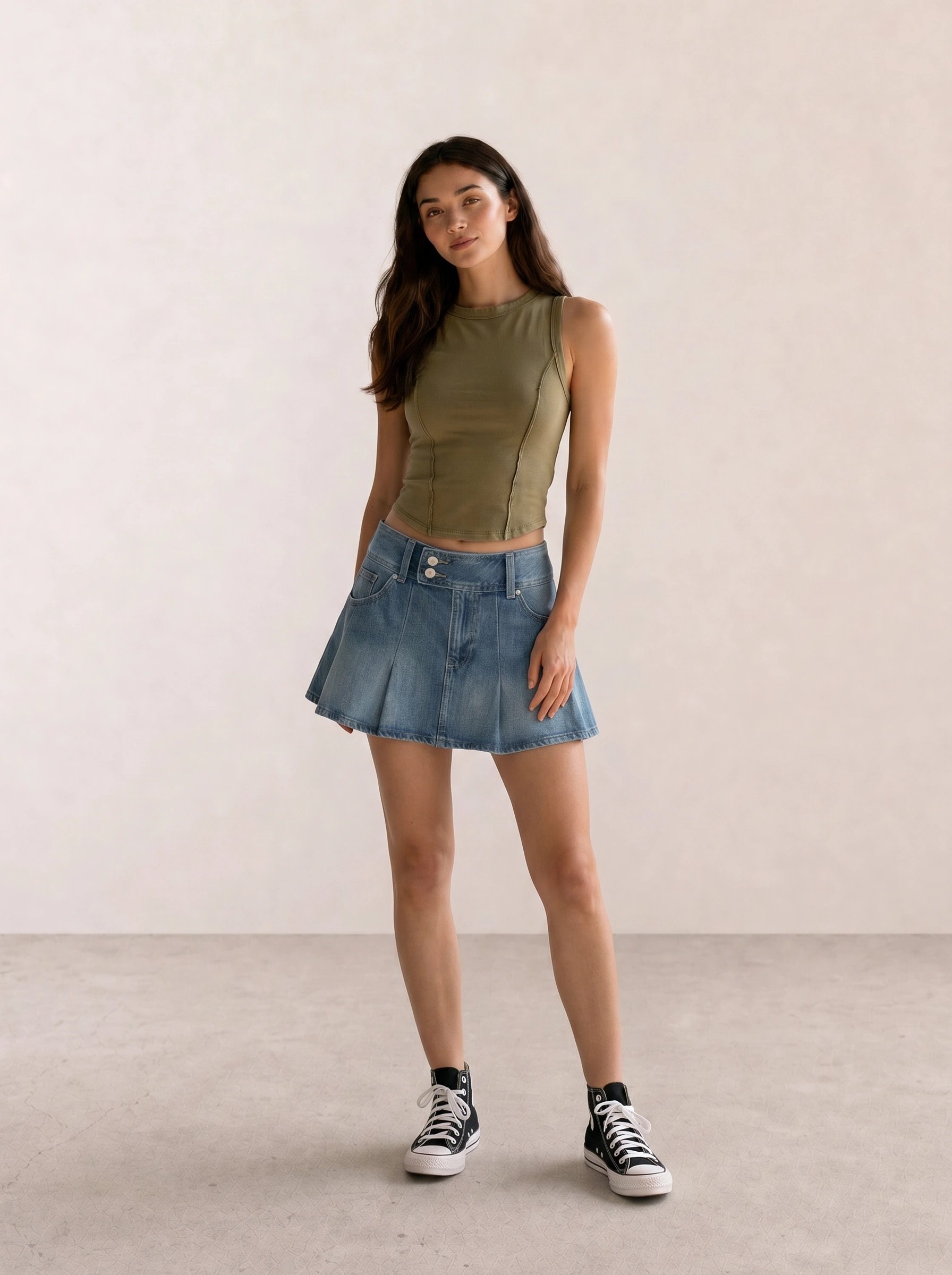
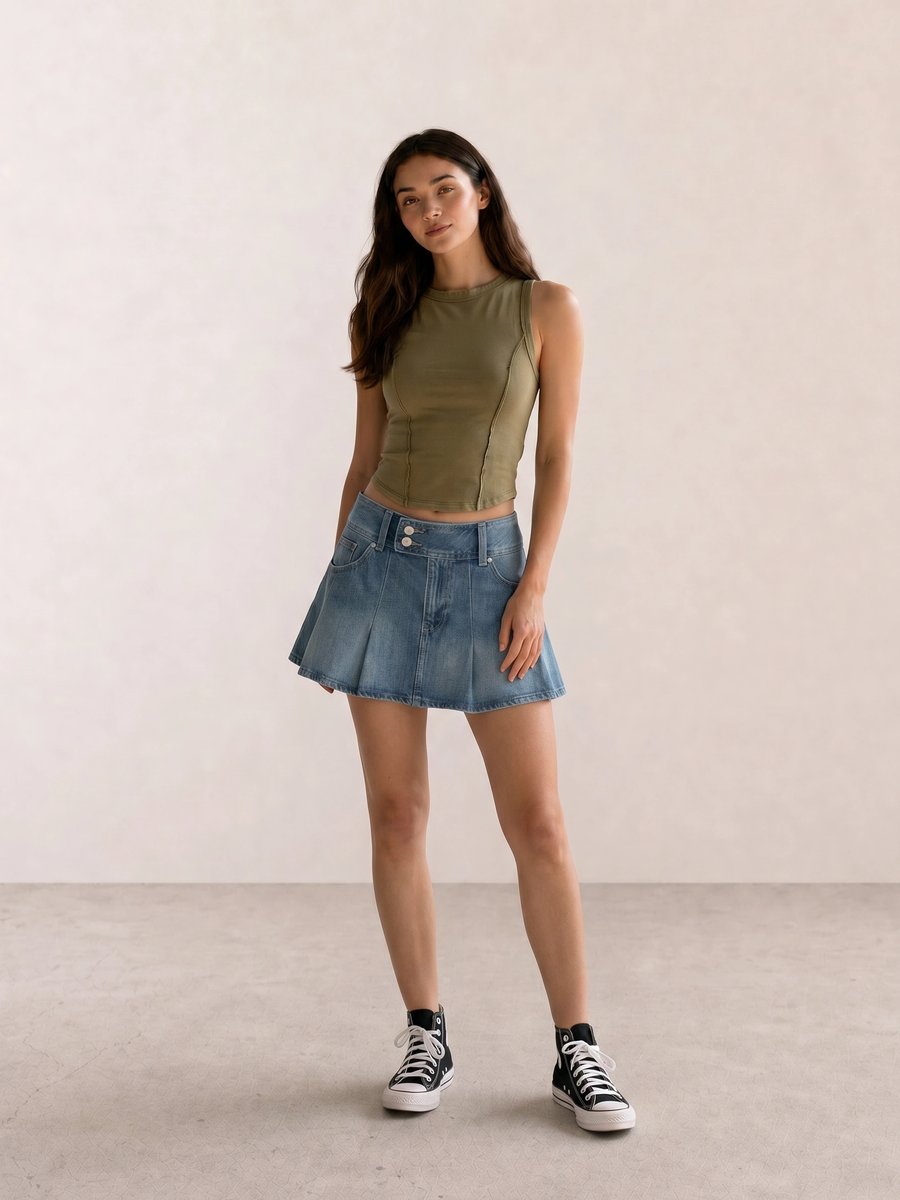
The Olive Ribbed Crop Tank with Light Wash Denim Pleated Mini Skirt is the shortest route to the 70s casual silhouette. Ribbed crop, pleated denim mini, Black High-Top Canvas Sneakers: a three-piece formula that requires no styling thought. Try it before committing to flares or wide-leg volume.
The Accessories That Finish the Silhouette
The outfit formula is silhouette-first, but accessories close the era gap. Three pieces do most of the work.
A wide belt, worn over a tucked top or a wrap blouse, makes the waist architecture visible from a distance. The 70s defined waistlines more aggressively than any other decade; a belt is the fastest way to signal that intention. Look for tooled leather or woven leather in brown, tan, or cognac.
Round sunglasses with a thin metal frame, small to medium scale. Oversized oval and rectangular frames both miss the reference. Round frames anchor the era; everything else can be contemporary.
A structured suede or leather bag at shoulder or top-handle length. The saddle bag shape (curved bottom, center clasp) is the decade's bag silhouette. Crossbody or hobo-style bags work too; the material matters more than the shape. Avoid nylon or neoprene; they break the material logic of the whole outfit.
One of these three is enough. All three is deliberate. They don't tip into costume because they're functional objects, not props.
The Retro-Vintage Wardrobe: Key Pieces and Where to Shop
The retro vintage aesthetic is built from a small number of structural pieces:
High-waist flare or wide-leg jeans are the foundation. Fit matters more than price here. Light wash reads closer to the decade than dark. The rise must sit at the natural waist; hip-rise versions don't create the leg-lengthening proportion the silhouette depends on. Most flare jeans run long to accommodate the sweep, so petite frames often need a hem. Factor that into the budget when buying new, or source secondhand at the right inseam length.
A leather or suede jacket in any earth tone: brown, dark olive, burgundy. It prevents a retro look from tipping into recreation. Budget-friendly leather-look options work here. Genuine suede marks in wet weather; spray it before first wear.
Fitted or cropped tops in natural fabrics: lace, velvet, cotton, mesh. Avoid synthetic-looking polyester; it kills the 70s texture logic. Thrift stores are the best source. Authentic vintage lace tops and velvet crops are cheap, original, and easy to find. Lace and velvet typically need hand washing or dry cleaning, so check labels before buying secondhand.
At least one printed top — gingham, plaid, houndstooth, or small-scale floral. The print is the accent; the silhouette does the rest.
Where to shop: Depop and thredUP for authentic vintage tops and jackets. Nordstrom and ASOS for new flare and wide-leg jeans in accurate proportions. Princess Polly for crop tops with tie-front and lace details.
Common Retro Vintage Styling Mistakes
Overloading the retro signals is the most common error. Fringe boots plus vintage print top plus wide-leg flares plus round glasses in one outfit isn't 70s-inspired; it's a costume. One strong retro anchor per look. The silhouette does the rest.
Bottoms that sit at the hip. The entire proportion logic of this aesthetic depends on a natural-waist fit. Hip-rise wide-leg jeans don't create the leg-lengthening effect; they just add bulk. If the pants aren't sitting at or above the belly button, the 70s silhouette won't read.
Tops that are too long. A regular-length top tucked into high-waist jeans blurs the waist definition more often than not. A genuine crop — ending at or just above the waistband — creates the clean proportion line the silhouette needs.
Two competing prints. The eye needs somewhere to rest. A printed top needs a solid bottom and vice versa. Two prints eliminate the 70s visual logic, which is about considered, coherent dressing — not pattern mixing.
Frequently Asked Questions
What is the retro vintage aesthetic? The retro vintage aesthetic refers to fashion inspired primarily by 1970s American and European fashion: high-waisted flare and wide-leg silhouettes, earth-tone color palettes, natural-feeling fabrics (velvet, lace, denim, corduroy), and decorative details like embroidery, plaid, and fringe. The 2026 interpretation keeps the proportion logic while updating the fabric and footwear choices.
How do I style retro vintage outfits in 2026? Start with the proportion formula: high-waist bottom, fitted or cropped top, visible waist definition. Choose one retro signal per outfit (a leather jacket, a vintage print, or fringe boots) and let the silhouette carry the rest. Retro sneakers are a more contemporary shoe choice than platforms and keep the look from reading as costume.
What jeans work best for a 70s-inspired look? High-waist flare jeans or high-waist wide-leg jeans in a light wash are the most period-accurate choice. The key is waist placement — the rise must sit at the natural waist, not the hip. Flares (wider from the thigh) suit taller frames; wide-leg cuts (wider from the knee) work across more body types.
Is retro vintage still relevant in 2026? Yes, and the trend is still in its growth phase. The 70s revival that began building in 2024 accelerated into 2026 as the counter-movement to Y2K's grip on the prior three years. Unlike accessory-led micro-trends, the 70s revival is proportion-based — silhouette trends have longer staying power than it-bag or it-shoe cycles.
What's the difference between boho and retro vintage? Boho is a permanent aesthetic that borrows from multiple eras: 1960s folk, 1970s California, 1990s festival. Retro vintage specifically reconstructs the 1970s proportion logic: high waist, wide-leg or flare silhouette, defined waistline. You can wear boho without touching 70s proportions; retro vintage is always anchored in that specific silhouette formula. Practically: a maxi dress with flowy sleeves is boho. The same dress belted at the natural waist paired with wide-leg jeans is retro vintage.
How is the 70s revival different from Y2K? Y2K was accessory-led: low-rise, body-skimming, with decade-specific it-pieces (butterfly clips, tiny sunglasses, cargo pants). The 70s revival is proportion-led. Silhouette trends are harder to displace than accessory trends because they require a wardrobe rebuild rather than a single purchase. That's why this cycle is reading as a real shift rather than a micro-trend. When the bottom silhouette changes, from hip-rise to natural-waist, from slim to wide-leg, the whole wardrobe adjusts around it. Y2K's grip on the prior three years made the correction more dramatic when it came.
What shoes go with retro vintage outfits? Retro sneakers with a chunky sole or vintage colorway are the most current choice. Kitten-heel mules dress the look up without losing the era. Cowboy or Western boots work for the boho-Western crossover. Avoid contemporary chunky sneakers or thin-soled fashion sneakers; neither reads correctly with wide-leg or flare silhouettes.
The full retro vintage outfit collection covers every variation of this aesthetic, from casual Saturday to dinner without changing. For spring-ready looks that cross over with this wardrobe, see the spring outfit ideas guide. The flare jeans styling guide covers proportion rules, shoes, common mistakes, and nine outfits.
Save These Looks
Pin these retro vintage outfits to your boards:
- Dark Brown Leather Jacket & Vintage Flare Jeans — save for 70s casual day looks
- Vintage Gingham Summer Outfit — save for summer festival and picnic inspo
- Brown Leather Moto & Fringe Cowboy Boots — save for your Western boho board
- White Lace Bell Sleeve & Brown Ruffle Skirt — save for boho evening outfit ideas
- Burgundy Monochromatic Outfit — save for tonal dressing and vintage style boards
The flare jeans, the leather jacket, the velvet wrap top: pick one and start there.
Weekly outfit picks and style guides — no fluff, unsubscribe anytime.