What Is the Coquette Aesthetic? The 2026 Answer
What is coquette aesthetic? Bows, lace, soft pastels, and romantic silhouettes. Learn the origin, key pieces, and how to dress coquette in 2026. Start here.
STYLEFINDEN editorial review: checked before publication for wearability, proportion logic and real-life outfit use. We explain our editorial method and image policy on the About page and keep affiliate independence details in the affiliate disclosure.
The coquette aesthetic is a style rooted in hyper-feminine dressing — think bows, lace, soft pastels, ballet flats, and romantic silhouettes that nod to mid-century femininity without taking themselves too seriously. It borrows from Brigitte Bardot's 1960s playfulness, filters it through the Pinterest era, and lands somewhere between vintage charm and modern girlishness. If an outfit makes you think of ribbons tied in your hair and a dress that swirls when you spin, you're in coquette territory.
For the full breakdown of how to dress coquette in 2026 — including key pieces, styling rules, and what to avoid — see the complete guide to coquette fashion.
Where the Coquette Aesthetic Comes From
The word "coquette" is French for a flirtatious woman — someone who leans into her femininity with deliberate charm. As a fashion aesthetic, it surfaced on Tumblr in the early 2010s, peaked on Pinterest around 2020–2022, and then fully exploded on TikTok under hashtags like #coquetteaesthetic and #coquetteoutfit. The reference point is Brigitte Bardot at Saint-Tropez: gingham, bows in the hair, fitted bodices, a general air of not needing anyone's approval. By 2024 it had become one of the most-searched fashion aesthetics online. In 2026 the aesthetic has matured slightly — less maximalist, more texture-led — but the core DNA hasn't changed.
The Visual Codes: What Makes Something Coquette
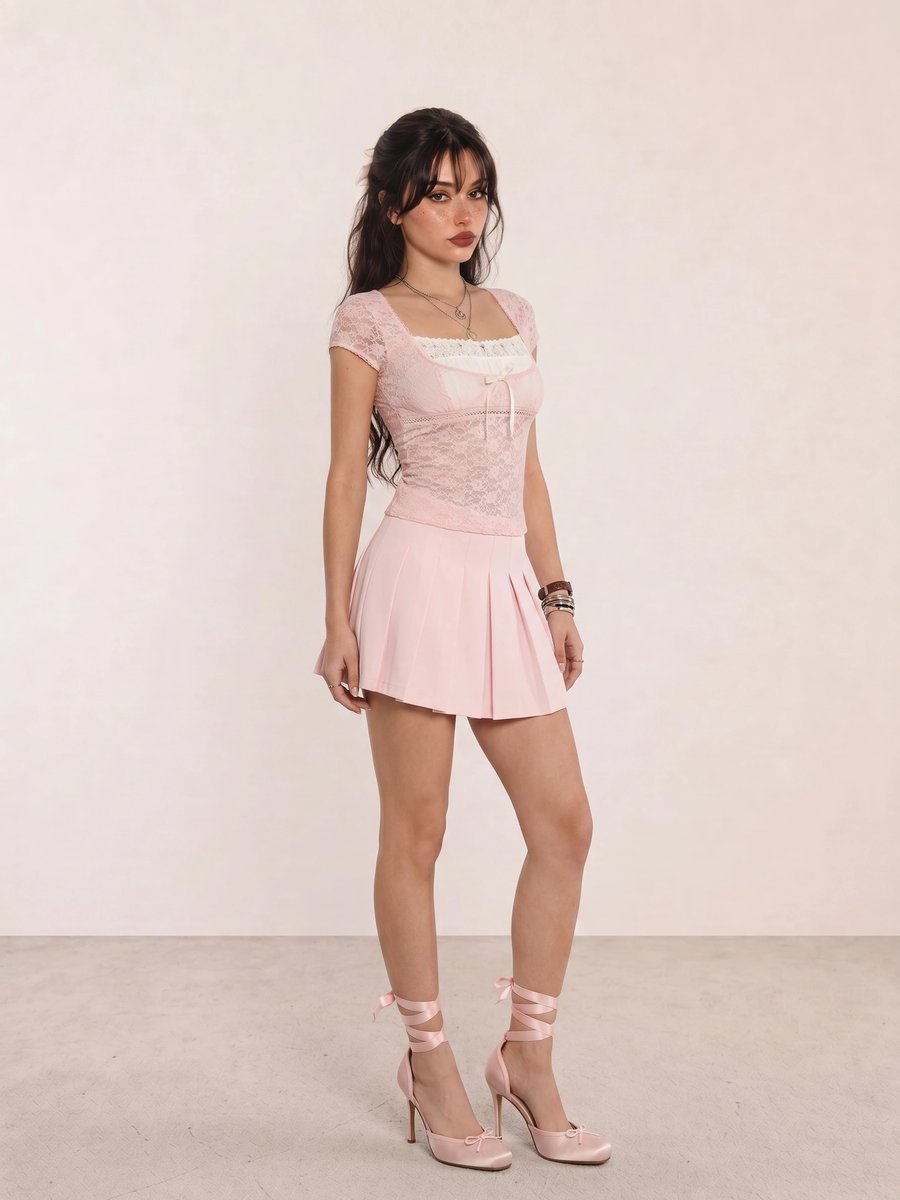
A few elements appear in almost every coquette outfit: bows (on tops, in the hair, as bag details), lace (trim, overlay, full lace tops), ballet flats or kitten heels, soft pastels and cream (pinks, whites, ivories, lilac), and romantic feminine silhouettes — mini skirts, corset tops, ruffle hems, co-ord sets. Ribbons used as hair accessories are the aesthetic's signature move. The overall effect is deliberately pretty, self-aware, and unapologetically feminine.
Coquette Outfits: What It Looks Like in Practice
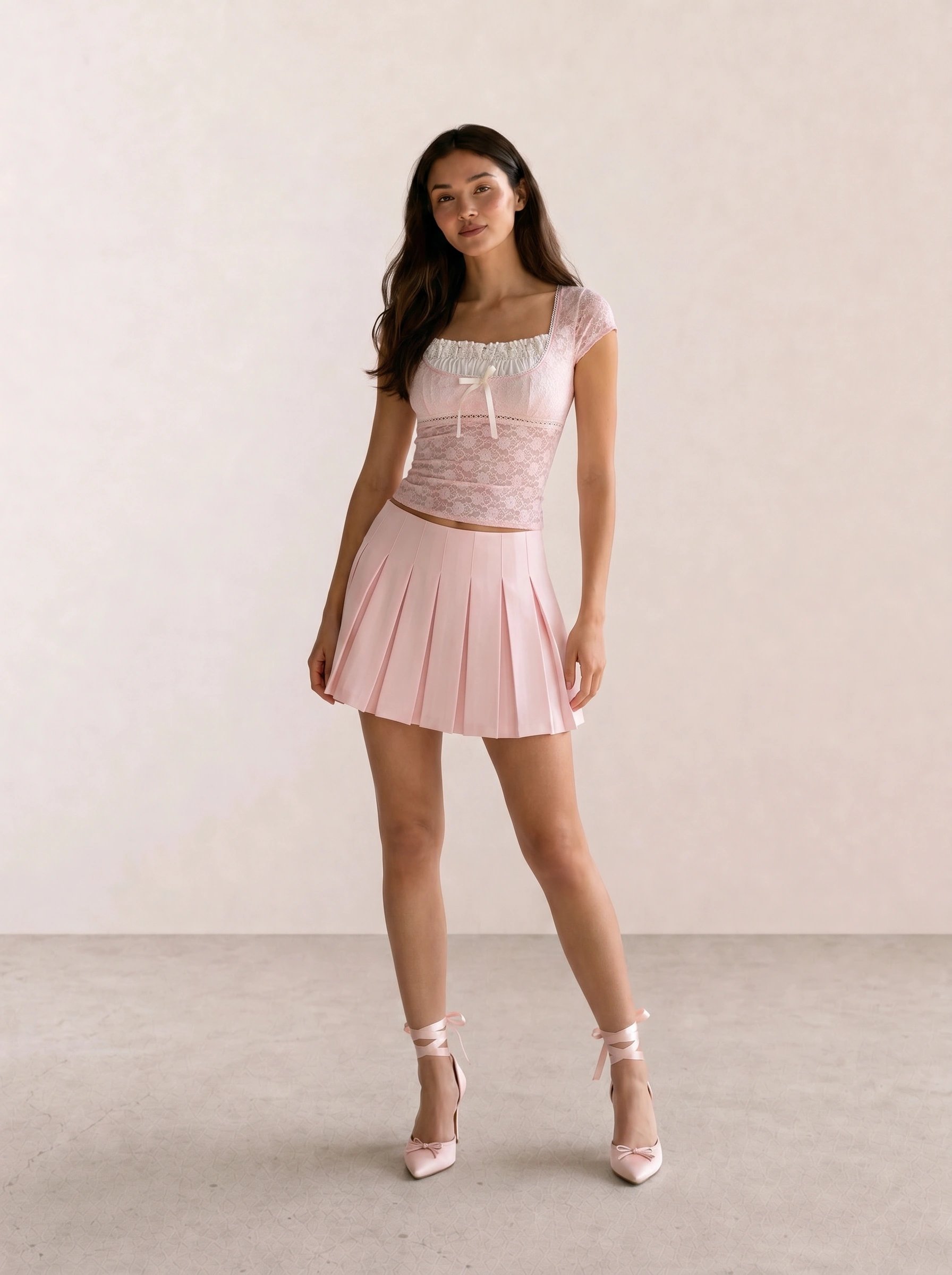
This is probably the clearest visual definition of coquette in a single outfit. The Pink Lace Bow Crop & Pleated Mini hits every code at once: lace texture, bow detail, fitted top, pleated skirt, satin ballet heels. If you had to show someone a photo and say "this is coquette," this is the photo.
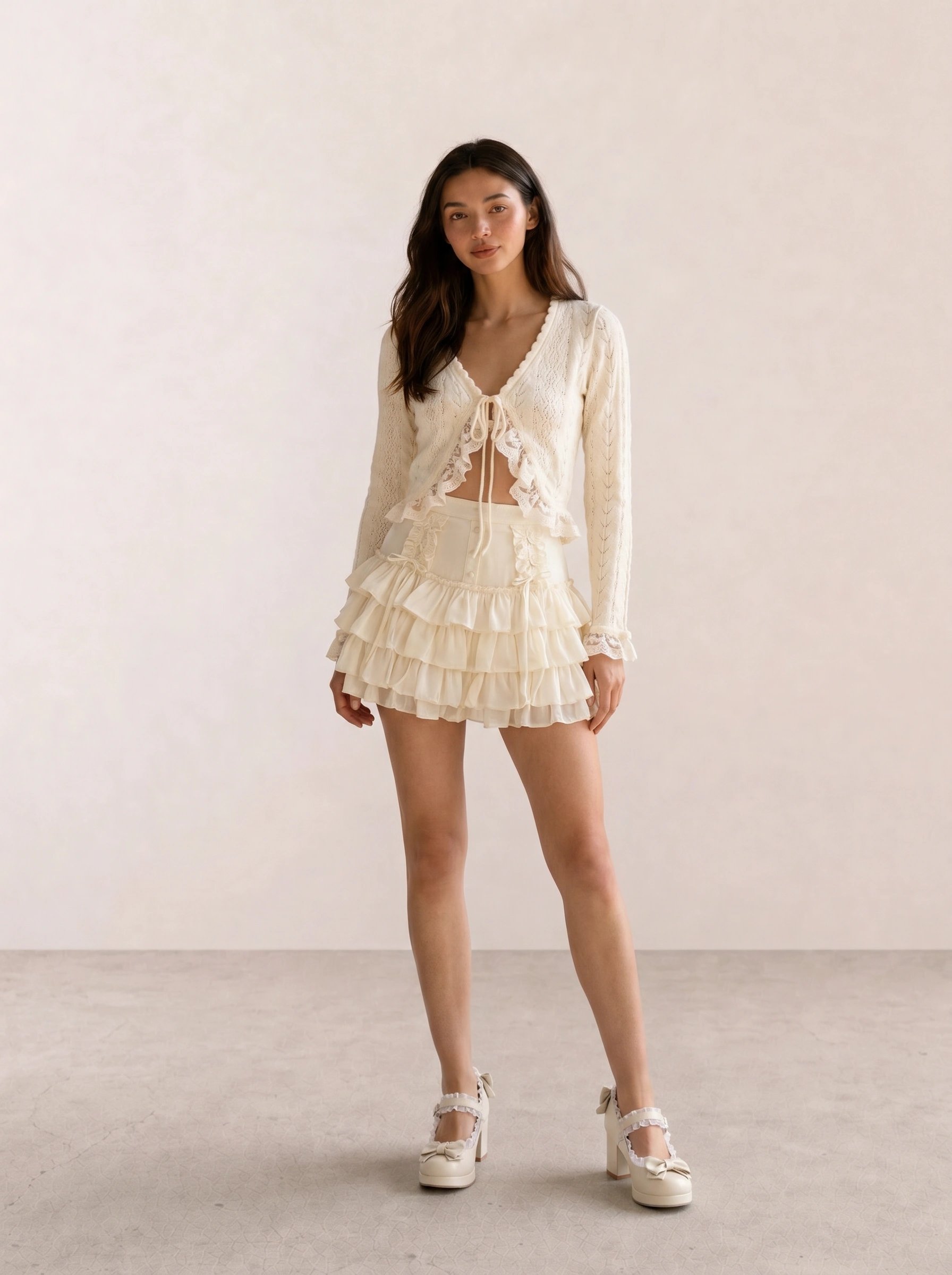
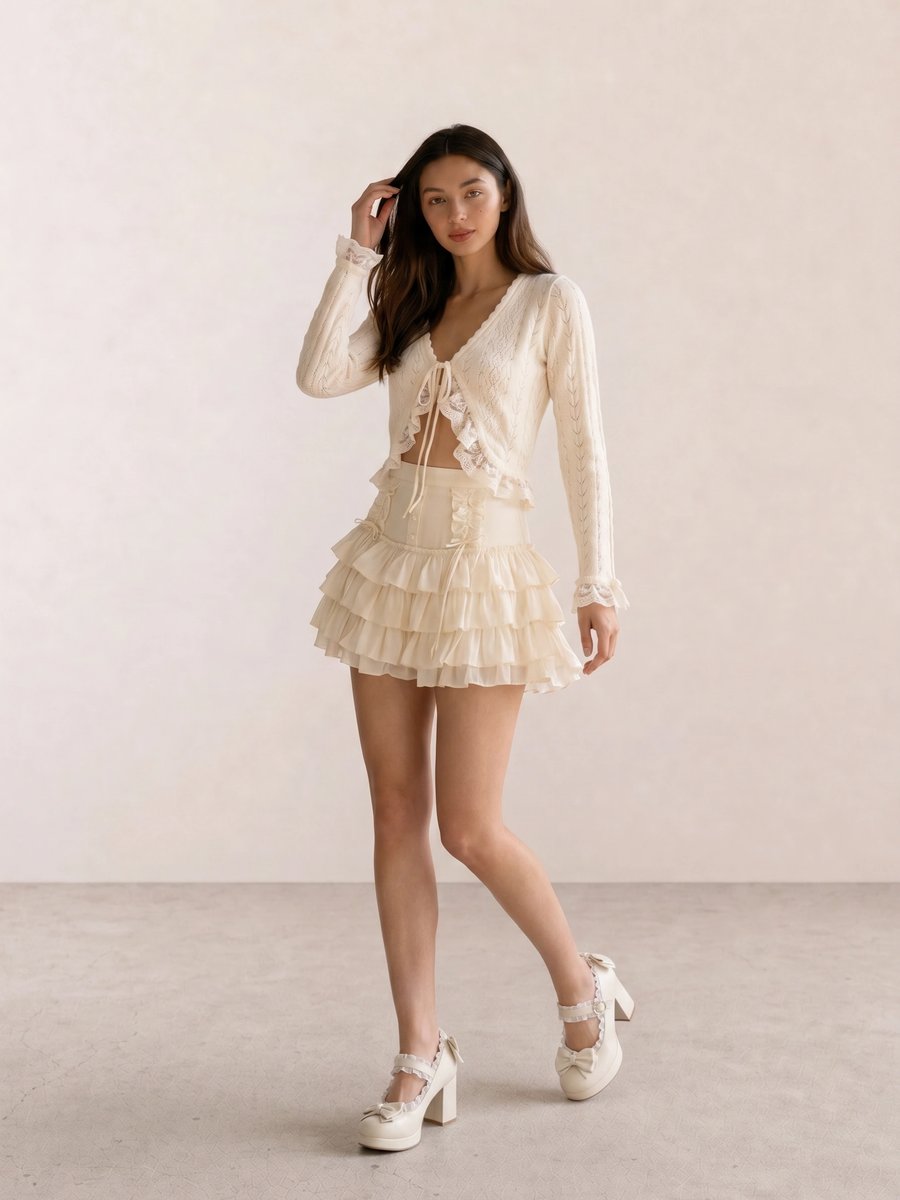
The Ivory Lace Ruffle Tie-Front Co-Ord is the more elevated version — an all-cream palette with ruffle detailing and Mary Jane heels. This is coquette for a date or a garden party, and it shows how far the aesthetic can stretch without losing its identity.
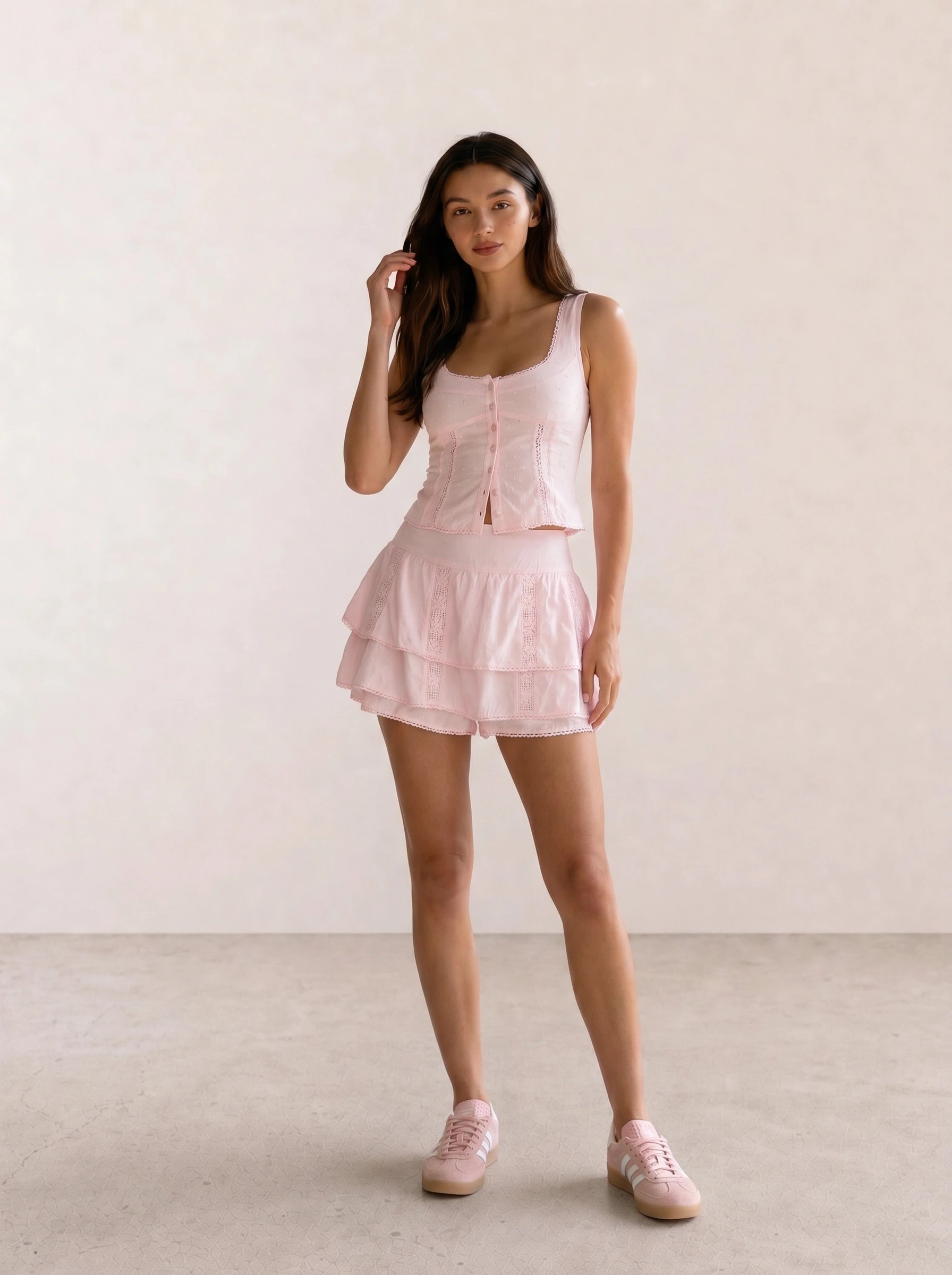
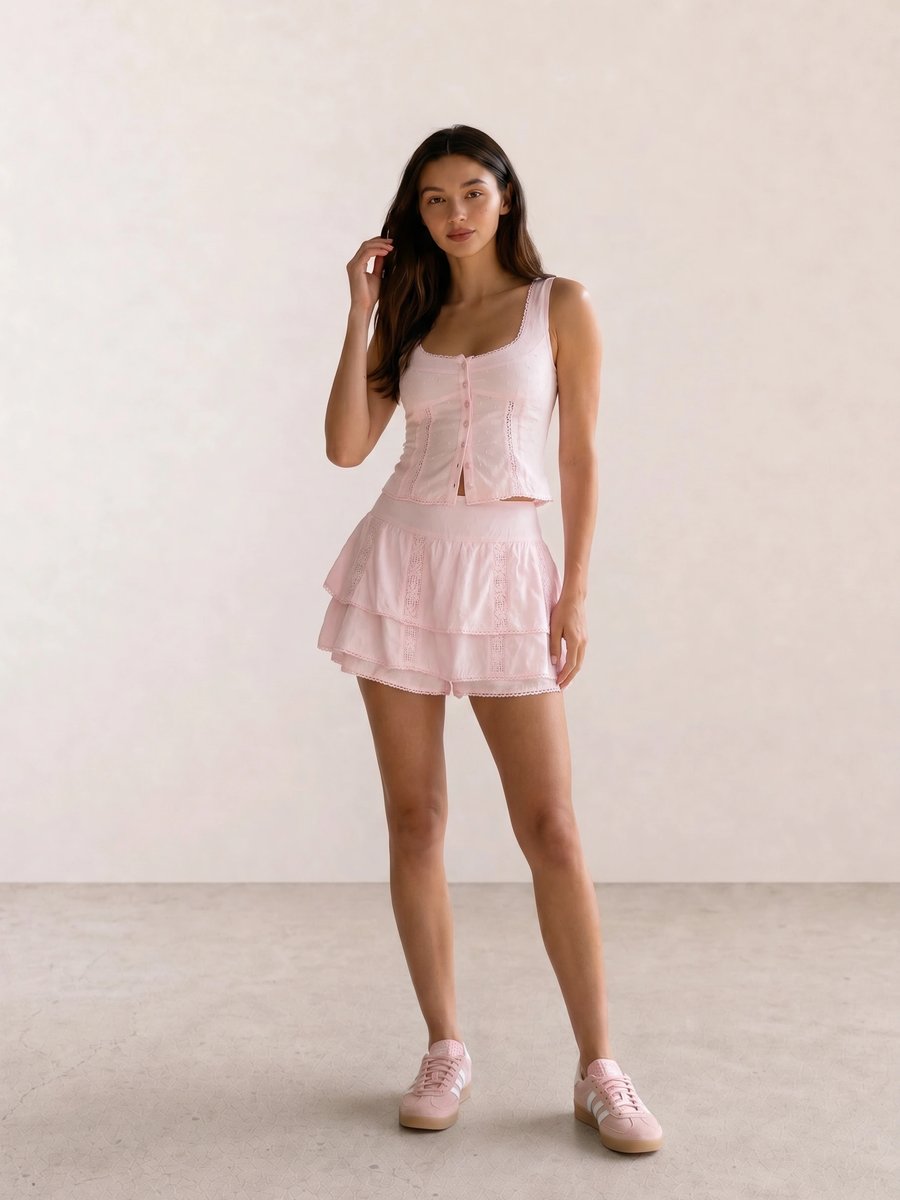
The Pink Linen Corset Crop & Tiered Ruffle Skirt proves coquette doesn't require heels. Sneakers paired with a ruffle skirt and corset top is actually a good entry point for the aesthetic — it takes the formality down without losing the feminine silhouette. Perfect for a Sunday afternoon when you want to look intentional without trying too hard.
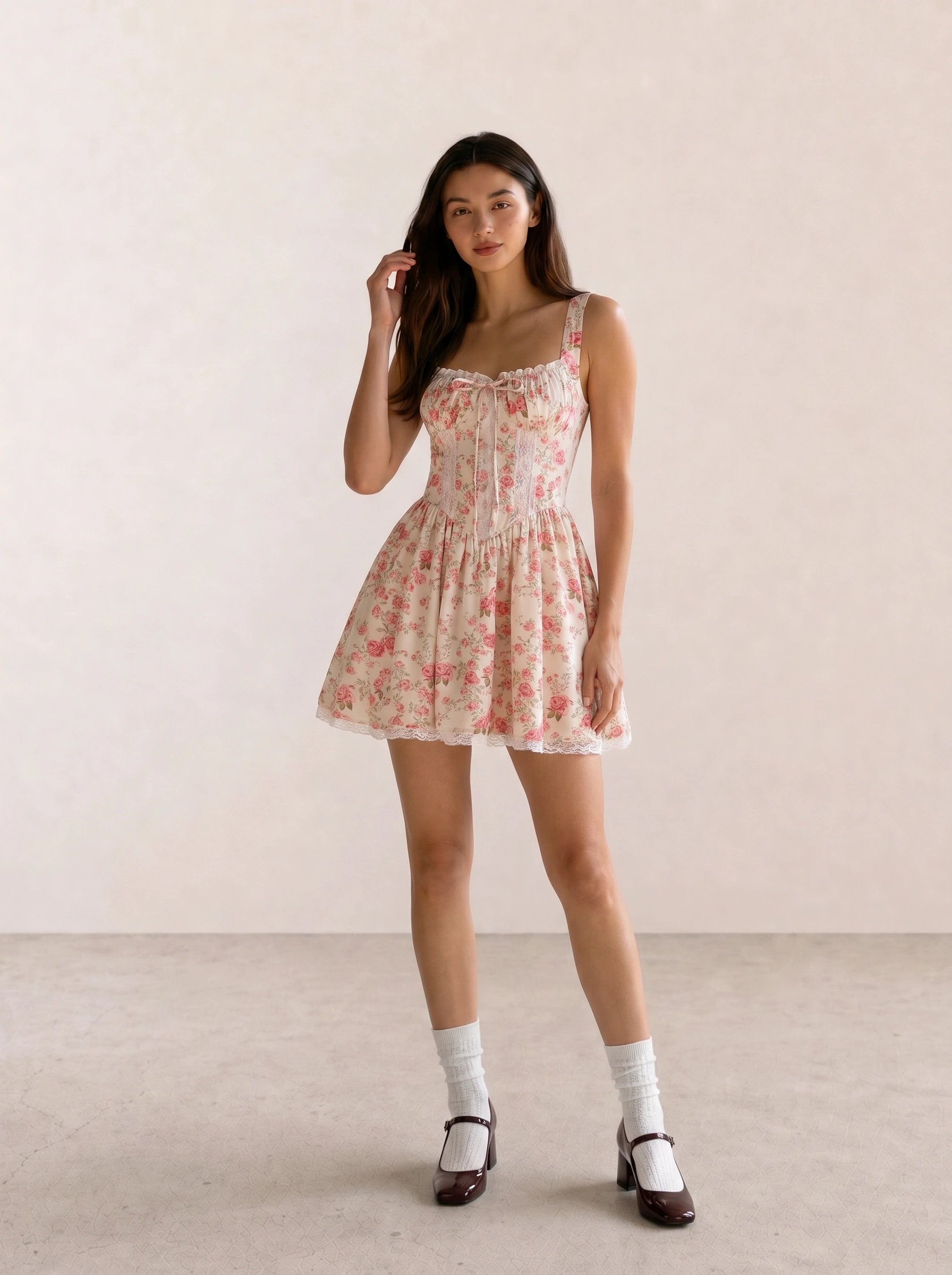
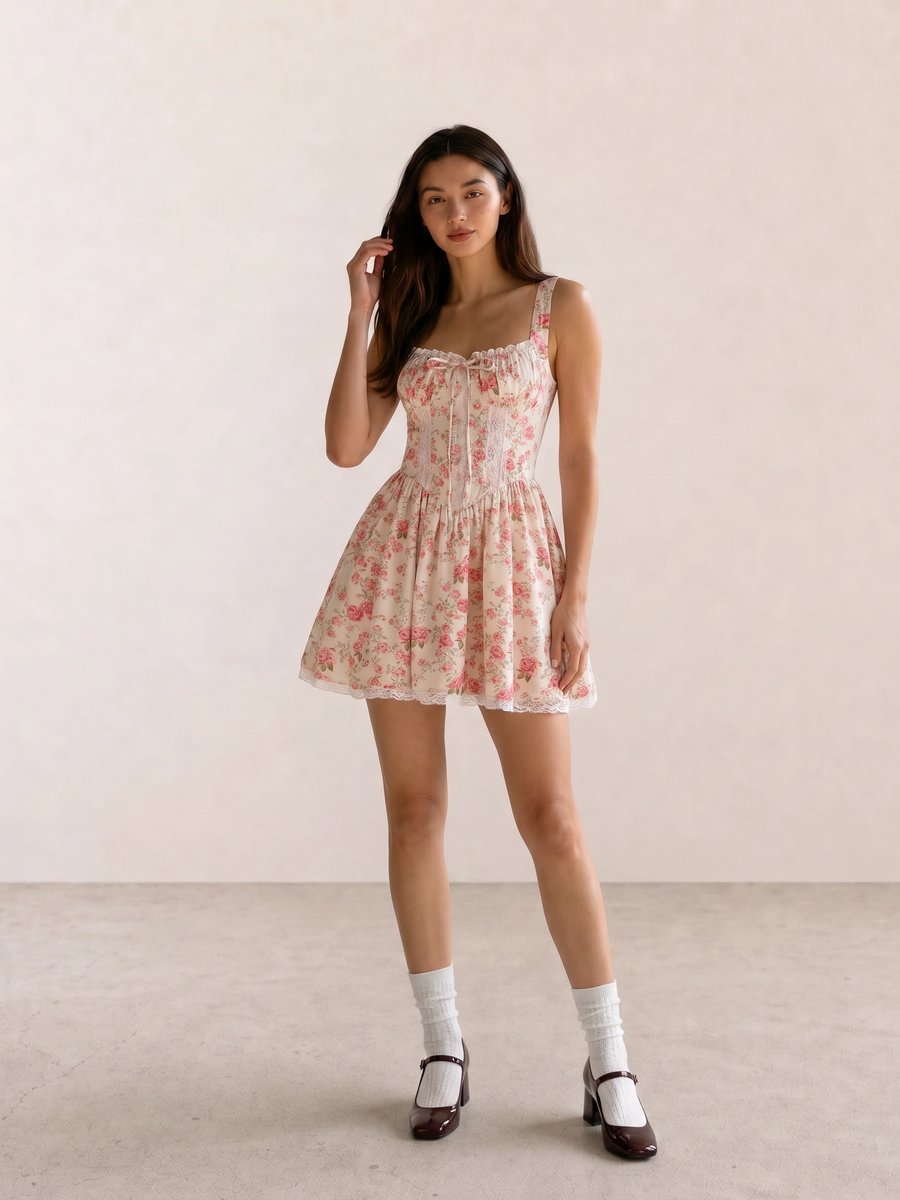
The Cottagecore Rose Floral Mini Dress sits at the intersection of coquette and cottagecore — a floral corset mini with lace trim and Mary Jane heels. It's a useful reminder that the coquette aesthetic borrows freely from adjacent styles without becoming them.
For more real outfits to reference, the coquette outfit ideas for spring & summer roundup has the full picture.
Coquette vs. Balletcore vs. Cottagecore
These three aesthetics overlap enough to cause confusion, but the distinctions are real. Coquette is about feminine flirtation — bows, lace, and a very deliberate prettiness. Balletcore draws from the ballet studio — wrap tops, leotard silhouettes, leg warmers, a more athletic and disciplined quality. Cottagecore romanticizes rural, pastoral life — prairie dresses, florals, linen, a sense of living in a field somewhere. Coquette can include floral prints and ballet flats, which is where the overlap happens. The test: if the outfit reads as "feminine and a little flirtatious," it's coquette. If it reads as "I might be about to attend ballet rehearsal," it's balletcore. If it reads as "I baked bread this morning in a meadow," it's cottagecore.
How to Start Dressing Coquette
The easiest entry point is one piece with a bow or lace detail worn with something already in your closet. A lace trim top with your regular jeans, or a bow-detail bag with a simple dress, reads coquette without requiring a full wardrobe overhaul. From there, the pieces that do the most work are: a mini skirt with ruffle or pleat detail, a corset-style crop top, and a pair of ballet flats or Mary Janes. You don't need all three at once. If you want to go deeper into specific pieces and how to build the look from scratch, the lace coquette outfits guide is a good next read.
Frequently Asked Questions
Is coquette still in style in 2026?
Yes — though it has shifted. The hyper-maximalist version of coquette (five bows, head-to-toe pink, every accessory in the same palette) has quieted down. The 2026 iteration is more restrained: one strong bow detail rather than several, lace used as texture rather than decoration, and a slightly more grown-up silhouette. It's the same aesthetic with a little less noise. Search volume and outfit content around coquette have remained consistently high through 2025 and into 2026, which makes it one of the more durable fashion aesthetics of the decade.
What's the difference between coquette and balletcore?
Coquette and balletcore share ballet flats, soft colors, and a feminine sensibility — but the references are different. Balletcore is drawn from the actual ballet studio: wrap cardigans, leotard necklines, bun hairstyles, a lean and disciplined quality. Coquette is drawn from a more playful, flirtatious femininity — Bardot, not Balanchine. The quickest tell: coquette has bows. Balletcore has leg warmers. An outfit can borrow from both, but if you had to pick one label, look at the dominant reference.
Weekly outfit picks and style guides — no fluff, unsubscribe anytime.