The Best Bob Haircuts for Your Face Shape
Find the best bob haircuts for your face shape, with precise guidance on length, layers, bangs, and volume placement before your next cut with confidence.
STYLEFINDEN editorial review: checked before publication for wearability, proportion logic and real-life outfit use. We explain our editorial method and image policy on the About page and keep affiliate independence details in the affiliate disclosure.
The best bob haircuts for your face shape share one trait: the cut has a clear reason for ending where it does. A bob brings the hem close to the jaw, so an inch of length or a change in part can alter the balance of the face.
Start with two decisions: where the perimeter should sit and where the cut should carry volume. Fringe changes both. Hair texture and upkeep then decide which version will still look good on an ordinary Tuesday, long after the salon finish has gone.
How to Choose a Bob Haircut for Your Face Shape
Find the widest part of your face, then compare it with the proposed hem. A cut that ends on the same horizontal line can stress that width; a line above or below it can redirect the eye. The full face-shape hairstyle guide helps if you have not settled on your shape.
Most people think short hair makes a round face look wider. The warning misses the role of surface shape. A close, sleek side and a diagonal part create vertical movement, while a puffed curve at cheek level adds width. Face shape should narrow your options, not dictate the cut.
Best Bob Haircuts for Oval and Heart-Shaped Faces
Oval faces can carry a clean perimeter with little correction. Heart-shaped faces need more attention at the lower half, where the chin is narrower than the forehead.

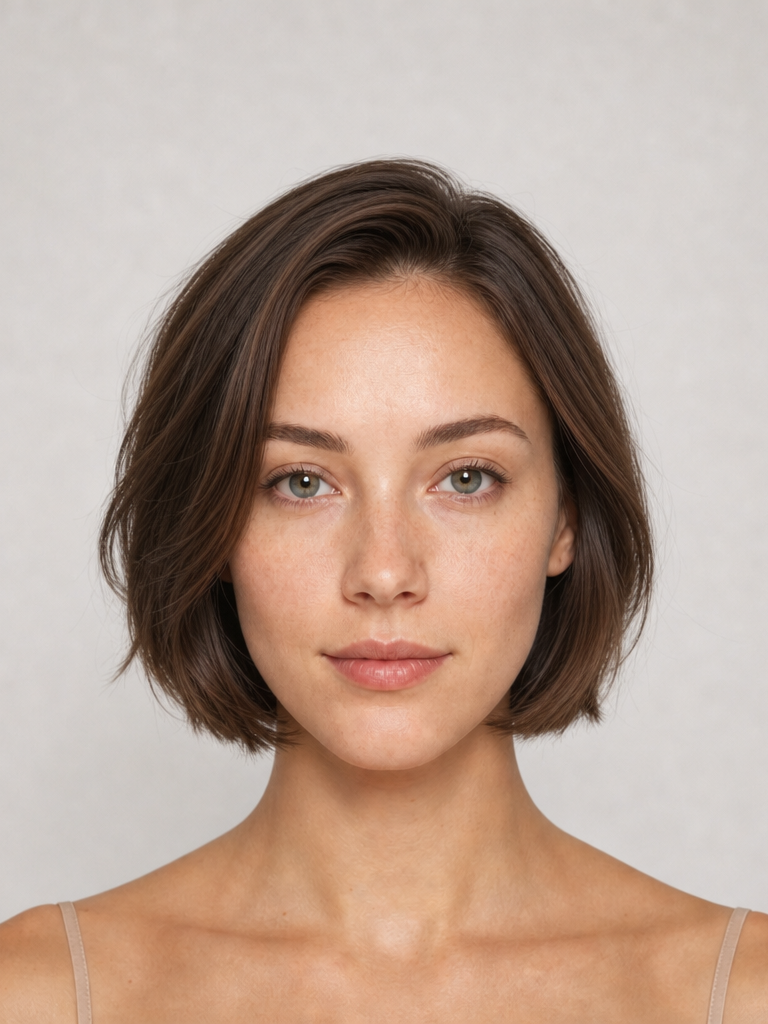
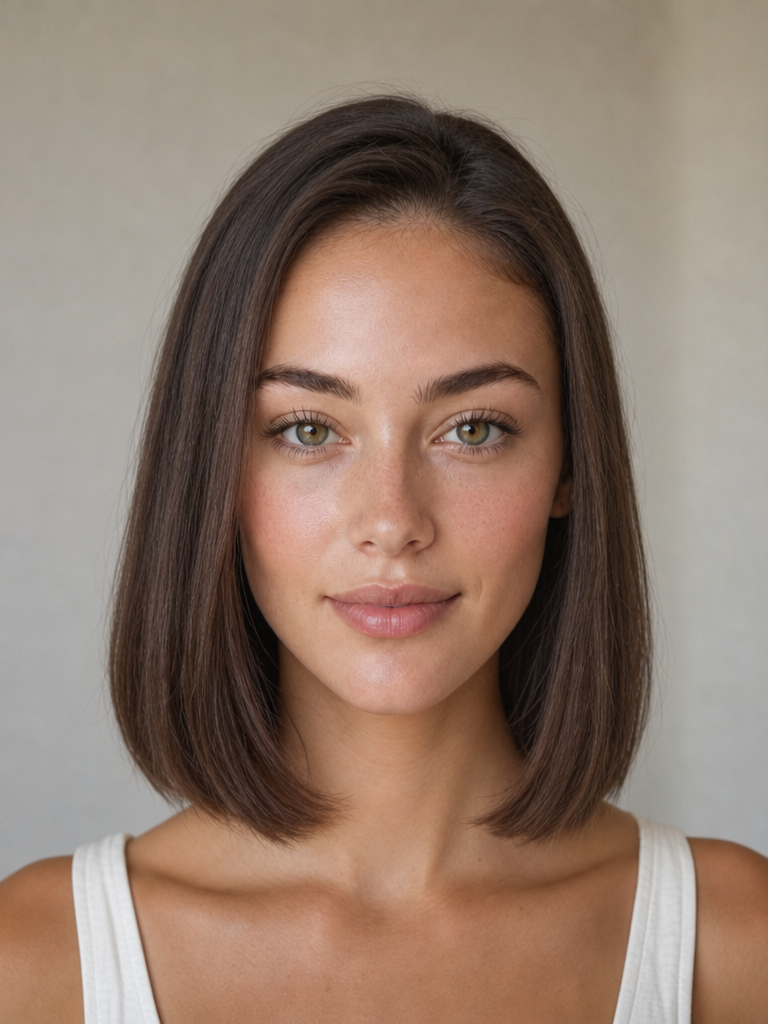
The Classic Bob works because its jaw-skimming perimeter repeats the balanced proportions of an oval face. The blunt edge adds structure, while the bare forehead keeps the face open. Remove the precise edge and the same length loses its graphic effect, turning into a softer crop with less definition.
This is the strongest low-maintenance option in the guide. It can air-dry with a slight bend or take a flat-iron finish for dinner, and neither version needs heavy layering to make sense. Read the oval-face hairstyle guide if you want longer alternatives before committing to the cut.
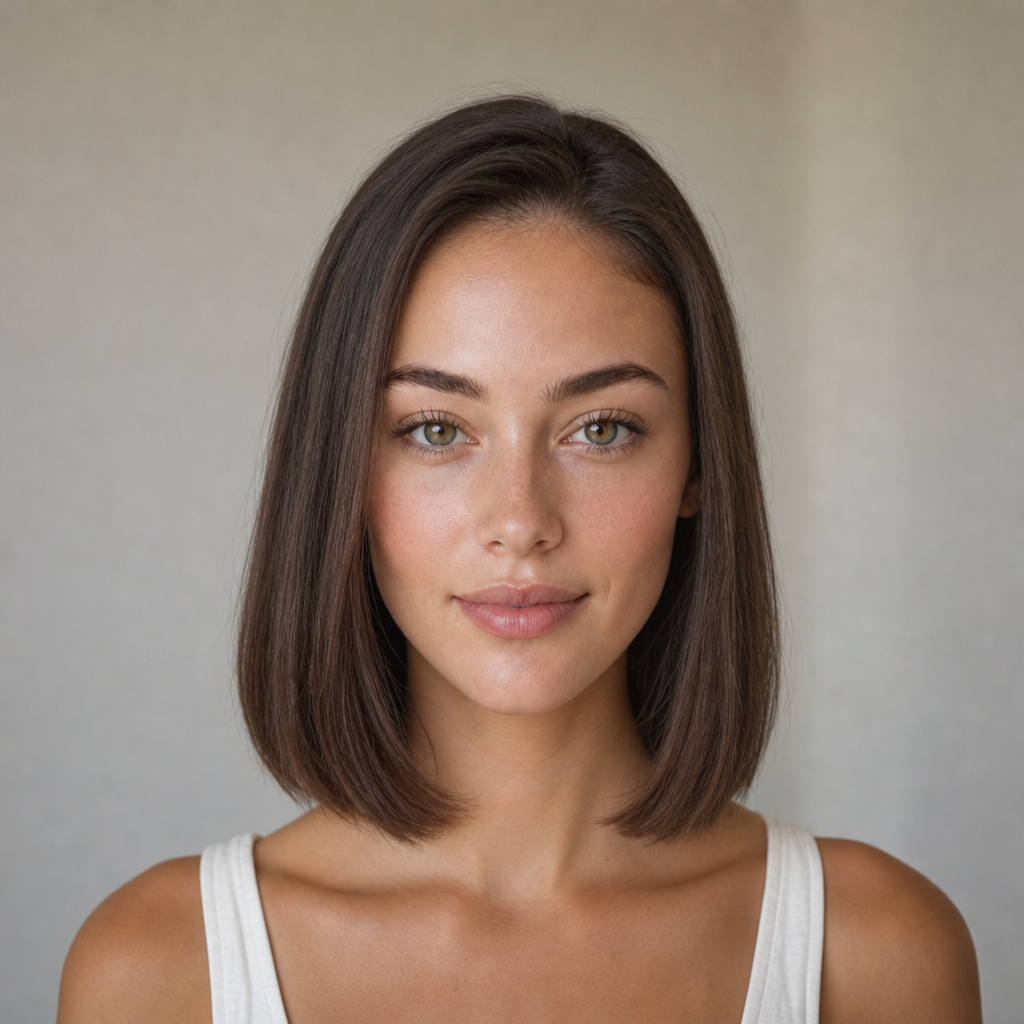
A Classic Blunt Bob places a firm horizontal line beside a narrow chin. That line supplies visual weight at the jaw, which balances a broader forehead. Without the dense perimeter, the ends fall inward and make the lower face look narrower.
Keep the ends full and resist thinning them into wisps. A small bend at the jaw is enough for a workday that moves into dinner; a large inward curl can make the chin look pinched. The heart-shaped face guide covers the same balance at other lengths.
Best Bob Haircuts for Round and Square Faces
Round and square faces both benefit from direction, though they need different finishes. Round faces gain length from clean vertical lines. Square faces gain softness from movement that breaks up a firm jaw.
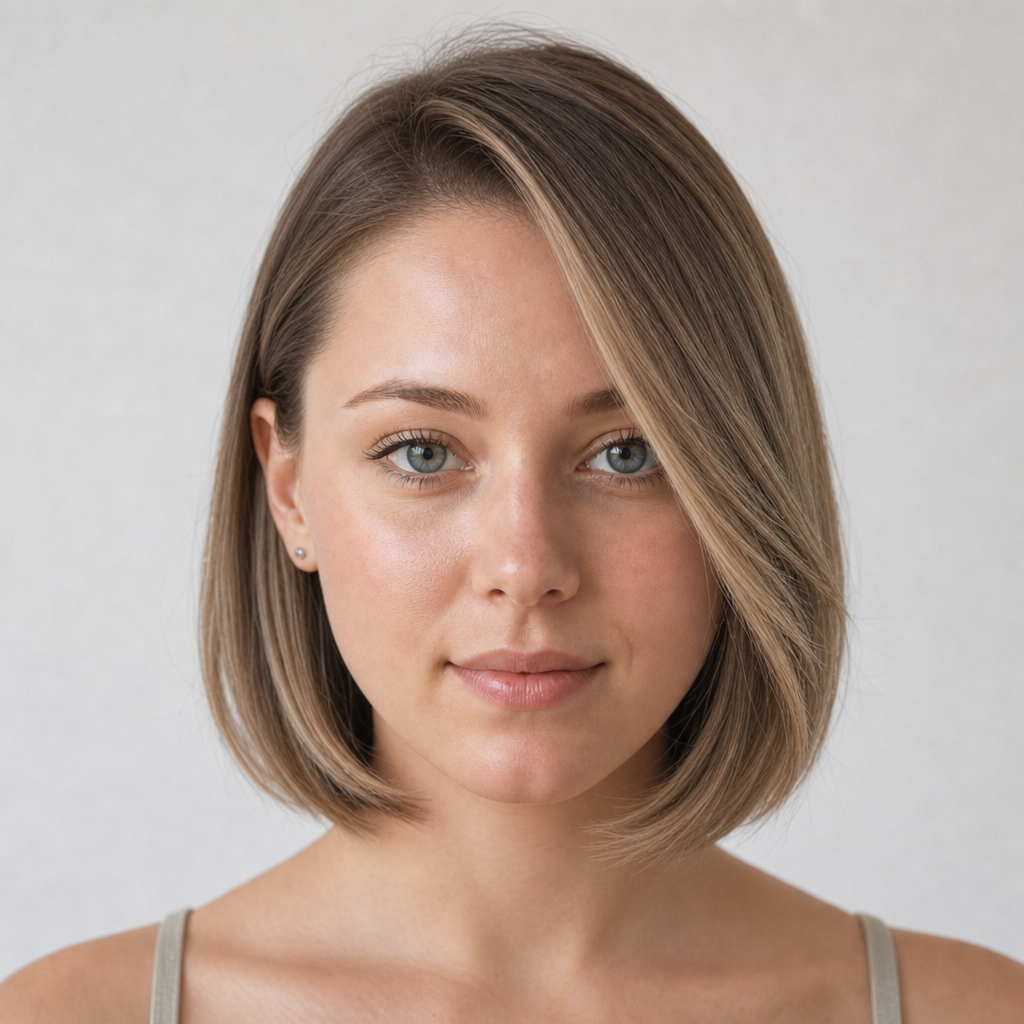
The usual warning against jaw-length hair on round faces ignores how the hair sits. The Sleek Jaw-Length Bob keeps the sides close, and the deep part draws a diagonal across the face. A straight surface reflects one clean line instead of building a round halo at the cheeks.
The ends need weight, but they should not kick outward at the widest point of the face. Remove the side part and add cheek-level volume, and the cut repeats the face shape instead of lengthening it. Avoid a rounded blowout that expands on both sides; it cancels the vertical line that makes this bob useful.
Picture this with a black knit, small earrings, and a late table at a narrow city restaurant. The hair reads polished because the geometry stays spare. The round-face hairstyle guide offers softer choices if a sleek finish asks too much of your routine.

A Wavy Bob softens a square face through irregular movement near the jaw. The bends interrupt a firm outline, and the medium length keeps that width from collecting at one blunt point. Without the wave pattern, this cut needs a softer perimeter to avoid looking severe.
Loose bends beat uniform curls here. The square-face hairstyle guide explains why off-center parts and face-framing pieces support the same goal.
Bob Haircuts for Triangle, Rectangle, and Diamond Faces
The less-discussed face shapes need placement more than a blanket rule. A triangle face carries width at the jaw, an inverted triangle carries it near the forehead, and a rectangle has more visible length. Diamond faces concentrate width at the cheekbones.
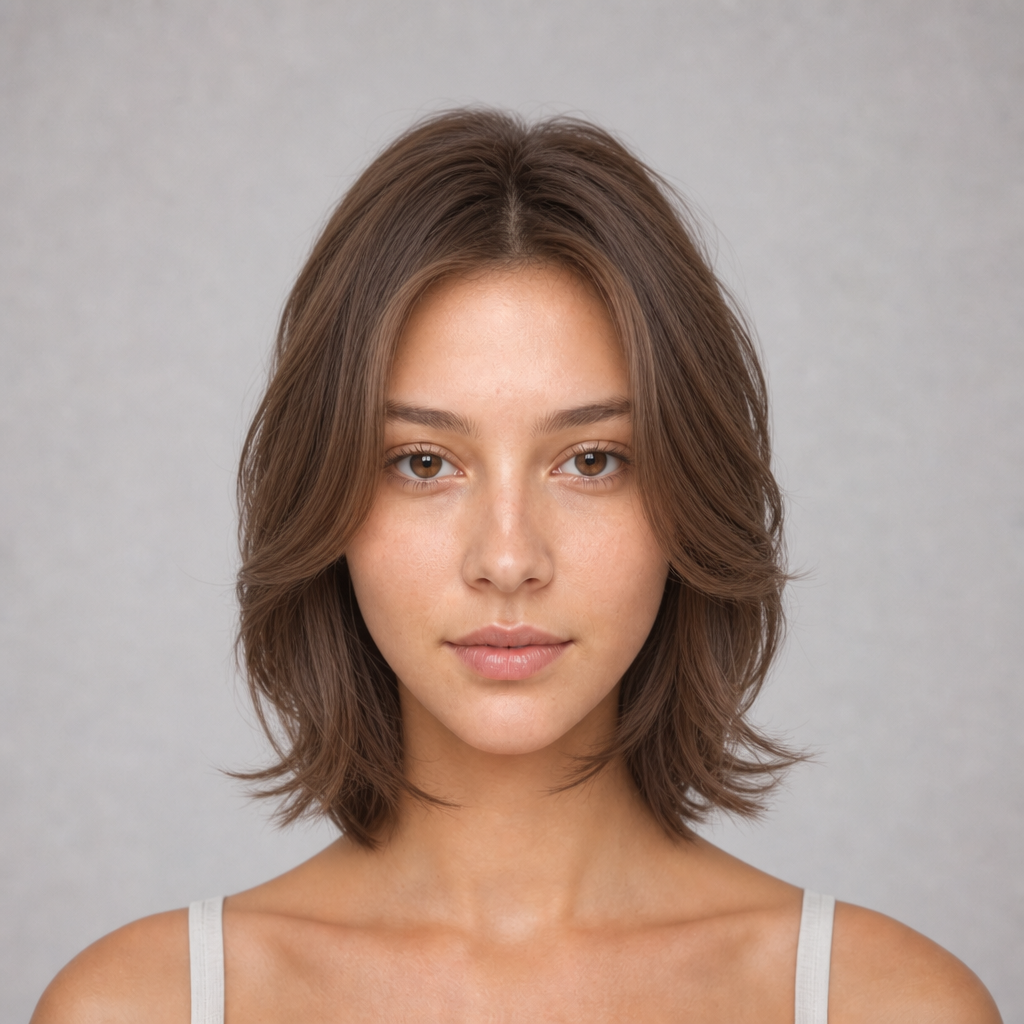
A Layered Shoulder Bob moves the perimeter below a broad jaw instead of stopping beside it. The shoulder length creates a vertical extension, while light layers keep the lower section from becoming a solid block. Without that extra length, a blunt chin-level edge can double the visual weight at the jaw.
Ask for movement through the mid-lengths and keep the bottom from flaring out. The cut is forgiving on days when you only rough-dry it, since the layers have room to shift without losing the main line. For more options, compare it with the triangle-face hairstyle guide.
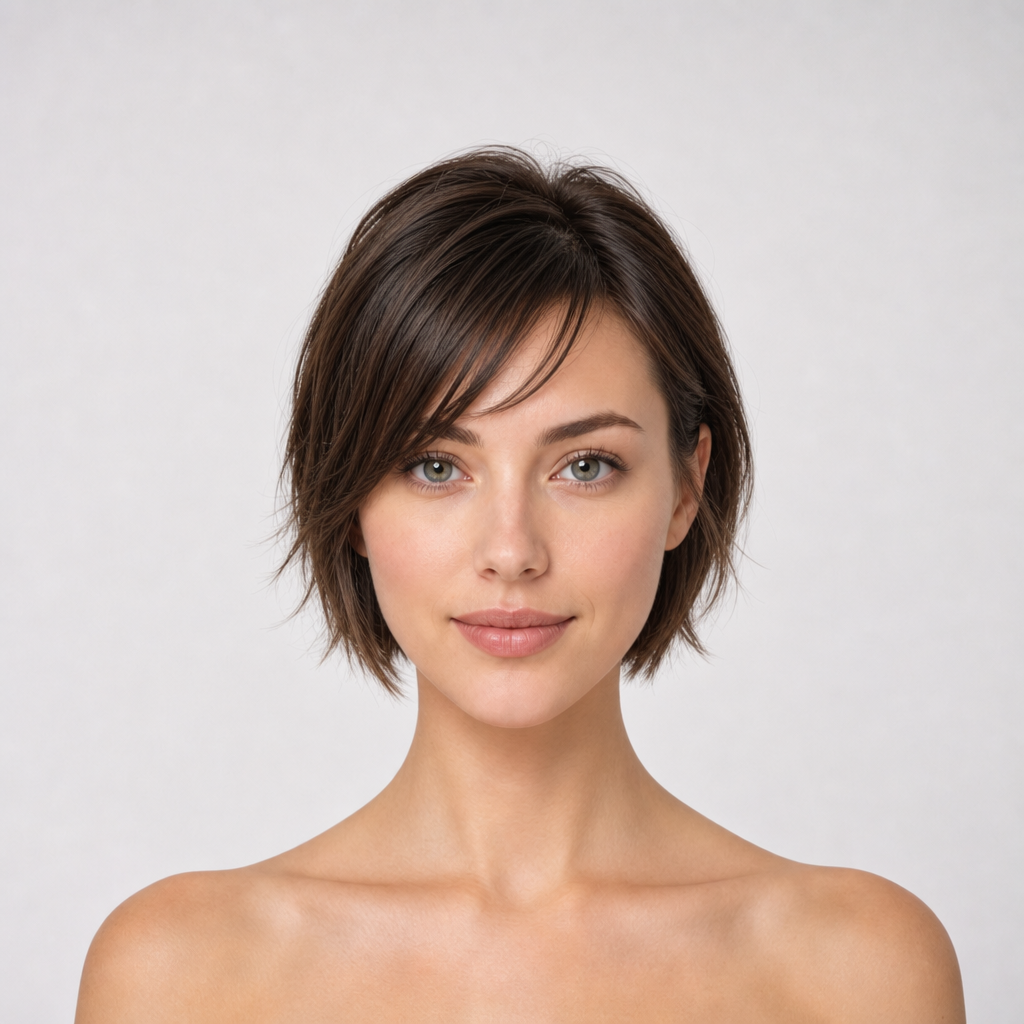
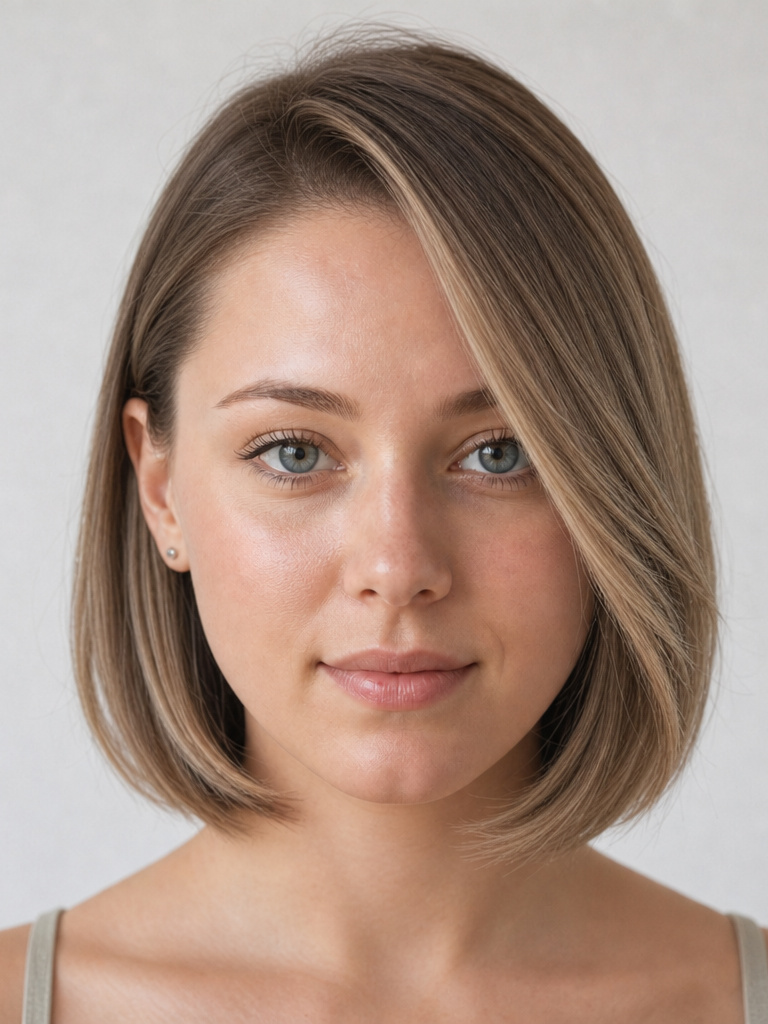
The Side-Swept Bob uses a deep part to break up forehead width and flipped ends to add movement near a narrow chin. The diagonal fringe guides the eye down the face. Remove the bend at the ends and the cut puts too much attention back near the temples.
This version feels less formal than a blunt bob and handles a soft natural bend well. The inverted-triangle hairstyle guide shows how the same placement works in longer cuts.

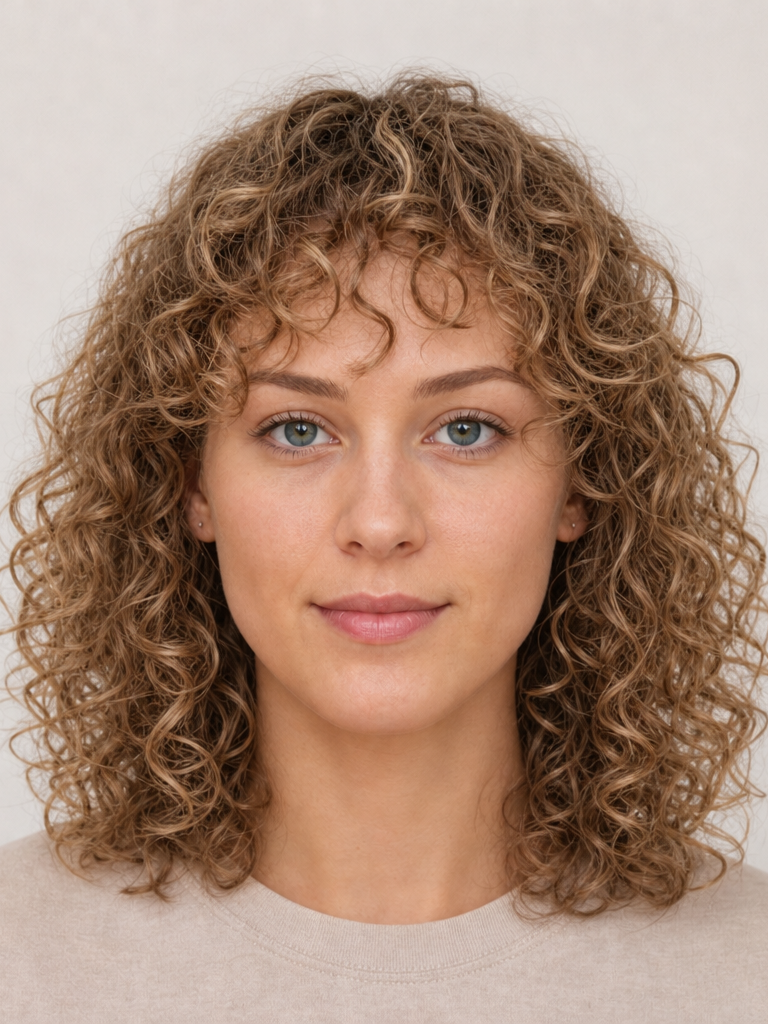
A Curly Bob with Bangs balances a rectangle face by adding width at the sides and reducing visible forehead length. The curls build a horizontal rhythm; the fringe closes some of the vertical space. Without the bangs, the bob still adds width, but it loses its strongest length-shortening tool.
Let the curls keep separate shapes rather than brushing them into one triangle. A diffuse finish preserves movement through the cheeks and jaw. See the rectangle-face hairstyle guide for straight and wavy alternatives.
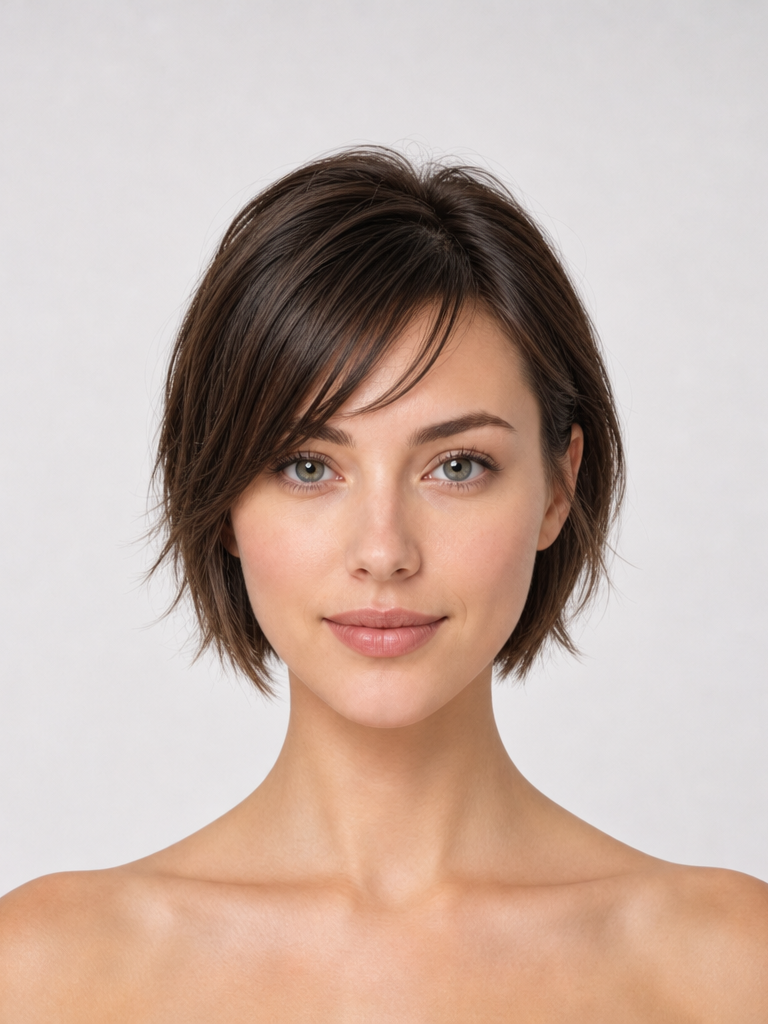
Diamond faces need a quieter cheek area and some softness near the forehead or chin. A side-parted bob with ends below the cheekbones is a sound starting point, but the exact answer depends on texture. The diamond-face hairstyle guide gives better reference points than forcing a cut whose volume lands in the wrong place.
Should You Add Bangs or Layers to a Bob?
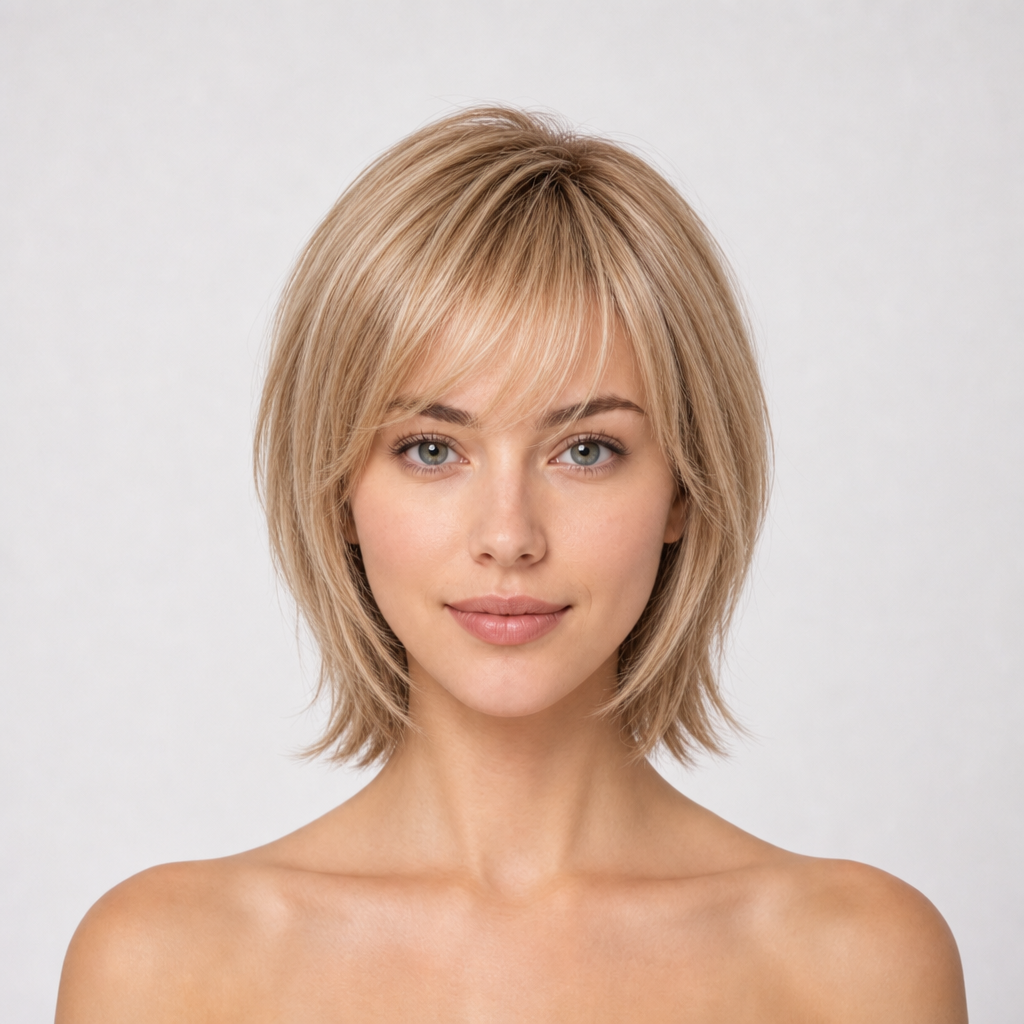
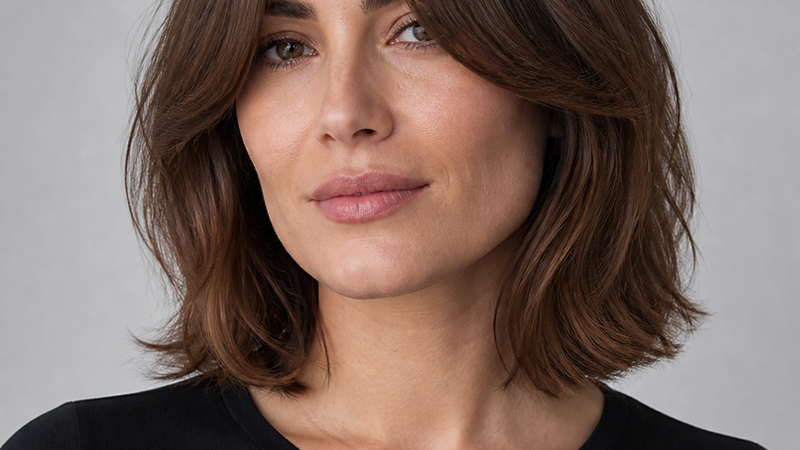
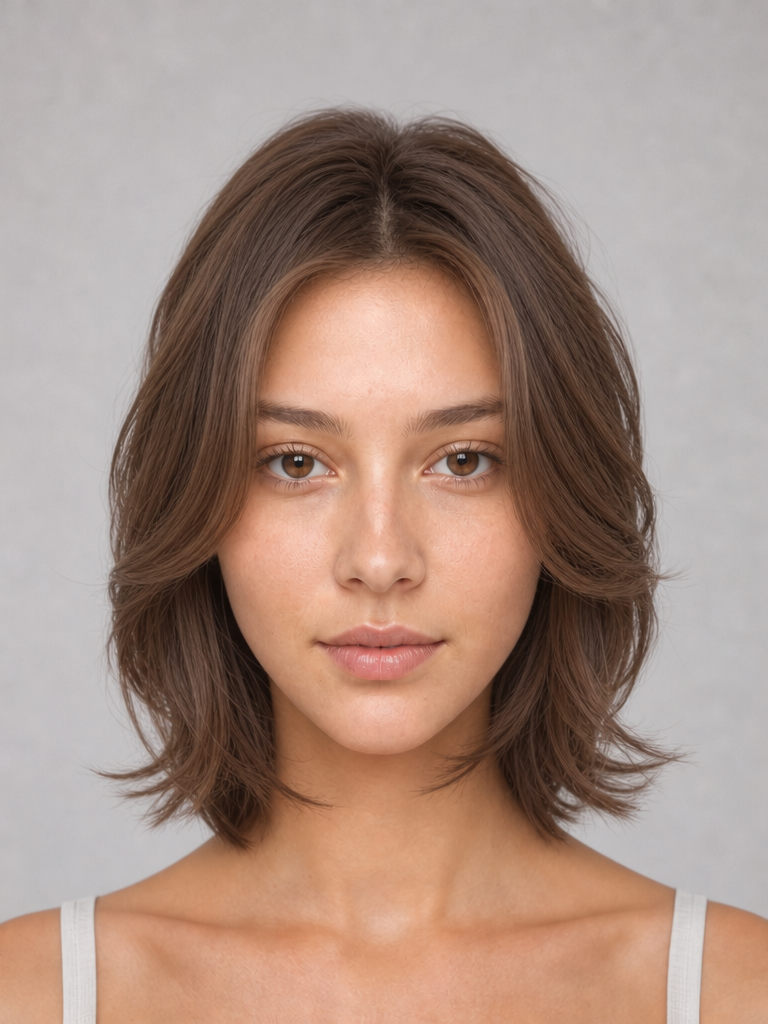
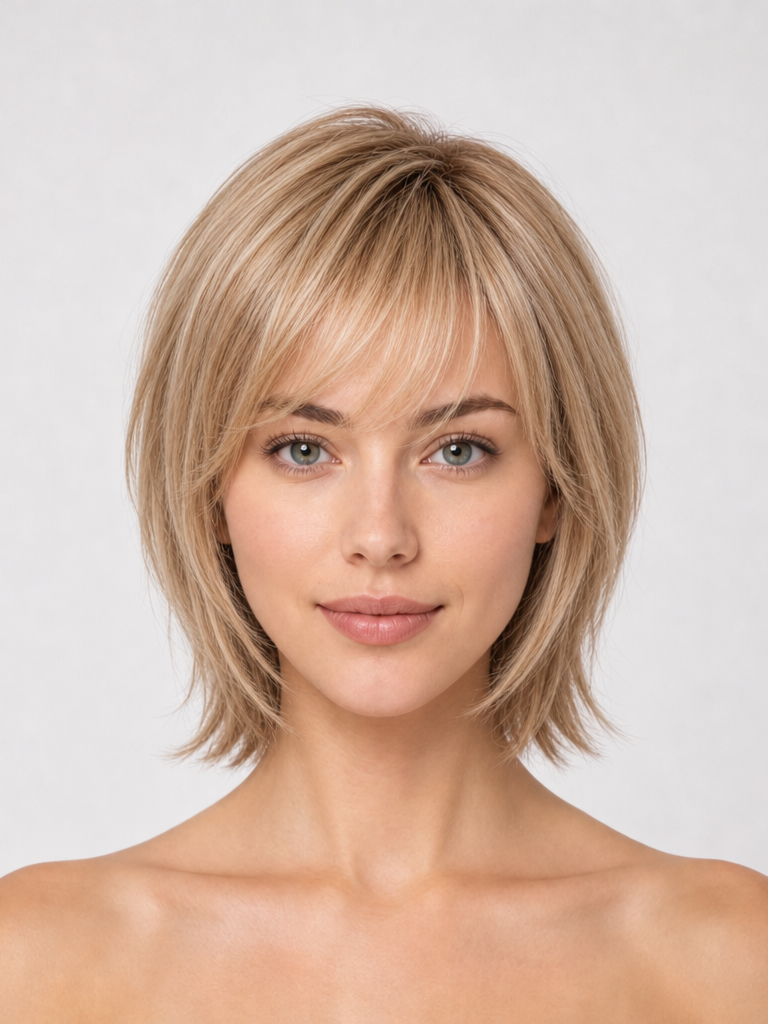
Bangs change the upper frame of a bob; layers change its weight. The Layered Bob with Curtain Bangs spreads volume from the cheek toward the jaw, while the split fringe reduces emphasis at the forehead. The center opening keeps the face visible. Remove the layers and the same curtain bangs can sit on top of a heavy, triangular shape.
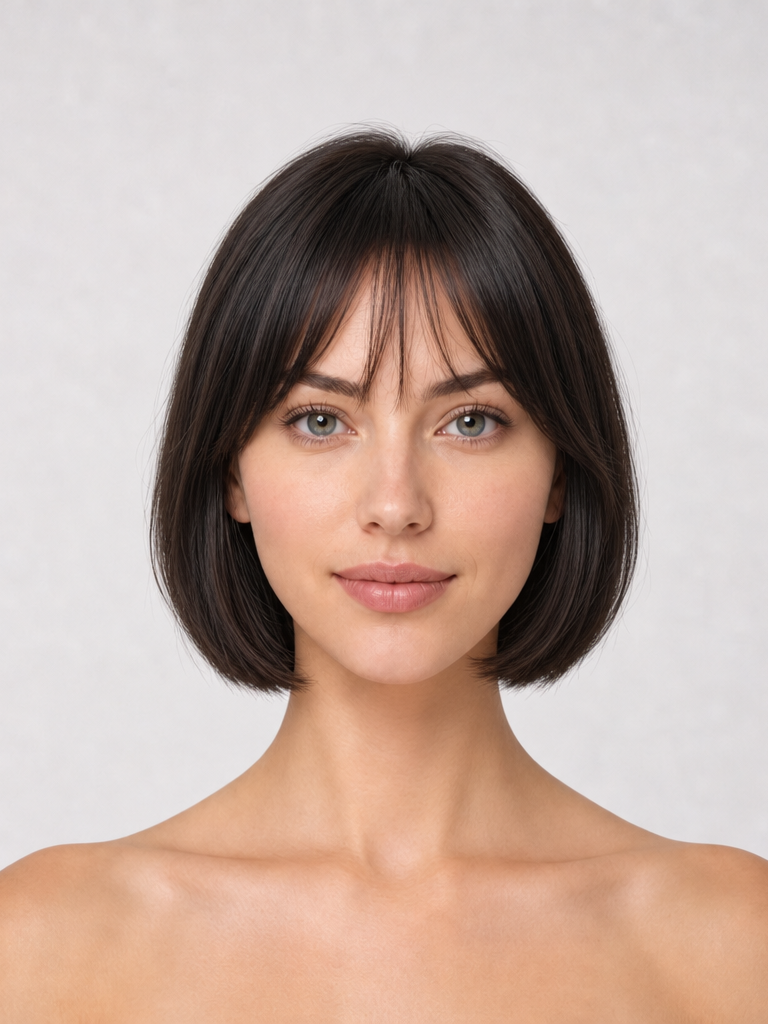
Choose curtain bangs when you want movement and a forgiving grow-out. Full bangs create a stronger horizontal line, as the Blunt Bob with Bangs shows, but they demand more regular trims. The bangs-by-face-shape guide helps with that choice.
The mistake most clients make is choosing a bob by its name. Labels such as “French bob” and “lob” tell the stylist too little. Bring a reference for the endpoint and internal weight, then discuss how your hair behaves without a blowout. The cut should survive your routine, not depend on a salon appointment.
A face-shape match sets the architecture, and texture decides the execution. Save two versions you would wear, compare their hemlines, and take both to your stylist. The right conversation starts with the line of the cut rather than the label attached to it.
Weekly outfit picks and style guides — no fluff, unsubscribe anytime.