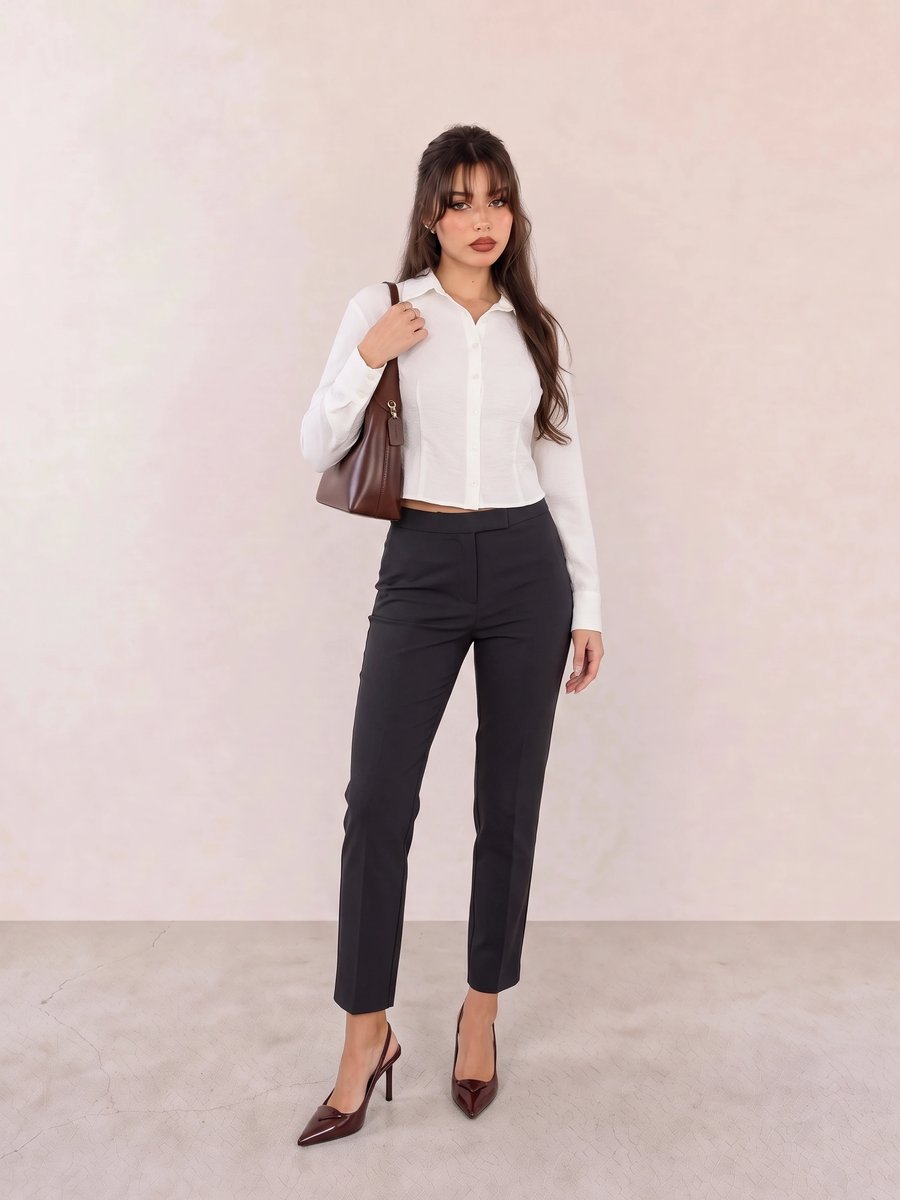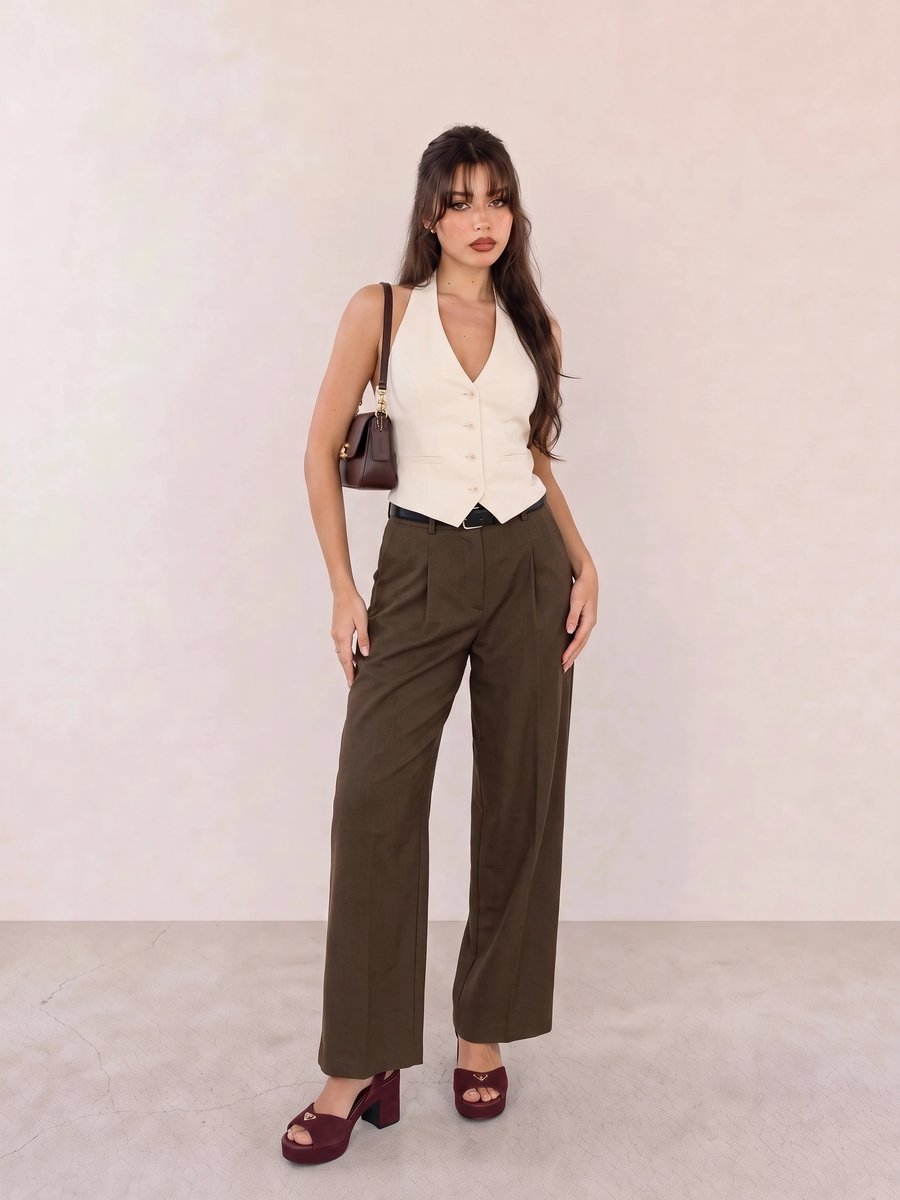
7 Old Money Styling Mistakes (And How to Fix Them)
The old money aesthetic fails fast when you get these 7 details wrong. Here's what to fix — with real outfits that get it right.
STYLEFINDEN editorial review: checked before publication for wearability, proportion logic and real-life outfit use. We explain our editorial method and image policy on the About page and keep affiliate independence details in the affiliate disclosure.
Old money style looks simple until you try to actually build it. Then you notice the version you put together reads more "costume party" than "quietly wealthy," and you can't quite name why. That gap is almost never about money — it's about a handful of repeatable mistakes that show up in nearly every failed attempt at the aesthetic.
For a full breakdown of the aesthetic itself — its history, key pieces, and shopping tiers — read the complete guide to old money style. This piece is narrower: the 7 specific errors that undercut the look, and 7 real outfits that show the correction in practice.
Mistake 1: Buying Logos Instead of Tailoring
Most people assume old money style requires recognizable luxury branding — a monogram canvas bag, a logo belt, a visible designer buckle. That's backwards. The entire point of old money dressing is that wealth doesn't announce itself. A logo is a billboard; tailoring is a whisper only someone who knows fit can actually hear.
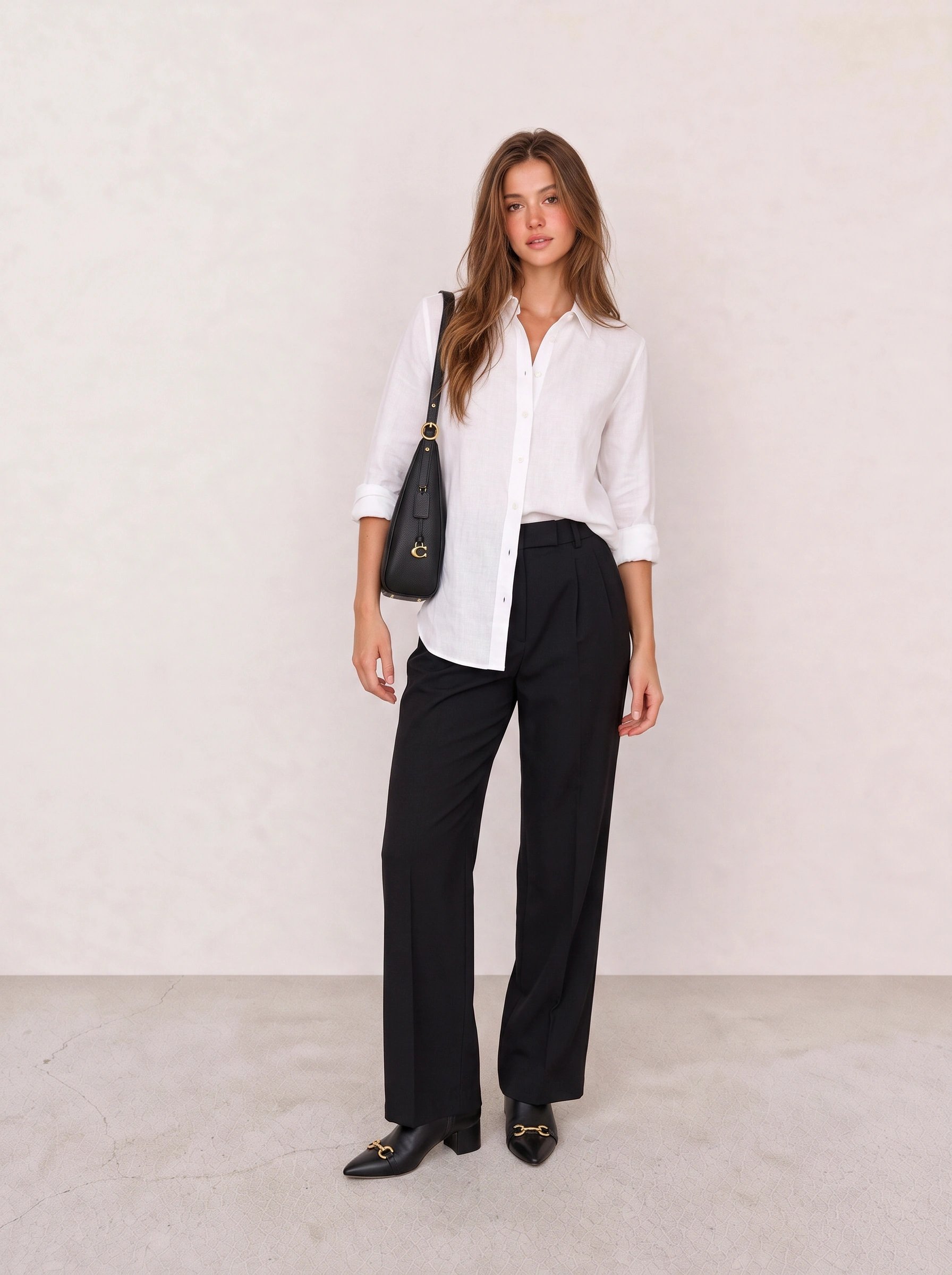
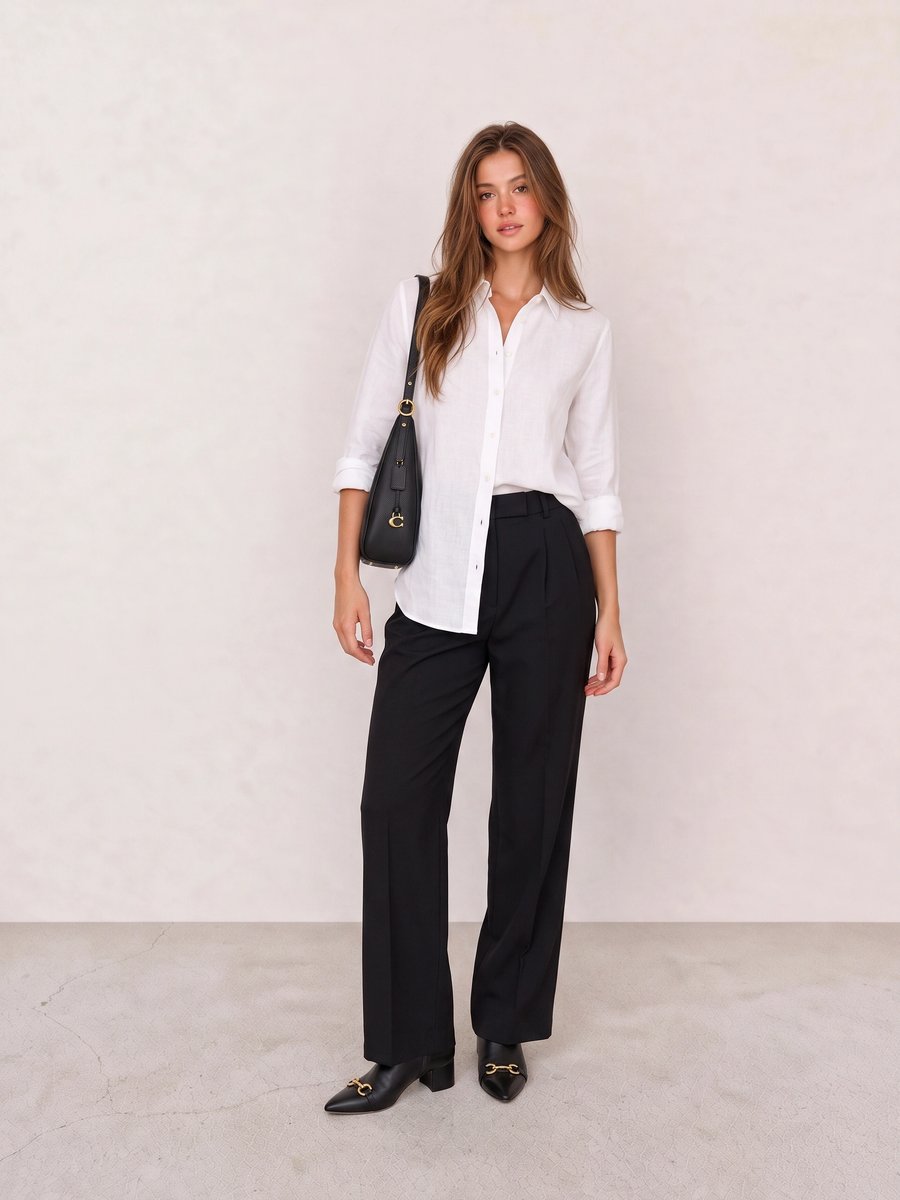
The mechanism here is fit contrast, not branding. In this white button-down shirt and black tailored trousers, the crispness of the shirt collar against the clean trouser break is what reads as considered — not the coach hobo bag or the gold hardware on the ankle boots, which are quiet enough to go unnoticed at first glance.
The formula: a properly pressed white shirt, black trousers with a real break at the ankle, and hardware you'd have to look twice to notice. Without the tailoring, the gold-bit detail on the boots would read as the star of the outfit instead of a finishing note — and that's the tell that separates old money from mall-brand imitation.
Avoid this: any piece where the brand mark is bigger than the buttonhole. If you can identify the logo from across a room, it's working against the aesthetic, not for it.
Mistake 2: Wearing Skinny Jeans Instead of Wide-Leg Trousers
This is a proportion problem, not a fabric problem. Old money style descends from equestrian and country-club dressing — jodhpurs, riding trousers, wide trouser cuts made for movement, not for showing off the leg line. Skinny denim does the opposite job. It's a 2010s silhouette grafted onto a decades-older reference, and the mismatch is visible even if you can't name it.
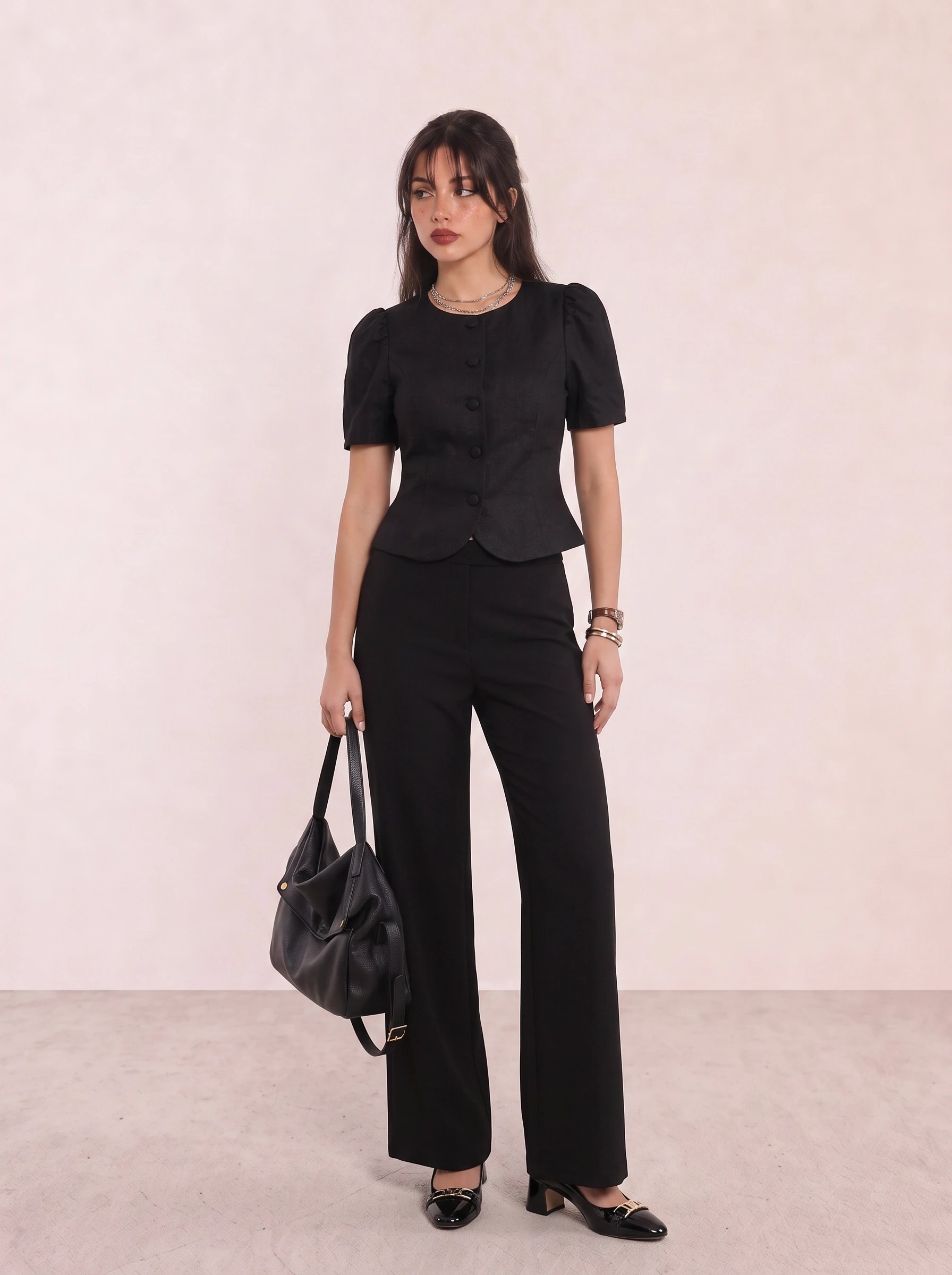
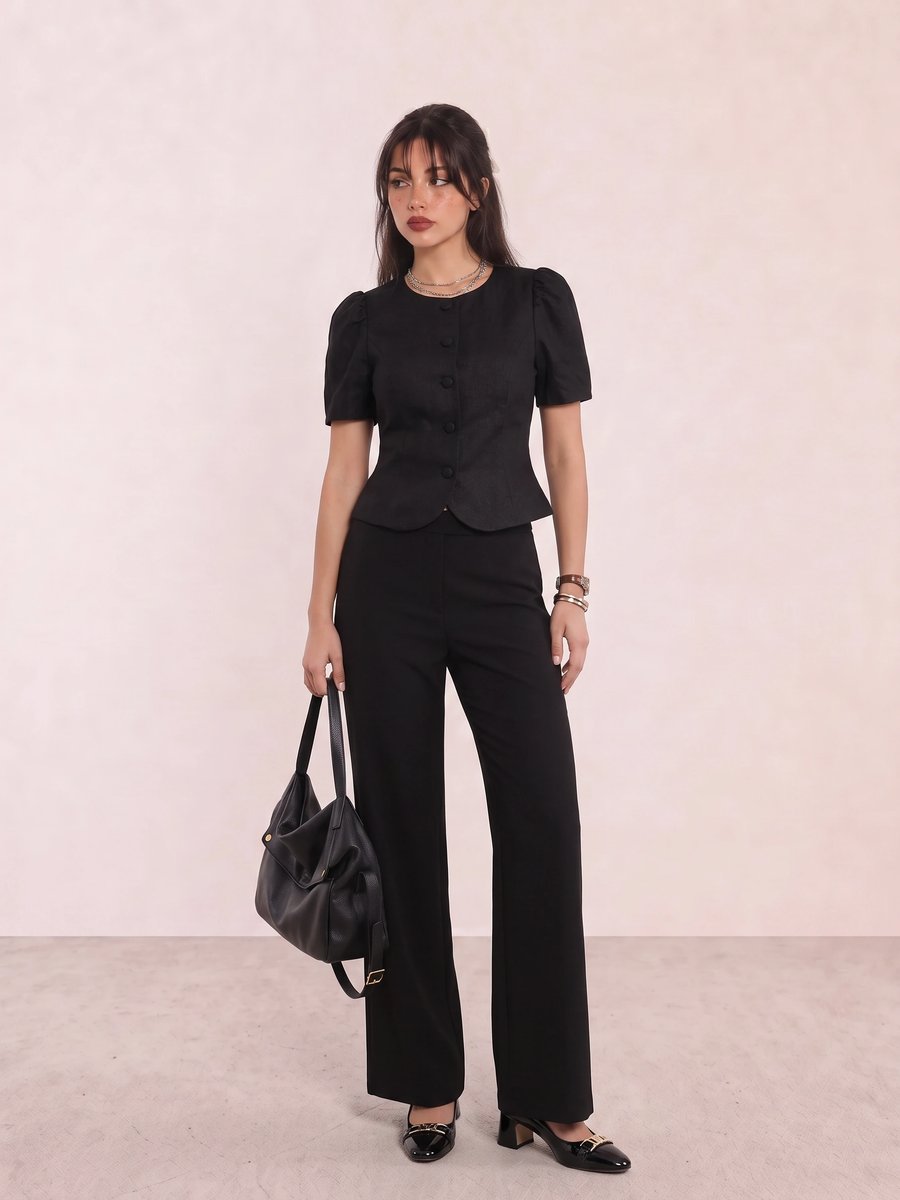
The formula in this black puff-sleeve blouse and wide-leg trousers pairing: a fitted, structured top half and a wide, fluid bottom half. That silhouette contrast is what makes wide-leg trousers read tailored instead of sloppy — the volume is intentional because the waist is defined.
Where you'd wear it: this is the outfit for a Tuesday client lunch that runs into a 3pm meeting — put-together enough that no one clocks you changed clothes, comfortable enough that you actually forget you're dressed up.
Without the puff sleeve and pointed-heel pump, this would read as office-basic rather than old money — the structured shoulder is doing more work than people give it credit for. If you only own one of these pieces, start with the trousers; the wide leg carries the reference on its own.
Mistake 3: Treating Old Money as an All-Pastel Aesthetic
The assumption people bring from Pinterest is that old money means baby pink and pastel everything — a softer version of coquette. That's a different aesthetic wearing the same trend tag. Old money's actual color logic is tonal neutrals: ivory, charcoal, camel, navy, burgundy. Depth comes from texture and layering within a narrow palette, not from pastel brightness.
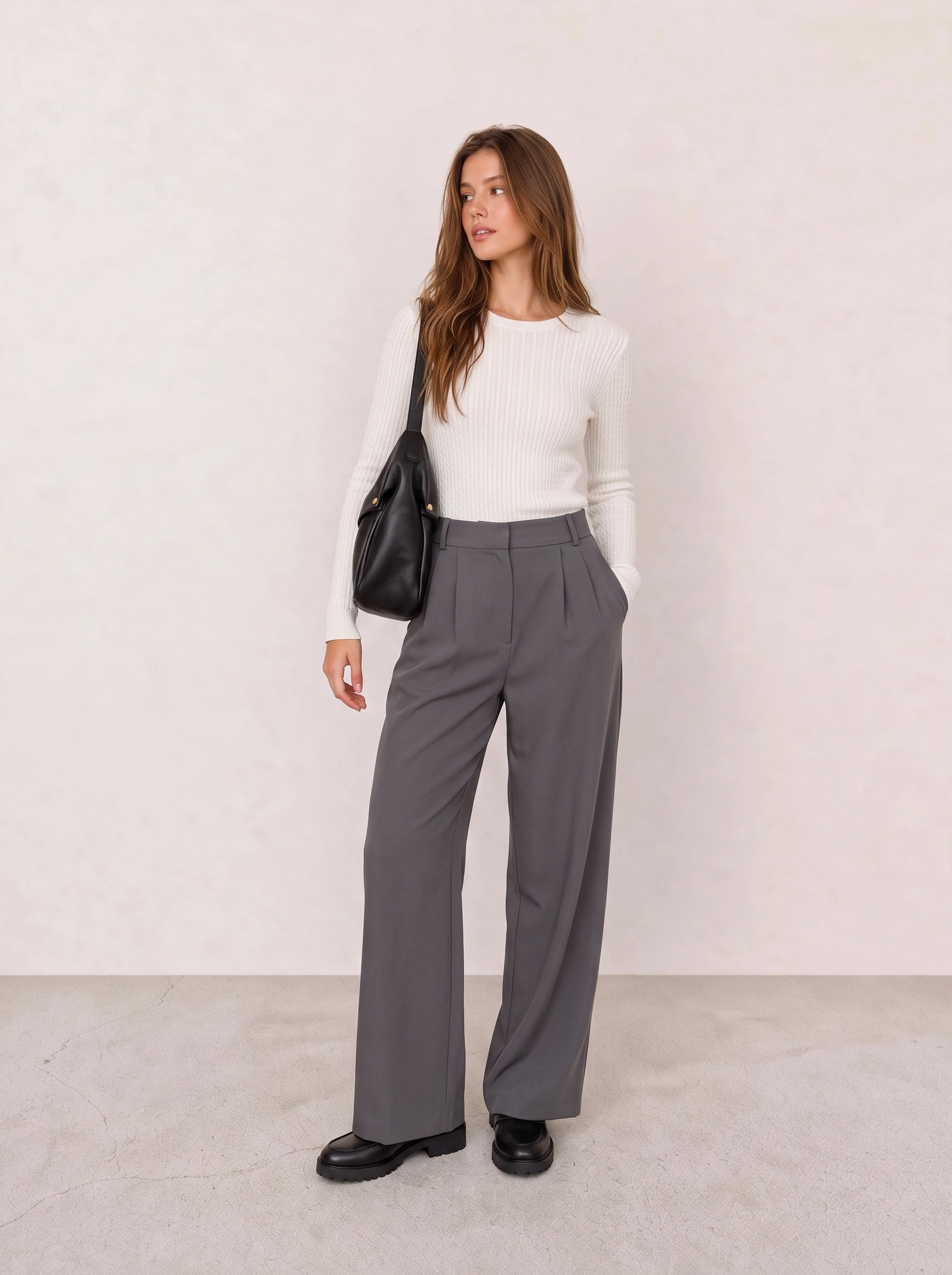
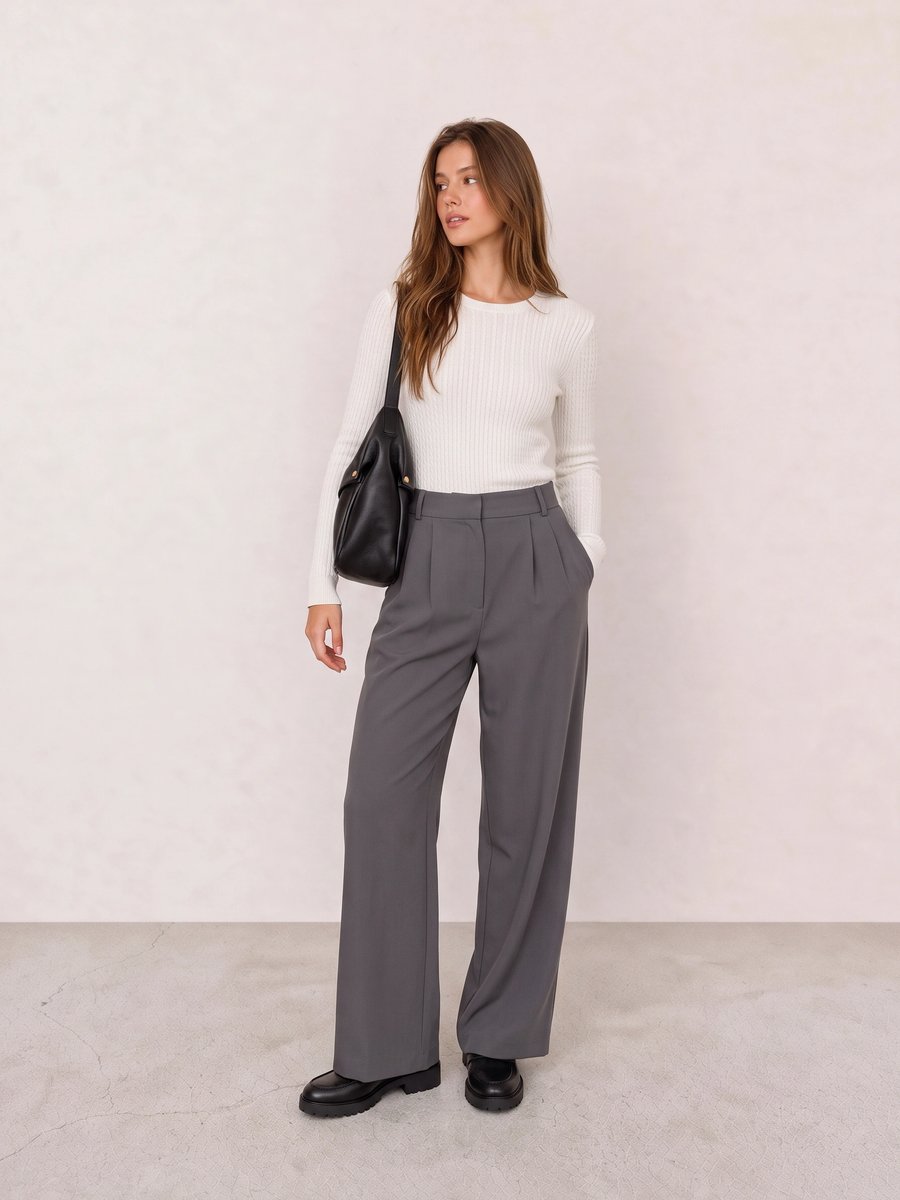
The color logic in this ivory ribbed knit and charcoal trouser pairing is tonal contrast, not color contrast. Ivory and charcoal sit at opposite ends of the same neutral family, so the outfit reads rich rather than flat — the ribbing on the knit adds texture depth where a pastel palette would rely on hue alone.
Practical note: this combination transitions across seasons better than pastel does — swap the knit for a linen shirt in warm months and the trousers carry over without adjustment. That's the versatility pastel-heavy versions of the aesthetic don't have.
Mistake 4: Finishing the Outfit With Sneakers
Sneakers break the silhouette this aesthetic depends on. Old money dressing builds a clean line from shoulder to shoe — chunky rubber soles interrupt that line at the exact point it needs to resolve. This is one of the fastest ways to turn a considered outfit into a streetwear hybrid that reads as neither.
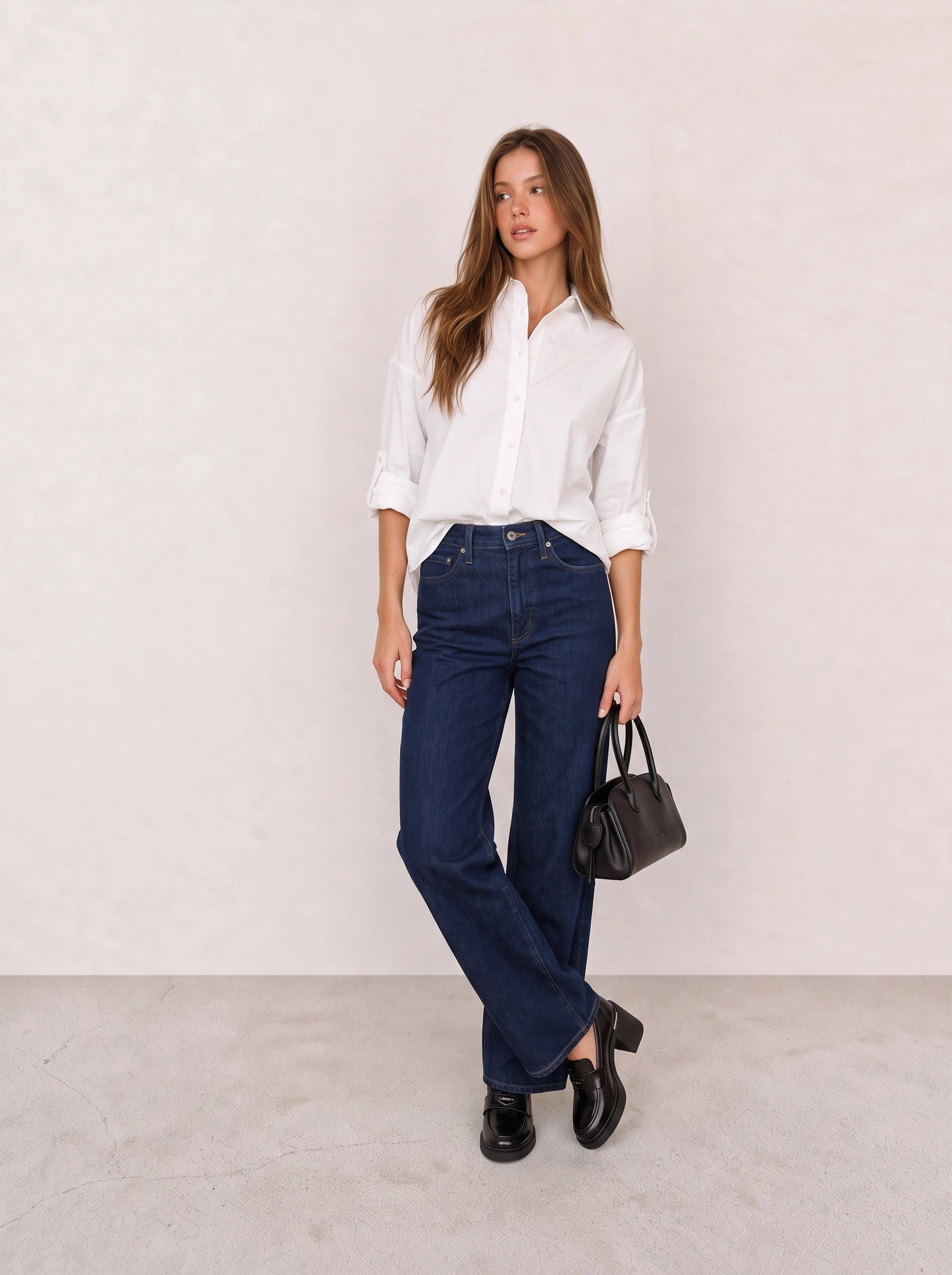
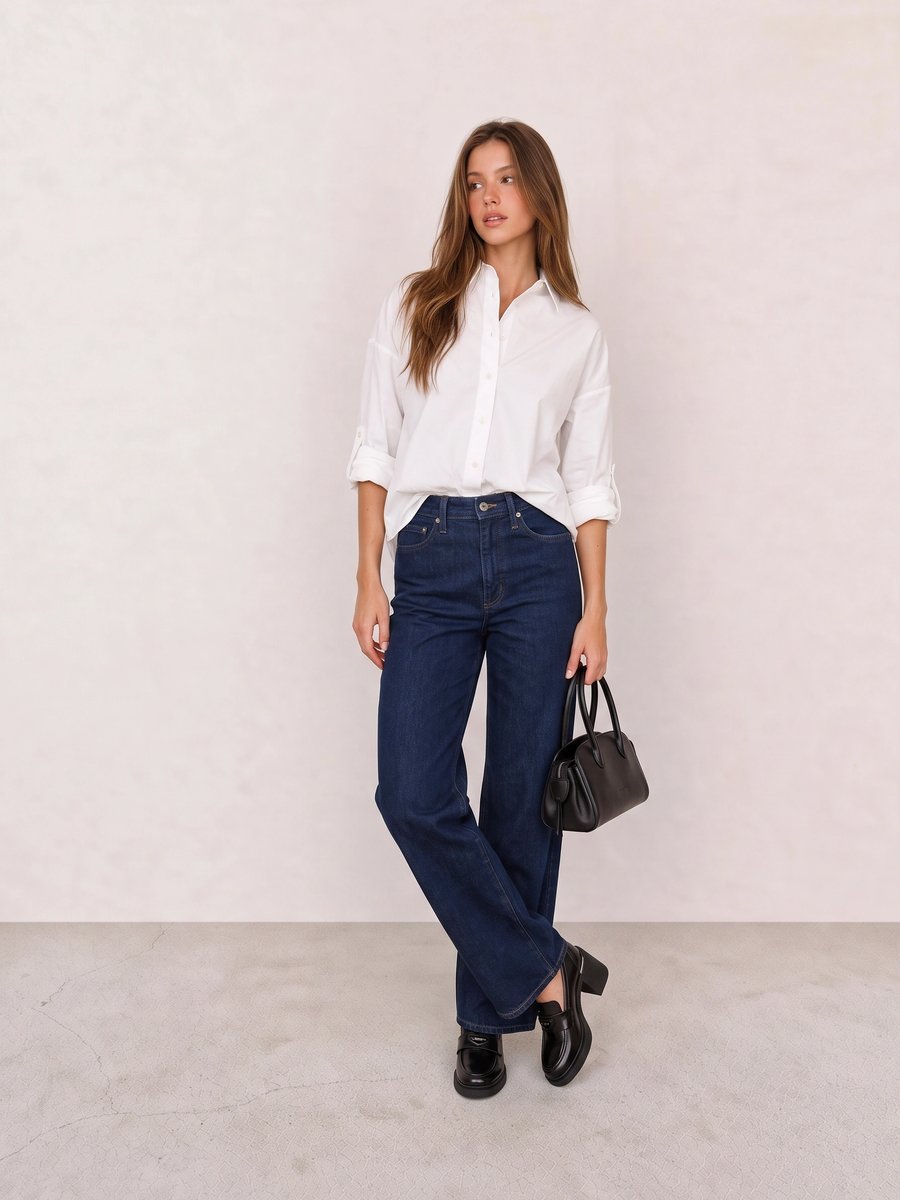
Key pieces in this white shirt and dark denim outfit: a crisp white button-down, dark wide-leg jeans, and black block-heel loafers. The loafer is what elevates denim into old money territory — the low, structured heel keeps the leg line clean in a way a flat sneaker sole never could.
Styling tip: if you're transitioning a casual wardrobe toward old money, this is the easiest swap to make first. Trade sneakers for loafers before you touch anything else in your closet — it changes the read of nearly every casual outfit you already own.
Mistake 5: Over-Accessorizing With Statement Bags and Jewelry
Counterintuitively, more accessories make an outfit look less expensive, not more. A stack of statement jewelry or an oversized logo bag pulls the eye toward the accessories and away from the tailoring — which is the opposite of what this aesthetic is built to showcase. One structured bag does more work than five loud ones.
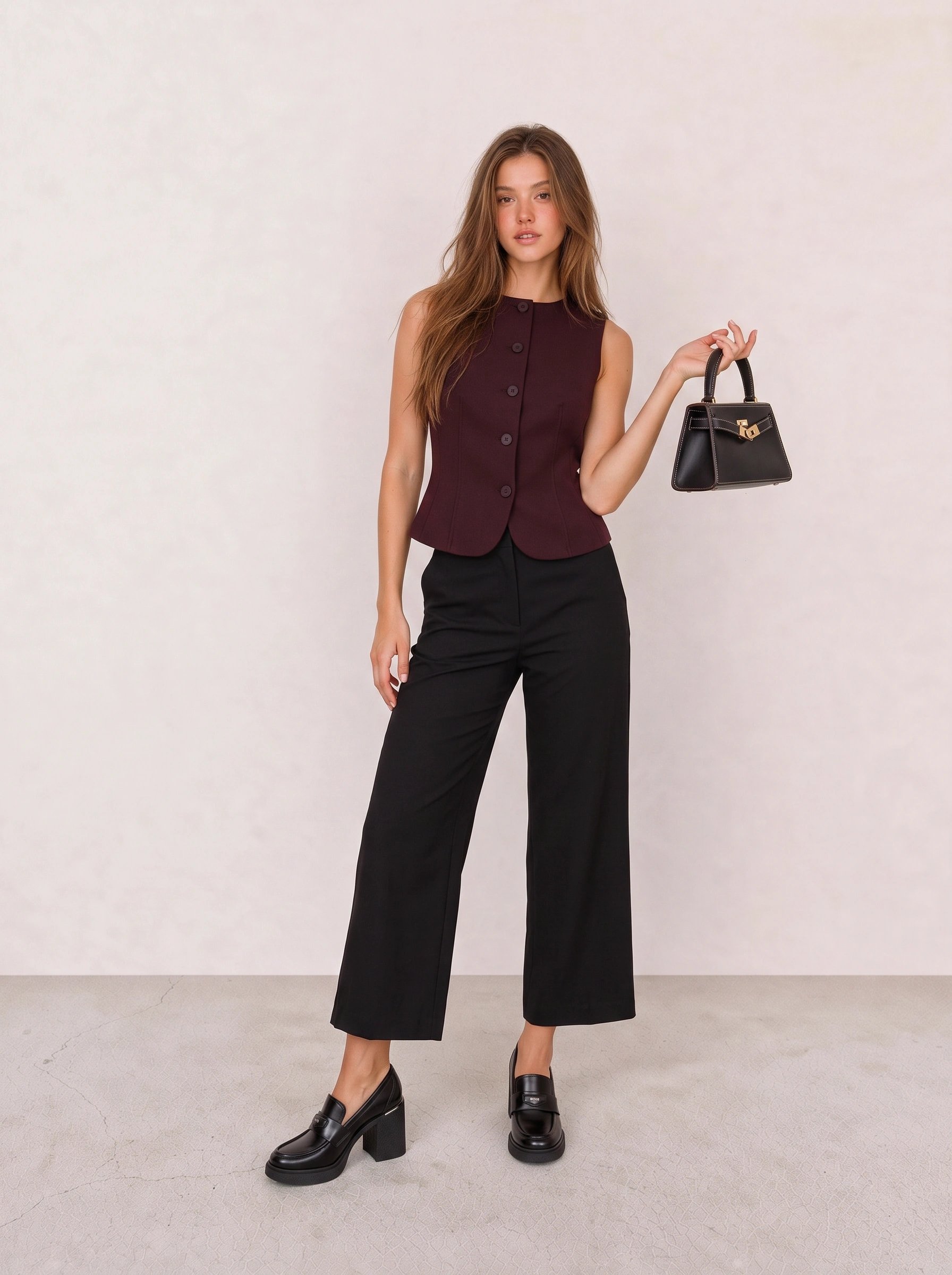
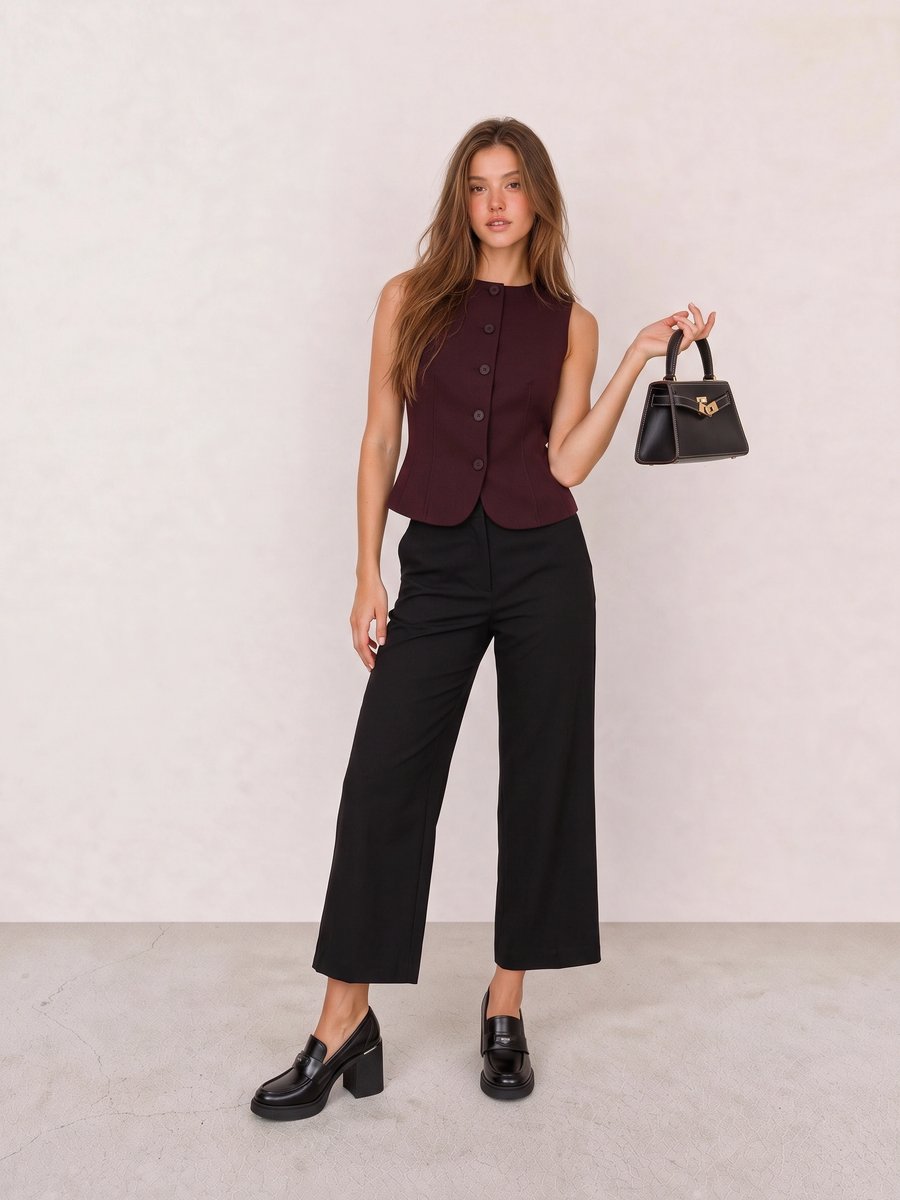
Editor's take: if I had to pick one outfit on this list as the clearest teaching example, it's this burgundy waistcoat and cropped trouser pairing. The single structured top-handle bag is the only accessory in the frame, and it's exactly enough — everything else is fabric, fit, and one confident color choice.
Without the restraint on jewelry, the burgundy piece would compete with a necklace or statement earrings instead of standing as the outfit's one bold note. Let one element carry color or shine — never two.
Mistake 6: Ignoring Fabric Weight and Texture
This is the mistake that photographs fine and fails in person. A shiny polyester blouse can look identical to linen or silk in a flat product photo, but fabric weight is what old money style actually communicates — heavier, natural fibers drape rather than cling, and drape is what reads as considered up close.
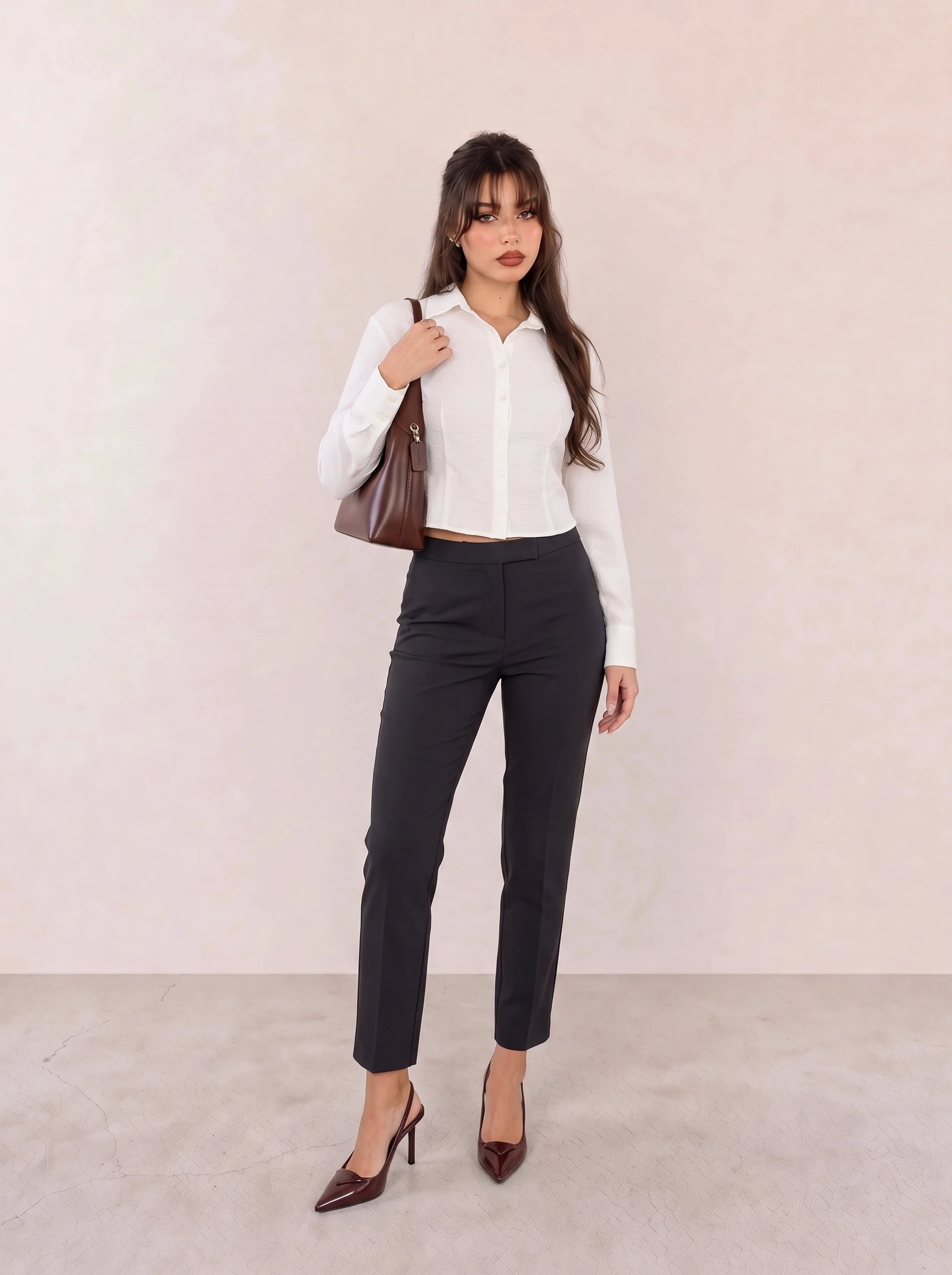
The mechanism in this ivory linen shirt and tapered trouser combination is drape logic: linen falls with soft creases that photograph as texture, not flatness, while the burgundy slingback heel adds a single warm accent against an otherwise cool, neutral base.
Budget note: this is where it's actually worth spending more, even a little. A mid-weight cotton or linen shirt from a mid-range retailer will outlast and out-drape a cheaper synthetic blend every time — this is the one category where fabric quality is non-negotiable.
Mistake 7: Assuming Old Money Only Works in Neutrals
What's actually happening here is a common overcorrection: after learning that old money avoids bright, saturated color, people swing too far and flatten everything into beige and white. That's not the rule. The palette is warm and tonal — camel, burgundy, chocolate brown, ivory — it just avoids neon and high-contrast primary color, not color itself.
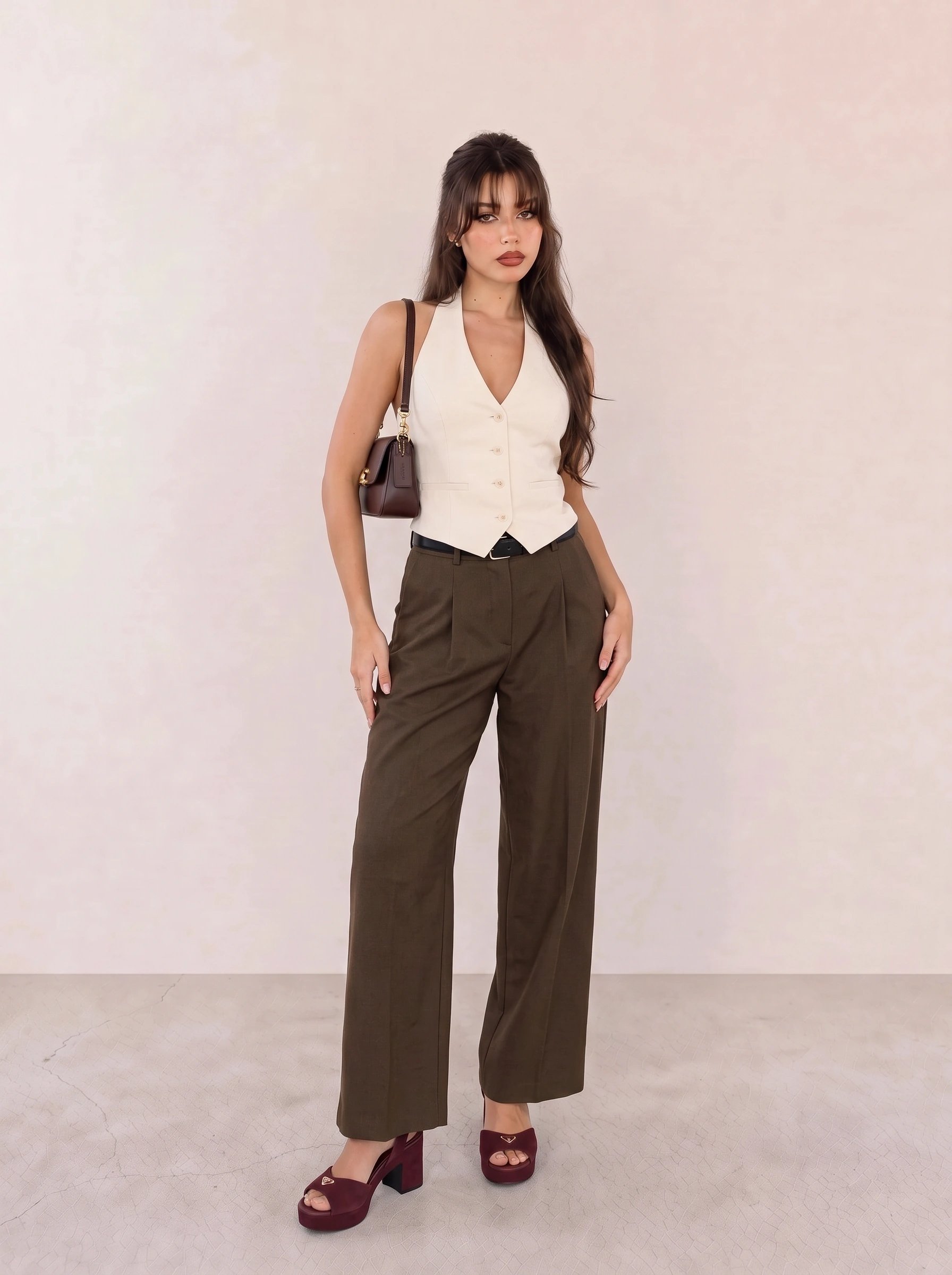
The cultural reference point here is closer to a 1970s Hamptons summer than a boardroom — think Lee Radziwill on a porch, not a corporate uniform. In this ivory halter top with brown trousers and burgundy accents, three warm tones sit together without a single neutral gray or black in the frame, and it still reads unmistakably old money.
Where to wear it: this is the outfit for a long, unhurried lunch on a hotel terrace in early September, when the season hasn't fully turned and you want color without looking like you're trying. Worth noting — this warmer, richer palette is where the aesthetic is heading in 2026, moving away from the flat all-neutral interpretation that dominated a few years ago toward something with more visible color depth.
FAQ: Common Old Money Styling Questions
What is the biggest old money styling mistake? Buying visibly branded pieces instead of well-fitted basics. The aesthetic depends on quiet signals — fit, fabric, proportion — not recognizable logos, so a logo bag or belt undercuts the entire look regardless of how expensive it is.
Can old money style include color? Yes. The palette is warm and tonal — camel, burgundy, chocolate, ivory — and avoids neon or high-contrast primary color rather than avoiding color altogether. An all-beige wardrobe is a common misreading of the aesthetic, not a requirement of it.
Are sneakers ever acceptable in old money outfits? Rarely, and only minimal leather styles in low-key colorways. Chunky, logo-heavy sneakers break the clean shoulder-to-shoe line the aesthetic relies on — a loafer or block-heel shoe almost always reads more correctly.
For the deeper history and full shopping breakdown behind these rules, see the complete guide to old money style, or browse the full old money outfit collection for more examples of the palette and silhouette in practice.
None of these fixes require a bigger budget — most of them require less. Old money style rewards restraint more than spend, which is exactly why it's one of the harder aesthetics to fake and one of the easier ones to get right once you know what to look for.
Weekly outfit picks and style guides — no fluff, unsubscribe anytime.