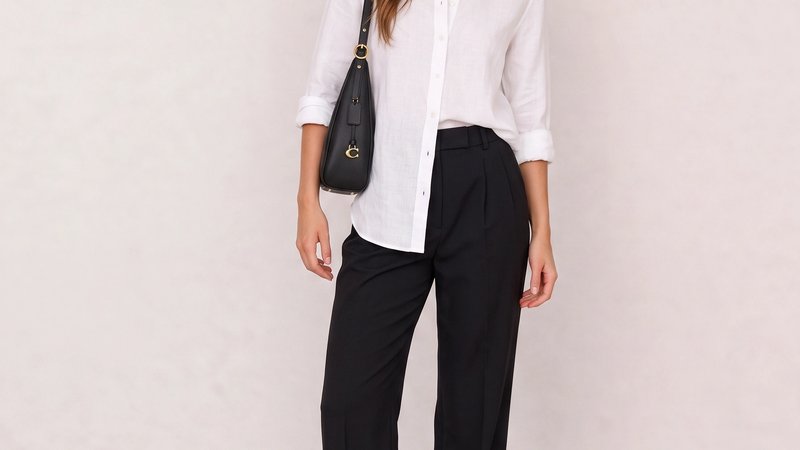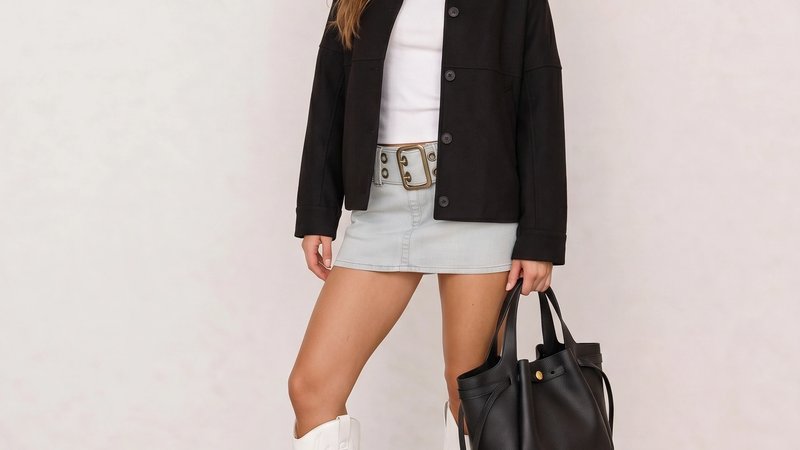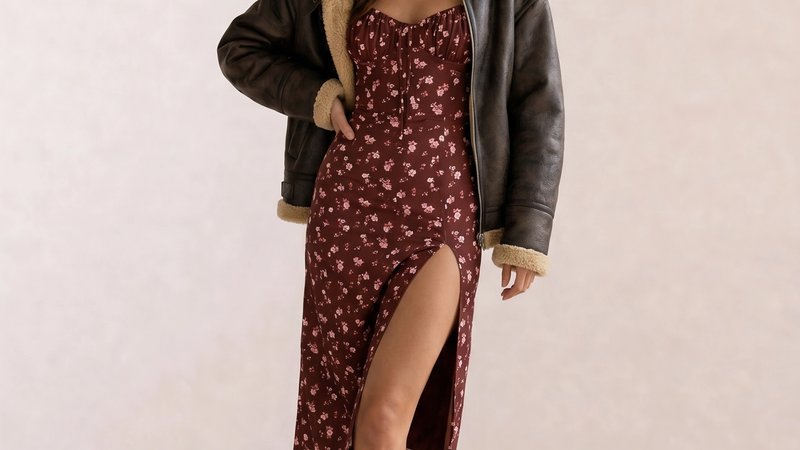
The Best Clothing Colors for Your Undertone
Find the best clothing colors for your undertone with warm, cool, neutral, and olive palette formulas for neutrals, denim, black, white, and accents.
STYLEFINDEN editorial review: checked before publication for wearability, proportion logic and real-life outfit use. We explain our editorial method and image policy on the About page and keep affiliate independence details in the affiliate disclosure.
The best clothing colors for your undertone are the ones that make getting dressed easier, not a private set of rules. Start with the colors closest to your face: tops, collars, scarves, and earrings. Then build the rest of the outfit around a repeatable neutral, one accent, and denim or black when the occasion calls for it.
Warm, cool, neutral, and olive are useful comparison labels. They do not erase skin depth, contrast, fabric texture, or taste. Use the formulas below as small fittings: try two versions in daylight, keep notes, and repeat the combinations that make you feel alert rather than managed by a palette.
What Are the Best Clothing Colors for Your Undertone?
Undertone color choices describe temperature first, then value and chroma. Warm palettes often begin with cream, camel, warm brown, coral, tomato red, and golden yellow. Cool palettes often begin with optic white, charcoal, ink navy, blue-red, berry, and blue pink. Neutral and olive dressers can borrow from both directions, then narrow the result by softness, depth, and contrast.
Color Me Beautiful’s color-analysis guide uses warm, cool, and neutral as part of a broader color-analysis vocabulary. Adobe’s guide to hue, saturation, and brightness helps separate hue from saturation and brightness, which matters when a soft sage and a vivid emerald produce very different effects even though both read as green.
Where Undertone Palettes Came From—and What They Cannot Do
Personal color analysis became widely known through late twentieth-century seasonal systems, then moved from four broad seasons to more detailed temperature, value, and chroma comparisons. The useful modern takeaway is smaller than the promise: color can make a garment easier to repeat near your face. It cannot rank bodies, settle a style identity, or tell you to throw out a favorite color.
The counterintuitive part is that the most flattering color is not always the most obvious warm or cool one. A muted cool rose can work better than a clear icy pink when softness is your stronger variable; a deep warm burgundy can beat a bright coral when depth is doing more work. Compare within a family before you reject the family.
The Key Pieces That Make an Undertone Palette Wearable
Build from five pieces: a face-framing neutral, a second neutral for trousers or skirts, one denim wash, a colored top or dress, and a metal or shoe that can either continue or interrupt the temperature. Cream, charcoal, taupe, olive, and ink navy earn their place because they can carry several accents without becoming the subject of every outfit.
Denim deserves its own test. Mid-blue denim is often a flexible bridge; faded blue reads softer, dark indigo reads deeper, and washed black changes the temperature conversation into a contrast conversation. Keep the denim constant when you compare tops so you can see what the color near your face is actually doing.
Clothing Color Formulas for Warm Undertones
Warm undertones can start with cream, camel, warm navy, cognac, olive, tomato red, coral, marigold, and chocolate. If a clear warm shade feels loud, lower the chroma before changing the temperature: try terracotta instead of orange, muted moss instead of bright grass green, or butter yellow instead of primary yellow.
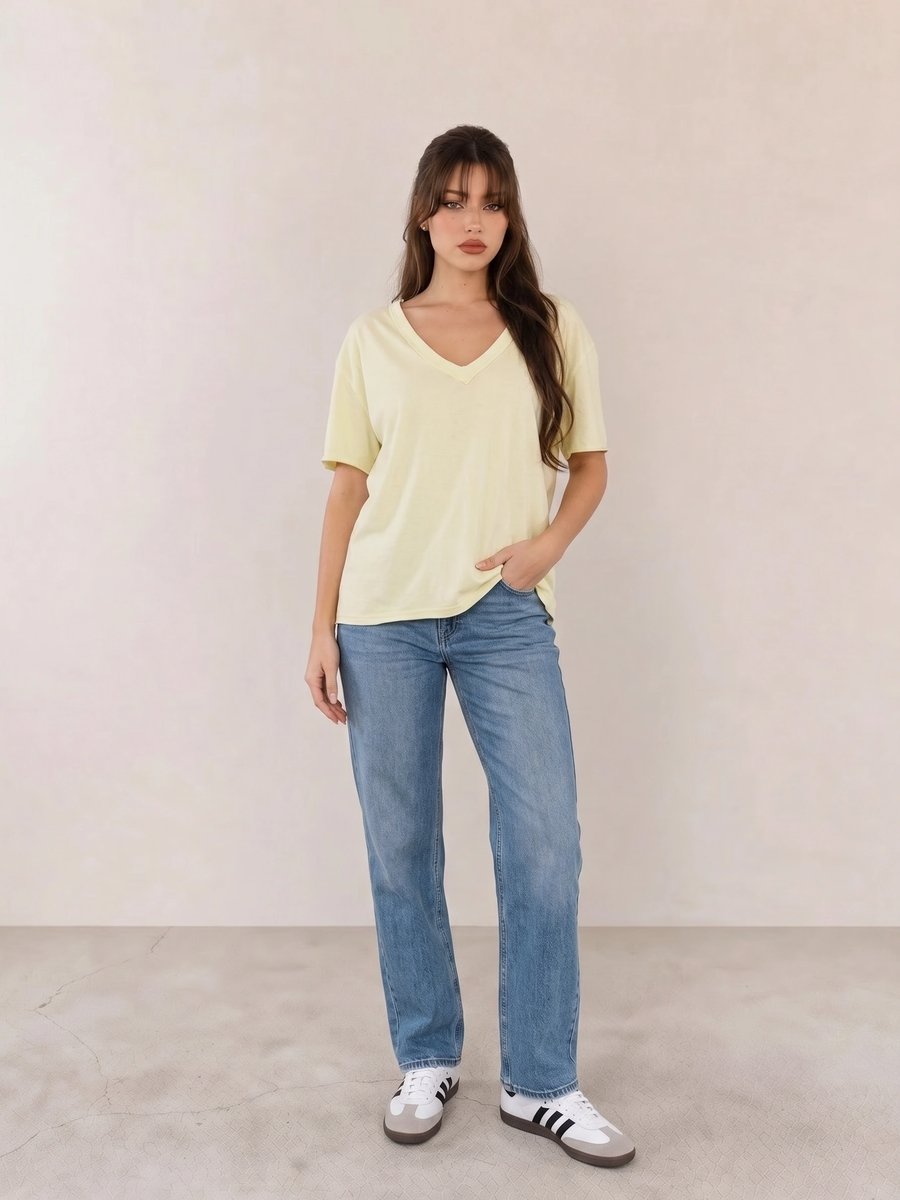
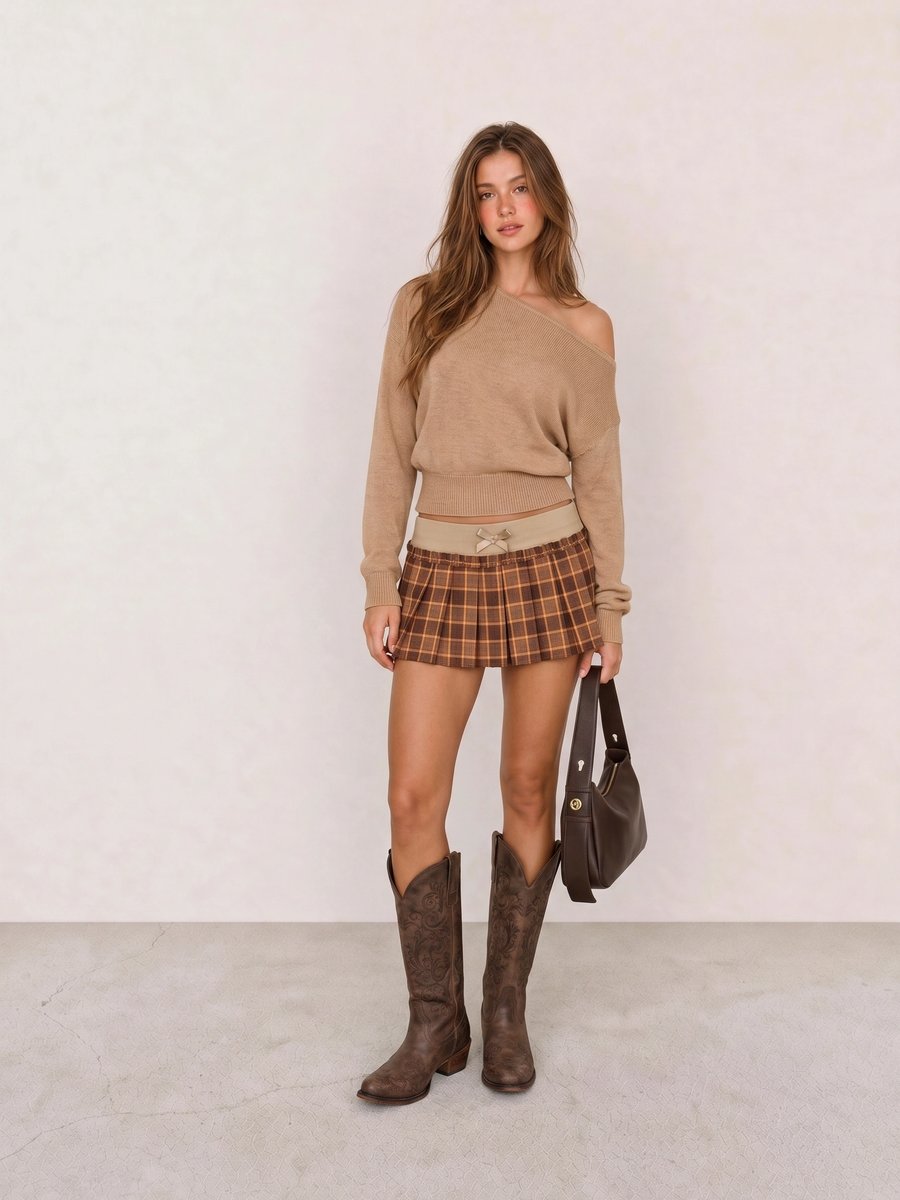
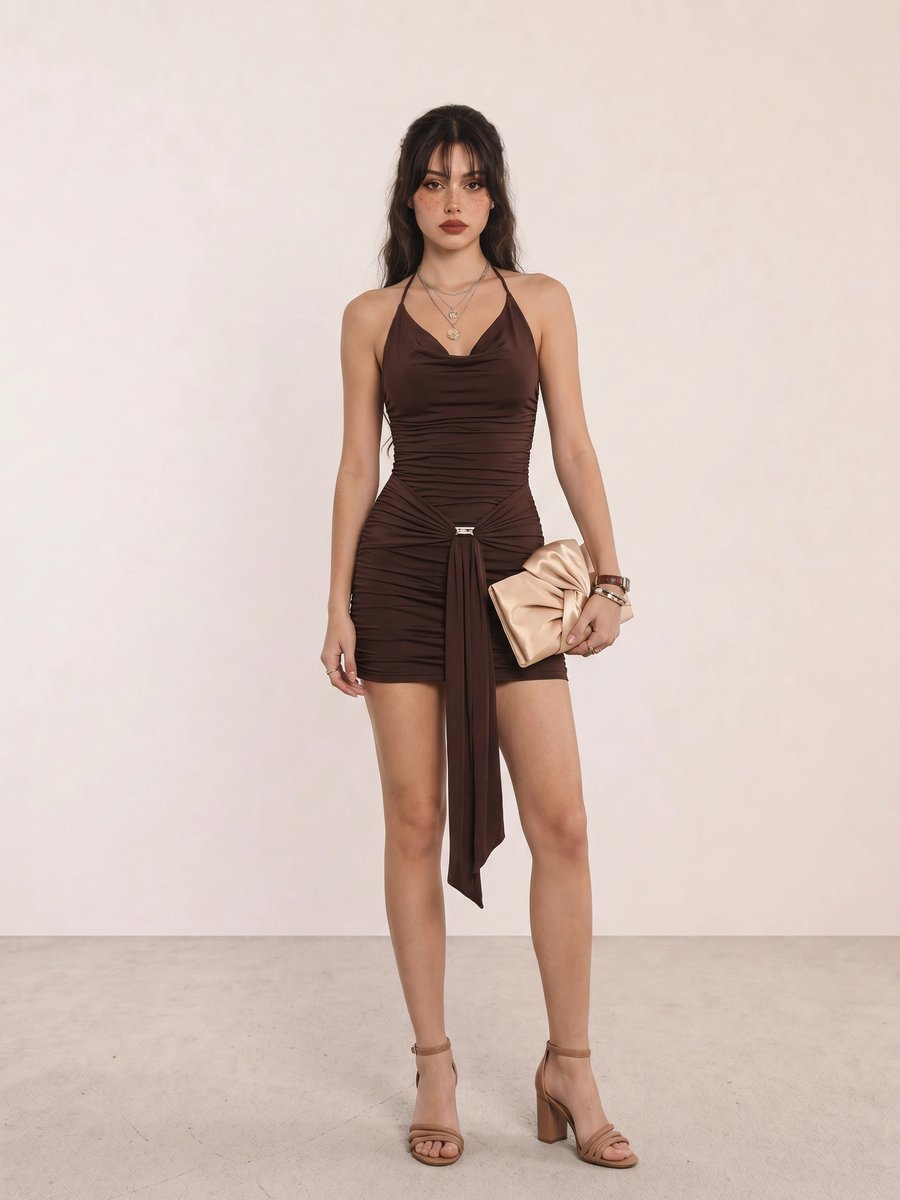
Formula 1: cream tee + mid-blue straight jeans + warm yellow or cognac accessory. Formula 2: camel knit + brown plaid or chocolate bottom + tan boot. Formula 3: chocolate or rust dress + beige bag + warm-metal jewelry. These formulas use connected neutrals, so the accent does not have to carry the entire outfit.
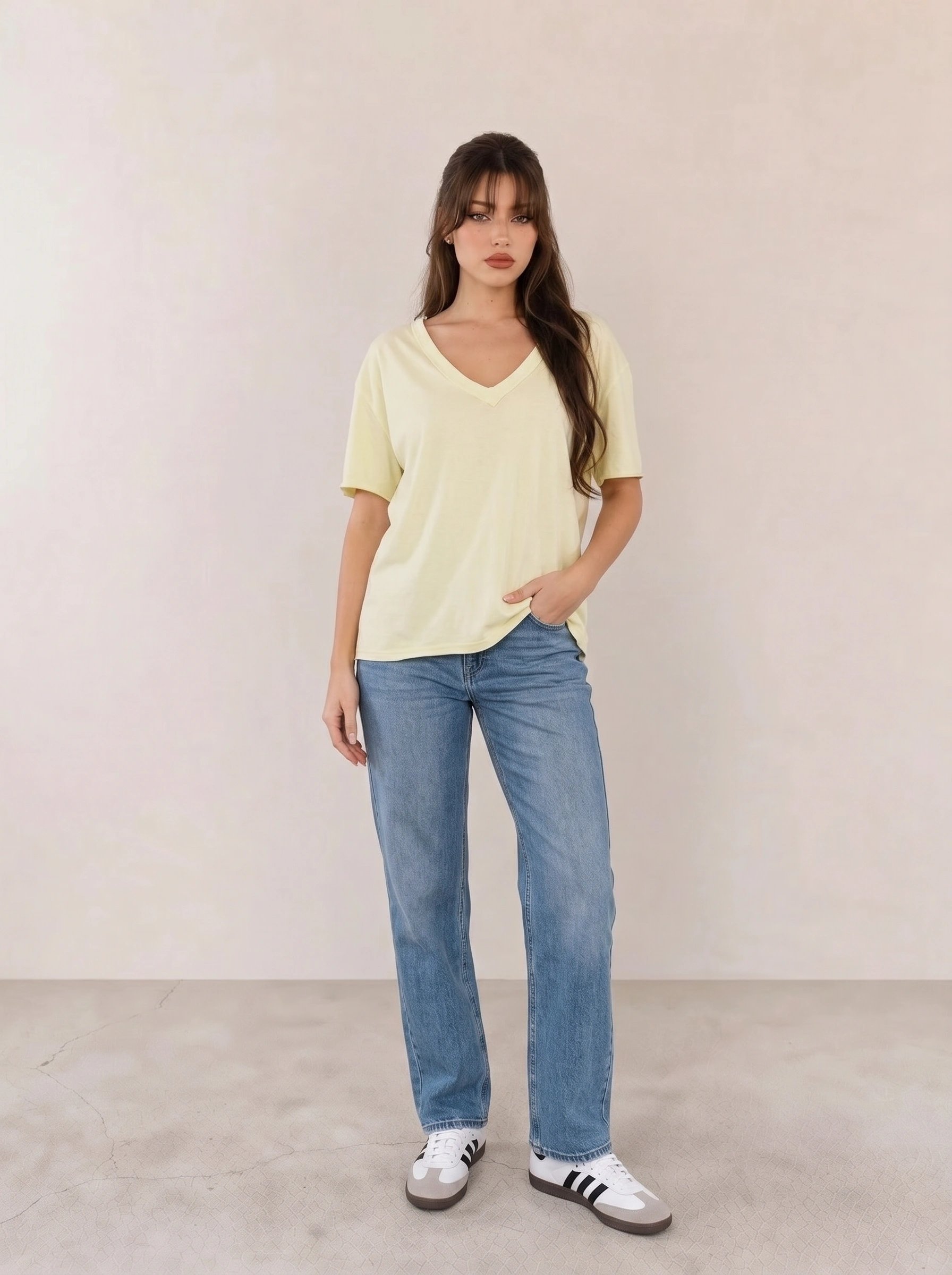
The warm yellow and mid-blue balance in Pale Yellow V-Neck Tee & Blue Straight Jeans makes it the easiest formula to test first. The color logic is simple: a light warm top gets enough cool relief from denim. Without the blue, head-to-toe yellow would raise the brightness and make it harder to identify whether warmth or intensity is the issue.
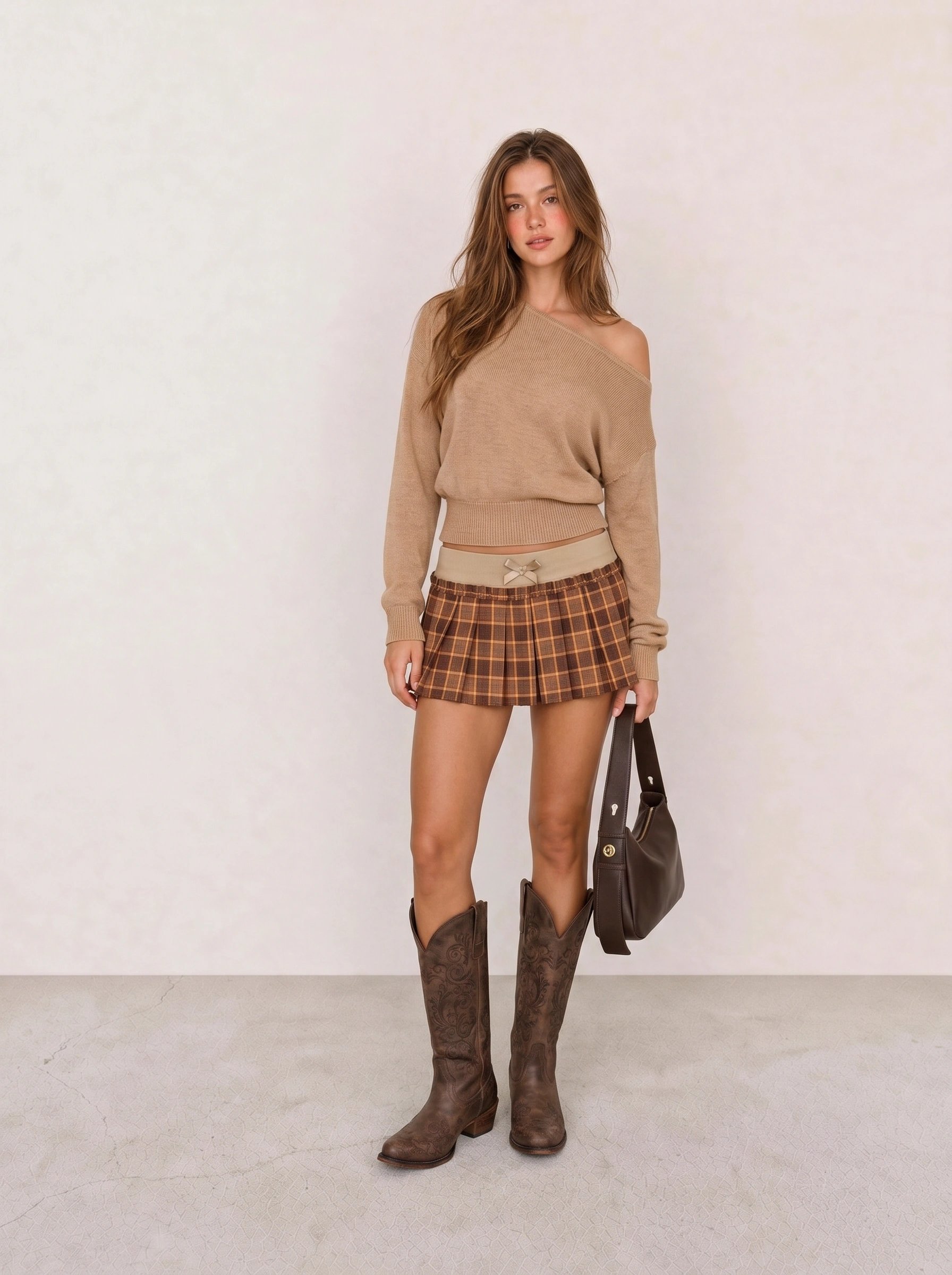
In Camel Off-Shoulder Sweater & Plaid Pleated Mini Skirt, camel, brown plaid, and tan boots sit in a related temperature range. Try this when you want warmth without a bright accent; the varied texture keeps the neutral formula from becoming flat.
Clothing Color Formulas for Cool Undertones
Cool undertones can compare optic white, soft grey, charcoal, navy, cool taupe, cobalt, periwinkle, berry, blue-red, and blue pink. If black feels severe, try charcoal or ink navy near the face. If optic white feels too sharp, soft grey or cool pearl can preserve the direction with less brightness.
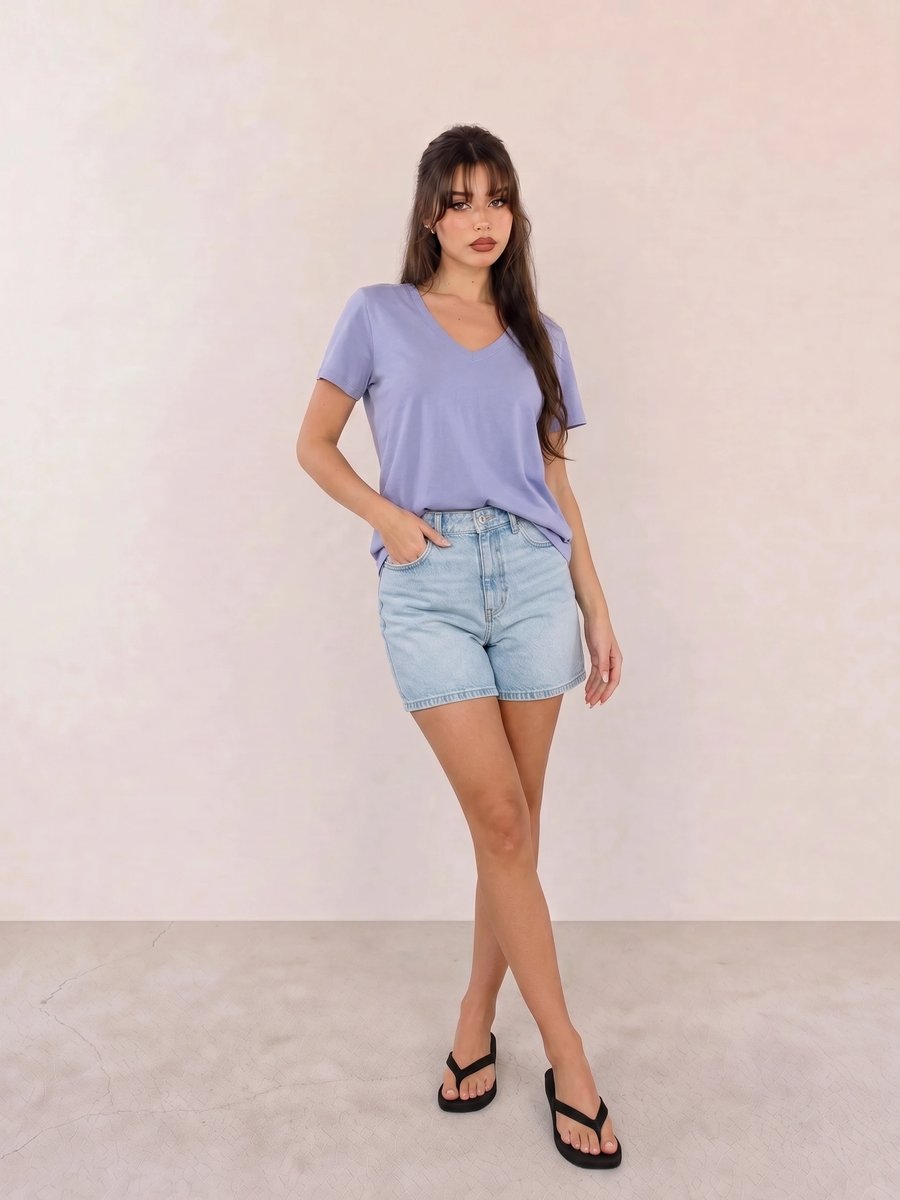
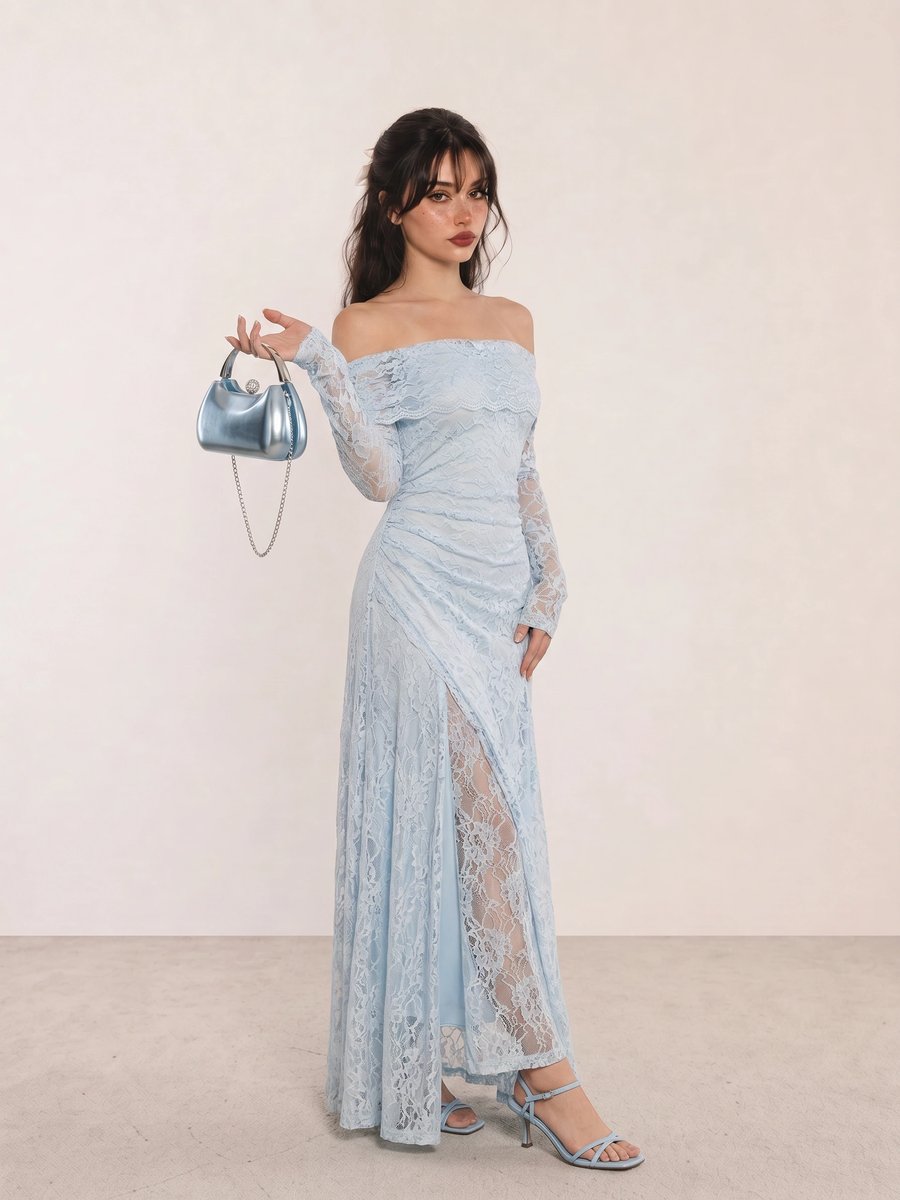
Formula 1: periwinkle tee + light-wash denim + silver or black sandal. Formula 2: powder blue dress + blue or silver accessory. Formula 3: navy dress + cool metallic or charcoal layer. The common thread is a blue-based neutral or accent; the outfit can stay soft or deepen with navy without changing its temperature direction.
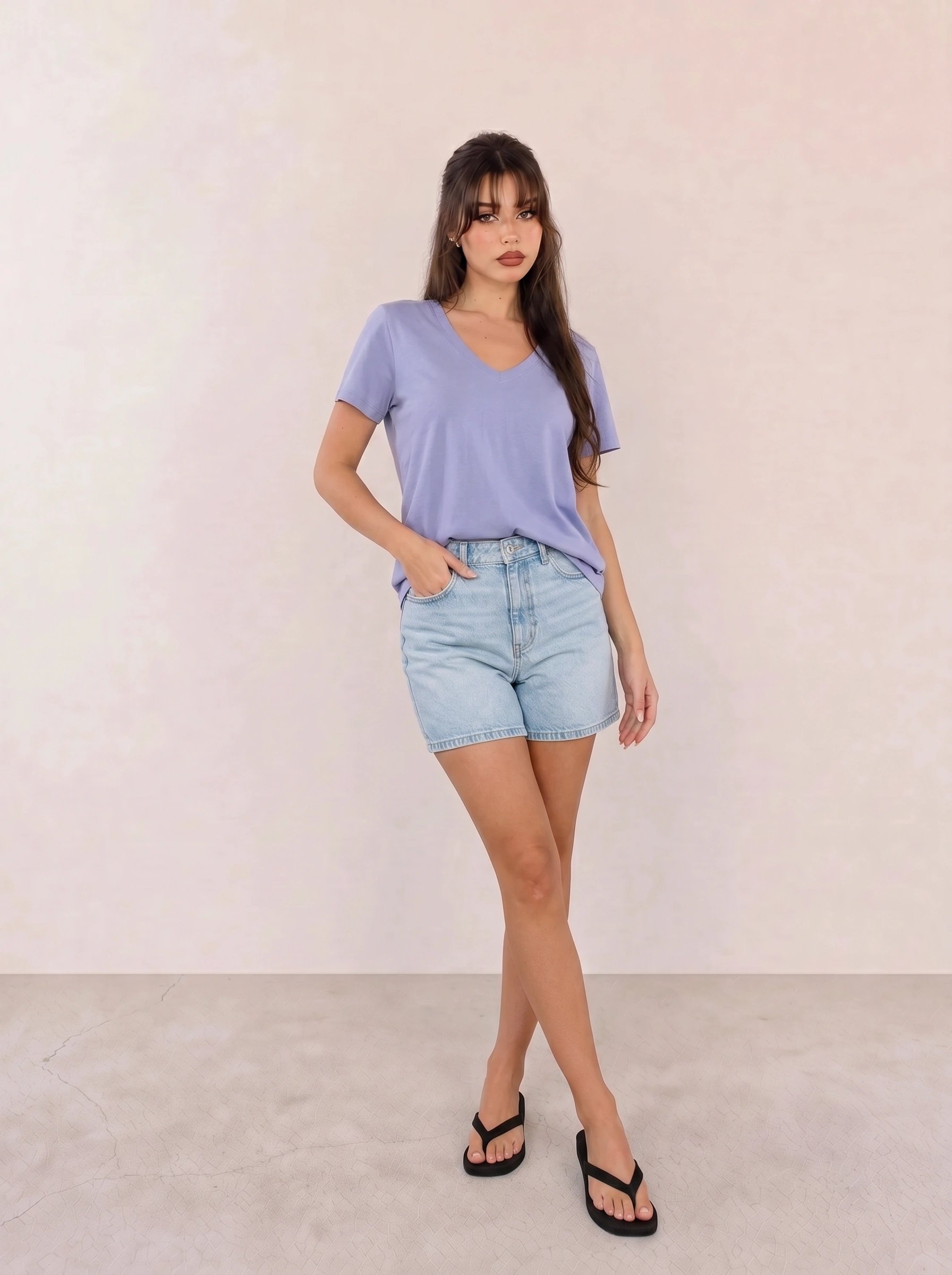
The low contrast in Periwinkle V-Neck Tee & Light Wash Denim Shorts shows why cool does not have to mean icy. Periwinkle carries the temperature while the faded denim keeps the value range close; add a charcoal jacket if you want more definition.
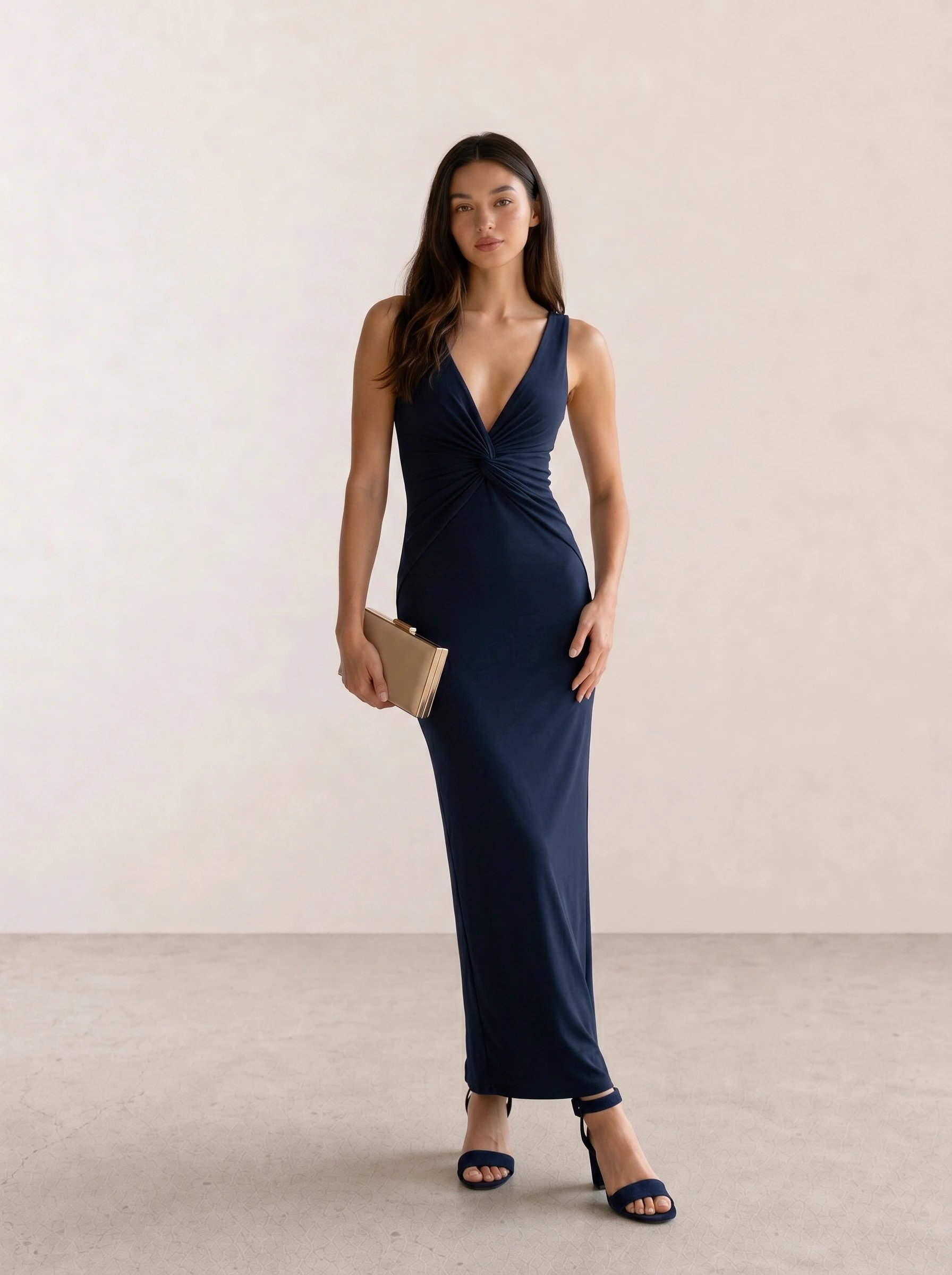
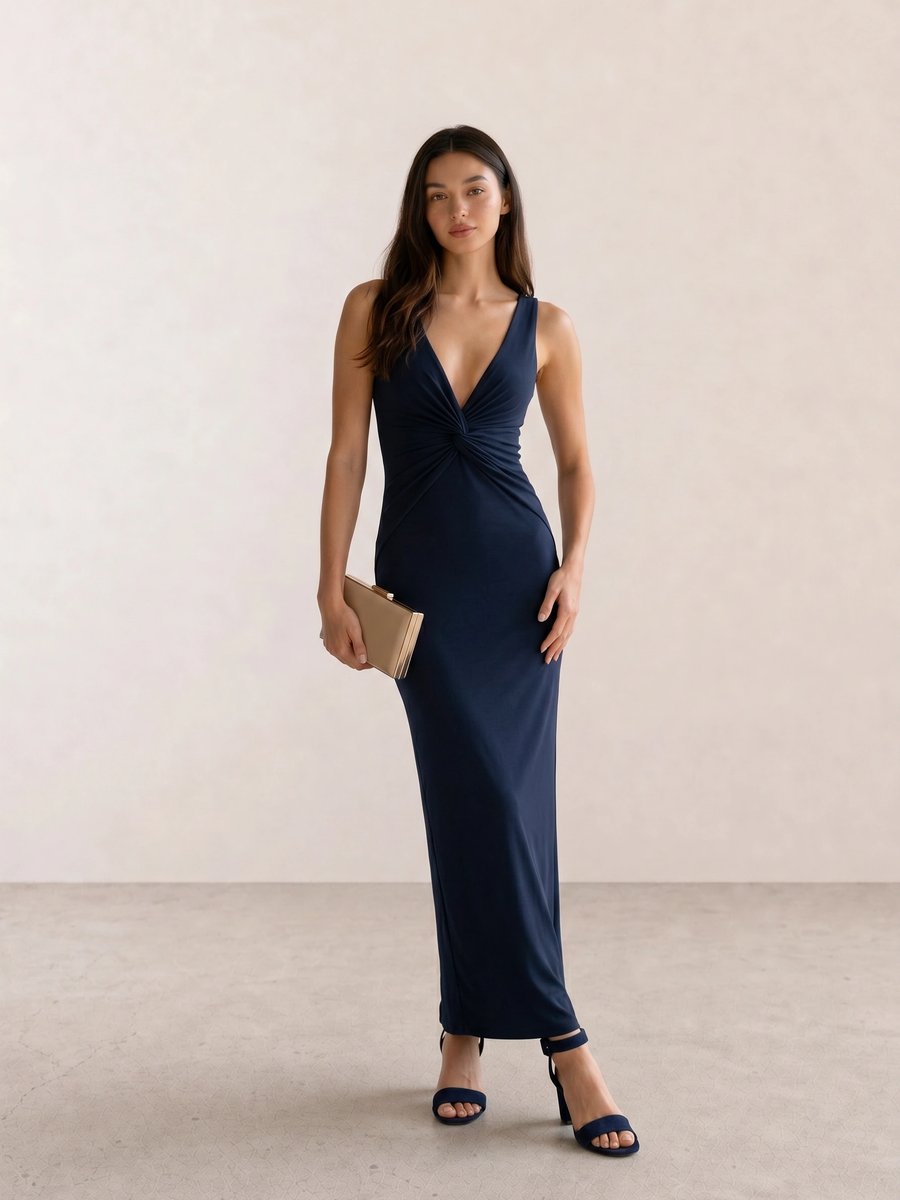
For a deeper option, Navy Twist-Front Maxi Dress uses navy as the main neutral. A cool metallic clutch or silver earring would sharpen the contrast; a muted taupe wrap would soften it. Compare both rather than treating one metal as compulsory.
Clothing Color Formulas for Neutral Undertones
Neutral undertones can often work across warm and cool palettes, especially when the outfit uses softened colors or a measured contrast. Start with taupe, soft white, stone, mushroom, denim, muted navy, dusty rose, muted teal, berry, and sage. Then notice whether you prefer a warmer or cooler version when the color gets brighter.
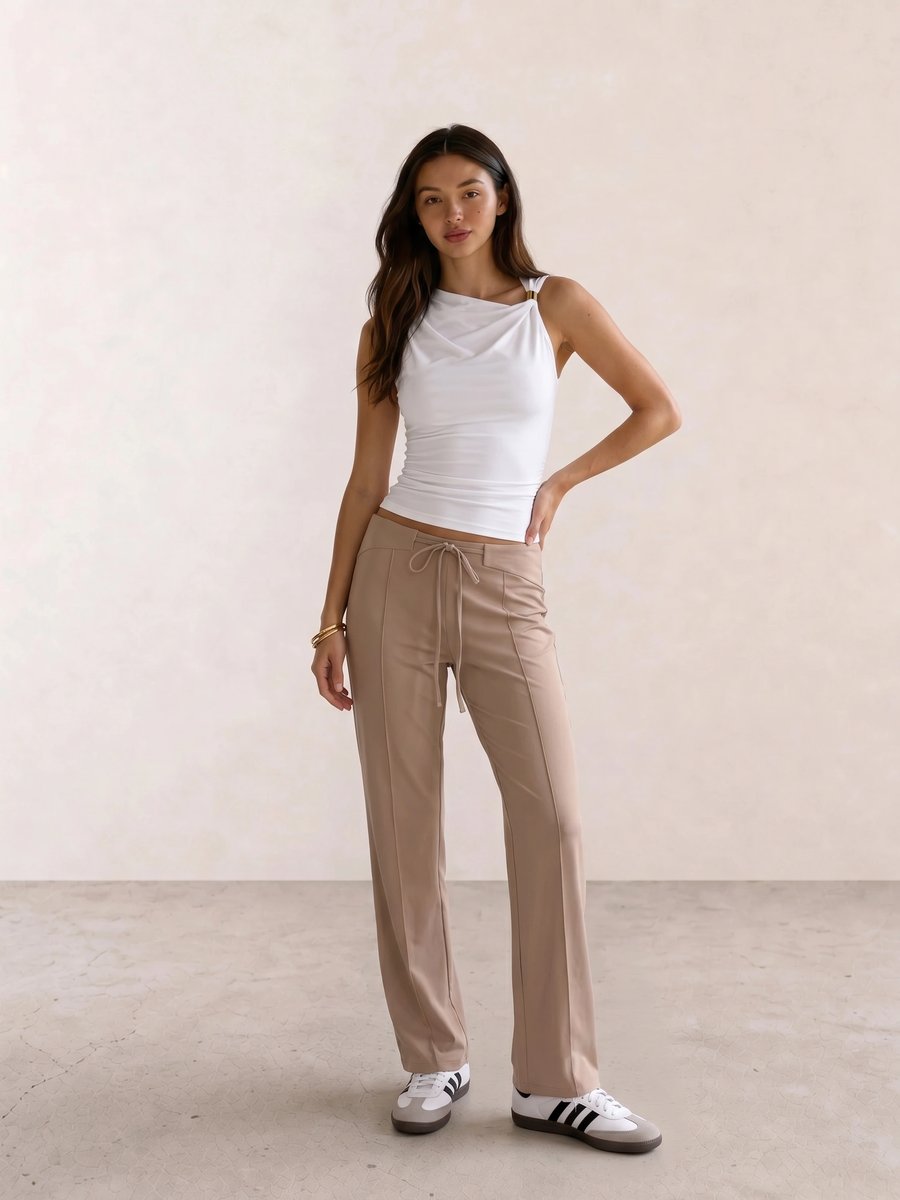
Formula 1: mauve shirt + pale denim + white sneaker. Formula 2: taupe dress + olive or cream accessory. Formula 3: soft white top + beige trouser + a muted colored shoe or bag. Neutrals usually gain more from controlling brightness than from forcing a single temperature.
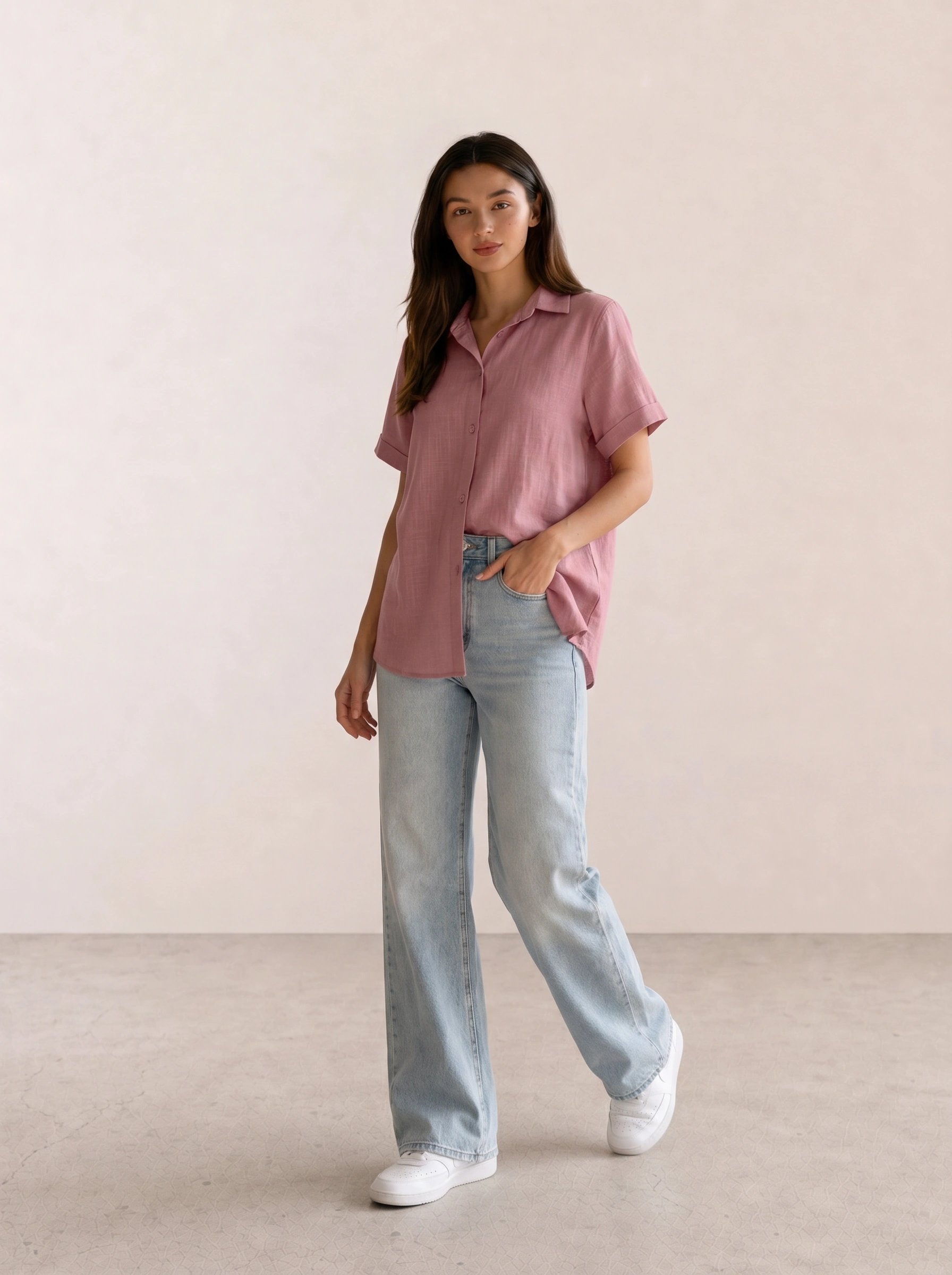
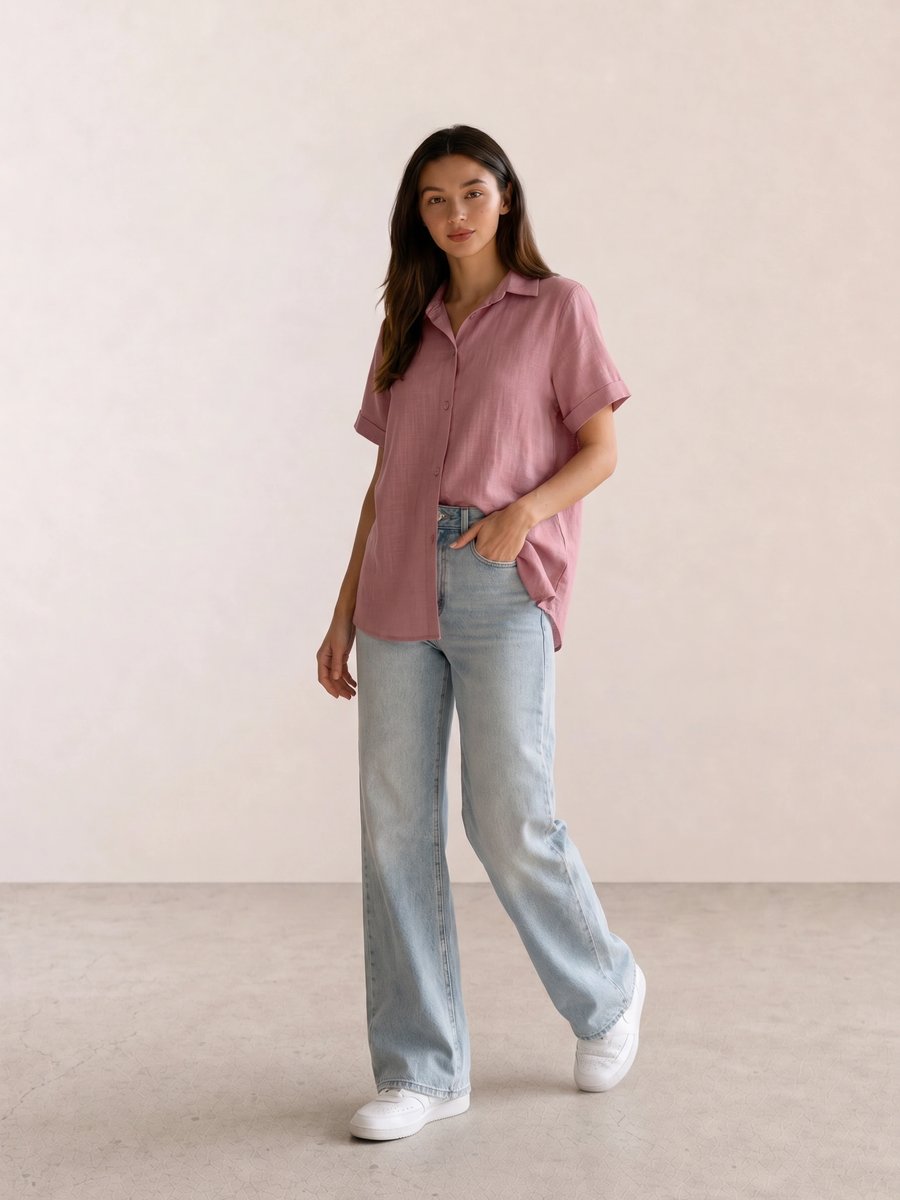
The muted mauve in Mauve Linen Shirt & Bleached Wide-Leg Jeans is useful because it can lean warmer or cooler depending on the light. The bleached denim keeps the formula open, making it a practical comparison outfit for a neutral dresser.
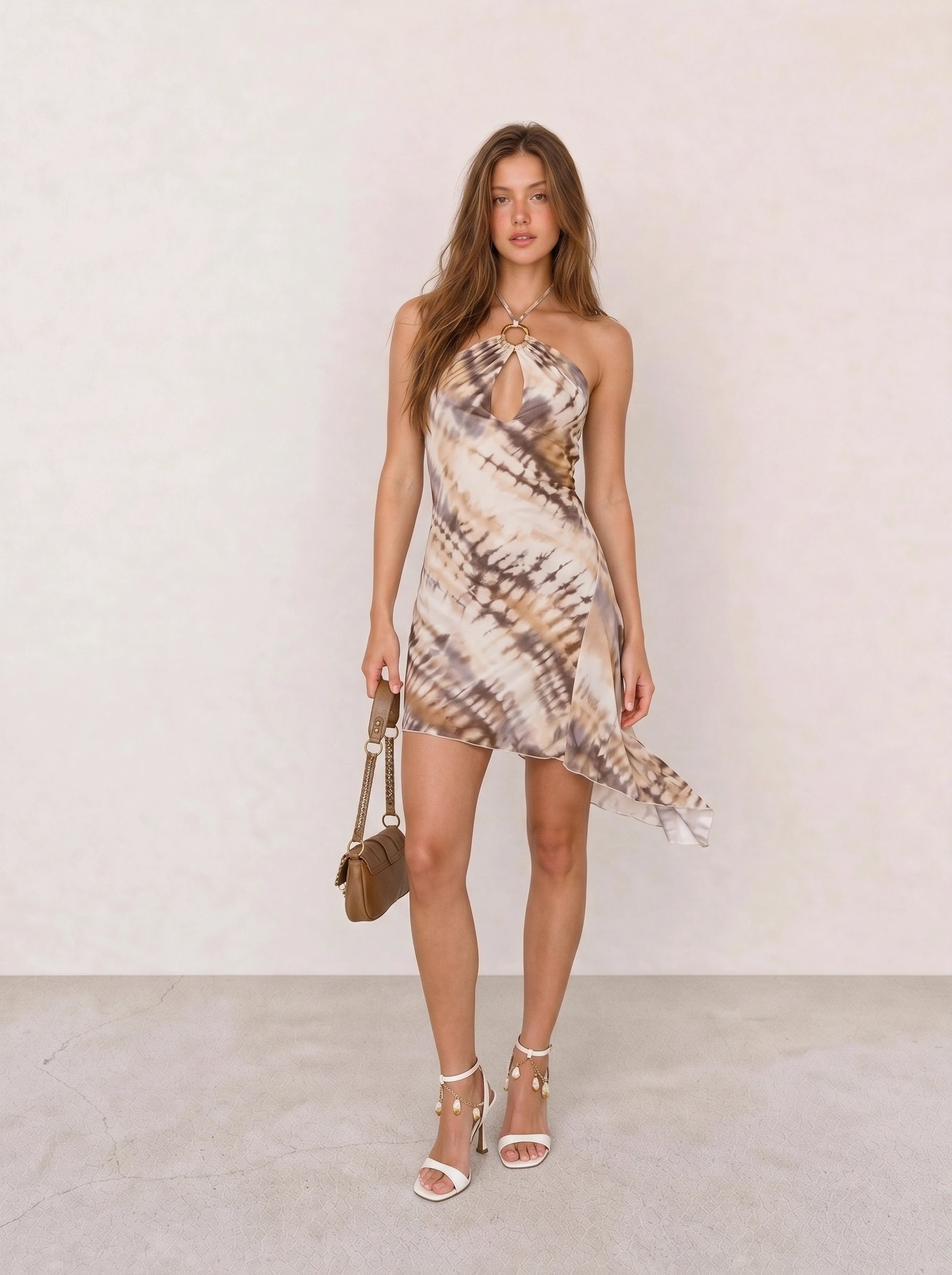
Try a small accent before adding several. A neutral palette loses its flexibility when every piece pulls in a different direction; one muted green bag or one berry lip gives the outfit a center.
Clothing Color Formulas for Olive Undertones
Olive describes a green-gray or golden-green cast that can show warm, cool, or neutral behavior. Test moss, sage, muted olive, teal, deep green, soft cream, charcoal, and burgundy beside the face. The goal is not to match your skin with green; it is to find green and adjacent colors that keep the face visible.
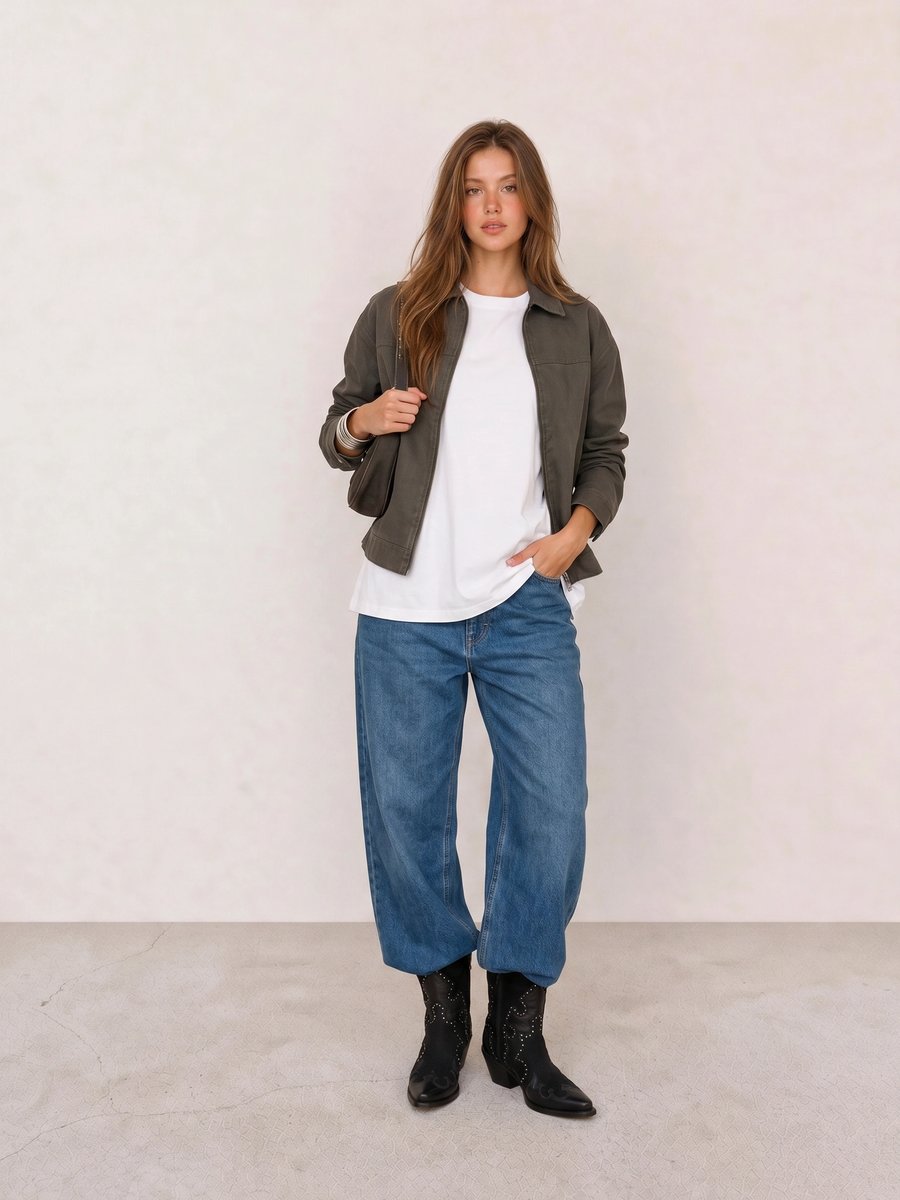
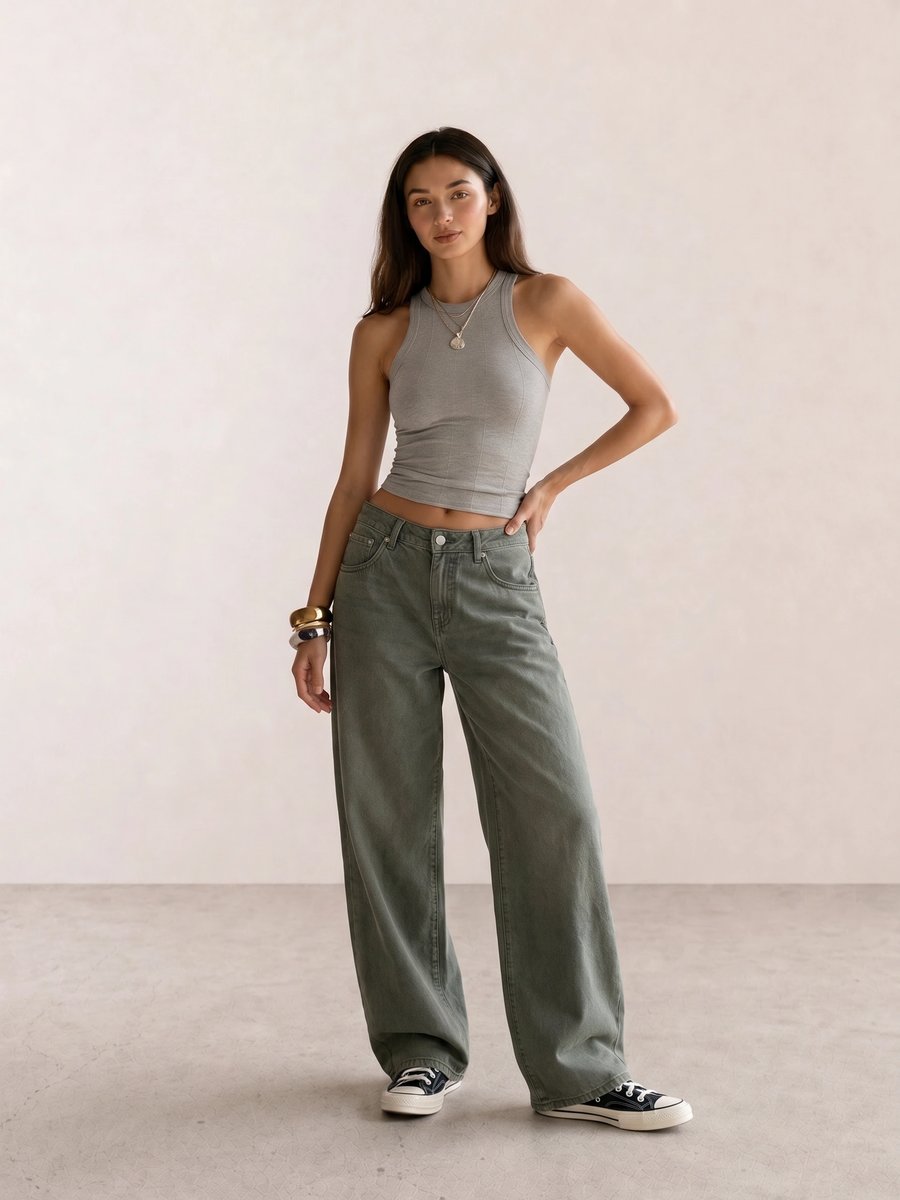
Formula 1: sage dress + ivory shoe or bag. Formula 2: olive jacket + white tee + blue denim. Formula 3: grey tank + olive denim + black sneaker. These formulas change value and texture while keeping green controlled, which makes them better tests than an all-olive outfit.
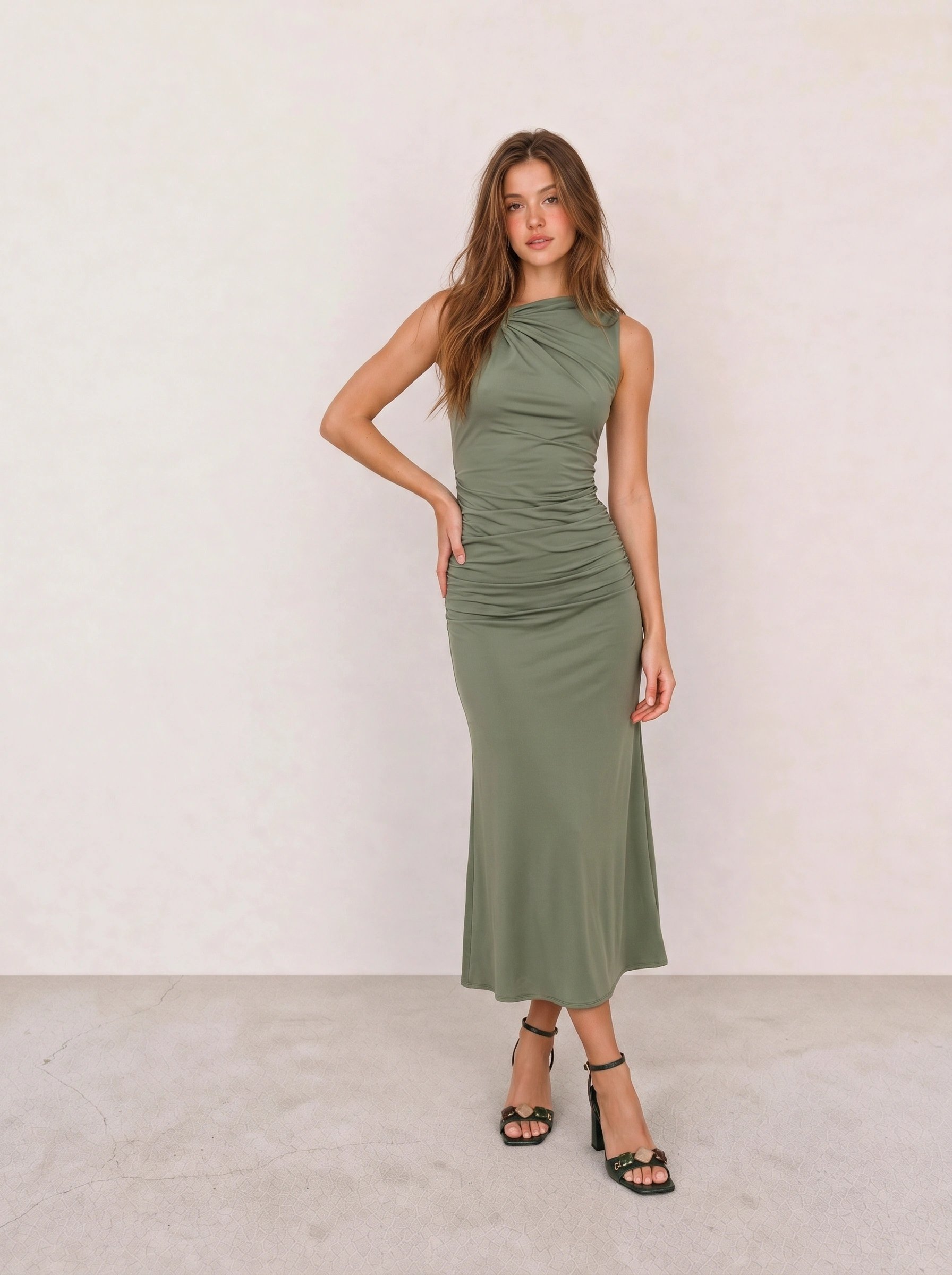
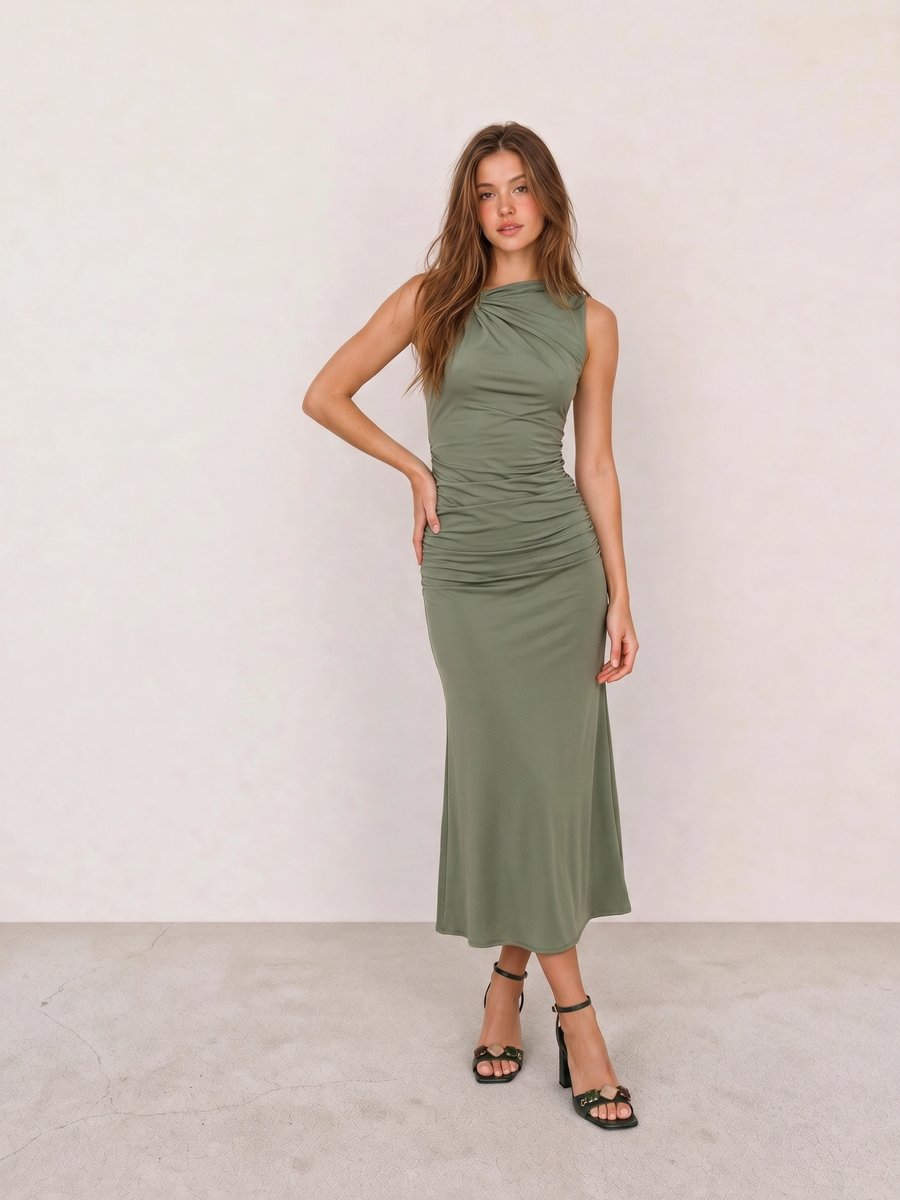
In Sage Twist-Neck Ruched Midi Dress, sage stays close to the face while ivory adds light. If this reads washed out, compare a deeper teal or a clearer emerald before deciding green is wrong for you.
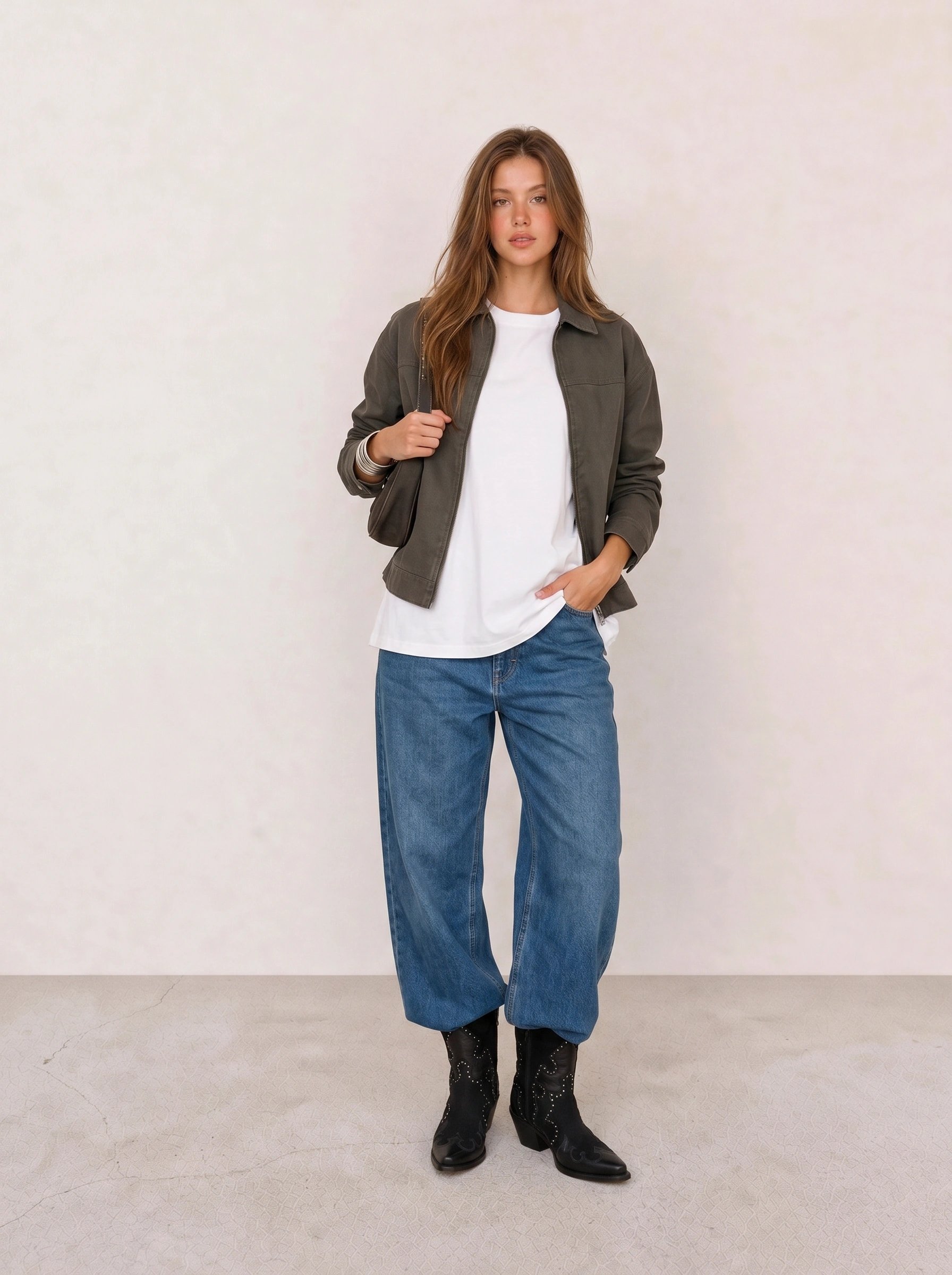
The mix in Olive Jacket & White Tee with Barrel Jeans is the most useful everyday olive formula: green sits farther from the face, the white tee provides a test neutral, and blue denim adds a temperature contrast. Without the white layer, the jacket would have to do too much visual work.
How to Style Black, White, Denim, and Bright Colors
Black and white are contrast tools before they are undertone labels. Warm dressers can try soft black, espresso, cream, or ivory when optic white and jet black overpower the face. Cool dressers can compare charcoal, ink navy, pearl white, and true black. Neutral and olive dressers often get the clearest answer by testing the same black or white with different accents.
Soft and bright colors solve a different problem. Soft colors have lower saturation; bright colors have more intensity. Keep the undertone direction and change only saturation: dusty coral versus clear coral, smoky blue versus cobalt, muted olive versus chartreuse. A soft preference can make the wrong temperature look acceptable, so test both variables separately.
Common Clothing Color Mistakes to Skip
Do not turn a comparison result into a ban. “I look better in cream” does not mean white shirts are over; it means cream may be the easier choice for a close-up portrait or a no-makeup day. Keep black for the drama you want, then change the neckline, lipstick, or earring if it feels heavy.
Do not test a saturated accent against a muted neutral and call the result temperature. Brightness will win that contest. Also skip the all-at-once closet purge: buy one scarf, tee, knit, or lipstick-adjacent accessory in a comparison color and wear it three times before you decide it earns a larger role.
A Practical Shopping Guide by Undertone
At a budget level, use tees, scarves, and earrings to test temperature because they sit near the face and cost less to replace. At mid-range, prioritize a great neutral knit, jeans in a useful wash, and shoes that repeat your chosen neutral. At luxury level, invest in coat, handbag, or tailoring colors only after you know they support several outfits; expensive camel or charcoal should work with more than one accent.
For outfit formulas across the calendar rather than personal-color labels, browse spring outfit ideas, summer outfits, autumn outfit ideas, and the winter color palette guide.
Use Clothing Colors With the Rest of Your Palette
If your undertone still feels unclear, return to How to Find Your Undertone and Seasonal Color Analysis. Then compare the same color direction through jewelry metals and makeup colors instead of judging a top in isolation.
Clothing Colors by Undertone FAQ
What colors should I wear if I have warm undertones? Begin with cream, camel, warm brown, olive, coral, tomato red, and golden yellow, then compare muted and bright versions. Your best choices may depend as much on depth and saturation as on warmth.
What colors should I wear if I have cool undertones? Compare soft grey, charcoal, navy, cool white, periwinkle, berry, blue-red, and cobalt near your face. If a color feels severe, lower its contrast or saturation before you abandon the cool direction.
Can neutral undertones wear both warm and cool colors? Yes. Use taupe, soft white, denim, dusty rose, muted teal, and sage as flexible starting points, then notice which direction you prefer at higher brightness.
What colors work for olive undertones? Sage, moss, teal, muted olive, cream, charcoal, burgundy, and deep green are useful comparisons. Olive can lean warm, cool, or neutral, so repeated wear in consistent daylight matters more than a single swatch.
Weekly outfit picks and style guides — no fluff, unsubscribe anytime.