Gold or Silver Jewelry? How to Choose by Undertone
Choose gold, silver, rose gold, or mixed-metal jewelry by undertone, neckline, garment color, and contrast without turning metal into a strict rule.
STYLEFINDEN editorial review: checked before publication for wearability, proportion logic and real-life outfit use. We explain our editorial method and image policy on the About page and keep affiliate independence details in the affiliate disclosure.
Gold or silver jewelry becomes most useful when it helps you read an outfit, rather than when it becomes a test you have to pass. A small hoop, pendant, watch, or clasp sits close to the face, so metal can echo a warm or cool direction. It can also introduce contrast on purpose when your clothing needs a sharper edge.
Start with undertone, then look at garment color, neckline, skin-to-clothing contrast, and the amount of shine already in the look. Warm, cool, neutral, and olive are comparison points, not membership cards. Try two metals with the same outfit in daylight and keep the version that gives your face and clothes equal attention.
What Does Undertone Have to Do With Gold or Silver Jewelry?
Undertone describes the temperature that can sit beneath surface skin color. Gold often reads warmer because of its yellow cast; silver often reads cooler because of its gray-white cast. Rose gold sits between them, while mixed metals let you carry more than one temperature when the rest of the outfit supports it.
Color Me Beautiful’s color-analysis guide frames warm, cool, and neutral as useful parts of broader color analysis. Adobe’s explanation of hue, saturation, and brightness separates hue, saturation, and brightness, which matters because a matte silver chain and a mirror-polished silver cuff can create very different amounts of contrast.
How the Gold-or-Silver Rule Became So Rigid
Personal color systems made metal advice memorable by pairing warm palettes with yellow gold and cool palettes with silver. The shorthand is useful for a first fitting, but it became too absolute once it crossed into everyday styling. Necklines, fabric sheen, a watch you wear daily, and the clothing color next to the metal all change the result.
The counterintuitive part is that a contrast metal can look more intentional than a matching one. A cool silver earring against a warm camel knit can sharpen a clean minimal outfit; gold beside navy can add light without changing the dress itself. The better question is whether the metal repeats a color story or creates a controlled interruption.
The Jewelry Pieces That Make Metal Comparisons Easy
Use pieces that are visible but easy to swap: medium hoops, a small pendant, a signet ring, a watch, a slim bangle, and a bag clasp. Earrings and necklaces are strongest for testing because they sit near the face. Rings and bracelets matter more when sleeves are cropped or when your hands are part of the visual focus.
Finish matters as much as color. Brushed gold reads softer than a highly polished yellow chain; oxidized silver reads deeper than bright rhodium. A delicate piece gives you a quiet temperature cue, while a wide cuff or layered chain can become the outfit’s main contrast. Begin small when you are still learning what you like.
How to Choose Gold Jewelry for Warm Undertones
Warm undertones can begin with yellow gold, antique gold, bronze, or champagne gold beside cream, camel, chocolate, olive, coral, and tomato red. These combinations tend to make the temperature direction legible without raising contrast too far. If bright yellow gold feels louder than the clothes, compare a brushed finish or a slimmer chain before changing metals.
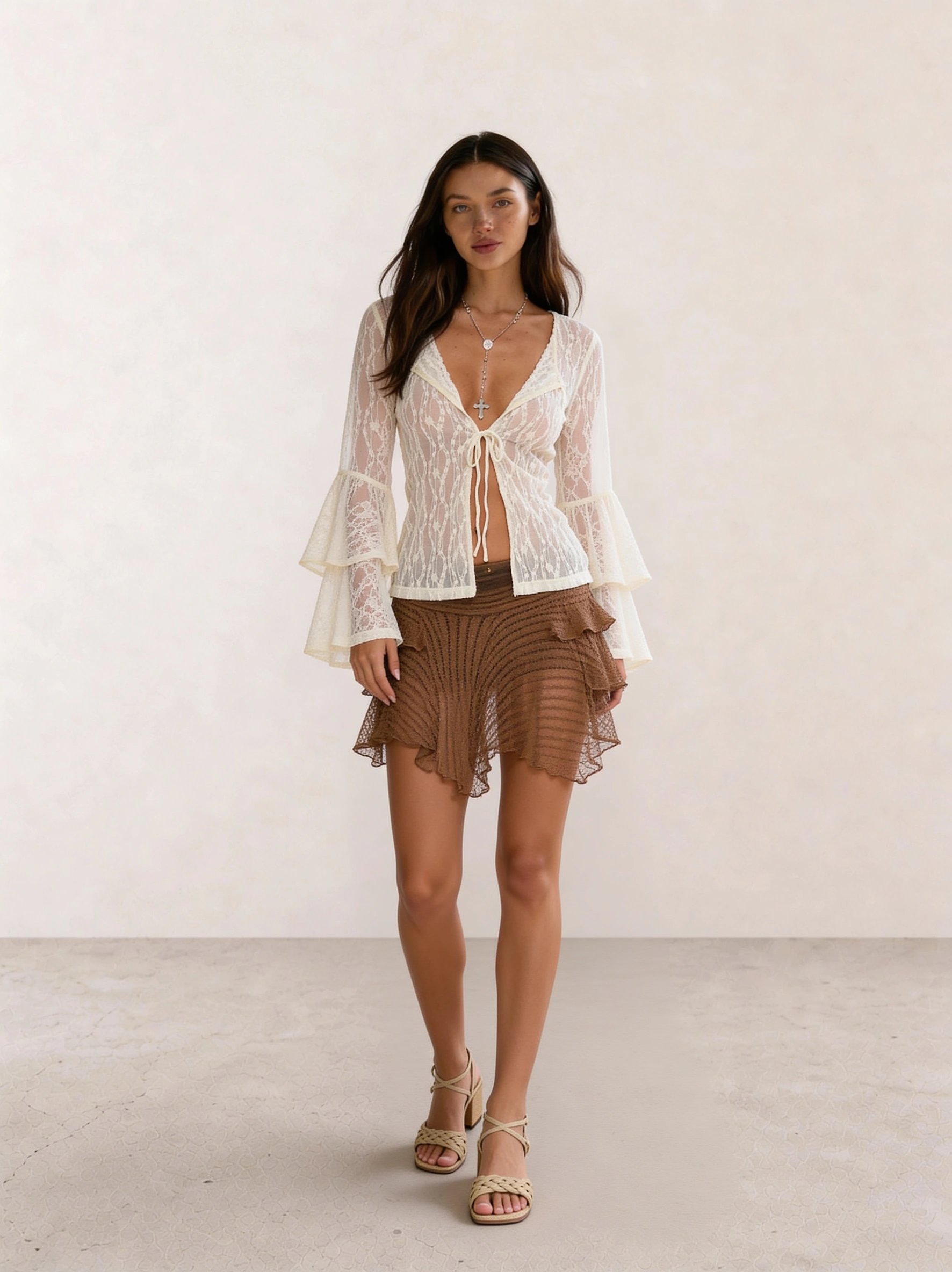
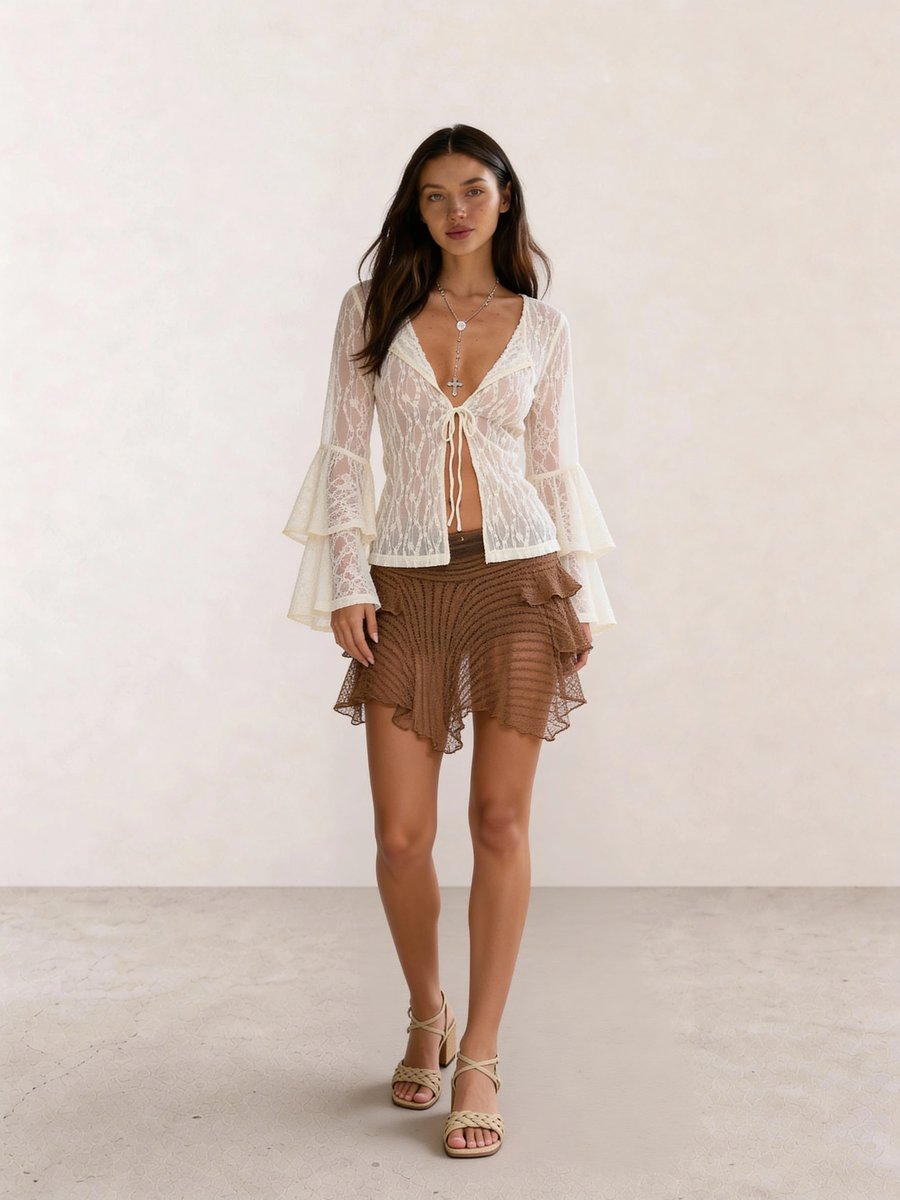
In White Lace Bell Sleeve & Brown Ruffle Skirt, gold sandals carry the same warmth as the brown skirt without adding another saturated color. The lace sleeves keep the upper half light, so a small gold earring would repeat the direction near the face. Without the cream and brown anchors, several gold pieces could turn the look into a single block of shine.
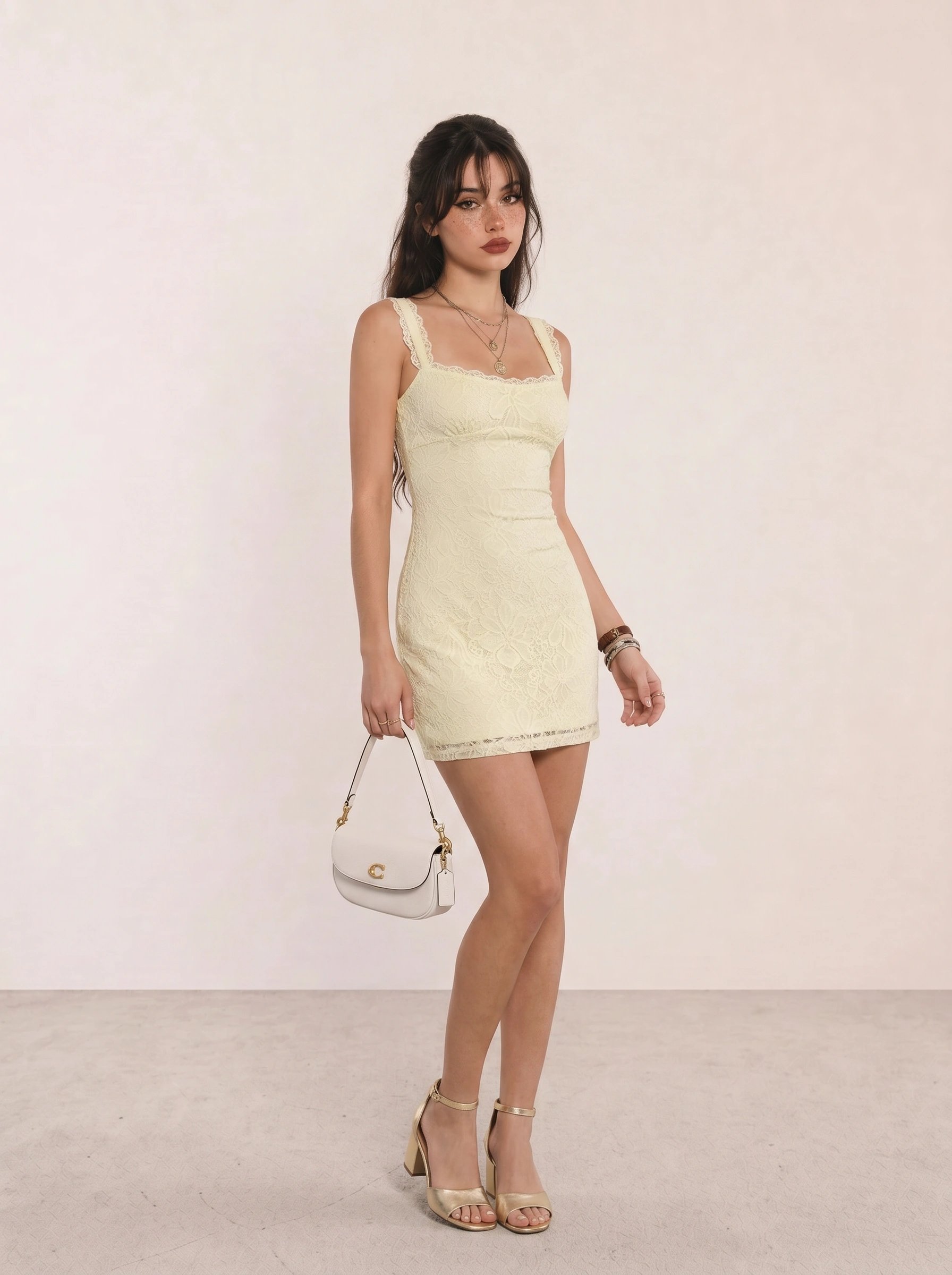
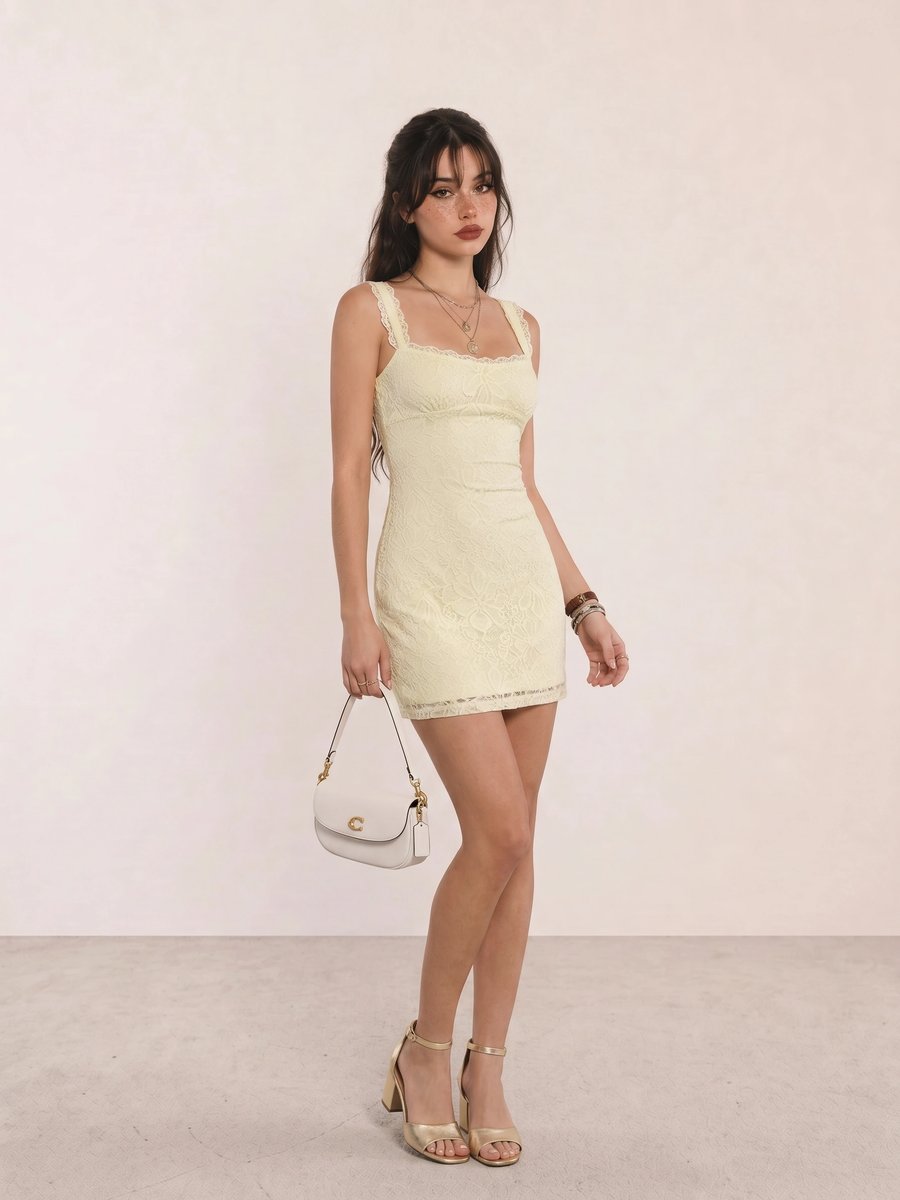
The gold sandals in Pale Yellow Lace Bodycon Mini Dress make a useful warm comparison because pale yellow already carries warmth near the face. Keep the necklace fine or skip it; the dress and shoes have enough reflective detail. This is the version for a dinner reservation where the light is low and a small metal repeat reads more polished than a full stack.
How to Choose Silver Jewelry for Cool Undertones
Cool undertones can compare silver, white gold, platinum-colored finishes, and pewter beside charcoal, soft gray, navy, berry, cobalt, periwinkle, and blue pink. Silver often gives blue-based colors a cleaner outline. When black feels severe, a softer gray garment or a pearl-toned top can keep the cool direction while lowering the contrast.
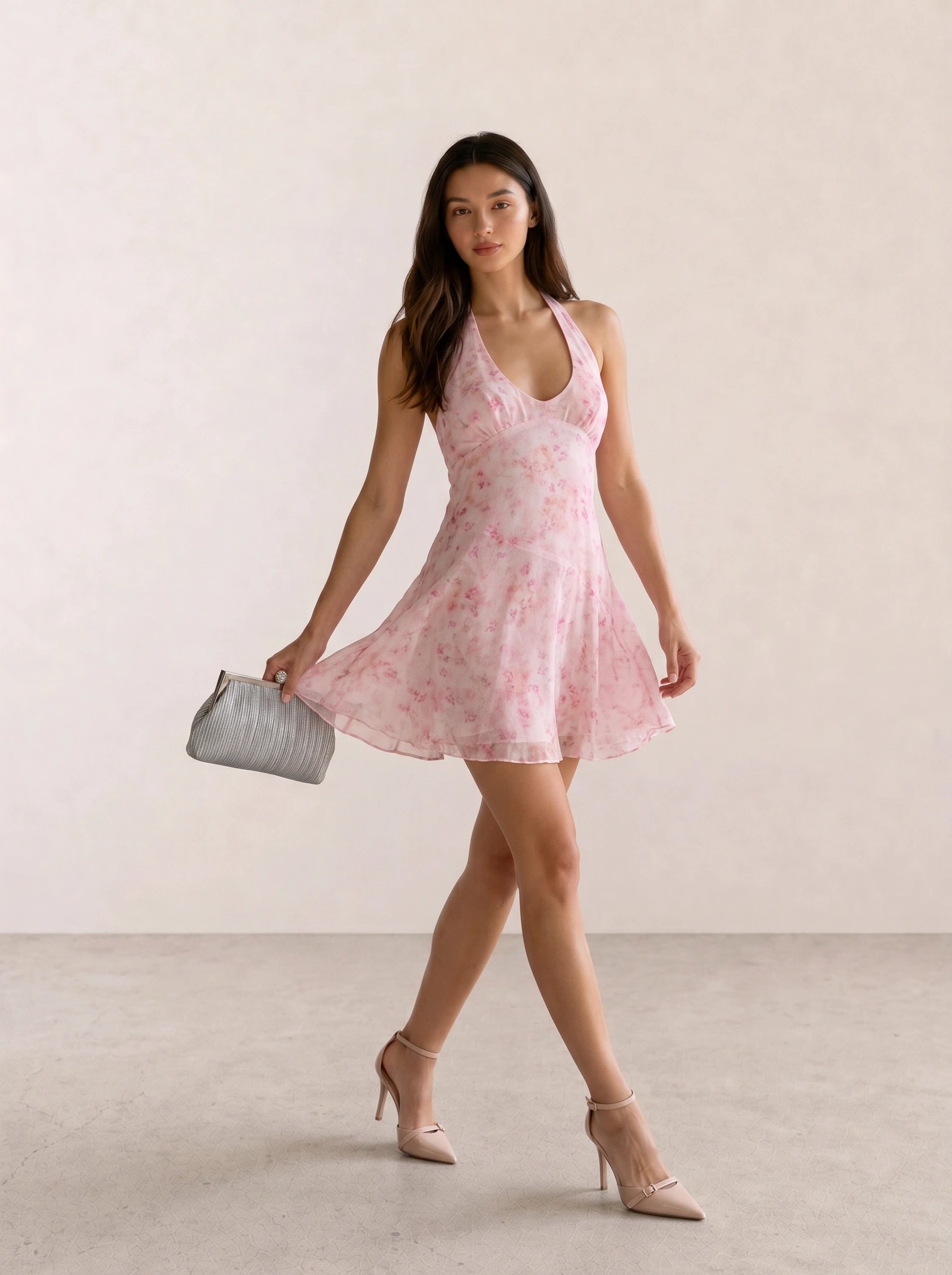
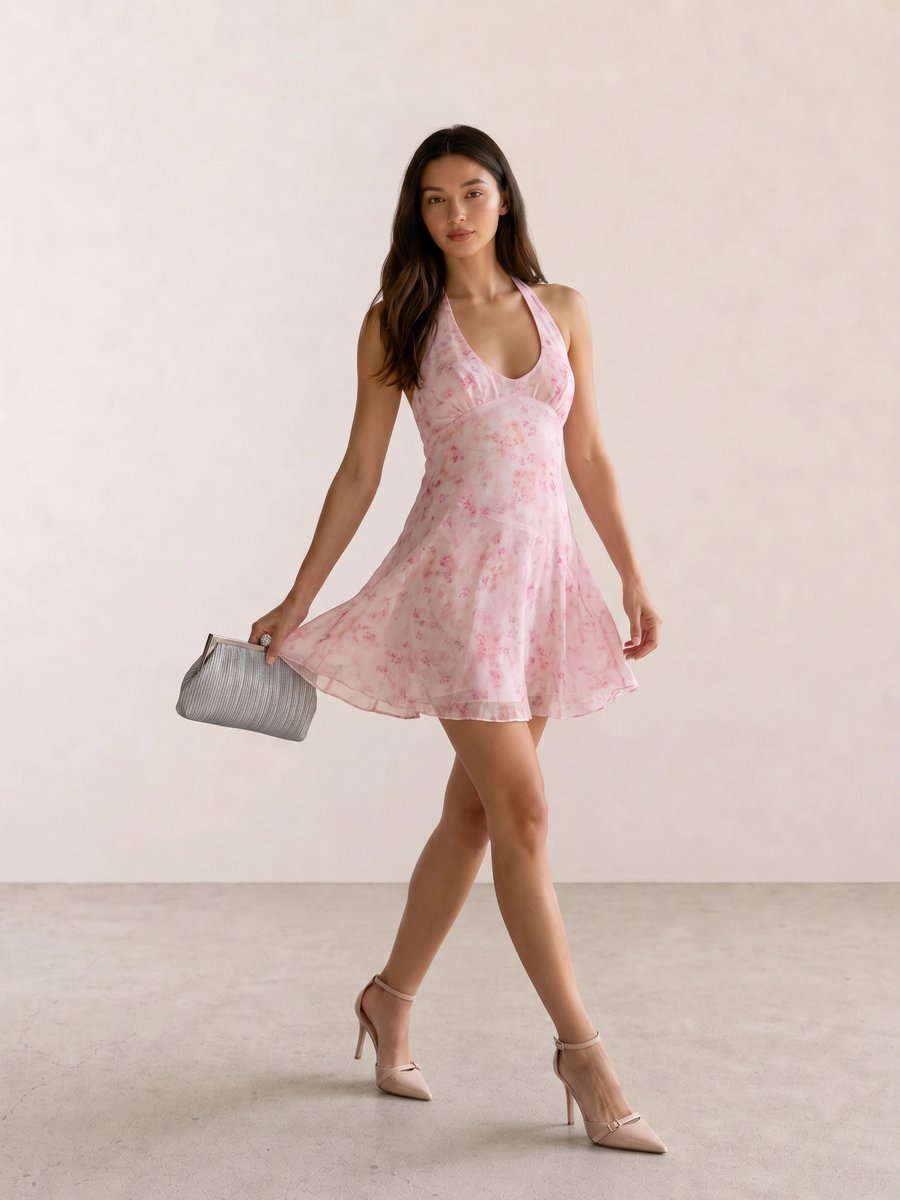
In Pink Floral Chiffon Halter Mini Dress, the silver clutch does not need a matching shoe to make sense. It gives the pink chiffon a cooler edge and leaves the nude sandals to lengthen the line. A silver drop earring would work best when the halter neckline leaves enough bare space for one focused vertical detail.
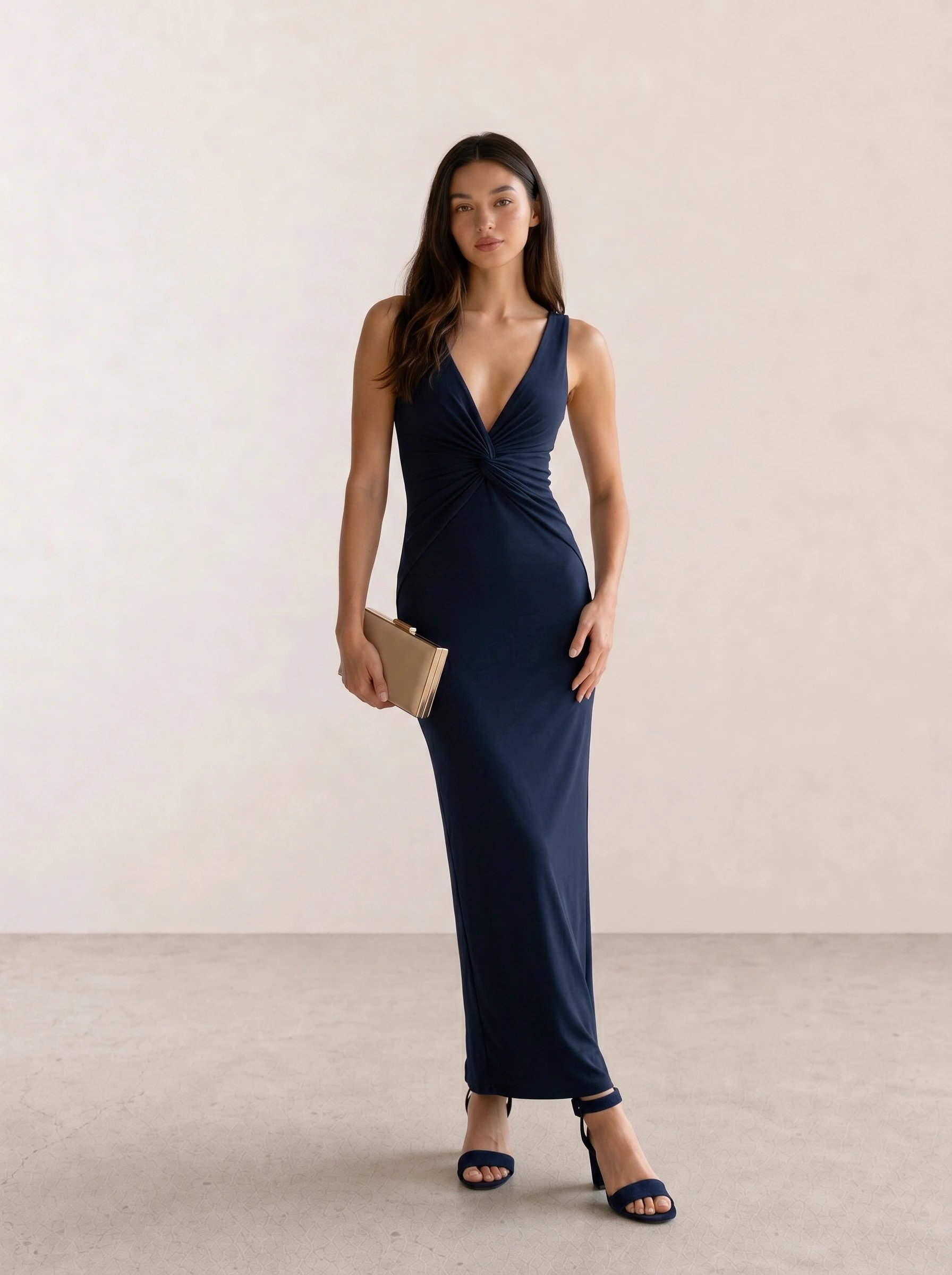
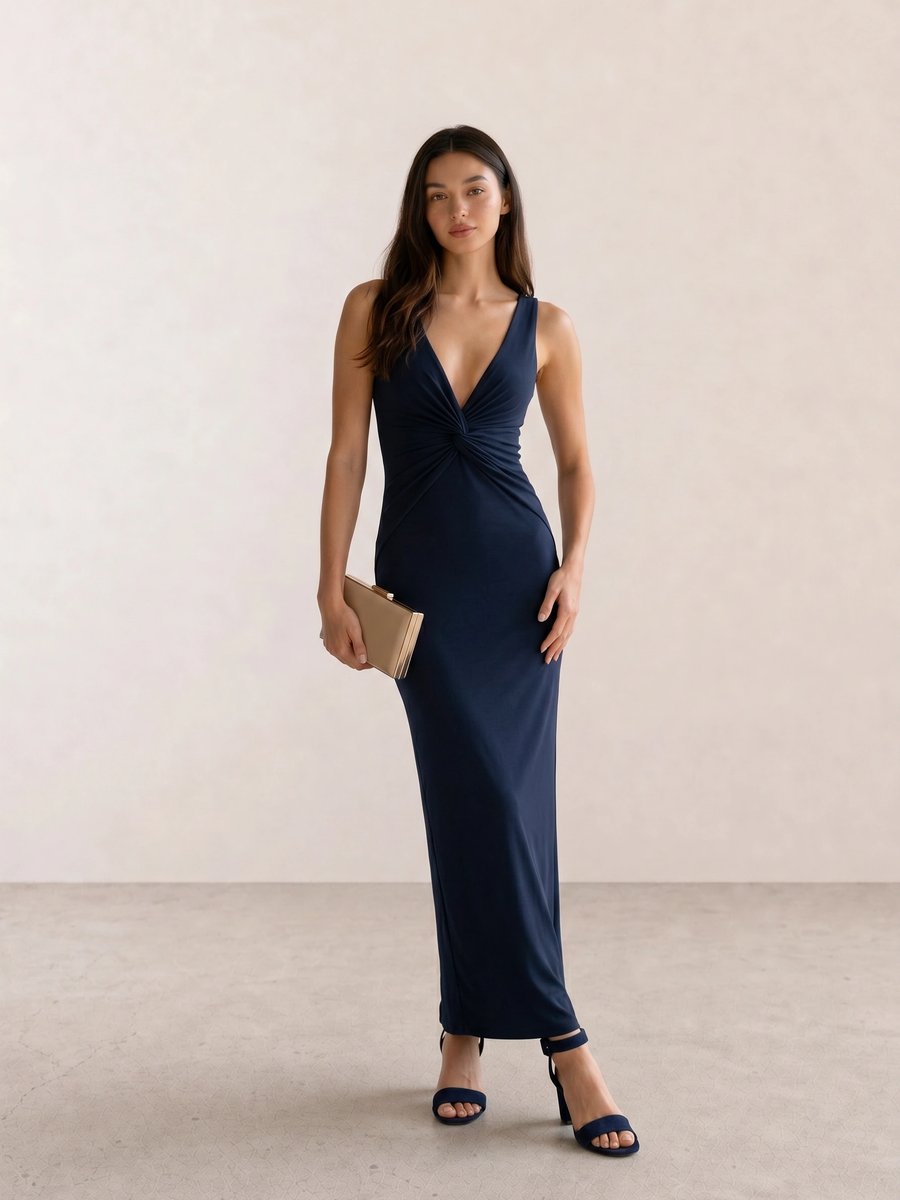
With Navy Twist-Front Maxi Dress, silver produces a crisp cool finish, while its champagne-gold clutch proves navy can also carry a warmer highlight. Compare the two around your face: silver for a graphic edge, softer gold when you want the accessories to pick up evening light instead.
Neutral and Olive Undertones: Rose Gold and Mixed Metals
Neutral undertones often have room to test gold, silver, rose gold, and a controlled mix. Start by matching the dominant metal to your outfit’s strongest neutral, then use the second metal as a smaller repeat through a ring, watch face, belt buckle, or bag hardware. Rose gold can bridge soft pink, taupe, cream, and muted brown without becoming as yellow as classic gold.
Olive undertones can work across the same range, especially with sage, moss, teal, charcoal, cream, burgundy, and denim. The key is clarity: choose one main metal and one supporting metal, rather than layering unrelated finishes until the outfit loses a focal point. Mixed metals look deliberate when each one appears at least twice or when a two-tone watch does the connecting work.
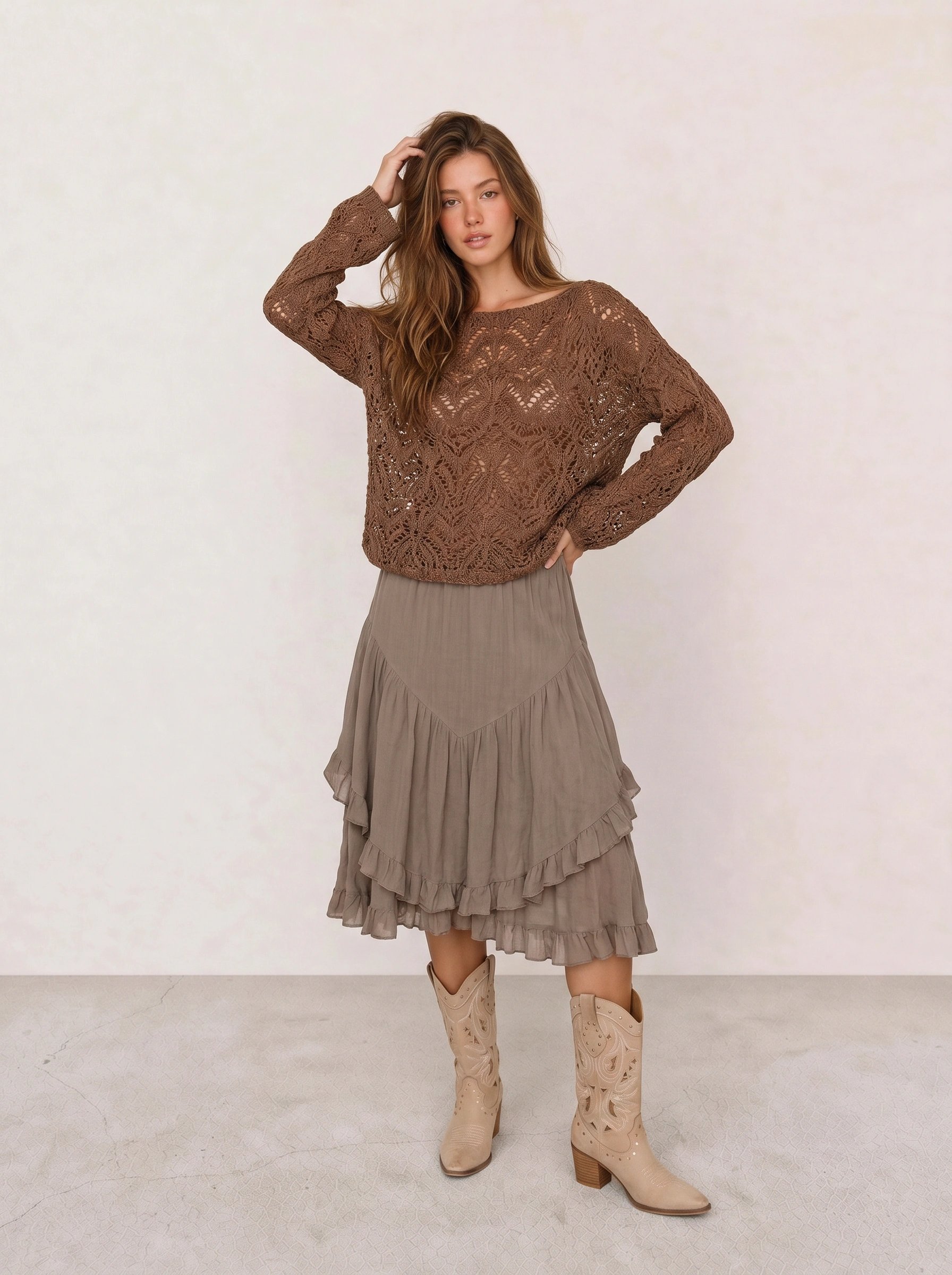
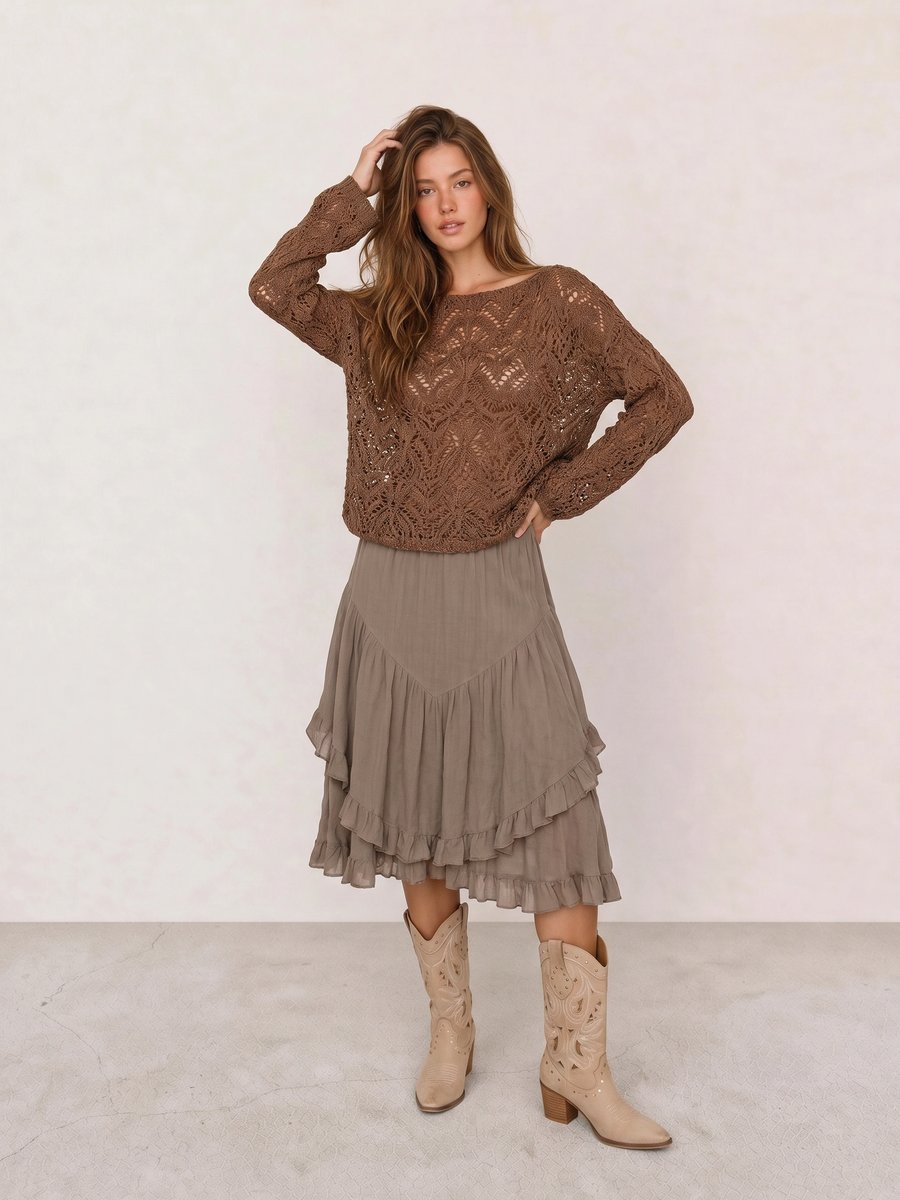
The gold cuff in Crochet Knit Sweater & Ruffle Midi Skirt makes warmth visible against taupe and brown, but the low-shine crochet texture leaves room for a steel watch or silver ring. That is a practical mixed-metal formula: one broad warm piece, one smaller cool piece, and fabric with enough texture to absorb the contrast.
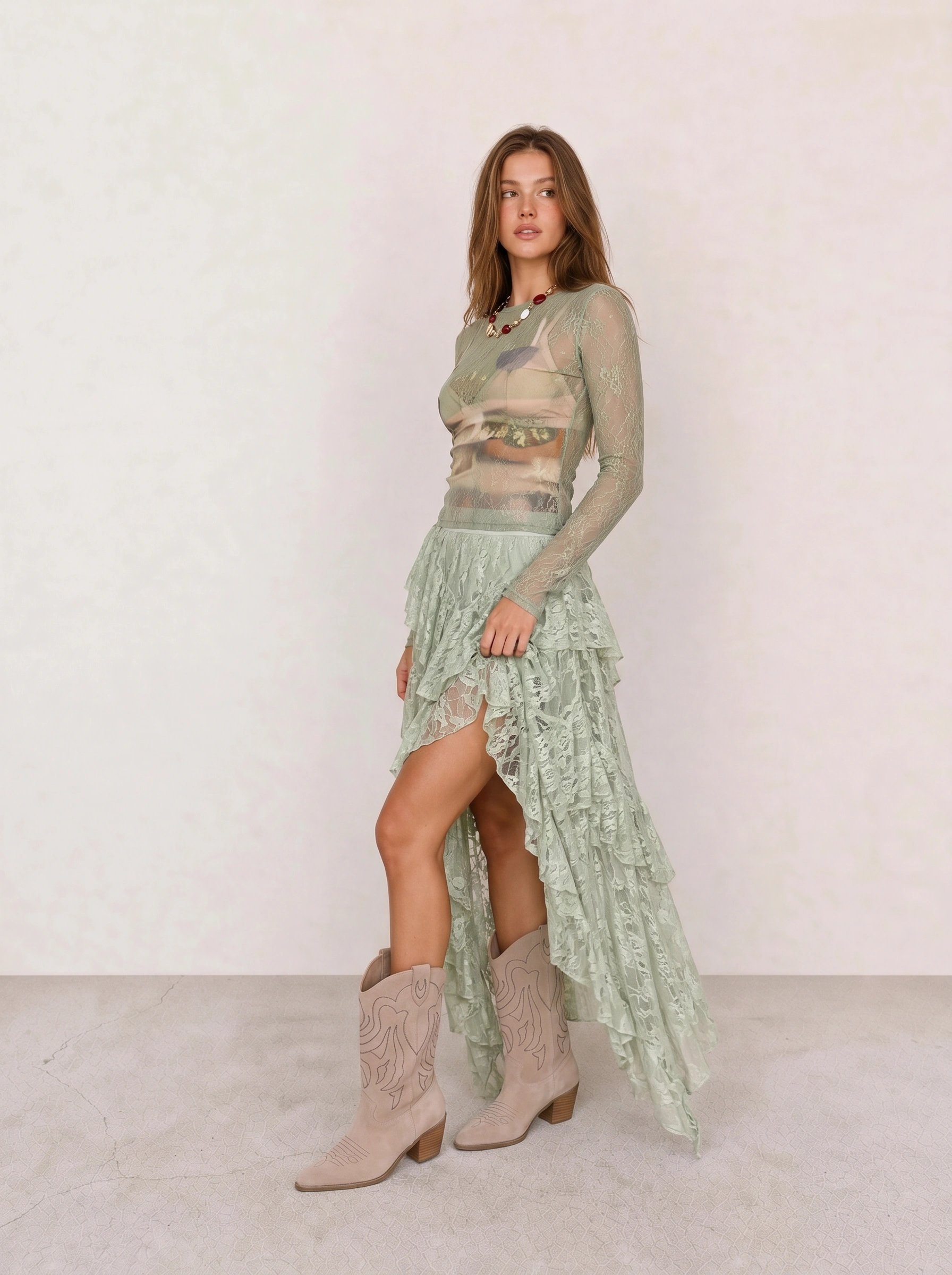
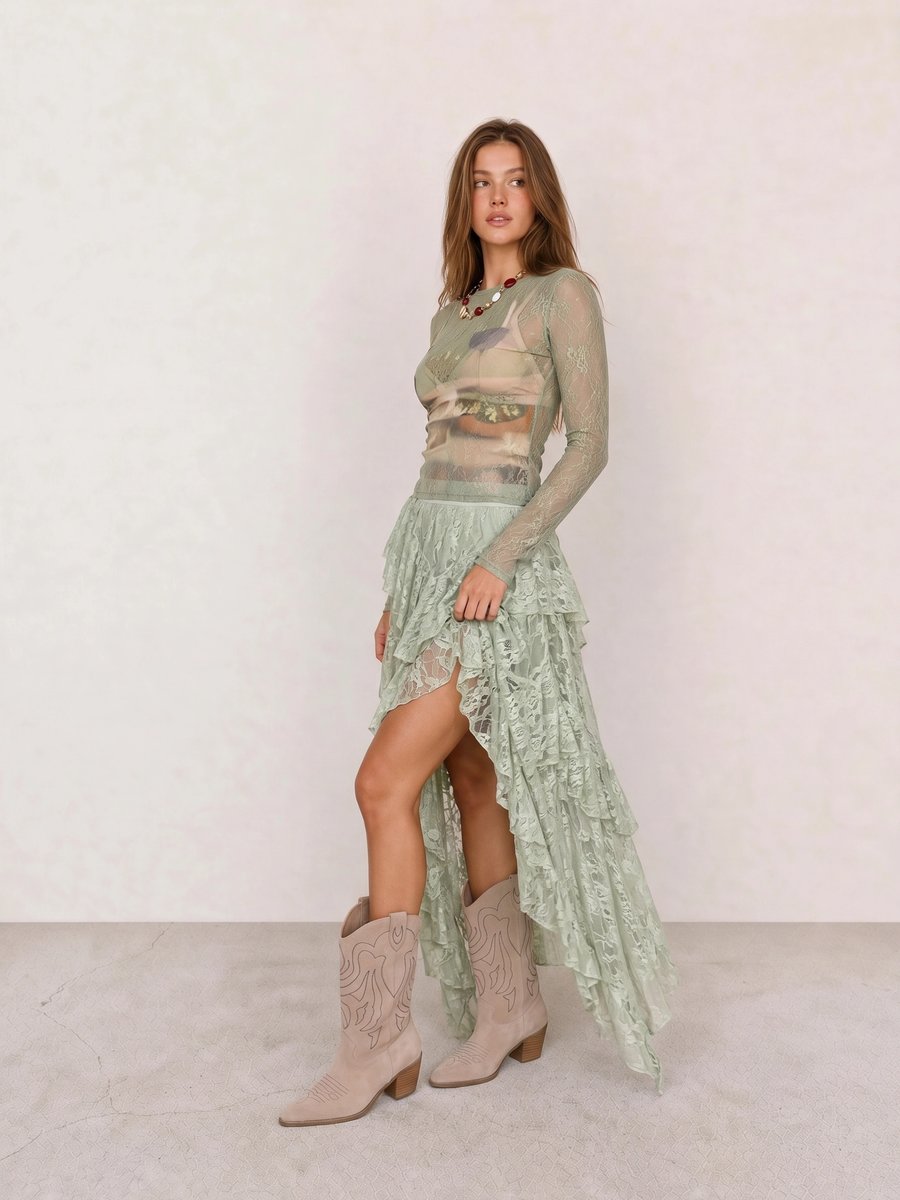
In Sage Lace Top & Ruffle Maxi Skirt with Cowboy Boots, the gold stone necklace adds warmth to sage without asking every other accessory to match. If gold feels too soft in this formula, silver can make the green look cooler and more graphic. Both readings are valid; the neckline and your preferred level of contrast decide the stronger option.
How Neckline, Garment Color, and Contrast Change the Metal
A metal choice has more impact at an open neckline than it does under a high crewneck. With a V-neck or halter, choose either one pendant that follows the opening or earrings that frame the face, then stop. With a crewneck or turtleneck, earrings, rings, and a watch often do more work because a necklace competes with the fabric edge.
Garment color changes the temperature read. Cream, camel, olive, and warm brown tend to make yellow gold feel continuous; charcoal, ink navy, icy pink, and cobalt tend to make silver feel continuous. A burgundy dress can go either way: gold pulls out depth and warmth, silver makes the red-blue side more visible. Bright clothing needs less metal, while muted clothing can carry a bolder cuff or layered chain.
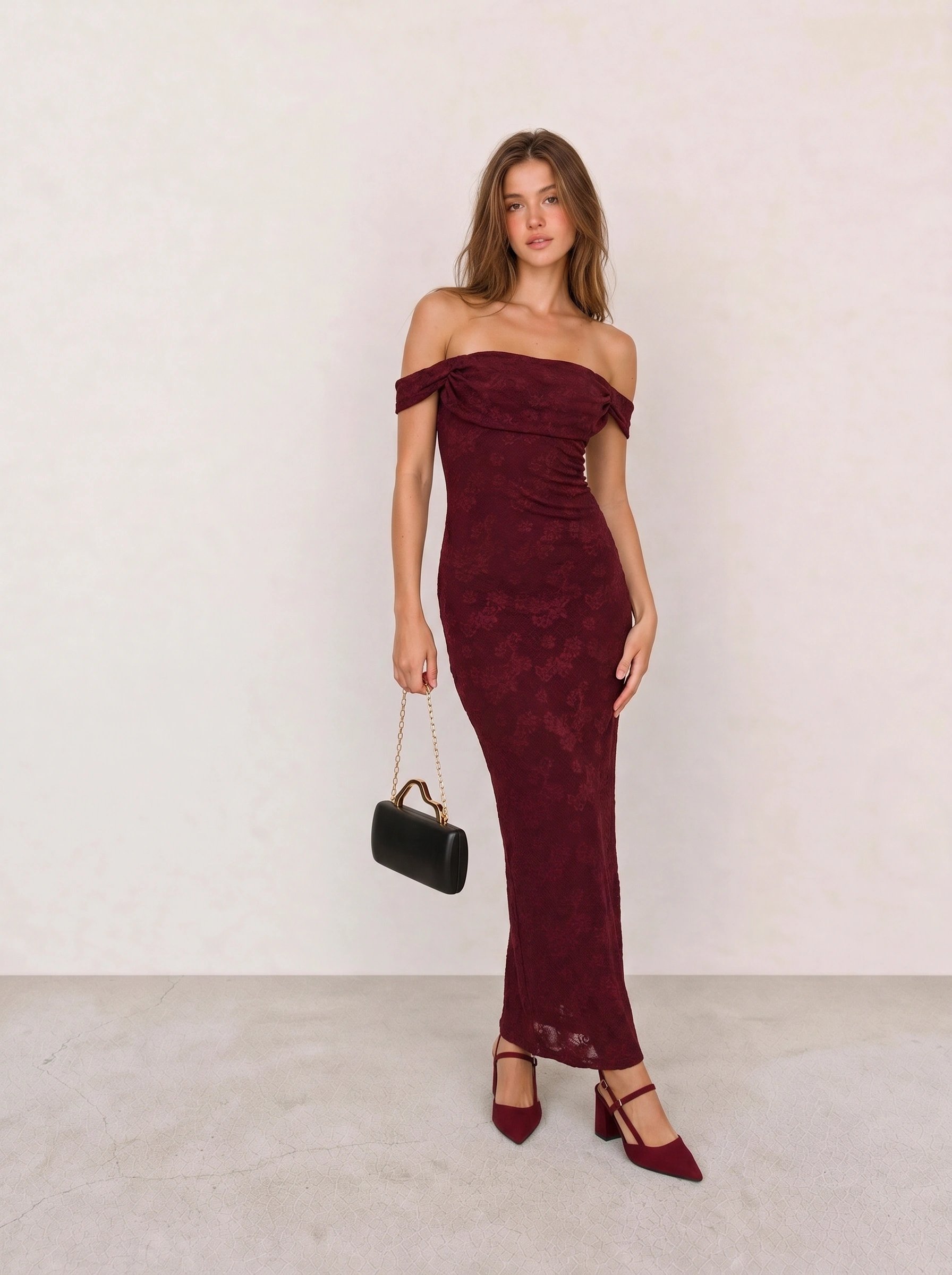
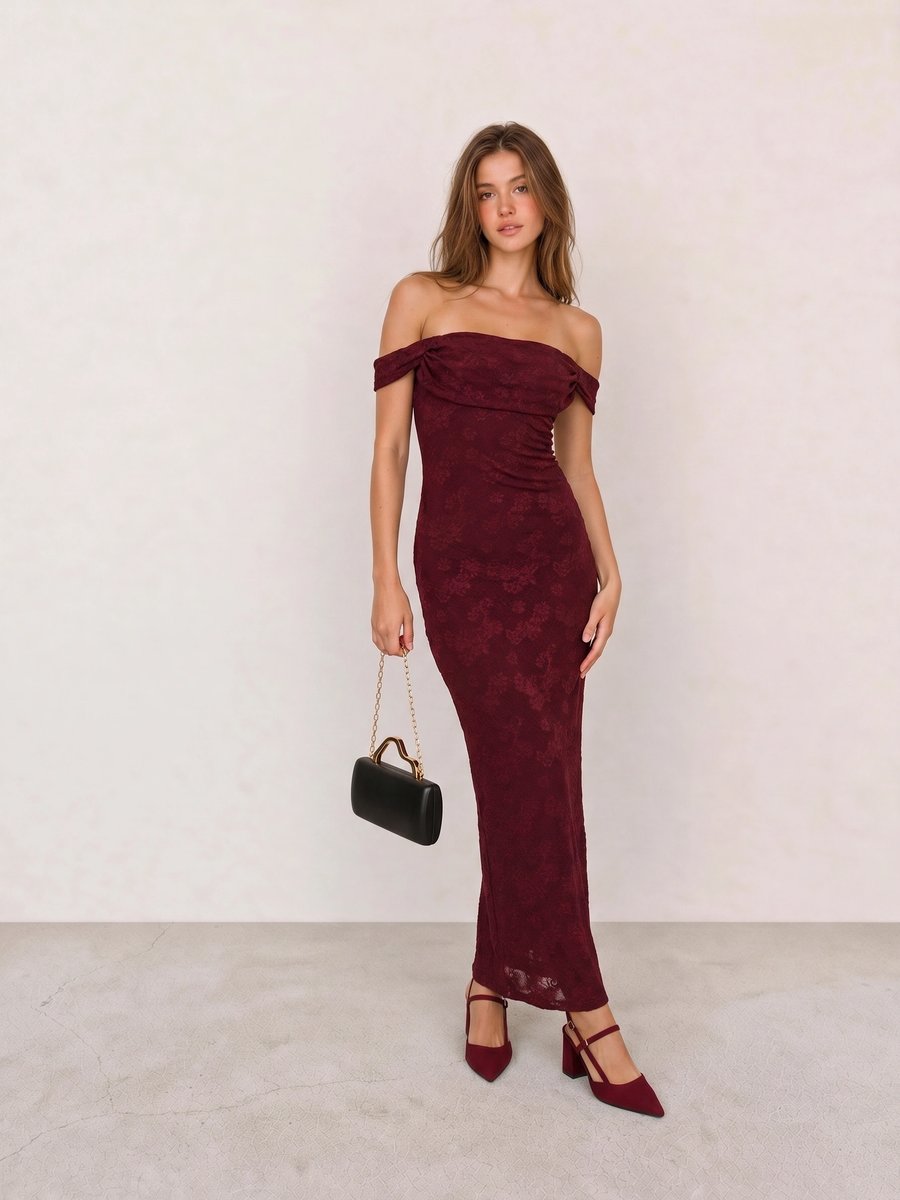
The open shoulder line in Burgundy Off-Shoulder Floral Maxi Dress gives earrings the clearest job. A small gold hoop continues the depth of burgundy; a silver statement earring turns the neckline into a cooler contrast point. Keep the black clutch simple so the metal has one readable role.
Common Metal-Matching Mistakes
Do not make every clasp, ring, earring, and shoe buckle match by default. Exact matching can look dated when the outfit has no other repeated structure. Choose a dominant metal, then let one small hardware detail differ if it creates a useful bridge between colors.
Do not use undertone to overrule comfort or a sentimental piece you wear often. Change the clothing near the face, the finish, or the scale before you retire a favorite necklace. Also skip the pile-up of shiny pieces against sequins, metallic fabric, or a highly embellished neckline; one strong reflective surface usually gives the outfit enough light.
A Practical Jewelry Shopping Guide by Metal
At a budget level, test plated hoops, a pendant, a slim ring, or a watch strap in two metal colors. These pieces let you compare scale and temperature before you spend on a set. At mid-range, prioritize earrings you can wear several days a week and one chain that sits at a useful neckline length; quality construction matters more here than collecting every trend.
At a luxury level, buy precious metal or a statement cuff only after you know its repeat value across your closet. Spend on a piece that works with your face-framing neutrals and daily hardware, then save on novelty stacks and highly specific event jewelry.
For face-shape and earring silhouette guidance rather than metal temperature, see the round face shape styling guide or square face shape styling guide. This guide stays focused on metal, garment color, and contrast, so the two decisions remain separate.
Compare Metals Within the Full Palette
Use your undertone notes with Seasonal Color Analysis, then compare metal beside your clothing colors and your makeup colors. The strongest choice supports the colors closest to your face.
Gold or Silver Jewelry FAQ
Should I wear gold or silver jewelry for warm undertones? Begin by comparing yellow gold, antique gold, and champagne gold with cream, camel, olive, and warm brown near your face. If the result feels too bright, reduce the shine or width of the piece before you change the temperature direction.
Should I wear gold or silver jewelry for cool undertones? Start with silver, white gold, or a pewter finish beside gray, navy, berry, periwinkle, and blue pink. Then compare a small gold piece if you want a warmer contrast against a cool garment.
Can neutral undertones wear gold and silver jewelry? Yes. Choose a dominant metal for the outfit, then repeat a second metal through a smaller detail or a two-tone watch. Rose gold can be a useful bridge with soft pink, taupe, cream, and muted brown.
What metal jewelry works for olive undertones? Gold, silver, rose gold, and mixed metals can all work for olive undertones. Compare them with sage, teal, cream, charcoal, burgundy, and denim, then choose the level of warmth and contrast that feels most like you.
Weekly outfit picks and style guides — no fluff, unsubscribe anytime.