Western vs Cowgirl vs Country Style: What's the Difference?
Western vs cowgirl vs country style explained through key pieces, outfit rules, common mistakes, and practical ways to choose your direction.
STYLEFINDEN editorial review: checked before publication for wearability, proportion logic and real-life outfit use. We explain our editorial method and image policy on the About page and keep affiliate independence details in the affiliate disclosure.
Western vs cowgirl vs country style comes down to where the outfit takes its cues. Western style relies on workwear-shaped pieces such as boots, denim, leather, and yokes. Cowgirl style softens that language with waist detail and movement. Country style starts with a relaxed, rural-minded closet and may not use a single Western symbol.
For the broader visual vocabulary, begin with the Western & Cowgirl Style Guide, then compare more looks in the Western outfit collection. The useful question is not which label is correct. It is which reference you want the clothes to carry.
What Is Western vs Cowgirl vs Country Style?
Western is the umbrella: practical boot shapes, denim, leather, metal hardware, and shirts with a visible yoke or embroidered detail. It can be spare and tailored, which is why black boots, a vest, and flared jeans still count even without a hat.
Cowgirl is a more decorative branch of Western dressing. It often adds fitted tops, corsetry, ruffles, skirts, hats, and a clear waist. Country style is wider and less literal. Think worn-in jeans, a plaid shirt, a barn jacket, a sundress, or boots chosen for comfort rather than a rodeo reference.
The three overlap at denim and boots, but their priorities differ. Western uses heritage construction. Cowgirl uses a feminine Western frame. Country uses ease and setting. A pointed boot can move through all three, but the pieces around it decide the result.
Where These Three Styles Come From
Western dress began with the working clothing of the American West in the late nineteenth century. Boots protected riders, denim held up to physical work, and hats managed sun and dust. By the 1930s and 1940s, Hollywood Westerns turned those functional items into a recognizable fashion silhouette for audiences far from ranch life.
Cowgirl imagery grew alongside rodeo culture, stage performers, and Western film costumes. The 1940s and 1950s made the fitted shirt, full skirt, boot, and hat combination familiar through performers such as Dale Evans. Later country stars and festival dressing pushed the look toward ornament, body-conscious shapes, and bright detail.
Country style has a different route. It borrows from rural American clothing, outdoor workwear, and the casual dress codes around country music, but it does not need historical Western gear to read clearly. A waxed jacket, faded jeans, and sturdy boots may feel country because they suit a wet field or a long drive, not because they quote a cowboy film.
Key Pieces That Separate the Looks
Cowboy boots sit at the center of Western style. Look for a defined shaft, a stable heel, and leather that can take wear; cheap pairs often have stiff shafts and plastic-looking shine. Country outfits can use a simpler ankle boot, while cowgirl outfits often make the boot visible below a shorter hem.
Denim belongs to all three, but the cut changes the message. Western jeans need enough room for a boot and often use a longer inseam. Cowgirl dressing favors flares, short skirts, or fitted denim that puts the waist forward. Country style leans toward relaxed straight jeans, overalls, or any pair you would keep on for an afternoon outside.
A Western shirt earns its place through yokes, snaps, piping, or embroidery. A country plaid shirt can be softer and more ordinary. A cowgirl shirt may be cropped, tied at the waist, or paired with a corset, but the Western reference still needs one solid piece underneath the decoration.
Leather and suede matter most in Western outfits because they bring weight and finish. Choose a jacket with a clean seam and a belt that sits flat. Cowgirl looks can use suede fringe, though fringe needs space to move. Country style gets the same grounded quality from a barn jacket, worn belt, or practical bag.
Hats are optional, not entry tickets. A structured cowboy hat gives cowgirl styling a fast visual signal, while Western dressing can leave it out and still read clearly through boots and a shirt. Country style may use a baseball cap, wool hat, or no hat at all.
Belt buckles and turquoise jewelry work best as punctuation. One buckle can define the waist; one stone can bring color into brown leather and denim. Repeating both across several accessories turns the outfit into a souvenir-shop version of the reference.
Styling Rules for Each Direction
Start with one Western anchor, then choose a modern base around it. A boot under black pants, a suede jacket over a slip skirt, or a shirt with dark denim keeps the reference clear without asking every item to perform the same role.
For cowgirl, choose one soft or fitted element and one hard edge. A ruffle skirt needs a pointed boot; a corset needs relaxed denim; a hat needs fewer decorative extras. This tension stops the look from becoming dress-up clothing.
For country style, use clothes that tolerate an actual day. A plaid shirt, straight jeans, and sturdy boots work because you can walk, sit outside, and add a jacket without changing the outfit’s logic. Country dressing loses credibility when every item looks too precious to wear twice.
Keep the palette rooted in materials: indigo, cream, black, tobacco, olive, burgundy, and weathered red. These colors let boots and leather look intentional. Bright accents can work, but use one near the face or at the shoe instead of scattering them across the outfit.
Common Mistakes When Mixing Western, Cowgirl, and Country
Avoid wearing a hat, heavy fringe, a large buckle, bright embroidery, distressed denim, and cowboy boots at once. Each one has a strong visual job. Pick the detail you want people to notice first, then lower the volume everywhere else.
Do not call every plaid shirt country or every boot Western. A plaid shirt with delicate jewelry and a slim skirt can sit closer to cowgirl. A boot with a tailored blazer can look Western because the shoe supplies the heritage cue. Context matters more than a single item.
Skip costume-grade materials when the rest of the outfit is simple. Shiny faux leather, thin fringe, and novelty buckles make the reference feel borrowed. Spend on the boot, jacket, or belt that touches the body often; save on a seasonal top or scarf.
Most people think a cowboy hat makes the outfit. In reality, the hat exposes weak proportions faster than it fixes them. Get the boot, denim length, and outer layer right first, then add a hat only when the plan, weather, and outfit leave room for it.
Western, Cowgirl, and Country Outfit Examples
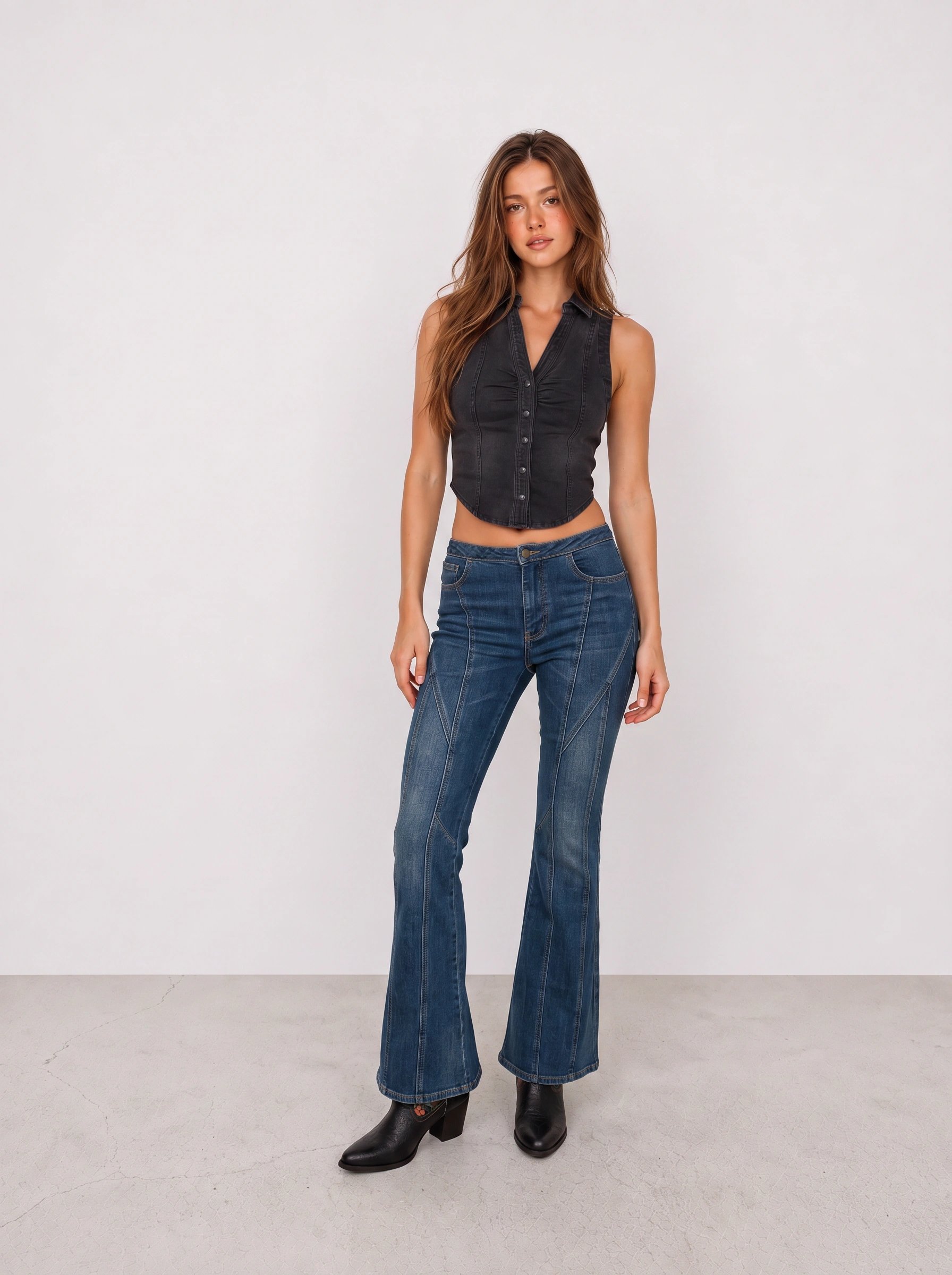
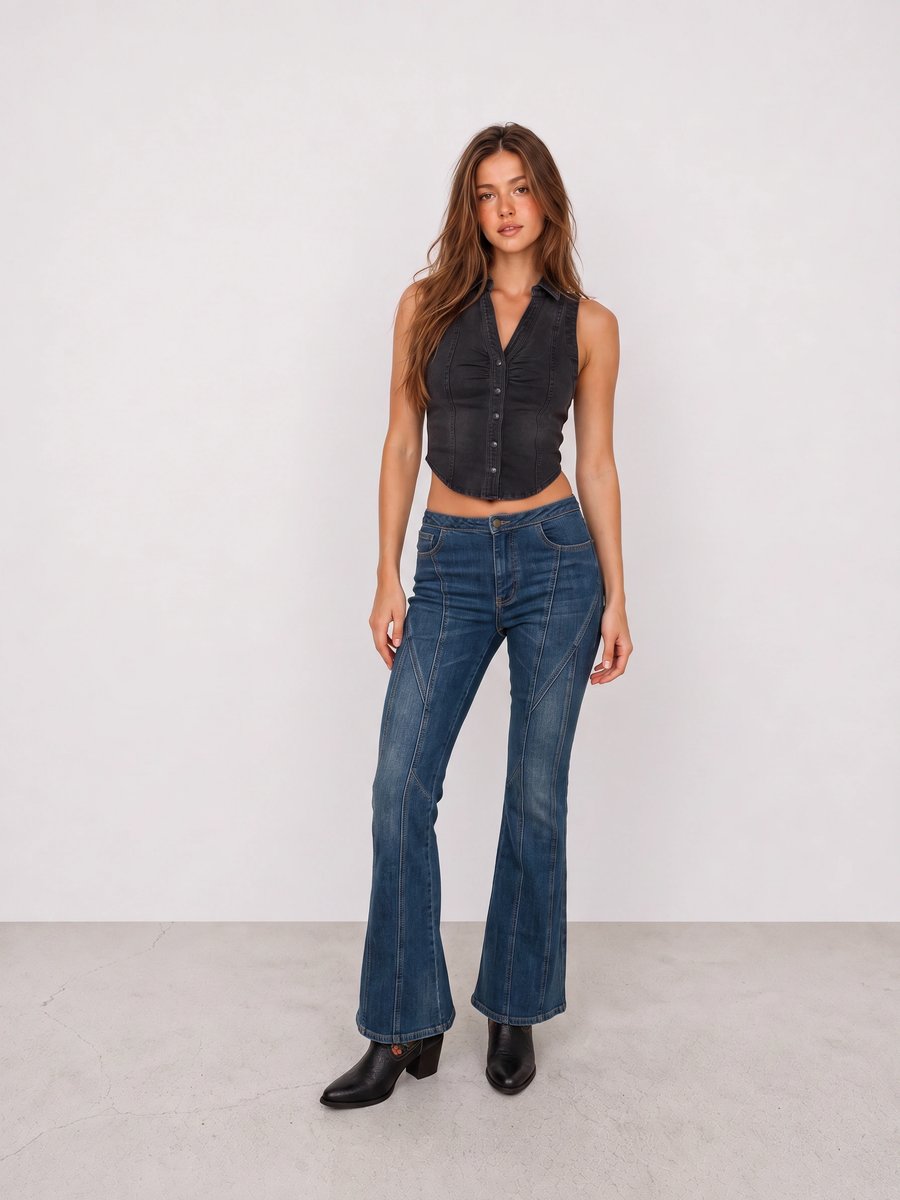
This black vest and flared-jeans outfit is Western in its cleanest form. The fitted vest sets a firm upper line, the flare makes room for the boot, and the dark shoe gives the hem a defined end point. Without the boot shaft, the outfit loses the detail that explains the flare.
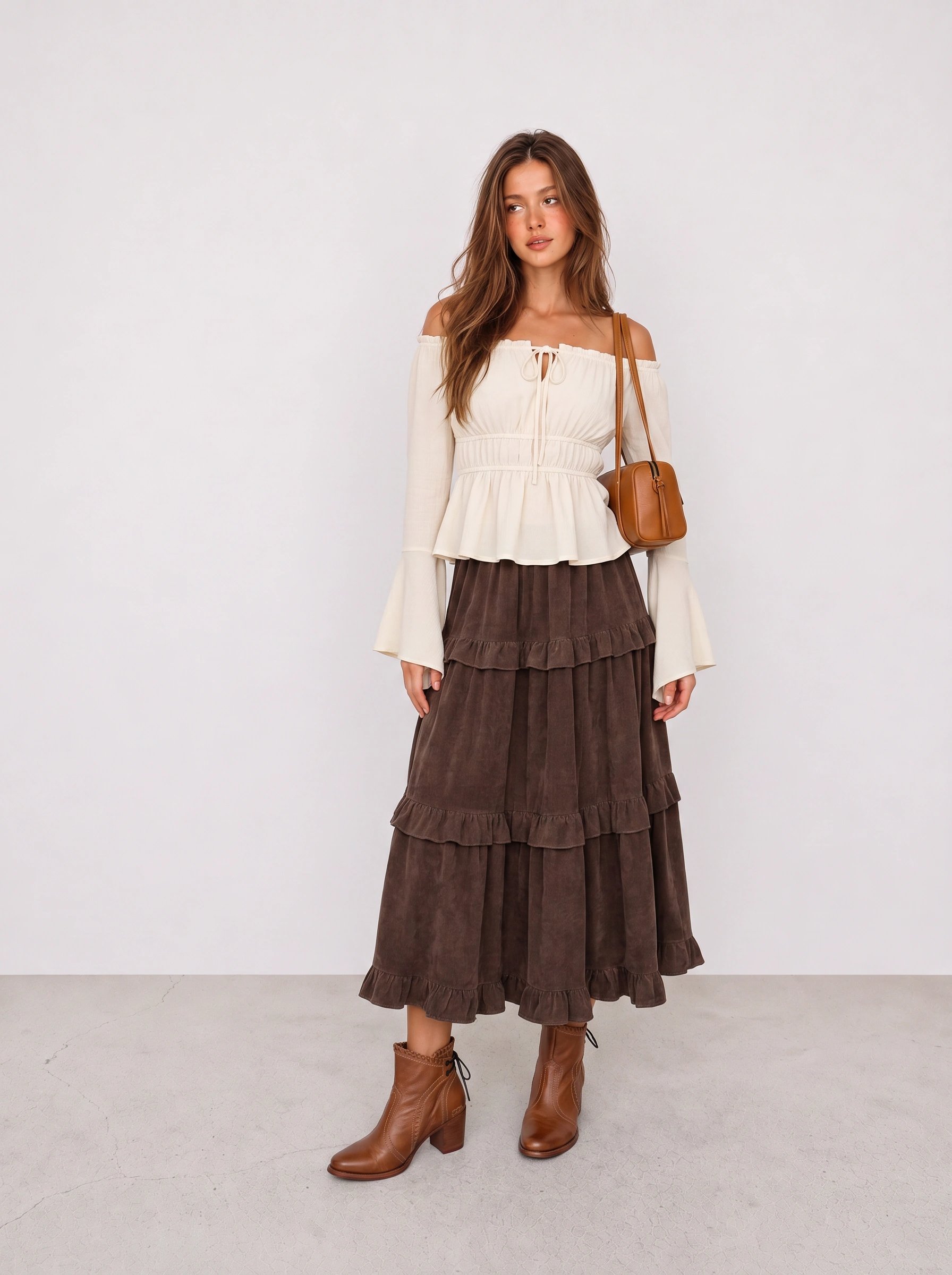
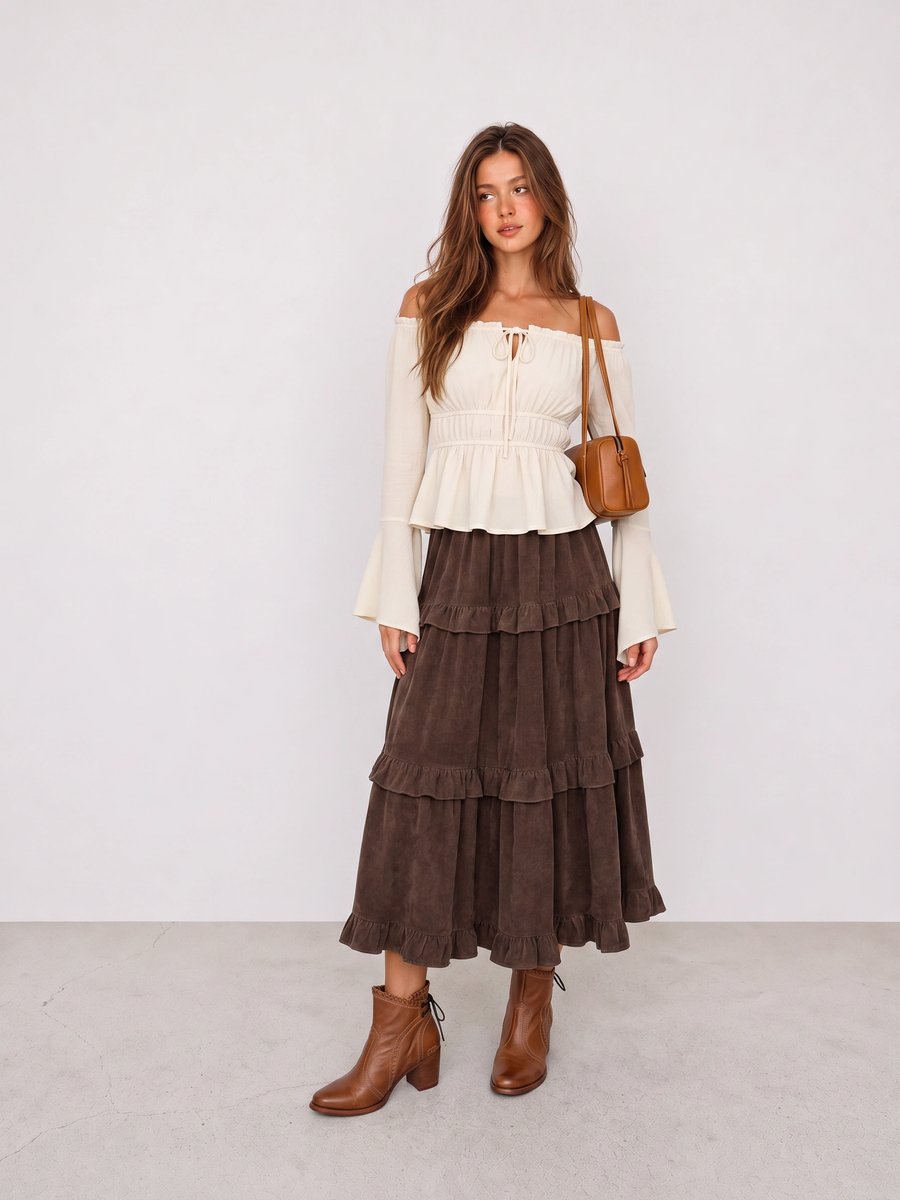
The cream blouse and brown tiered-skirt outfit lands closer to cowgirl. The blouse and skirt create movement around the waist, while the boots and bag add enough leather to keep it from reading as a prairie costume. Wear this to an outdoor lunch or an early concert.
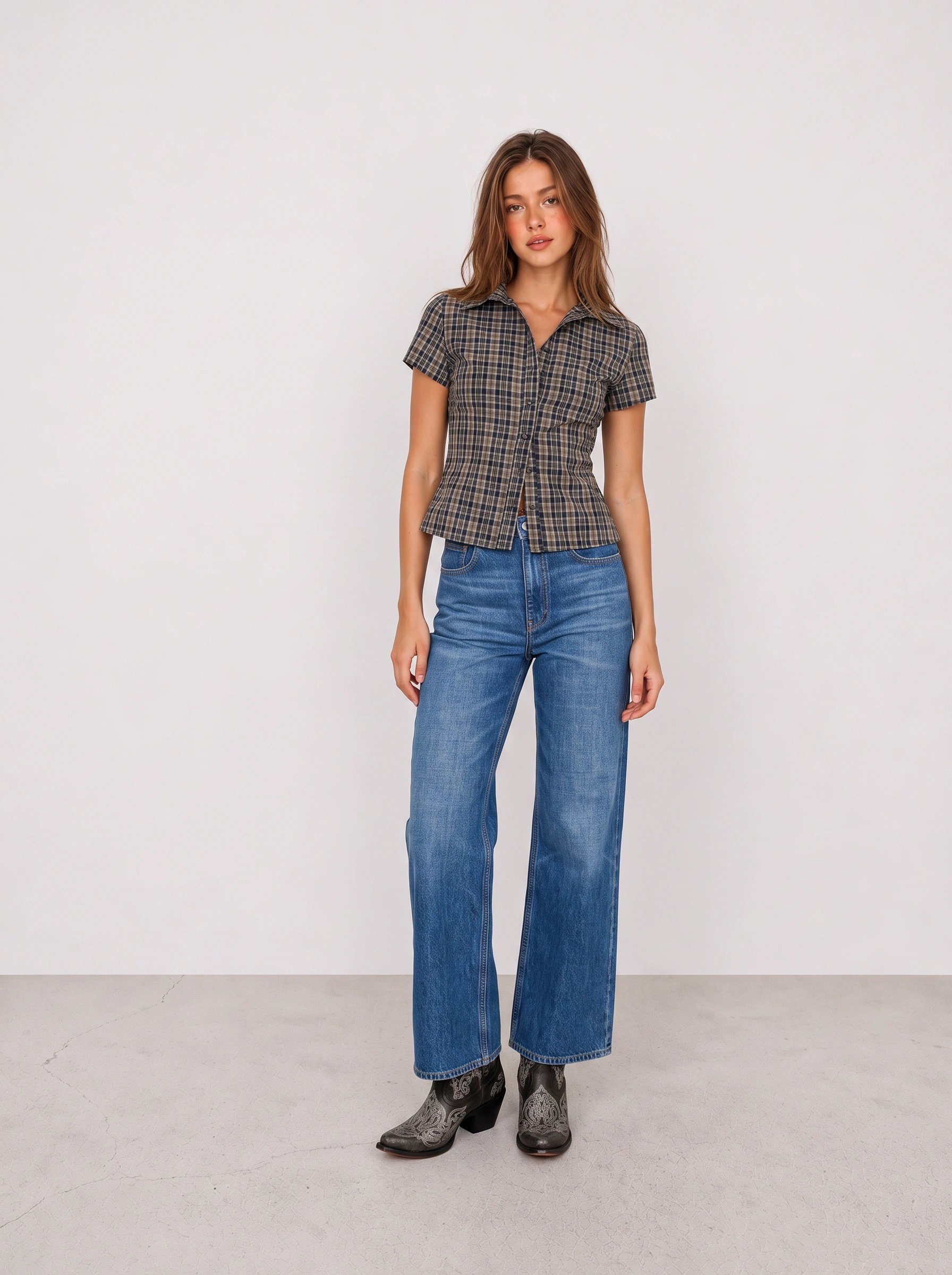
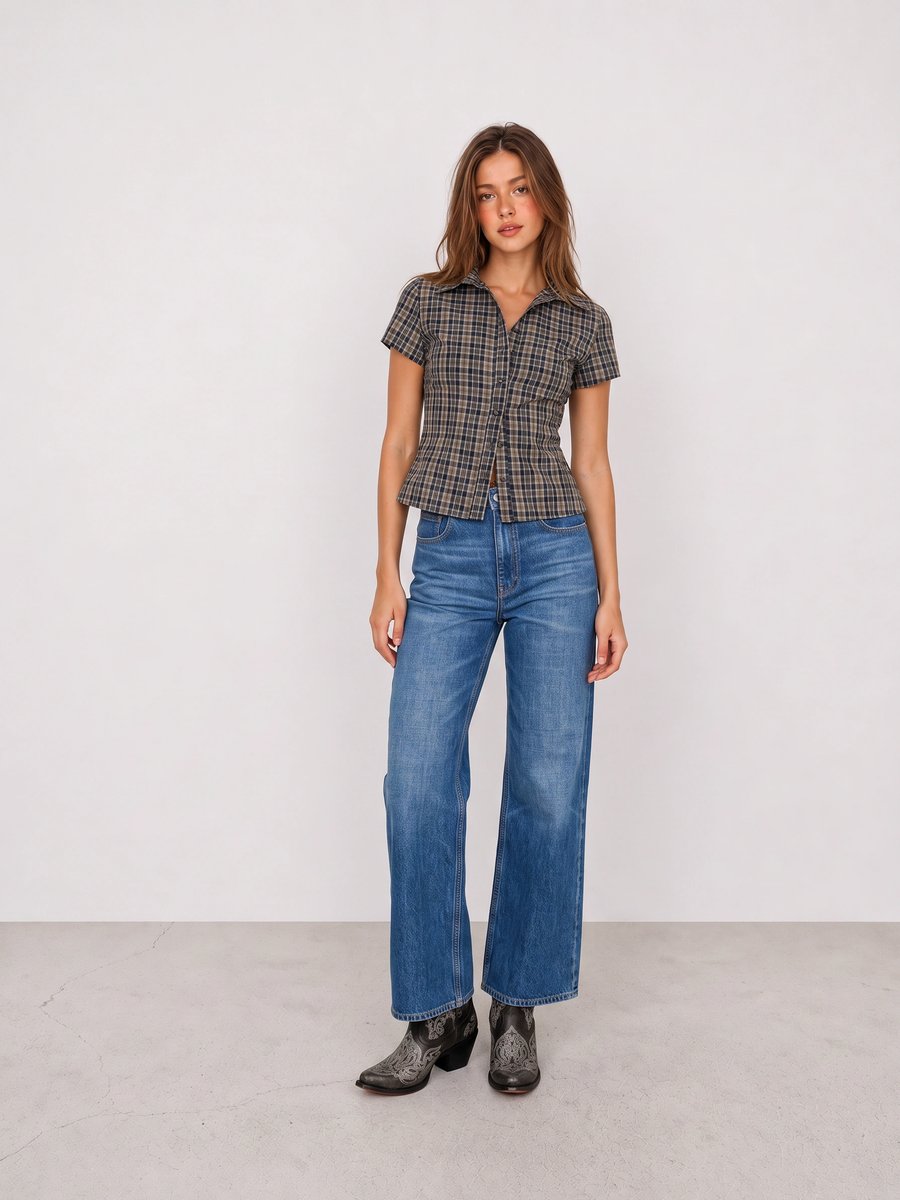
This plaid shirt and flared-jeans outfit sits between country and Western. The plaid gives it a familiar country base, but the longer denim line and embroidered boot steer it West. Without the structured boot, it would become a standard weekend denim outfit.
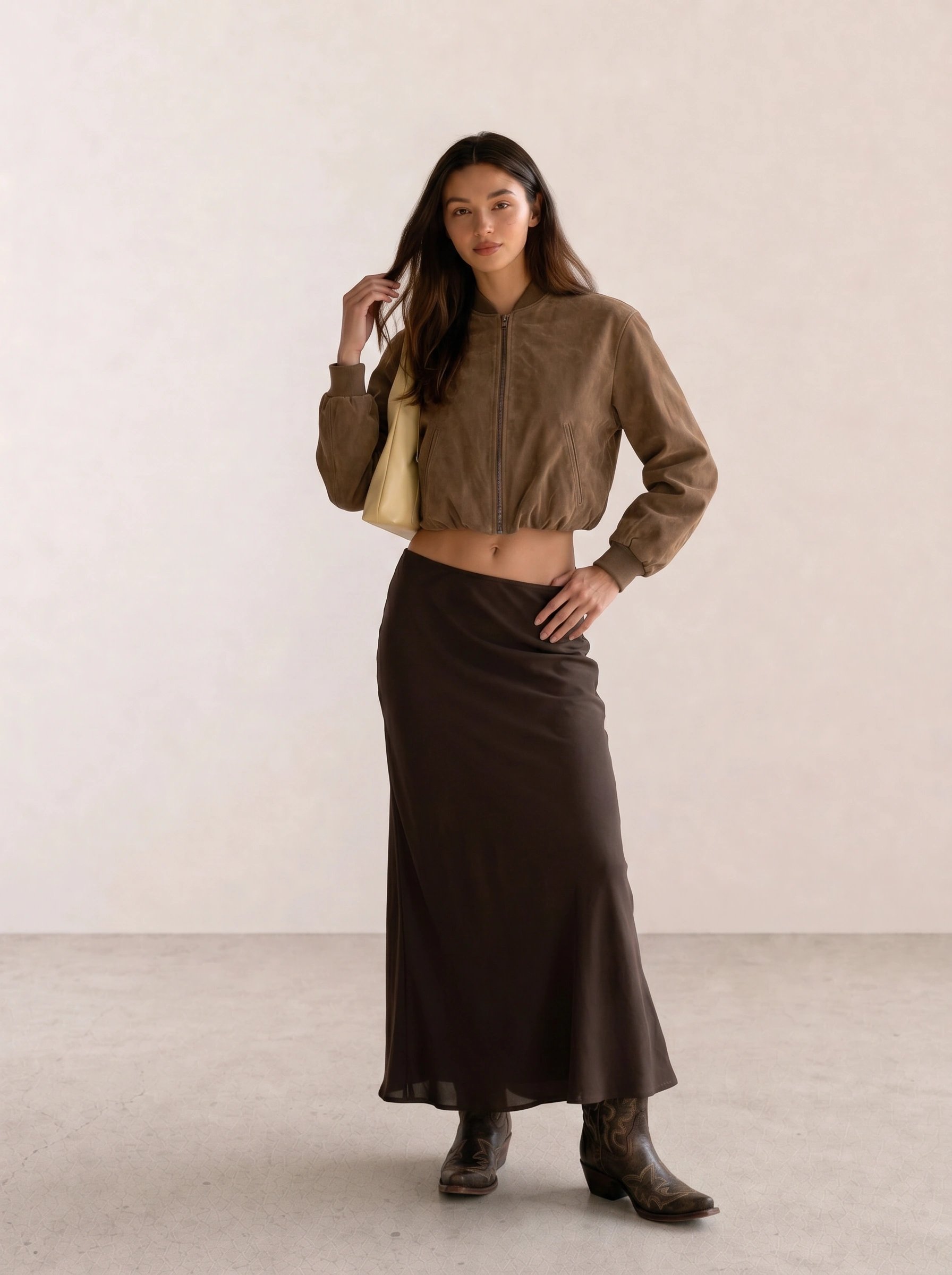
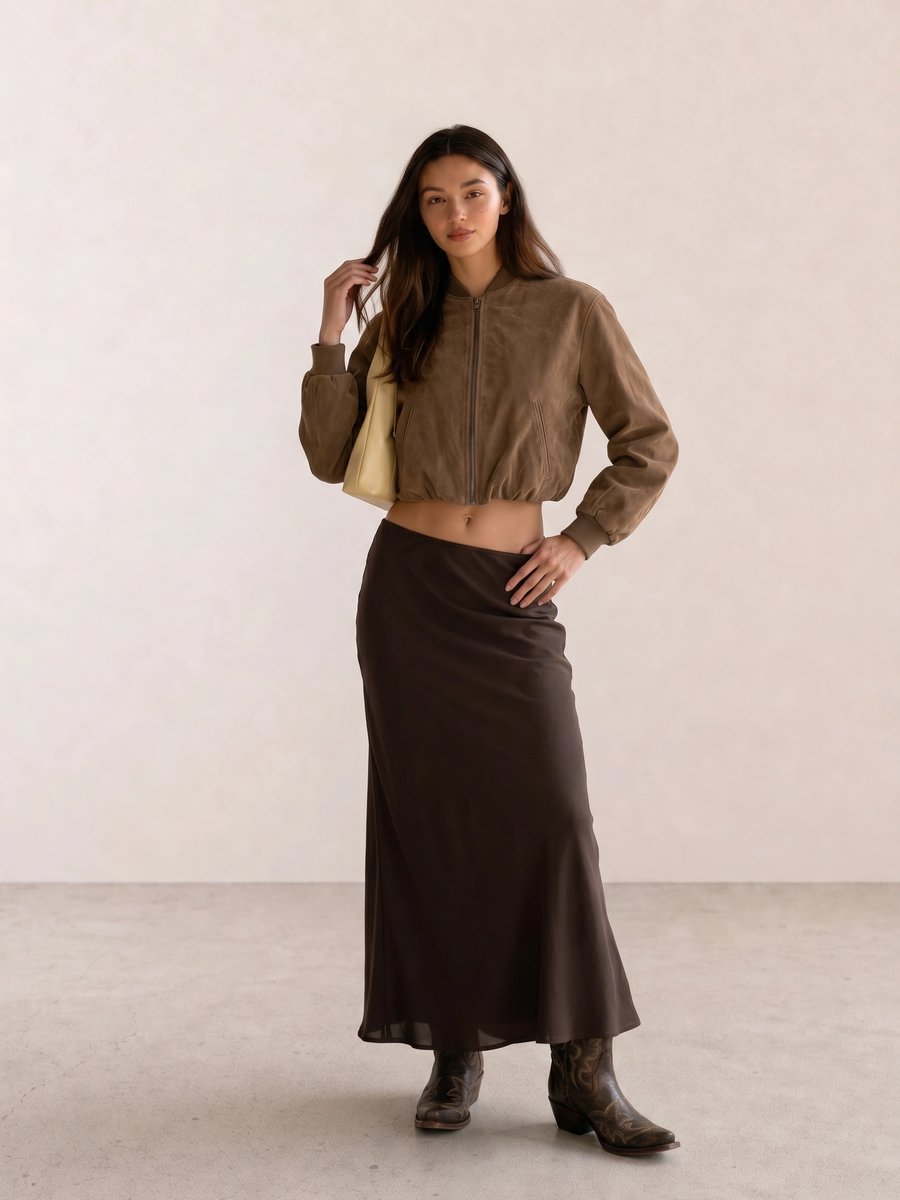
The brown suede bomber and maxi-skirt outfit uses texture instead of costume signals. The cropped suede layer marks the waist above the long skirt, and the boot keeps the lower half from floating away from the Western reference. It works for dinner when jeans feel too casual.
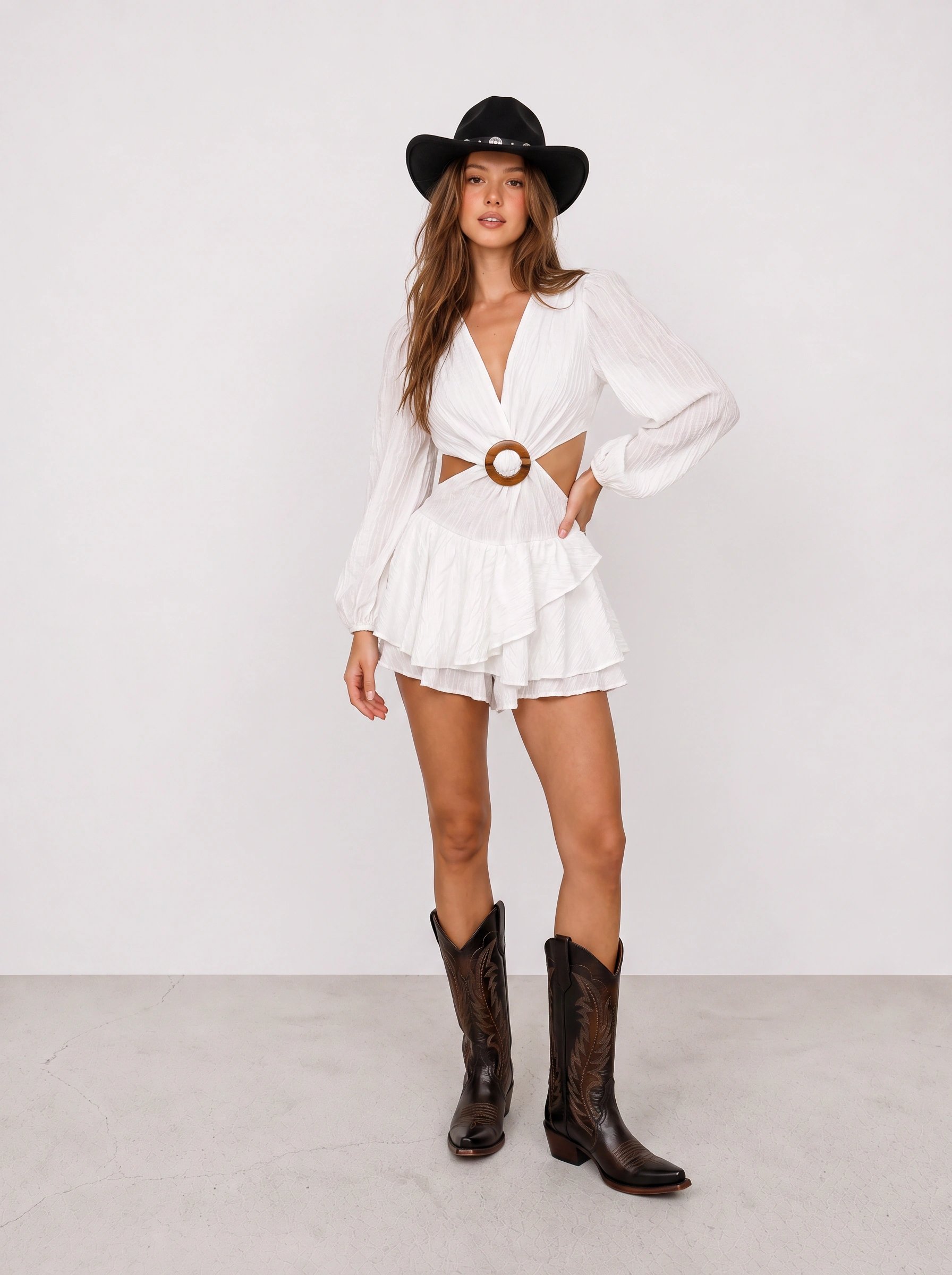
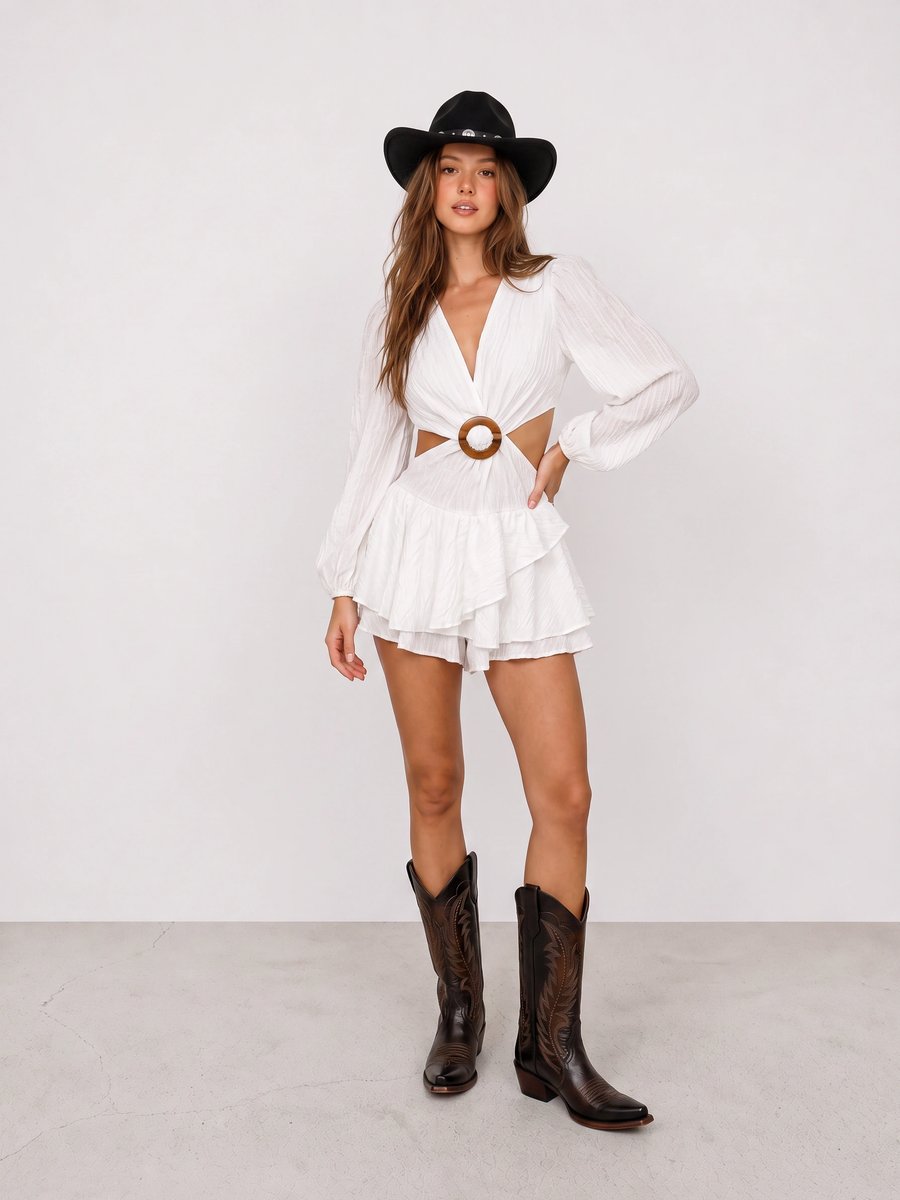
The white ruffle dress with black Western accessories is firmly cowgirl because the soft dress needs the repeated black hat, belt, and boot to hold its shape. Without the belt, the ruffles lose their waist and the outfit drifts toward romantic summer dressing.
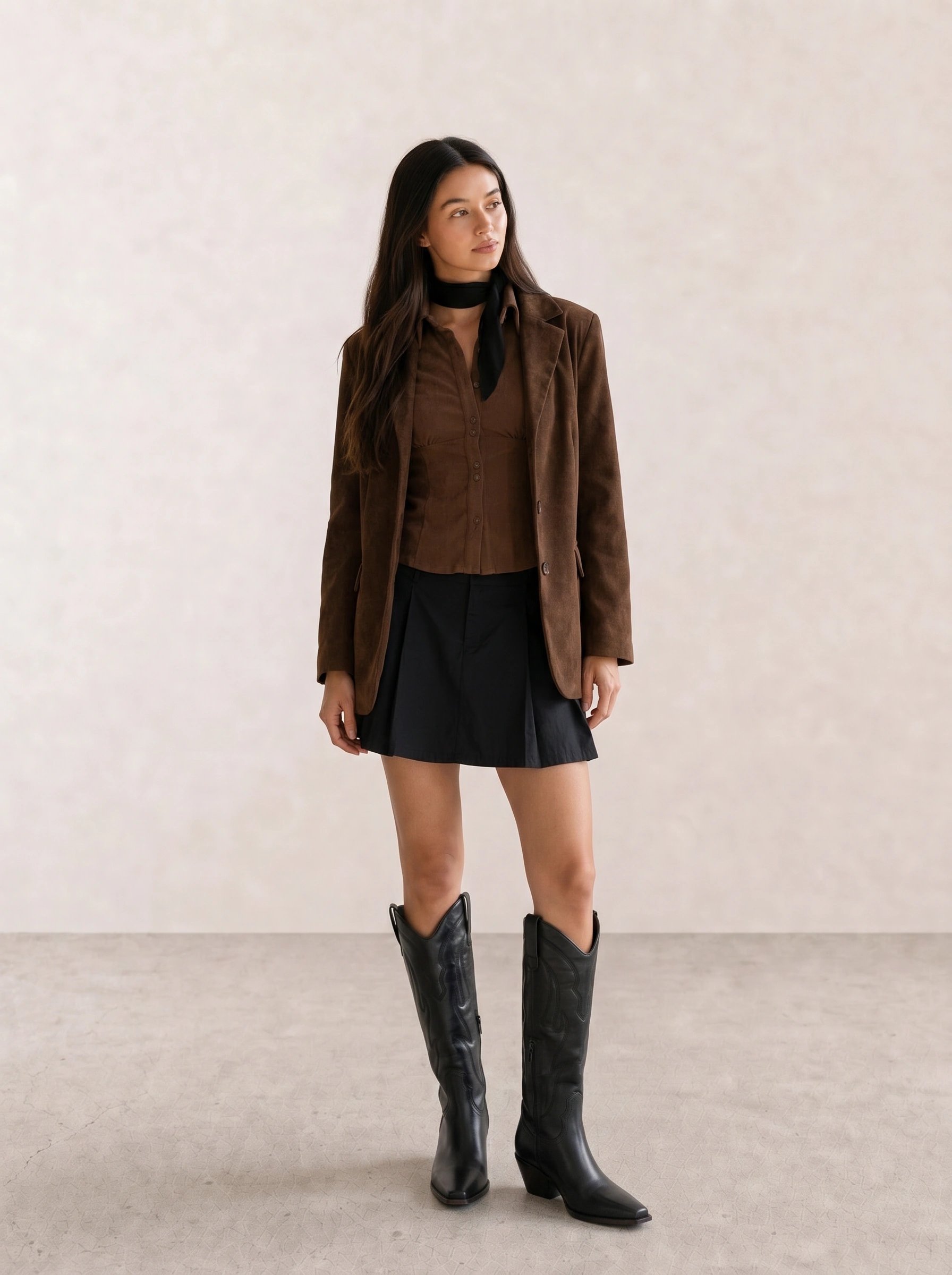
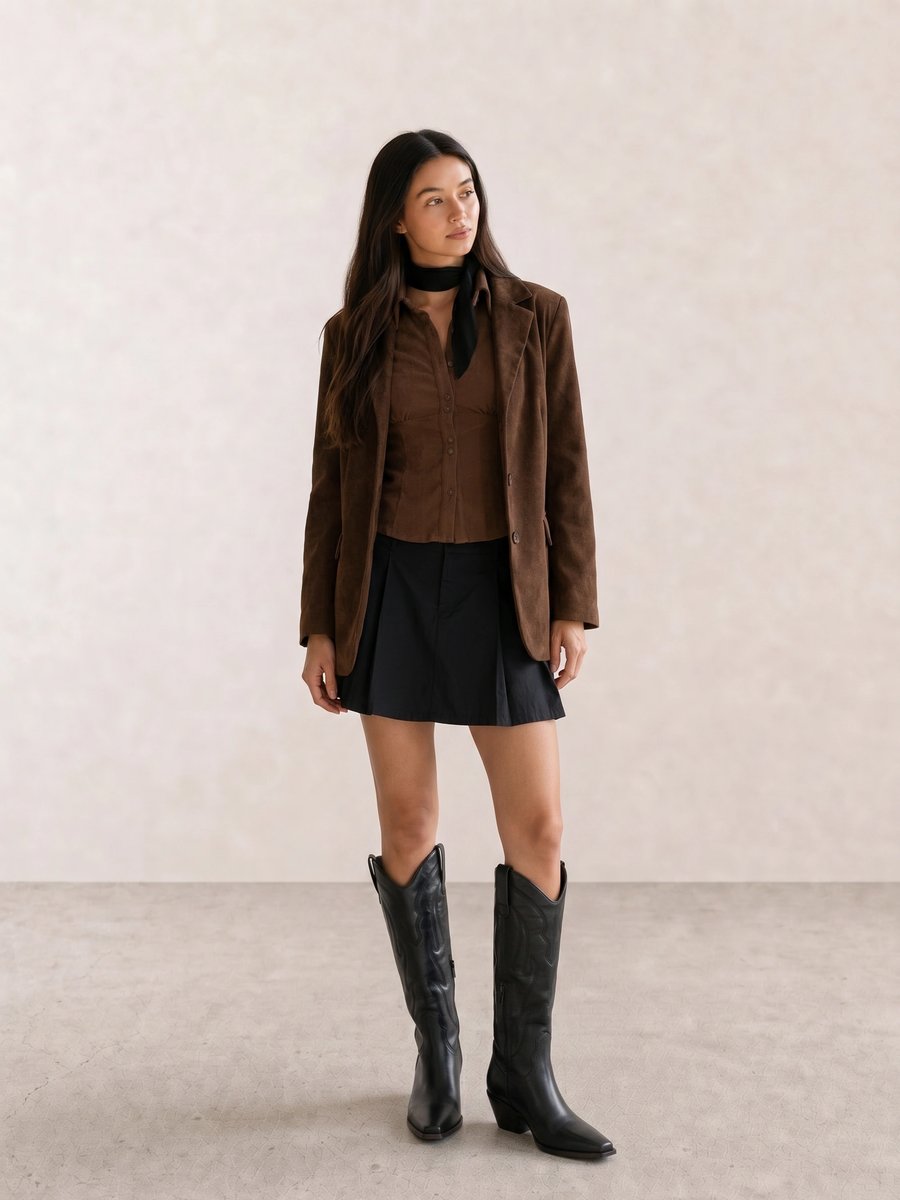
The brown blazer and black-skirt outfit proves that Western can work with a city-ready base. The blazer carries the leather-like texture, and the boot sharpens the short black skirt. Save this formula for drinks or a date when you want the reference to stay subtle.
Shopping Guide: What to Buy First
At a luxury budget, put your money into leather boots, a suede jacket, or a belt with solid hardware. These pieces get better with wear and decide whether an outfit feels grounded. Check the boot at the ball of the foot and the jacket at the shoulder before you pay for decorative stitching.
At mid-range, buy denim, cotton Western shirts, and a reliable leather bag. You can find strong options in workwear, denim, and contemporary labels without paying for a theme. Focus on fit and fabric weight, then use alterations for jeans that need a cleaner break over boots.
At a budget price, save on scarves, tops, costume jewelry, and fringe. Country style needs the least specialized shopping: start with jeans, an overshirt, and boots you already own.
For a deeper outfit formula, read How to Wear Western Boots with Modern Outfits and the Western Wardrobe Essentials checklist.
Western vs Cowgirl vs Country Style FAQ
What is the difference between Western and cowgirl style? Western style uses the broader heritage vocabulary of boots, denim, leather, and workwear-shaped pieces. Cowgirl style is a more feminine, decorative version that often uses waist emphasis, skirts, fitted tops, and hats.
Can country style include cowboy boots? Yes. Cowboy boots can fit country style when the surrounding outfit stays relaxed, practical, and low on decorative Western signals. Pair them with straight jeans and a plaid shirt instead of a hat and fringe if you want the country direction.
How do I make a cowgirl outfit look modern? Use one strong Western element with a current proportion, such as a pointed boot with relaxed jeans or a fitted vest with a long skirt. Keep the accessories sparse so the clothing, rather than the costume cues, carries the reference.
Do I need a cowboy hat for Western style? No. Boots, denim, and a textured outer layer communicate Western style without a hat. Add one only when it suits the weather and the outfit has room for another strong shape.
Is Western style the same as country style? No. Western style draws directly from the clothing and visual codes of the American West. Country style is broader, more casual, and can borrow from rural workwear or music culture without using Western-specific details.
Weekly outfit picks and style guides — no fluff, unsubscribe anytime.